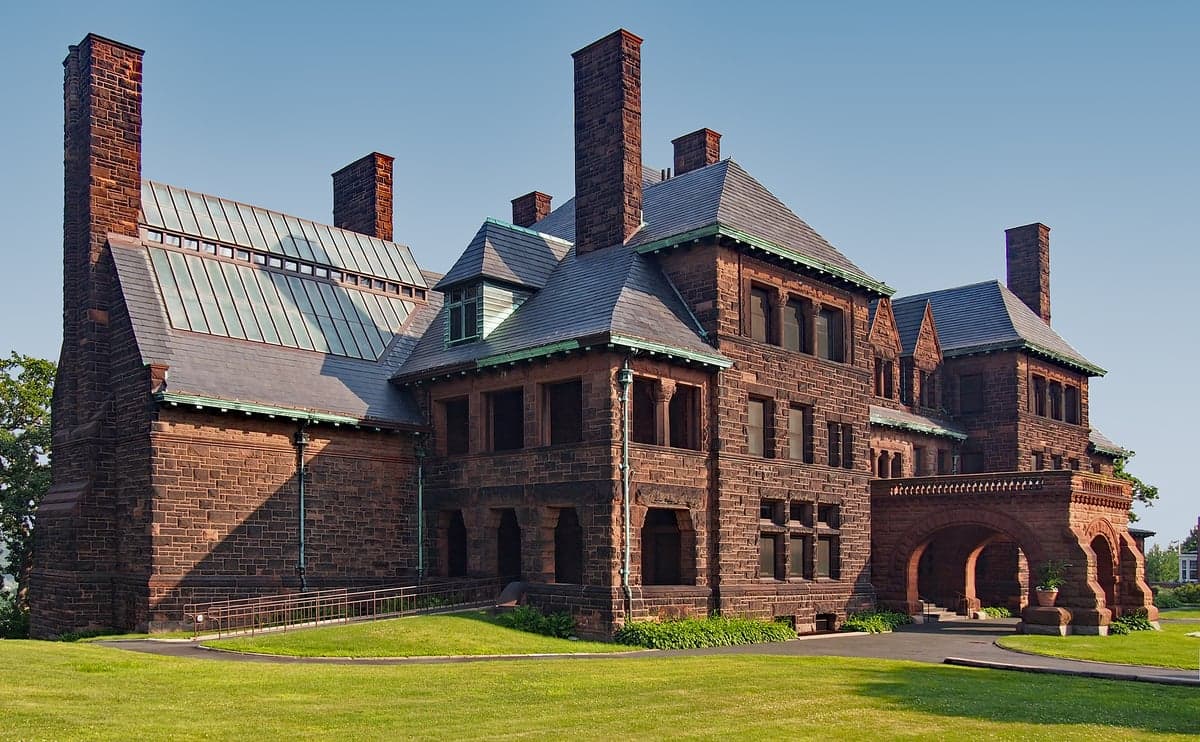
Photo: Wikipedia
Personal Sovereignty in St Paul, MN
Viable for self-reliance. Generally workable, though some barriers may limit total independence.
What does Personal Sovereignty tell us?
Personal Sovereignty measures your capacity for self-reliance and independence with minimal government friction. Higher scores mean fewer barriers between you and the way you want to live... but it assumes you have the space you need and good neighbors.
What does this tell us?
Personal Sovereignty measures your capacity for self-reliance and independence with minimal government friction. Higher scores mean fewer barriers between you and the way you want to live... but it assumes you have the space you need and good neighbors.
State Policy
Energy independence: Importer (20% of energy produced in-state)
Personal Liberty
Homesteading

Personal Liberty Analysis
St. Paul, Minnesota, presents a challenging environment for personal sovereignty, particularly for those with a survivalist or prepper mindset who prioritize autonomy from government overreach. While the city offers some structural advantages like a strong community network and access to natural resources, its governance is heavily tilted toward collectivist policies that erode individual decision-making. For a conservative-leaning individual or family weighing relocation, the city’s regulatory posture, tax burden, and restrictions on self-defense and personal liberties create a landscape where true self-reliance is constantly tested by state and local mandates. This analysis breaks down the key sovereignty factors—from gun laws to homesteading feasibility—so you can gauge whether St. Paul’s trade-offs align with your strategic relocation goals.
Tax burden and regulatory posture: How much of your income and freedom is claimed by the state?
Minnesota’s tax structure is among the most aggressive in the nation, and St. Paul residents bear the full brunt. The state imposes a progressive income tax with a top marginal rate of 9.85% on income over $190,000 (single filers), which kicks in well before you’d consider yourself wealthy. Property taxes in Ramsey County, where St. Paul sits, are also high—the effective rate hovers around 1.1% of home value, but with median home prices near $280,000, that’s a recurring $3,000+ annual hit. Sales tax in St. Paul is 8.875% (state + county + city), one of the highest in the Midwest. For a prepper, this means every dollar saved for supplies, land, or gear is taxed multiple times before it can be used. The regulatory environment is equally dense: the city enforces strict building codes, energy efficiency mandates, and licensing requirements for everything from home-based businesses to backyard chicken coops. If you’re looking to minimize government entanglement in your finances and daily operations, St. Paul’s posture is a significant drag—you’ll be funding a large public sector that actively shapes how you live, work, and build.
Self-defense and gun law specifics: What can you legally do to protect your home and family?
For anyone serious about self-defense, St. Paul is a restrictive jurisdiction. Minnesota is a “shall-issue” state for concealed carry permits, but the process involves a background check, training course, and a $100+ fee, with renewal every five years. The city itself has local ordinances that complicate matters: discharging a firearm within city limits is heavily restricted, and carrying in certain public spaces (like schools, government buildings, and bars) is prohibited. More concerning for preppers is the state’s red flag law (Extreme Risk Protection Order), which allows law enforcement or family members to petition a court to temporarily seize firearms if someone is deemed a risk—a subjective standard that can be weaponized against those who voice strong political opinions or stockpile for emergencies. Magazine capacity is not currently limited by state law, but there are perennial legislative efforts to ban “high-capacity” magazines (over 10 rounds). Stand-your-ground laws do not exist in Minnesota; you have a duty to retreat if safely possible before using deadly force, even in your own home in some interpretations. For a survivalist, this means your ability to defend your property and family is legally constrained, and any defensive use of force will be scrutinized by a county attorney’s office that leans progressive. If self-defense is a non-negotiable priority, St. Paul’s legal framework is a liability.
Self-reliance and homesteading viability: Lot sizes, zoning, and off-grid feasibility
St. Paul’s urban density severely limits traditional homesteading and off-grid living. Typical residential lots in the city are small—often 5,000 to 7,000 square feet—with zoning that restricts accessory structures, livestock, and even extensive gardening in some neighborhoods. Raising chickens is allowed with a permit (hens only, no roosters), but larger animals like goats or rabbits for meat are generally prohibited. The city’s building code requires connection to municipal water and sewer, making true off-grid water or waste systems illegal. Solar panels are permitted but must meet utility interconnection standards, and battery storage for full energy independence is not a standard allowance—you’re expected to stay on the grid. For a prepper looking to reduce reliance on supply chains and government services, St. Paul offers little room for meaningful self-sufficiency. You can grow a vegetable garden and preserve food, but you won’t be drilling a well, installing a septic system, or keeping a food plot for deer. If homesteading is a core part of your sovereignty strategy, you’ll need to look at exurban townships in Washington or Chisago counties, where lot sizes of 1–5 acres are common and zoning is more permissive. Within St. Paul proper, self-reliance is limited to financial independence and community barter networks—not land-based autonomy.
Personal liberties: Parental rights, medical autonomy, speech, and property
St. Paul’s governance model consistently prioritizes state authority over individual and parental decision-making. On parental rights, Minnesota law gives schools broad latitude to implement curriculum on sexuality and gender identity without mandatory parental opt-in; the state’s “safe and supportive schools” act can override parental objections to certain materials. Medical autonomy is similarly constrained: Minnesota has a vaccine mandate for school attendance (with limited exemptions), and during public health emergencies, the governor has broad powers to mandate treatments or restrictions—powers that were used extensively during COVID-19, including mask mandates and business closures that lasted longer than in many neighboring states. Free speech is protected under the First Amendment, but St. Paul has a history of enforcing “disorderly conduct” and “unlawful assembly” laws against political protests, and the city’s noise ordinances can be used to limit public demonstrations. Property rights are weak: the city has an active community land trust program that can restrict resale values and uses, and rent control (a 3% annual cap on increases) was passed by voters in 2021, signaling a political climate that favors tenant rights over property owner autonomy. For a conservative individual, these policies represent a steady erosion of control over your children’s education, your medical choices, your ability to speak freely without government pushback, and your rights as a property owner. The cumulative effect is a city where the state is a constant presence in your private life.
Overall, St. Paul ranks low on the personal sovereignty scale compared to other relocation options in the Midwest. If you’re coming from a high-control state like California or Illinois, the differences may feel marginal—but if you’re seeking a jurisdiction that respects your right to keep and bear arms, raise your family without state interference, and pursue self-reliance on your own land, St. Paul will frustrate those goals. The city’s strengths—strong community bonds, access to healthcare, and a robust local food system—are real, but they come at the cost of constant regulatory friction. For a survivalist or prepper, the better bet is to look at rural counties in western or southern Minnesota, or across the border into Wisconsin or South Dakota, where tax burdens are lighter, gun laws are more permissive, and zoning allows for genuine homesteading. St. Paul can work as a base for employment or networking, but as a permanent home for those prioritizing personal sovereignty, it demands constant vigilance and compromise.

* Values derived from national, state, county, city and local statistics and may differ in a specific area. Last updated: 2026-04-24T18:35:50.000Z
Narrative content on this page is AI-generated and may contain mistakes. Verify any details that matter before acting on them.
ReloMaps may earn a commission from affiliate links at no extra cost to you.

