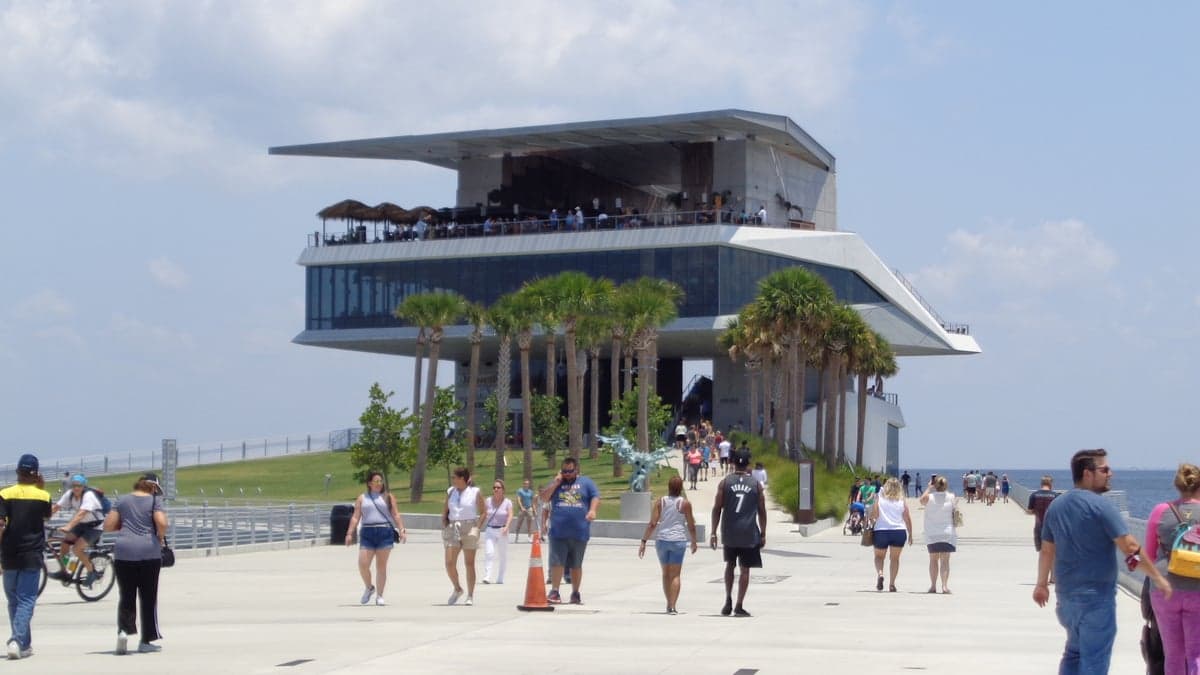
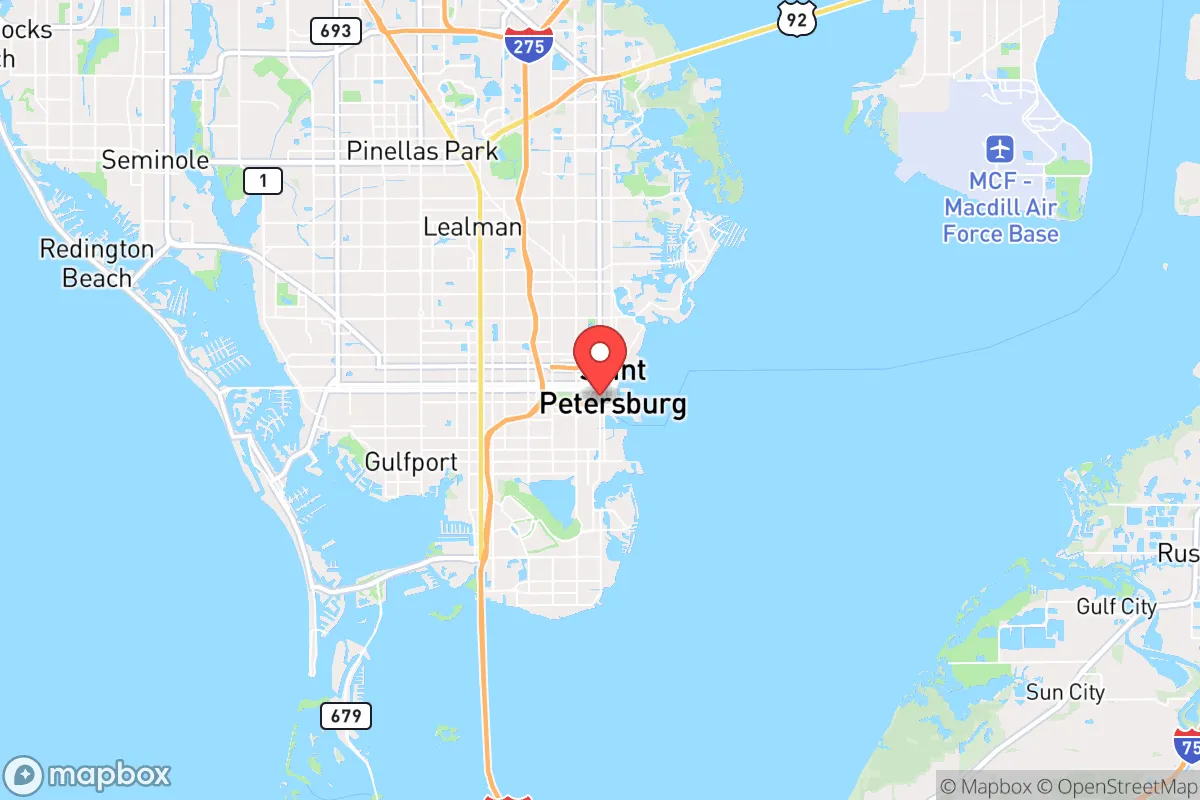
Photo: Wikipedia
Personal Sovereignty in St. Petersburg, FL
Viable for self-reliance. Generally workable, though some barriers may limit total independence.
What does Personal Sovereignty tell us?
Personal Sovereignty measures your capacity for self-reliance and independence with minimal government friction. Higher scores mean fewer barriers between you and the way you want to live... but it assumes you have the space you need and good neighbors.
What does this tell us?
Personal Sovereignty measures your capacity for self-reliance and independence with minimal government friction. Higher scores mean fewer barriers between you and the way you want to live... but it assumes you have the space you need and good neighbors.
State Policy
Energy independence: Importer (10% of energy produced in-state)
Personal Liberty
Homesteading

Personal Liberty Analysis
St. Petersburg, Florida, offers a mixed bag for those prioritizing personal sovereignty, with the state-level framework providing strong protections for gun rights and tax freedom, but local governance in Pinellas County introduces layers of regulation that can chafe against a survivalist or prepper mindset. While Florida’s constitutional preemption laws and lack of state income tax create a baseline of autonomy, the city’s dense urban layout, strict zoning codes, and progressive local ordinances mean you’ll need to pick your battles carefully. For a conservative-leaning individual or family concerned about government overreach, St. Pete is a place where you can secure your perimeter and keep your firearms, but you won’t be homesteading off-grid or running a bunker in your backyard without significant pushback from city hall.
Tax burden and regulatory posture in St. Petersburg
Florida’s absence of a state income tax is a major win for personal financial sovereignty, allowing you to keep more of what you earn without the state dipping into your paycheck. Property taxes in Pinellas County hover around 0.97% of assessed value, which is slightly above the national average but still manageable compared to high-tax states like New York or California. However, St. Petersburg’s local regulatory posture is where the friction begins. The city enforces strict building codes, flood zone restrictions, and environmental regulations that can complicate any DIY construction or off-grid modifications. For example, installing solar panels requires permits and adherence to HOA rules in many neighborhoods, and rainwater collection systems are limited by state-level water rights laws that prioritize municipal supply. The city’s stormwater utility fees and impact fees on new construction add recurring costs that eat into self-reliance budgets. If you’re looking to minimize government entanglement, the tax burden is light, but the regulatory web is tighter than in more rural Florida counties like DeSoto or Hardee.
Self-defense and gun law specifics in Pinellas County
Florida is a shall-issue state for concealed carry permits, and St. Petersburg residents benefit from constitutional carry (permitless carry) for both open and concealed carry since the 2023 law change. This means you can legally carry a firearm for self-defense without a permit, though a permit is still useful for reciprocity when traveling. The city itself has no local gun ordinances that exceed state law, thanks to Florida’s strong preemption statute, which prohibits municipalities from enacting their own firearm regulations. This is a critical safeguard against local government overreach—St. Pete cannot ban magazines, impose waiting periods, or restrict where you can carry beyond state-defined sensitive locations like schools and government buildings. However, the reality of urban self-defense in a dense city like St. Pete means you’re more likely to encounter property crime than a home invasion, and the St. Petersburg Police Department’s response times in high-density areas can lag during peak hours. For preppers, this reinforces the need for a layered security plan—good locks, a reliable firearm, and situational awareness—rather than relying on law enforcement. Stand-your-ground laws apply statewide, giving you legal cover to use deadly force if you reasonably believe it’s necessary to prevent death or great bodily harm, but expect a thorough investigation in a politically mixed city like St. Pete.
Self-reliance and homesteading viability in St. Petersburg
If your vision of personal sovereignty involves growing your own food, raising livestock, or living off-grid, St. Petersburg will disappoint. The city’s zoning code is heavily oriented toward suburban and urban residential use, with minimum lot sizes typically around 5,000 to 7,000 square feet in most single-family zones. That’s enough for a modest garden, but not for chickens, goats, or any significant livestock—city ordinances limit backyard chickens to a few hens (no roosters) and prohibit larger animals entirely. Off-grid living is effectively illegal: the city requires connection to municipal water and sewer systems, and solar-only power setups are subject to building codes that mandate grid interconnection. Rainwater harvesting is allowed but capped at 100 gallons per property without a permit, and any serious prepper infrastructure like a root cellar or underground bunker would require extensive permitting and likely face neighborhood opposition. For those serious about homesteading, the nearby rural areas of Pasco County or eastern Hillsborough County offer larger lots (1-5 acres) with looser zoning, but you’ll trade off proximity to St. Pete’s job market and amenities. In St. Pete itself, self-reliance means maximizing a small urban lot—think raised beds, container gardening, and food preservation—rather than true homesteading.
Personal liberties in St. Petersburg: parental rights, medical autonomy, speech, and property
Florida has been a battleground for parental rights, and recent state laws have strengthened parents’ control over their children’s education and medical decisions. The Parental Rights in Education Act (HB 1557) and subsequent legislation ensure that schools cannot withhold information about a child’s well-being from parents, and medical procedures for minors require parental consent. This is a significant win for conservative families concerned about government or school overreach into family matters. Medical autonomy for adults is more nuanced: Florida has no state-level vaccine mandate, but private employers and healthcare systems in St. Pete may require vaccinations for employment or treatment. The state’s COVID-19 response saw local mask mandates and business restrictions in 2020-2021, but those have been repealed, and a 2023 law bans future mask mandates in schools and government buildings. Free speech is protected under the First Amendment, and St. Pete has a history of political activism, but the city’s liberal lean means conservative viewpoints may face social pushback rather than legal suppression. Property rights are strong under Florida law, but St. Pete’s historic preservation ordinances and tree protection codes can limit what you do with your land—cutting down a large oak tree, for example, requires a city permit and potential replacement fees. Overall, personal liberties in St. Pete are robust at the state level but can be eroded by local ordinances, so staying informed and engaged in city politics is essential.
Compared to other areas in Florida, St. Petersburg offers a moderate level of personal sovereignty—stronger than blue-state cities like Portland or Seattle, but weaker than rural Florida counties where you can buy 10 acres, build a self-sufficient compound, and live with minimal government interaction. The city’s tax advantages and gun laws are solid foundations, but the regulatory density and urban constraints mean you’ll need to adapt your prepper strategy to a suburban environment. For a single individual or family willing to navigate local bureaucracy and prioritize self-defense and financial freedom, St. Pete can work, but if your goal is maximum autonomy with minimal government entanglement, look farther inland to places like Polk County or the Panhandle. In St. Pete, you’re trading some sovereignty for coastal living and economic opportunity—a trade-off that requires clear-eyed assessment of your priorities.

* Values derived from national, state, county, city and local statistics and may differ in a specific area. Last updated: 2026-04-15T23:48:06.000Z
Narrative content on this page is AI-generated and may contain mistakes. Verify any details that matter before acting on them.
ReloMaps may earn a commission from affiliate links at no extra cost to you.

