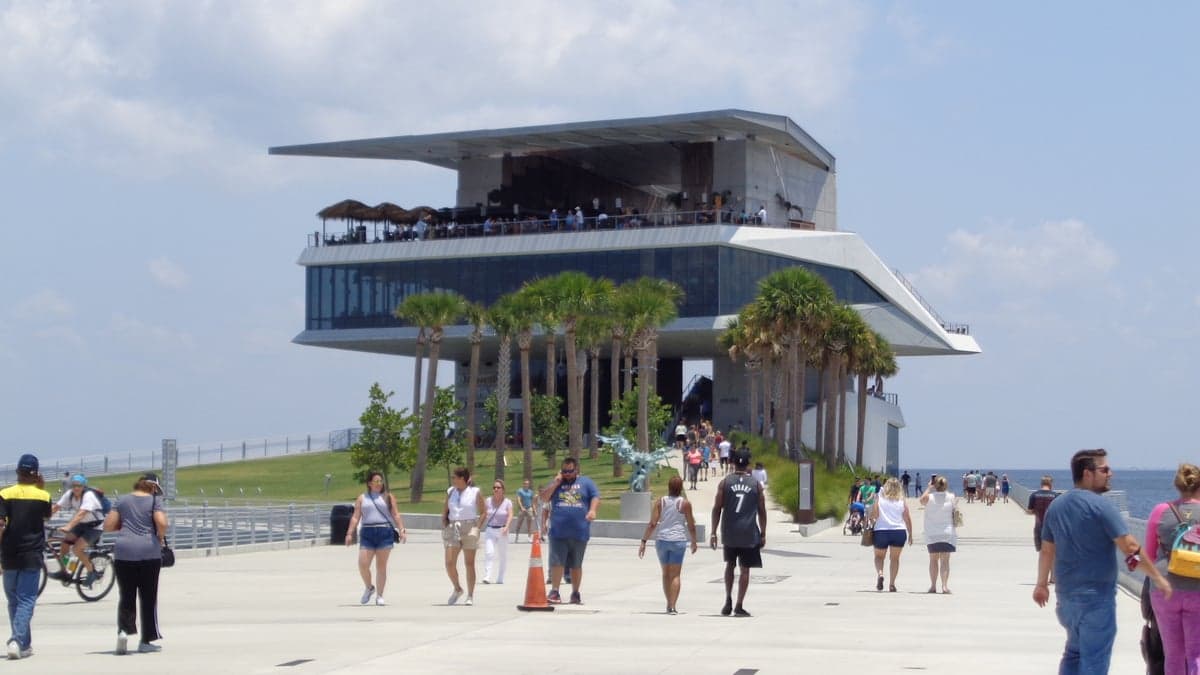
Photo: Wikipedia
Quality of Life in St. Petersburg, FL
Above-average quality of iife. The area offers a reasonable cost of living, decent mobility, and a mix of neighborhood amenities.
What does Quality of Life tell us?
Quality of Life blends cost of living, nearby amenities, socioeconomic signals, and neighborhood character. City-level scores represent the whole municipality; individual neighborhoods can differ.
What does this tell us?
Quality of Life blends cost of living, nearby amenities, socioeconomic signals, and neighborhood character. City-level scores represent the whole municipality; individual neighborhoods can differ.
Cost of Living
27% above national average
The Real Cost of Living in St. Petersburg, FL for 2026
| Tier | Individual | Family (4) |
|---|---|---|
| Survival | $25k | $46k |
| Comfortable | $64k | $95k |
| Luxury | $132k+ | $205k+ |
| Elite (Top 5%) | $183k+ | $284k+ |
77%
The Area Signal
A metric tracking the socioeconomic signals of the area.


Hobbies
Explore the areaGroceries
1 within 10 miles
Gas
0 within 10 miles
Hospital
3 within 20 miles
Airport
TPA — Tampa International
Post Office
USPS — Tampa, FL
Critical Amenities
Quality-of-Life Analysis
St. Petersburg, Florida, presents a quality of life defined by a blend of coastal affluence and a laid-back, creative culture, attracting a diverse mix of retirees, young professionals, and remote workers. The city’s cost of living index of 127 (100 = U.S. average) places it significantly above the national norm, driven primarily by housing demand in a sunbelt market. The typical resident is often a college-educated professional or a retiree drawn to the city’s 361 days of sunshine, vibrant arts scene, and waterfront lifestyle, though the rising costs are increasingly shaping who can afford to call the "Sunshine City" home.
Cost of living and housing affordability compared to Tampa and Sarasota
St. Petersburg’s cost of living is 27% higher than the national average, with housing being the primary driver. The median home value sits at $331,500, which is notably more affordable than nearby Sarasota (where the median often exceeds $400,000) but roughly 10-15% higher than comparable homes in Tampa across the bay. Renters face a median monthly cost of $1,542, a figure that has climbed sharply since 2020, though it remains slightly below the average for the broader Tampa-St. Petersburg-Clearwater metro area. The average commute of 25.4 minutes is manageable and shorter than in many major Florida metros, thanks to the city’s relatively compact geography and the availability of the SunRunner bus rapid transit line connecting downtown to St. Pete Beach. For buyers, the market is competitive but not as overheated as Miami or Naples; a household earning the area’s median income of roughly $62,000 per year will find homeownership challenging without a dual income or a down payment from a previous home sale.
Daily life, schools, and what makes St. Pete unique
Daily life in St. Petersburg revolves around its walkable downtown core, the 398-acre waterfront parks system, and a calendar packed with cultural events. The city is home to the Salvador Dalí Museum, the Morean Arts Center, and the Chihuly Collection, giving it a cultural density unusual for a city its size. Public schools are served by Pinellas County Schools, which is the 7th-largest district in Florida; top-rated options include St. Petersburg High School (IB program) and Shorecrest Preparatory School (private). The rhythm of life is distinctly outdoorsy: residents cycle the Pinellas Trail, kayak in the mangroves of Weedon Island Preserve, or spend weekends at Fort De Soto Park. The dining scene is strong, with a concentration of farm-to-table restaurants and craft breweries in the Edge District and Grand Central District. Traffic is manageable outside of peak snowbird season (January–April), and the city’s grid layout makes biking and scootering viable for short trips.
St. Petersburg is best suited for those who value a vibrant, walkable urban environment with immediate access to beaches and green space, and who can absorb a cost of living that is 27% above the national average. Remote workers, creative professionals, and retirees with equity from a previous home sale will find the lifestyle particularly rewarding. Families on a single income may struggle with housing costs, but the combination of strong cultural amenities, a mild climate, and a relatively short commute makes the city a compelling choice for those who prioritize quality of life over square footage.

Crime in St. Petersburg, FL
Generally safer than 73% of comparable U.S. locations.
Violent CrimeViolent Crime Analysis
Property CrimeProperty Crime Analysis
Crime Analysis
St. Petersburg, Florida, presents a mixed safety profile for potential residents. While the city’s violent crime rate of 166.8 per 100,000 residents is notably lower than the national average, its property crime rate of 735.6 per 100,000 is significantly elevated, placing it above both state and national benchmarks. This disparity means that while serious violent incidents are relatively uncommon, residents face a heightened risk of theft, burglary, and vehicle break-ins, particularly in areas with high foot traffic and tourist activity.
Crime in context
To understand St. Petersburg’s safety landscape, it is essential to compare its figures to broader trends. The city’s violent crime rate of 166.8 per 100,000 is roughly half the U.S. average of approximately 380 per 100,000, and it also falls below the Florida state average of about 380 per 100,000. This suggests that violent offenses like homicide, robbery, and aggravated assault are less common here than in many comparably sized cities. However, the property crime rate of 735.6 per 100,000 is substantially higher than the national average of roughly 1,950 per 100,000 and the Florida average of about 2,100 per 100,000. This elevated property crime rate is a primary concern for residents and is often driven by larceny-theft, including car break-ins and package theft, which are common in dense, mixed-use neighborhoods.
What residents experience
Daily life in St. Petersburg involves navigating this specific crime profile. Residents frequently report that property crimes, especially theft from vehicles and bicycles, are the most common safety issues they encounter. The city’s vibrant downtown and popular beach areas, while attractive, also concentrate opportunities for opportunistic crime. It is important to note that the local justice system operates under a progressive philosophy, with elected officials and judges who prioritize rehabilitation and alternatives to incarceration. While this approach aims to reduce recidivism, critics argue it can lead to more criminals remaining on the street and a perception of leniency that may embolden property offenders. This ideological stance directly impacts public safety by potentially reducing the deterrent effect of prosecution, which is a significant factor for residents concerned about justice for victims and the overall security of their neighborhoods.
Neighborhood-level variation in St. Petersburg is substantial. Areas like Old Northeast, Snell Isle, and the downtown core generally report lower violent crime but can still experience property crime, particularly in tourist-heavy zones. In contrast, neighborhoods south of Central Avenue, such as Childs Park and parts of Midtown, have historically reported higher rates of both violent and property crime. Prospective residents should research specific block-level data through the St. Petersburg Police Department’s crime mapping tool and consider that the progressive judicial environment may mean that even in safer neighborhoods, property crime offenders face fewer consequences, potentially increasing the likelihood of repeat offenses.
* Values derived from national, state, county, city and local statistics and may differ in a specific area. Last updated: 2026-04-15T23:48:06.000Z
Narrative content on this page is AI-generated and may contain mistakes. Verify any details that matter before acting on them.
ReloMaps may earn a commission from affiliate links at no extra cost to you.

