
Political ClimatePolitical Climate in Star, ID
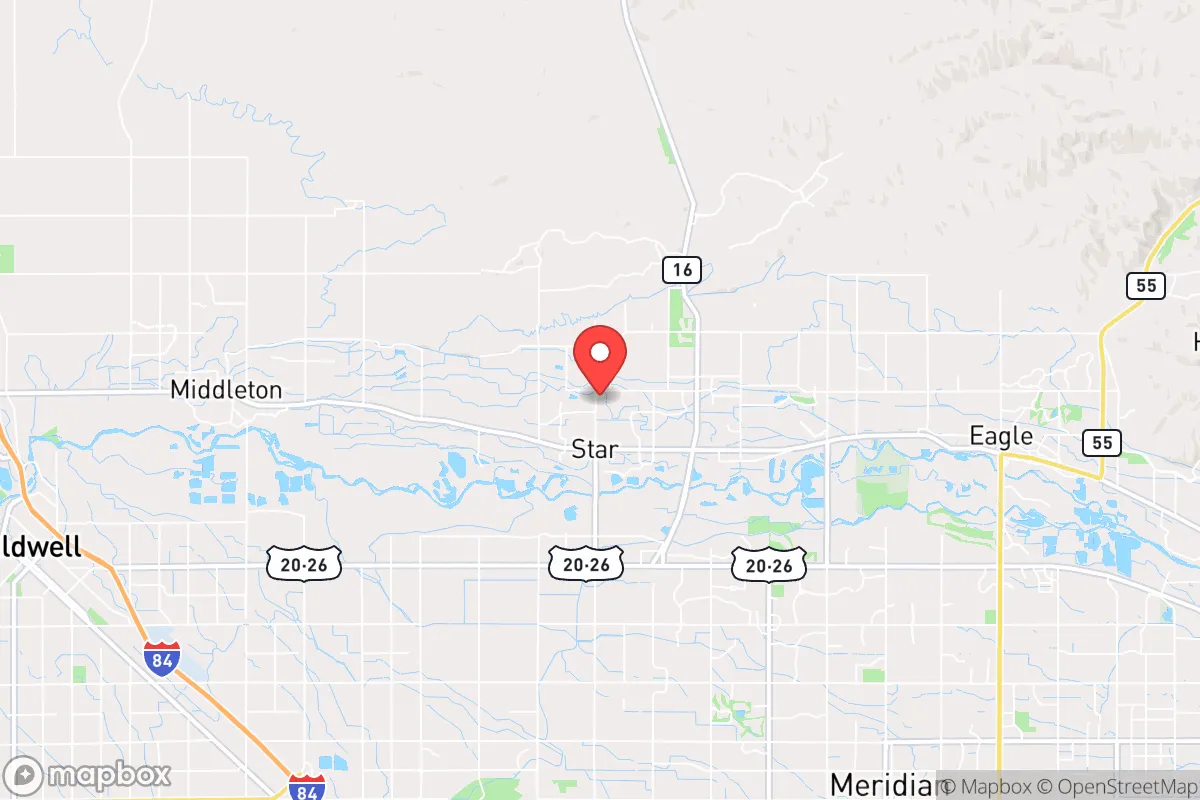
District shown is the primary district for this city’s centroid. Cities may span multiple districts.
Local Political AnalysisPolitical Analysis of Star, ID
Star, Idaho, is about as solidly conservative as they come, with a Cook PVI of R+22 that tells you everything you need to know about the local voting habits. This isn't a purple area that flips back and forth; it's a place where folks have consistently voted for limited government, lower taxes, and a hands-off approach to personal freedoms. Over the past decade, the political lean has only deepened, driven by an influx of people fleeing the chaos and overreach in places like California and Oregon. They come here specifically because Star still feels like a place where the government stays out of your business, your family, and your property.
How it compares
Drive ten minutes east into Eagle or Meridian, and you'll start to feel the political temperature shift. Those suburbs have seen more growth from out-of-state transplants, and with it, a creeping influence of progressive ideology that shows up in local school board races and zoning debates. Star, by contrast, remains a bulwark. Head west into rural Ada County or north into Gem County, and you'll find even more libertarian-leaning ranchers and farmers who view any new regulation as a direct threat. The contrast is stark: while Boise proper has drifted left on issues like land use and public spending, Star's voters consistently reject bond measures that would raise property taxes and push back against any hint of government overreach into their Second Amendment rights or parental control over education.
What this means for residents
For the people who live here, the political climate translates into a daily reality where you're not constantly fighting city hall. The local government is generally responsive to the idea that less is more—fewer ordinances, fewer fees, fewer hoops to jump through for building a shop on your property or running a small business from home. That said, the rapid growth is the biggest wild card. New developments are bringing in families who may not share the same deep-seated distrust of government intervention. If you've been here since the early 2000s, you've watched the local elections get tighter, with some candidates pushing for more "community planning" that sounds an awful lot like telling you what you can do with your own land. The long-term concern is that if enough newcomers with a more progressive mindset show up, Star could slowly lose the very character that made it attractive in the first place.
One cultural distinction that sets Star apart is the strong, informal network of neighbors who look out for each other without needing a government program to do it. There's a palpable skepticism of any new state or federal mandate, whether it's about water rights, building codes, or school curriculum. The local churches and civic groups are the real social safety net, not a county office. If you value personal responsibility and want to live in a place where your vote actually means something against the tide of expanding government, Star is still one of the last holdouts in the Treasure Valley. But keep an eye on those city council meetings—that's where the future of this town's freedom will be decided.

State Political ClimatePolitical Climate in Idaho
State Political AnalysisPolitical Environment in the State
Idaho has become one of the most reliably conservative states in the nation, with a Republican trifecta controlling the governorship, supermajorities in both legislative chambers, and a solid +30-point lean in presidential elections since 2020. Over the last 20 years, the state has shifted from a moderate, libertarian-leaning Western conservatism to a more assertive, culturally conservative posture, driven by explosive growth in the Boise metro and an influx of out-of-state transplants seeking lower taxes and fewer restrictions. The dominant coalition is now a blend of traditional ranchers, evangelical Christians, and tech-adjacent remote workers who want the state to stay exactly as it is—or get even more conservative.
Urban vs. rural divide
The political map of Idaho is starkly divided between its fast-growing urban corridor and its vast rural expanse. The Treasure Valley—anchored by Boise, Meridian, and Nampa—has become the state’s political engine, but it’s not a liberal bastion. Ada County (Boise) has trended purple in recent cycles, flipping to Trump by just 3 points in 2020 after going for Romney by 18 in 2012, but the surrounding suburban counties like Canyon (Nampa) and Kootenai (Coeur d’Alene) remain deeply red. The real conservative strongholds are the rural counties: Lemhi, Custer, and Butte routinely vote 80%+ Republican, while the northern panhandle counties like Boundary and Bonner are more libertarian-leaning but still solidly right. The only blue dots are the college towns—Moscow (home to the University of Idaho) and Pocatello (Idaho State University)—which vote Democratic but have little statewide influence. The urban-rural split is widening as Boise grows more diverse and moderate, but the rural counties still hold disproportionate power in the legislature thanks to gerrymandered districts.
Policy environment
Idaho’s policy environment is aggressively pro-business and culturally conservative. The state has a flat income tax of 5.8% (down from 6.5% in 2022), no corporate income tax on pass-through entities, and a property tax system that caps annual increases at 2% for primary residences. The legislature passed a school choice expansion in 2023, allowing education savings accounts for private and homeschool expenses, though it’s still limited compared to Arizona or Florida. On social issues, Idaho is among the most restrictive: a near-total abortion ban (the Defense of Life Act) took effect in 2022 with no exceptions for rape or incest, and the state has a “stand your ground” self-defense law and constitutional carry for firearms. Election laws are strict—voter ID is required, same-day registration is not allowed, and mail-in ballots require an excuse. The state also passed a law in 2024 banning ranked-choice voting and requiring hand-counting of ballots in all counties, a move that drew national attention. For a conservative family, the policy environment is about as friendly as it gets in the Lower 48, but the trade-off is limited public services and a healthcare system that ranks near the bottom nationally for access.
Trajectory & freedom
Idaho is arguably becoming more free in the areas that matter most to conservatives, but the trajectory is not without tension. The 2023 “Parental Rights in Education” law (similar to Florida’s) prohibits classroom instruction on sexual orientation and gender identity in K-3, and a 2024 law bans transgender girls from female sports at all levels. Gun rights expanded in 2023 with permitless carry and a “Second Amendment Protection Act” that nullifies federal firearms regulations. Property rights were strengthened in 2022 with a law limiting eminent domain for private development. However, the state’s rapid growth has created a backlash: the “Idaho Way” of low regulation is being tested by housing shortages and water rights disputes, and the legislature has responded with more state preemption of local zoning, which some see as a government overreach. The biggest freedom concern for newcomers is the lack of medical autonomy—Idaho has some of the strictest vaccine mandates in the country for healthcare workers, and the state’s health freedom index has actually declined since 2020 due to new reporting requirements for alternative treatments. Overall, personal liberty is expanding in cultural and economic spheres, but contracting in healthcare and local governance.
Civil unrest & political movements
Idaho has a long history of anti-government sentiment, from the Ruby Ridge standoff in 1992 to the modern “constitutionalist” movement centered in North Idaho. The Kootenai County area (Coeur d’Alene) has seen a resurgence of patriot groups, including the “People’s Rights” network founded by Ammon Bundy, who ran for governor in 2022 and got 17% of the vote. Protests have been relatively muted compared to coastal states, but there were significant clashes in 2020 over COVID-19 restrictions, with armed protesters at the Statehouse in Boise. The most visible flashpoint today is immigration: Idaho has no sanctuary cities, and the legislature passed a law in 2024 requiring local law enforcement to cooperate with ICE, but the growing Latino population in Canyon County has created cultural tensions. Election integrity remains a hot-button issue—the 2024 hand-counting law was driven by activists who distrust electronic voting, and the state has seen a wave of “audit” demands from grassroots groups. A new resident would notice the prevalence of “Don’t Tread on Me” flags and “Idaho is Full” bumper stickers, reflecting a mix of libertarian pride and anxiety about growth.
Projection
Over the next 5-10 years, Idaho will likely become more conservative in policy but less culturally homogeneous. The in-migration from California, Washington, and Oregon is accelerating—Idaho grew 18% between 2010 and 2020, and the pace hasn’t slowed. These newcomers are often conservative-leaning but bring different values: they want low taxes and school choice, but they also expect better infrastructure, more housing density, and a more diverse economy. The political risk is that the state’s rural-dominated legislature will overreach on social issues, alienating the suburban moderates in Ada County who currently vote Republican. If the GOP splits between the “MAGA” wing and the “liberty” wing, Democrats could become competitive in Boise and maybe Pocatello within a decade. But for now, the state’s demographic trends favor continued Republican dominance—the fastest-growing counties are the reddest (Canyon, Kootenai, Bonneville), and the blue areas are growing slower. A newcomer moving in now should expect a state that remains deeply conservative, with a government that is actively hostile to progressive policies, but also one that is wrestling with the consequences of its own success: traffic, housing costs, and a fraying social fabric in the Treasure Valley.
For a conservative family or individual, Idaho offers a policy environment that is among the most aligned with traditional values in the country—low taxes, strong gun rights, parental control in education, and a government that mostly stays out of your business. The practical takeaway is that you’ll find a community that shares your worldview, especially outside of Boise, but you’ll also need to accept that the state’s infrastructure and services are stretched thin by rapid growth. If you value personal freedom over convenience, and cultural alignment over urban amenities, Idaho is a solid bet. Just don’t expect it to stay exactly the same—the political climate is stable, but the people are changing, and that always brings new fights.
* Values derived from national, state, county, city and local statistics and may differ in a specific area. Last updated: 2026-05-01T05:32:09.000Z
Narrative content on this page is AI-generated and may contain mistakes. Verify any details that matter before acting on them.
ReloMaps may earn a commission from affiliate links at no extra cost to you.

