Strategic Assessment of Star, ID
Workable tactical position. Some exposure to population density or targets, but generally defensible in a crisis.
What does the Strategic Assessment tell us?
Our Strategic Assessment grades tactical survivability of an area. Major population centers, military targets, fallout zones, natural disasters, and border exposure all drive risk — lower exposure means a more defensible position in a crisis.
This is heavily inspired by Joel Skousen's Strategic Relocation book. Highly recommended you checkout the book ($)What does this tell us?
Our Strategic Assessment grades tactical survivability of an area. Major population centers, military targets, fallout zones, natural disasters, and border exposure all drive risk — lower exposure means a more defensible position in a crisis.
This is heavily inspired by Joel Skousen's Strategic Relocation book. Highly recommended you checkout the book ($)Strategic Pillars

Key Distances
Regional Safe Places
Below is our recommended "safe zones" in Idaho and the surrounding area based on our strategic heuristics. For most people, it's unrealistic to live in a “safe zone” full-time due to work, family or other personal reasons. They tend to be more rural. However, many of these areas are perfect for second homes and retreat properties that double as a vacation home or even a short-term rental.
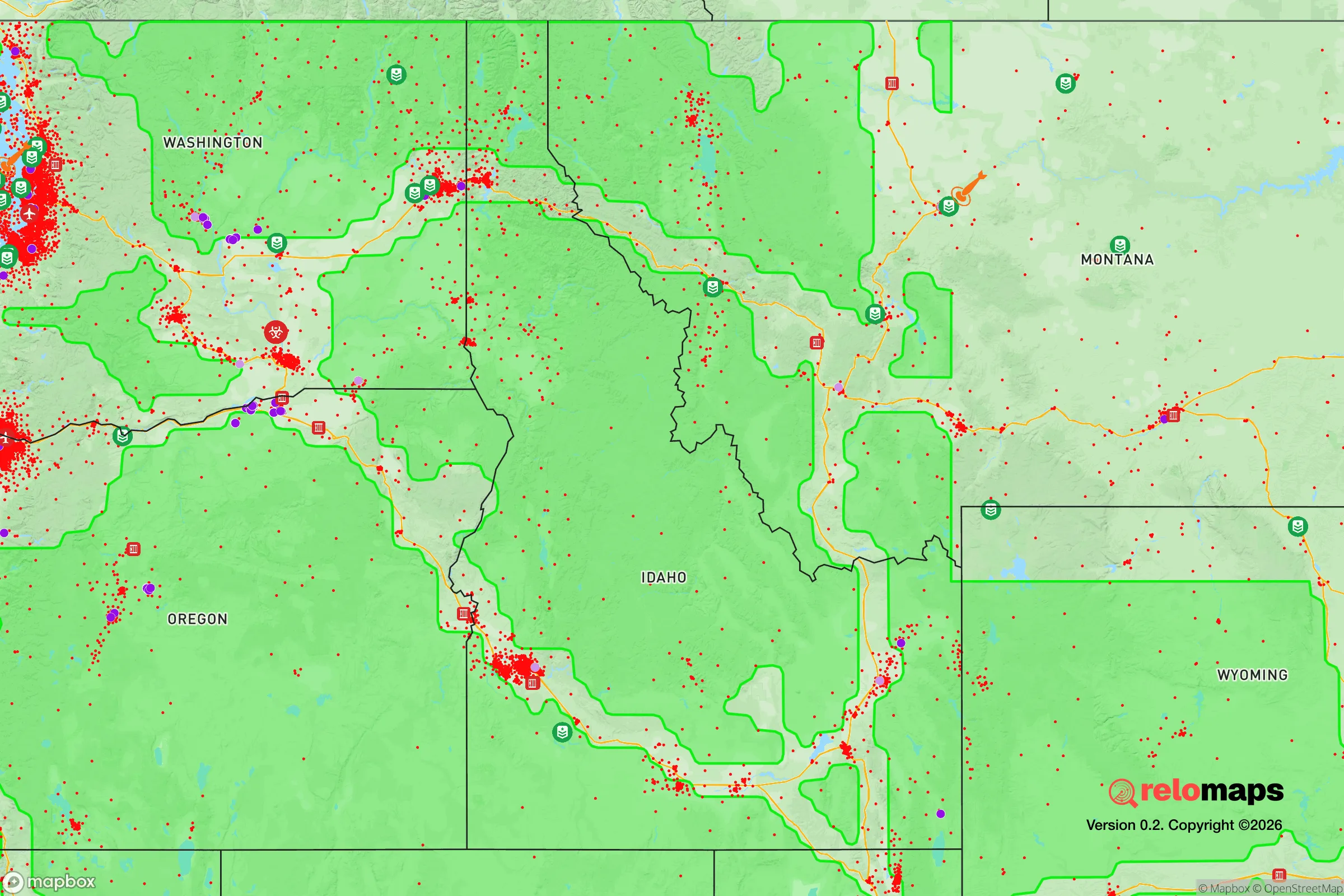
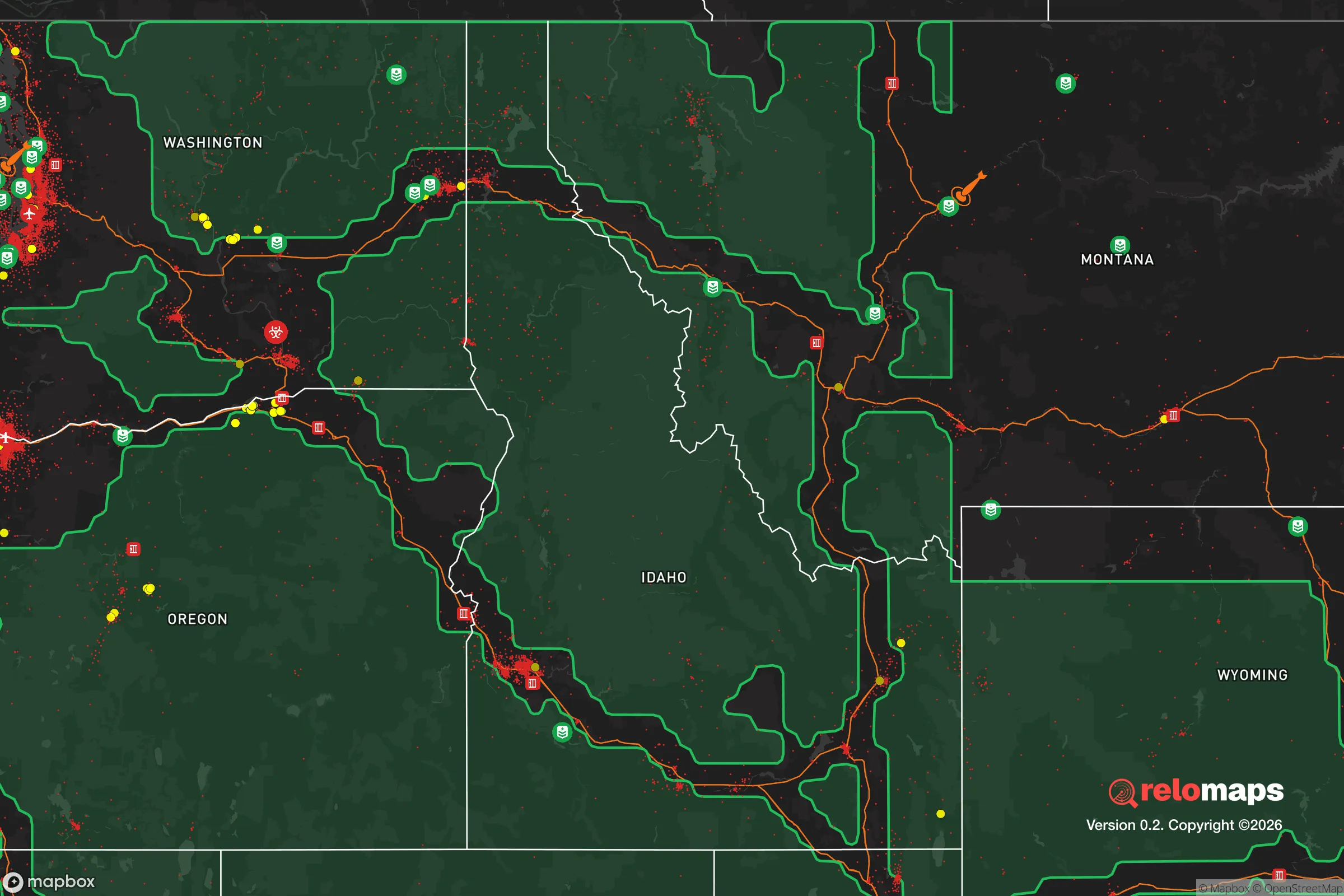


Important Note: For informational purposes only. This does not mean nothing bad ever happens in the green zones. Please use common sense. This is based on public data and modeled with AI. We tried to take a conservative approach but mistakes happen. We update this regularly as new information becomes available.
Solar Generator Recommendations
Backup power matters more here than in safer locations. We've picked three solar generators across budgets and capacity tiers — start with the budget unit if you only need a few essentials, or step up if you want to run a fridge and HVAC for days at a time.

Jackery Portable Power Station Explorer 300
Budget OptionPower on the Go: Weighing only 11 lbs, it's convenient to set up and store with book-sized foldable solar panels

BLUETTI Portable Power Station AC180
Designed for both indoor and outdoor scenarios, AC180 is highly capable as it has a robost capacity and continuous output power.

EF ECOFLOW DELTA Pro Ultra Power Station
Upgraded PickEcoFlow DELTA Pro Ultra is a whole-home energy system designed to grow with your family. Integrated with the Smart Home Panel 2, it scales to meet your evolving energy needs — keeping your home powered, intelligent, and secure through every stage of life.
We earn a commission, at no additional cost to you.
Strategic Assessment Analysis
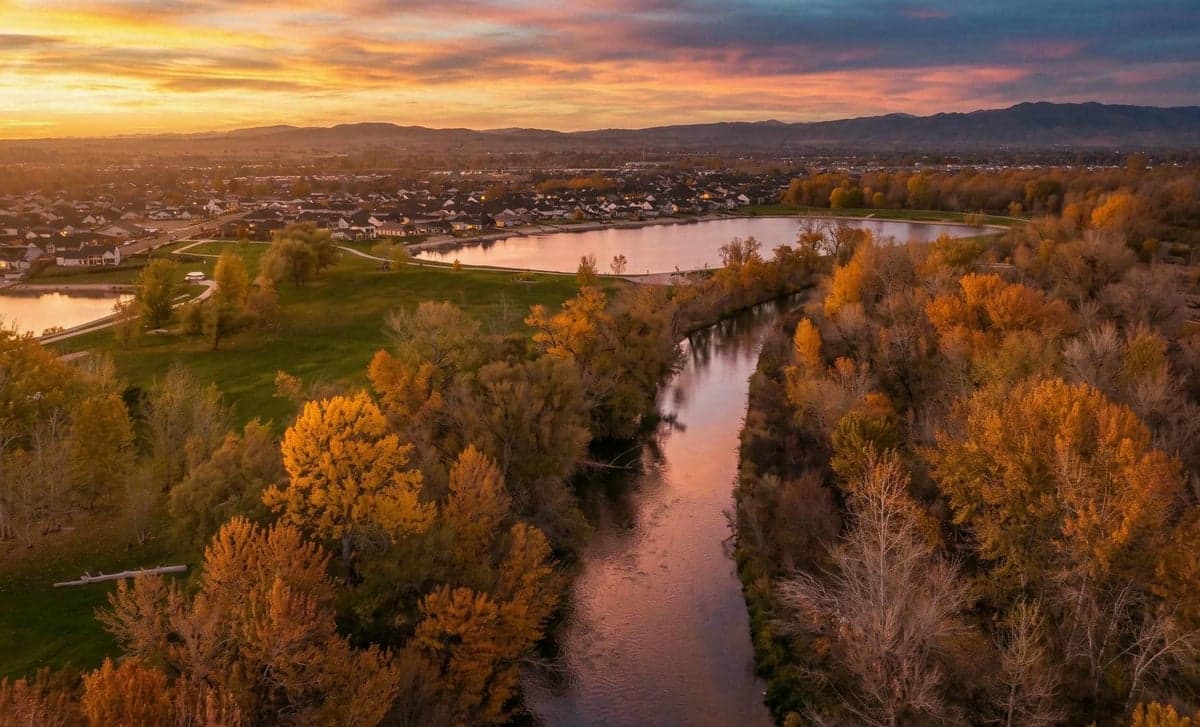
Star, Idaho, sits in a sweet spot that few preppers fully appreciate: close enough to Boise for supply runs and medical access, but far enough that you aren't breathing the same air when the city grid goes down. The town's position along the Boise River and its agricultural zoning give it a structural resilience that suburban sprawl lacks. For a conservative-leaning individual or family looking to weather civic unrest, mass casualty events, or natural disasters, Star offers a rare combination of defensible geography, local food potential, and low-profile living — provided you understand where the real vulnerabilities lie.
Geographic position and natural advantages for long-term survival
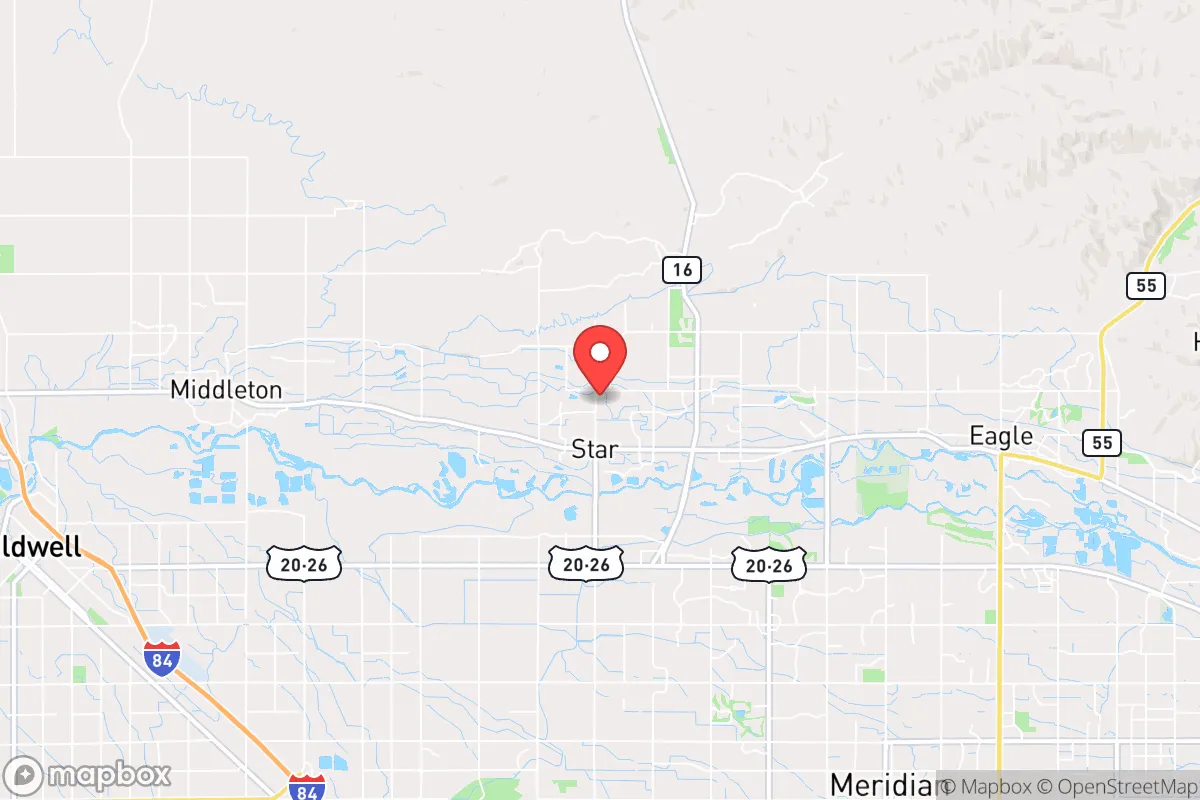
Star sits at the western edge of Ada County, roughly 15 miles northwest of downtown Boise, but it feels like a different world. The town is flanked by the Boise River to the south and the foothills of the Owyhee Mountains to the west, creating natural chokepoints that slow any uncontrolled movement into the area. The surrounding terrain is a mix of irrigated farmland, sagebrush steppe, and low hills — open enough to see threats coming, but with enough folds in the land to offer cover and concealment. The Boise River provides a reliable surface water source, and the shallow aquifer beneath the Treasure Valley means well water is accessible at depths of 100 to 300 feet, depending on the exact parcel. The local growing season runs roughly April through October, long enough for a serious garden or small-scale farming operation. The soil is volcanic loam in many areas — fertile, well-draining, and capable of producing high yields of potatoes, corn, beans, and squash. For a relocator thinking about food independence, Star's agricultural zoning is a major advantage: many properties are zoned for livestock, and the town's rural character means neighbors are less likely to complain about chickens, goats, or a small orchard. The climate is semi-arid, with only about 12 inches of annual precipitation, so water storage and irrigation planning are non-negotiable — but that same dryness reduces mold, rot, and pest pressure on stored food.
Risks, exposures, and proximity to fallout-relevant landmarks
The biggest strategic weakness of Star is its proximity to Boise, a city of roughly 240,000 that would become a humanitarian disaster zone in any major crisis. If a mass casualty event, EMP, or civil unrest hits the Treasure Valley, Star sits directly in the path of anyone fleeing west on State Highway 16 or ID-44. The town's population of about 12,000 is small, but it's growing fast — new subdivisions are creeping in, and that means more people who didn't prep and will be looking for resources. The Boise Airport, about 20 miles southeast, is a potential target for any coordinated attack or secondary disaster, and the National Interagency Fire Center in Boise is a high-value federal facility that could draw attention. On the natural disaster front, the biggest risk is wildfire: the foothills west of Star burn regularly, and a dry summer with high winds could push flames right up to the town's edge. The Boise River also floods in heavy snowmelt years, though the risk is moderate compared to areas downstream. There are no nuclear power plants within 200 miles, but Mountain Home Air Force Base, about 50 miles southeast, is a strategic asset that could become a target in a conflict. For a prepper, the takeaway is clear: Star is not a remote bug-out location. It's a semi-rural buffer zone that requires active defense and a solid plan for the first 72 hours of any regional collapse.
Practical resilience for a relocator: food, water, energy, and defensibility
For a family or individual serious about self-sufficiency, Star offers a workable baseline but demands upfront investment. Water is the first priority: municipal water comes from the Boise River and the local aquifer, but a grid-down scenario would cut that supply. A well with a hand pump or solar-powered submersible pump is essential. The water table is accessible, but drilling costs run $15 to $30 per foot, and a 200-foot well with a pump and pressure tank can easily hit $6,000 to $10,000. Rainwater catchment is possible but limited by low annual precipitation — plan on 1,000 to 2,000 gallons of storage per person for a 90-day supply. Food production is the area's strongest suit: the growing season is reliable, and local farmers' markets and co-ops mean you can source seeds, starter plants, and livestock feed without leaving the area. Many properties already have irrigation rights from the Boise River or local canals, which is a huge advantage for a serious garden or small orchard. Energy independence is achievable but not automatic: the Treasure Valley gets over 200 sunny days per year, making solar a solid option. Net metering is available through Idaho Power, but a grid-down scenario requires battery storage — a 10 kWh system with panels and installation runs $15,000 to $25,000. Propane is widely available for backup heating and cooking, and wood-burning stoves are common in older homes. Defensibility is moderate: Star's layout is mostly flat with scattered trees, so a single-family home on a few acres offers good lines of sight but limited natural cover. Perimeter fencing, motion-sensor lighting, and a well-placed security camera system are practical investments. The town's low crime rate (roughly 60% below the national average for violent crime) means you're unlikely to face immediate threats, but in a collapse scenario, the lack of natural barriers means you'll need to harden your property. The local sheriff's office is responsive but small — don't count on rapid response in a widespread emergency.
The overall strategic picture for Star, Idaho, is one of cautious optimism for a prepared relocator. It's not a remote fortress, and it's not a place to hide from the world. But for a conservative-minded individual or family who wants to be part of a functioning rural community with access to water, farmland, and a reasonable distance from urban chaos, Star checks most of the boxes. The key is to treat it as a base of operations, not a final retreat: build your water and food storage, establish relationships with local farmers and tradespeople, and have a secondary plan for the first 48 hours of any major event. If you do that, Star gives you a fighting chance to ride out whatever comes next — and that's more than most places in the lower 48 can honestly offer.

* Values derived from national, state, county, city and local statistics and may differ in a specific area. Last updated: 2026-05-01T05:32:09.000Z
Narrative content on this page is AI-generated and may contain mistakes. Verify any details that matter before acting on them.
ReloMaps may earn a commission from affiliate links at no extra cost to you.

