
Photo by Ben Dutton on Unsplash
Personal Sovereignty in Stonecrest, GA
Viable for self-reliance. Generally workable, though some barriers may limit total independence.
What does Personal Sovereignty tell us?
Personal Sovereignty measures your capacity for self-reliance and independence with minimal government friction. Higher scores mean fewer barriers between you and the way you want to live... but it assumes you have the space you need and good neighbors.
What does this tell us?
Personal Sovereignty measures your capacity for self-reliance and independence with minimal government friction. Higher scores mean fewer barriers between you and the way you want to live... but it assumes you have the space you need and good neighbors.
State Policy
Energy independence: Importer (12% of energy produced in-state)
Personal Liberty
Homesteading

Personal Liberty Analysis
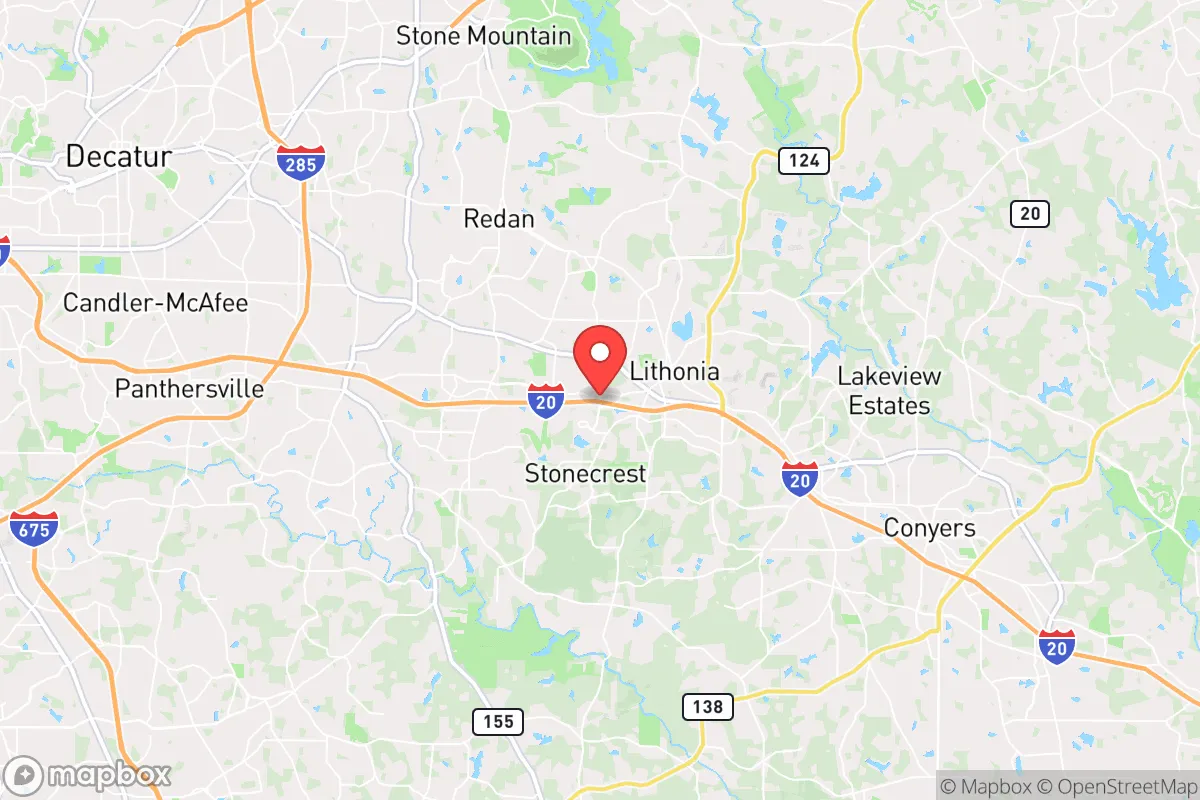
Stonecrest, Georgia offers a mixed but increasingly favorable environment for personal sovereignty, particularly for those who prioritize minimal government interference in daily life. Located in DeKalb County, this city of roughly 55,000 residents sits at a crossroads between the Atlanta metro's regulatory gravity and the more independent-minded rural areas to the east and south. For a conservative-leaning individual or family concerned with preserving autonomy, Stonecrest presents a workable base—provided you understand where the local and state lines of control actually fall.
Tax burden and regulatory posture: How Georgia's state framework limits local overreach
Georgia's state-level constitutional and statutory framework provides a meaningful buffer against the kind of municipal overreach that chokes personal freedom in many blue-state cities. The state's right-to-work law and limited government structure mean that Stonecrest cannot impose its own income tax, cannot create its own occupational licensing schemes that exceed state minimums, and cannot enact rent control or local price controls. Property taxes in DeKalb County run around 1.1% of assessed value, which is moderate for metro Atlanta but higher than in neighboring Rockdale or Henry counties. Sales tax in Stonecrest totals 8% (4% state, 4% local option), which is standard for the region. The city's zoning and business licensing are handled at the municipal level, but the state's Georgia Business License Act standardizes most requirements, preventing the kind of arbitrary local permit delays seen in more restrictive jurisdictions. For a prepper or survivalist, the key takeaway is that Georgia's state preemption laws—covering firearms, building codes, and land use—limit how much Stonecrest can deviate from a baseline of personal liberty.
Self-defense and gun law specifics: Georgia's strong preemption and Castle Doctrine protections
Georgia is a constitutional carry state since 2022, meaning no permit is required to carry a firearm openly or concealed for anyone legally allowed to possess one. Stonecrest, as a city, cannot enact its own gun control ordinances—state law preempts all local firearm regulations. This is a critical protection for anyone concerned about creeping restrictions. The state's Castle Doctrine and Stand Your Ground laws are among the strongest in the Southeast: there is no duty to retreat in any place where you are lawfully present, and the use of deadly force is presumed reasonable if someone unlawfully enters your occupied dwelling, vehicle, or place of business. DeKalb County does have a license-to-carry permitting process for those who want reciprocity with other states, but it is a shall-issue system—the sheriff cannot deny a permit to a qualified applicant. The county sheriff's office processes permits within 30 days on average. For those building a defensive capability, Georgia also allows private sales of firearms without background checks, though federal law still applies to licensed dealers. The state's preemption statute (O.C.G.A. § 16-11-173) is explicit: no local government can regulate the possession, ownership, transport, or carrying of firearms. This legal architecture means Stonecrest residents enjoy the same gun rights as someone in rural Georgia, regardless of the city's urban setting.
Self-reliance and homesteading viability: Lot sizes, zoning, and off-grid feasibility in Stonecrest
Stonecrest's zoning is a mixed bag for serious homesteading. The city was formed in 2016 from unincorporated DeKalb County, and its zoning code largely inherited the county's R-75 and R-100 residential districts, which require minimum lot sizes of 7,500 to 10,000 square feet. While that is not acreage for a full homestead, many lots in the city's eastern and southern edges (near the Rockdale County line) are 1 to 5 acres, particularly in subdivisions built before the 2000s. The city's zoning code does allow for agricultural uses on parcels of 2 acres or more, including keeping chickens, goats, and bees, though pigs and cattle are restricted. Rainwater collection is legal in Georgia, and the state's Water Stewardship Act encourages it, but DeKalb County requires a permit for systems over 1,000 gallons. Solar panels are permitted by right, but homeowners' associations (HOAs) in many subdivisions can restrict their placement—so check covenants before buying. Off-grid living (no utility connections) is technically possible on larger parcels, but the county's building code requires a septic system and well permit, and the city's minimum habitability standards mean you cannot legally live in a shed or RV as a permanent residence. For a prepper looking for a suburban buffer property with room for a garden, a few animals, and some defensive depth, Stonecrest's eastern fringe offers viable options. For true rural self-sufficiency, you would need to go farther east into Rockdale or Newton counties, where lot sizes of 5-20 acres are common and zoning is looser.
Personal liberties: Parental rights, medical autonomy, speech, and property protections
Georgia's legal climate provides strong protections for several key personal liberties. Parental rights are explicitly recognized in state law (O.C.G.A. § 20-2-780), giving parents the right to direct their children's education, including homeschooling without state approval—only a simple declaration of intent is required. Stonecrest is served by DeKalb County Schools, which is a large district with some high-performing magnet schools but also significant bureaucratic overhead. For parents concerned about curriculum content or medical mandates, the state's opt-out provisions for sex education and certain health screenings are robust. Medical autonomy is less settled: Georgia does not have a broad medical freedom law, but it does prohibit vaccine mandates by private employers in most cases (2023 law) and bans local governments from requiring proof of vaccination for public services. The state's Right to Try Act allows terminally ill patients access to experimental treatments. Free speech is protected under the Georgia Constitution, which has its own free speech clause that courts have interpreted broadly. There is no state-level hate speech law that criminalizes expression. Property rights are strong: Georgia is a non-disclosure state for real estate transactions (sale prices are not public record), and the state's eminent domain laws require "public use" and "just compensation," with a 2016 law limiting use for economic development. However, DeKalb County has a history of aggressive tax assessments, so property owners should be prepared to appeal valuations regularly. For a conservative individual, the overall legal environment in Stonecrest is more protective of personal autonomy than in most blue-state suburbs, but it is not a libertarian paradise—the county's bureaucracy and tax appetite require vigilance.
Compared to other metro Atlanta suburbs, Stonecrest offers a middle ground for personal sovereignty. It is less restrictive than Decatur or Atlanta proper, where local gun control and higher taxes are the norm, but it is not as free as rural counties like Banks or Union, where zoning is minimal and property taxes are half the rate. For a prepper or survivalist who needs to stay within commuting distance of Atlanta for work or supply chains, Stonecrest provides a defensible legal foundation—strong state preemption on guns, reasonable property rights, and a tax burden that, while not the lowest, is capped by state law. The city's relative newness (incorporated in 2016) means its local ordinances are still evolving, so residents must stay engaged with city council meetings to prevent creeping regulations. Overall, Stonecrest scores a B- on a personal sovereignty index—workable for the disciplined, but requiring active defense of the freedoms that Georgia's state framework provides.

* Values derived from national, state, county, city and local statistics and may differ in a specific area. Last updated: 2026-04-30T12:31:35.000Z
Narrative content on this page is AI-generated and may contain mistakes. Verify any details that matter before acting on them.
ReloMaps may earn a commission from affiliate links at no extra cost to you.

