 Popular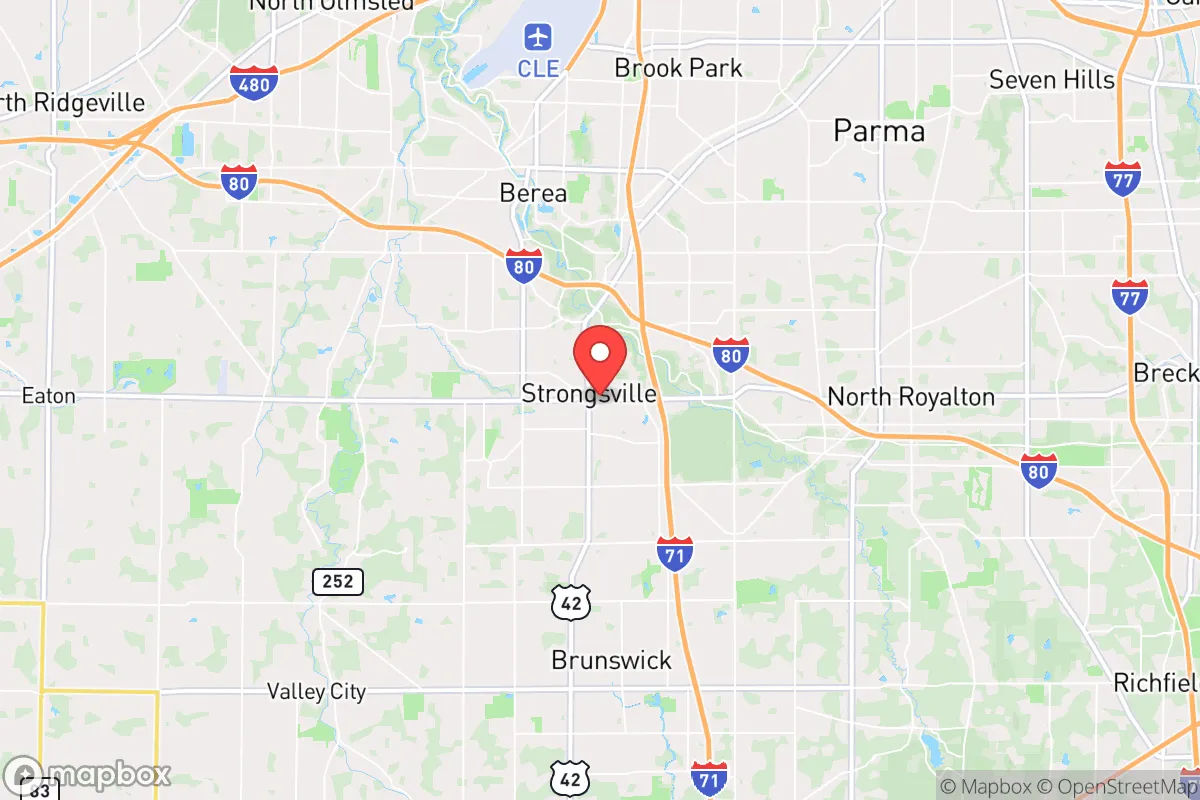
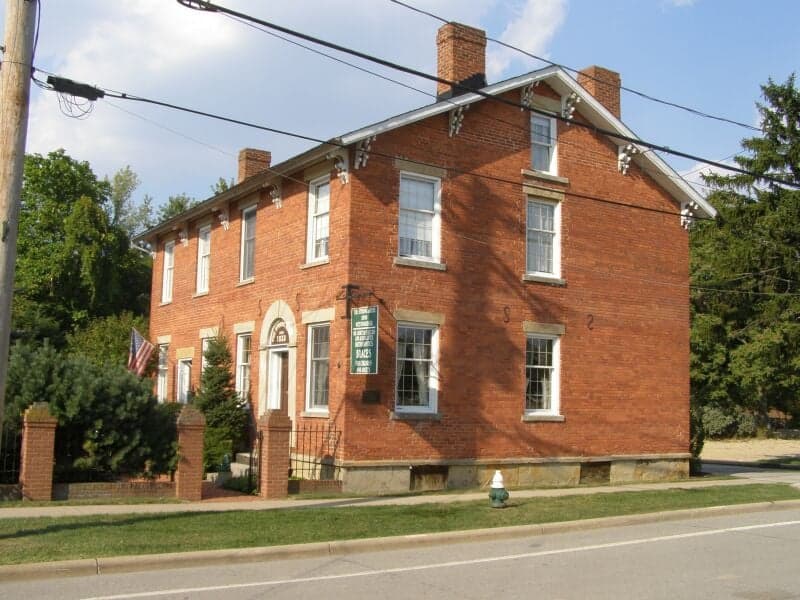
Photo: Wikipedia
Strategic Assessment of Strongsville, OH
Meaningful friction. Expect exposure to either population pressure, blast zones, or natural disaster risk. Consider buying a retreat property.
What does the Strategic Assessment tell us?
Our Strategic Assessment grades tactical survivability of an area. Major population centers, military targets, fallout zones, natural disasters, and border exposure all drive risk — lower exposure means a more defensible position in a crisis.
This is heavily inspired by Joel Skousen's Strategic Relocation book. Highly recommended you checkout the book ($)What does this tell us?
Our Strategic Assessment grades tactical survivability of an area. Major population centers, military targets, fallout zones, natural disasters, and border exposure all drive risk — lower exposure means a more defensible position in a crisis.
This is heavily inspired by Joel Skousen's Strategic Relocation book. Highly recommended you checkout the book ($)Strategic Pillars

Key Distances
Regional Safe Places
Below is our recommended "safe zones" in Ohio and the surrounding area based on our strategic heuristics. For most people, it's unrealistic to live in a “safe zone” full-time due to work, family or other personal reasons. They tend to be more rural. However, many of these areas are perfect for second homes and retreat properties that double as a vacation home or even a short-term rental.

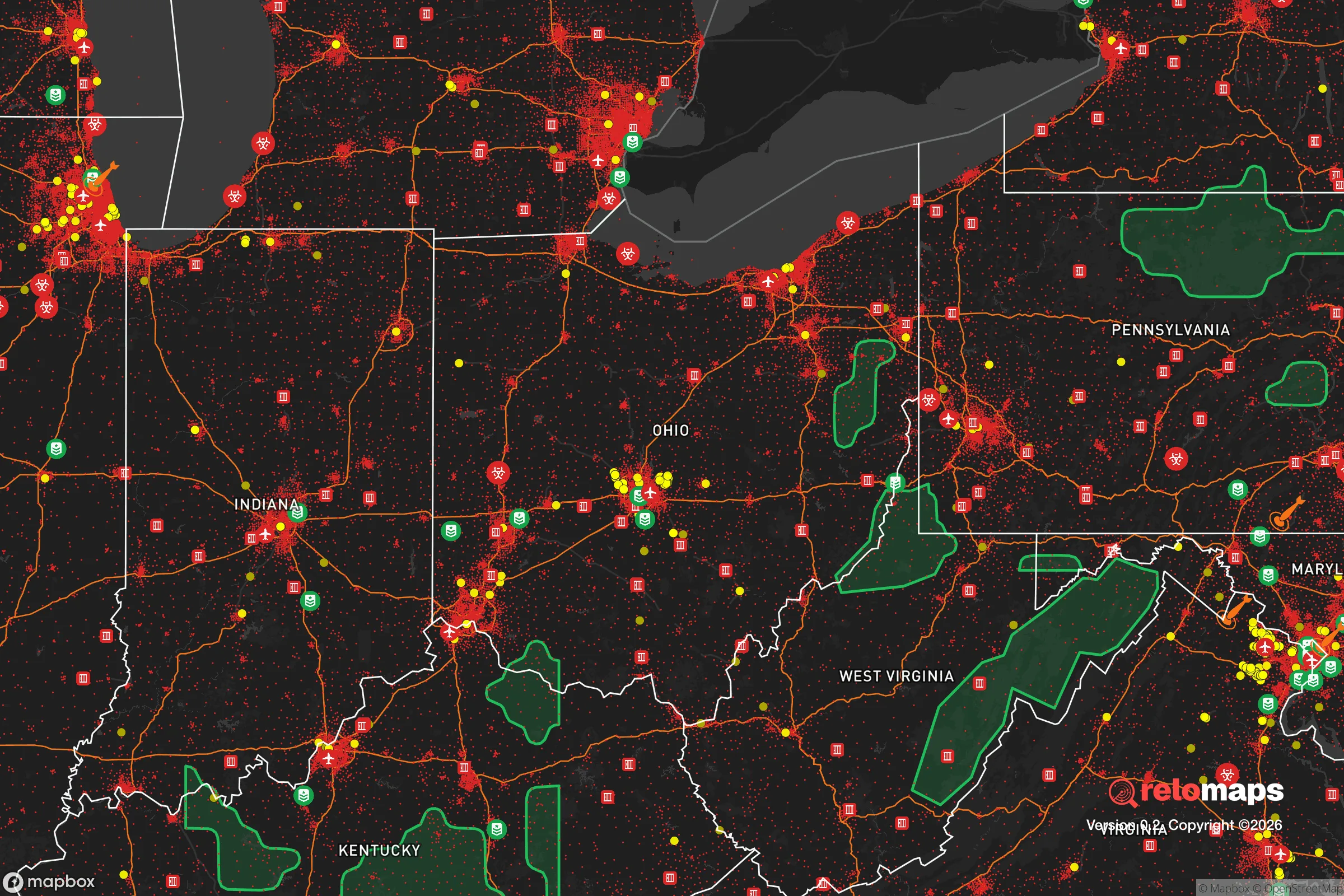


Important Note: For informational purposes only. This does not mean nothing bad ever happens in the green zones. Please use common sense. This is based on public data and modeled with AI. We tried to take a conservative approach but mistakes happen. We update this regularly as new information becomes available.
Solar Generator Recommendations
Backup power matters more here than in safer locations. We've picked three solar generators across budgets and capacity tiers — start with the budget unit if you only need a few essentials, or step up if you want to run a fridge and HVAC for days at a time.

Jackery Portable Power Station Explorer 300
Budget OptionPower on the Go: Weighing only 11 lbs, it's convenient to set up and store with book-sized foldable solar panels

BLUETTI Portable Power Station AC180
Designed for both indoor and outdoor scenarios, AC180 is highly capable as it has a robost capacity and continuous output power.

EF ECOFLOW DELTA Pro Ultra Power Station
Upgraded PickEcoFlow DELTA Pro Ultra is a whole-home energy system designed to grow with your family. Integrated with the Smart Home Panel 2, it scales to meet your evolving energy needs — keeping your home powered, intelligent, and secure through every stage of life.
We earn a commission, at no additional cost to you.
Strategic Assessment Analysis
Strongsville, Ohio, sits in a strategic sweet spot that few preppers fully appreciate: close enough to the economic engine of Cleveland to sustain a job and supply chain access, but far enough out that you’re not living in a primary target zone. This suburb of roughly 45,000 people, located along the I-71 corridor about 15 miles southwest of downtown Cleveland, offers a blend of suburban stability and rural-adjacent access that makes it a viable base for those thinking about long-term resilience. The local economy is anchored by the sprawling SouthPark Mall and a mix of light industrial employers, but the real value here is geographic—you’re positioned to bug in or bug out depending on the threat, with multiple escape routes and a population density that’s manageable without being isolated.
Geographic position and natural advantages for long-term stability
Strongsville’s location is its primary strategic asset. It sits on the edge of the Appalachian foothills, where the flat lake plains of northern Ohio give way to rolling, wooded terrain. This transition zone means you get decent drainage, varied topography for concealment, and access to multiple watersheds. The Rocky River runs through the eastern part of the city, and the nearby Cuyahoga Valley National Park—just a 10-minute drive east—offers over 33,000 acres of federal land that could serve as a natural buffer or retreat area in a crisis. The city itself is built on a ridge system that provides natural elevation advantages; most of Strongsville sits at 800–900 feet above sea level, which is high enough to avoid the flooding that plagues communities closer to Lake Erie. The soil is a mix of silt loam and clay, which is workable for small-scale gardening if you amend it properly, and the growing season runs roughly April through October—enough to supplement food stores with fresh produce. Water access is a mixed bag: the city draws from Lake Erie via the Cleveland Water system, which is a single-point-of-failure vulnerability, but many homes in the older sections have private wells that could be retrofitted with hand pumps. The tree canopy is dense, especially in the southern and eastern parts of town, offering natural cover and a degree of thermal signature reduction for anyone concerned about aerial surveillance or drone activity.
Risks, exposures, and proximity to fallout-relevant landmarks
No prepper analysis is honest without acknowledging the downsides, and Strongsville has several. The most obvious is its proximity to Cleveland—a major Great Lakes port, industrial hub, and potential target for both conventional and asymmetric threats. The city is roughly 15 miles from Cleveland Hopkins International Airport, which in a wartime or terror scenario would be a high-value target. The I-71 and I-80 interchange just north of Strongsville is a critical logistics node; in a grid-down or civil unrest event, that highway junction could become a chokepoint or a flashpoint for looting and refugee movement. There’s also the Perry Nuclear Power Plant about 35 miles northeast, on the Lake Erie shore. While that’s outside the typical 10-mile evacuation zone, prevailing winds from the west-northwest mean any airborne release could push contamination toward the Cleveland metro area, including Strongsville. The city itself has no major industrial hazards, but the surrounding region has a concentration of chemical plants, refineries, and rail lines that transport hazardous materials. The Norfolk Southern mainline runs through nearby Berea, carrying everything from crude oil to chlorine—a derailment could create a localized no-go zone. On the social side, Strongsville has seen a demographic shift over the past decade, with a growing Hispanic and Asian population, but it remains predominantly white (around 85%) and politically mixed—Cuyahoga County leans blue, but Strongsville itself has trended more conservative in local elections. That cultural tension could be a flashpoint if civil unrest escalates, though the city’s relatively high median household income ($85,000+) and low crime rate suggest a community that’s more likely to self-police than descend into chaos.
Practical resilience for a relocator: food, water, energy, and defensibility
For someone looking to set up a resilient household in Strongsville, the practical picture is workable but requires deliberate effort. Food security is the biggest challenge: the city is a food desert in the sense that most residents rely on chain grocery stores (Giant Eagle, Walmart, Heinen’s) that are vulnerable to supply chain disruptions. However, the surrounding area has a strong agricultural base—Medina County, just to the west, is one of Ohio’s top producers of corn, soybeans, and dairy. Building relationships with local farmers at the Strongsville Farmers Market (May through October) or directly through Medina County’s farm network is a smart move. For long-term storage, basements are common in older homes, and many have the space for a year’s worth of canned goods and freeze-dried supplies. Water is the more immediate vulnerability: if the Cleveland Water system goes down, you’re looking at a boil order or complete loss of pressure. A 1,500-gallon cistern or rain catchment system is feasible here given the average 38 inches of annual rainfall, but you’ll need to filter for the heavy clay sediment. Energy resilience is decent: natural gas is the primary heating fuel, and the grid is maintained by FirstEnergy, which has a mixed reliability record—outages during storms are common but usually short. Solar is viable, with the region averaging 160 sunny days per year, but you’ll need a battery bank to handle the overcast stretches. Defensibility is where Strongsville shines for a suburban setting. The street layout is a mix of cul-de-sacs and winding roads, especially in the newer developments south of Route 82, which creates natural chokepoints. The city’s police department is well-funded and has a good response time (under 5 minutes on average), but in a prolonged crisis, you’d want to rely on your own perimeter. The wooded lots and ravines in the eastern part of town offer good concealment, and the lack of high-density apartment complexes means fewer potential looters in a collapse scenario. The biggest practical downside is the lack of a defensible water source on most properties—you’re not going to have a pond or creek on a standard quarter-acre lot, so you’ll need to store or haul water.
The overall strategic picture for Strongsville is one of calculated trade-offs. It’s not a remote bug-out location, and it’s not a hardened fortress—but it is a place where a prepared individual or family can build a sustainable life that’s resilient to most shocks short of a direct nuclear strike on Cleveland. The key is to treat it as a base of operations rather than a final redoubt. Use the city’s infrastructure and economic opportunities to build your resources, establish relationships with the rural communities to the west and south, and have a secondary plan for a deeper retreat if the situation deteriorates beyond what a suburb can handle. The schools are solid (rated 7/10 or better on GreatSchools), the property taxes are manageable for Ohio (around 2.2% of assessed value), and the community has a strong sense of local identity that could coalesce into mutual aid networks. If you’re looking for a place that balances access to jobs and medical care with the ability to weather a moderate crisis, Strongsville deserves a serious look—just don’t mistake its suburban comfort for true self-sufficiency. Plan accordingly, and you’ll be ahead of 90% of the population.

* Values derived from national, state, county, city and local statistics and may differ in a specific area. Last updated: 2026-04-21T18:06:48.000Z
Narrative content on this page is AI-generated and may contain mistakes. Verify any details that matter before acting on them.
ReloMaps may earn a commission from affiliate links at no extra cost to you.

