 Popular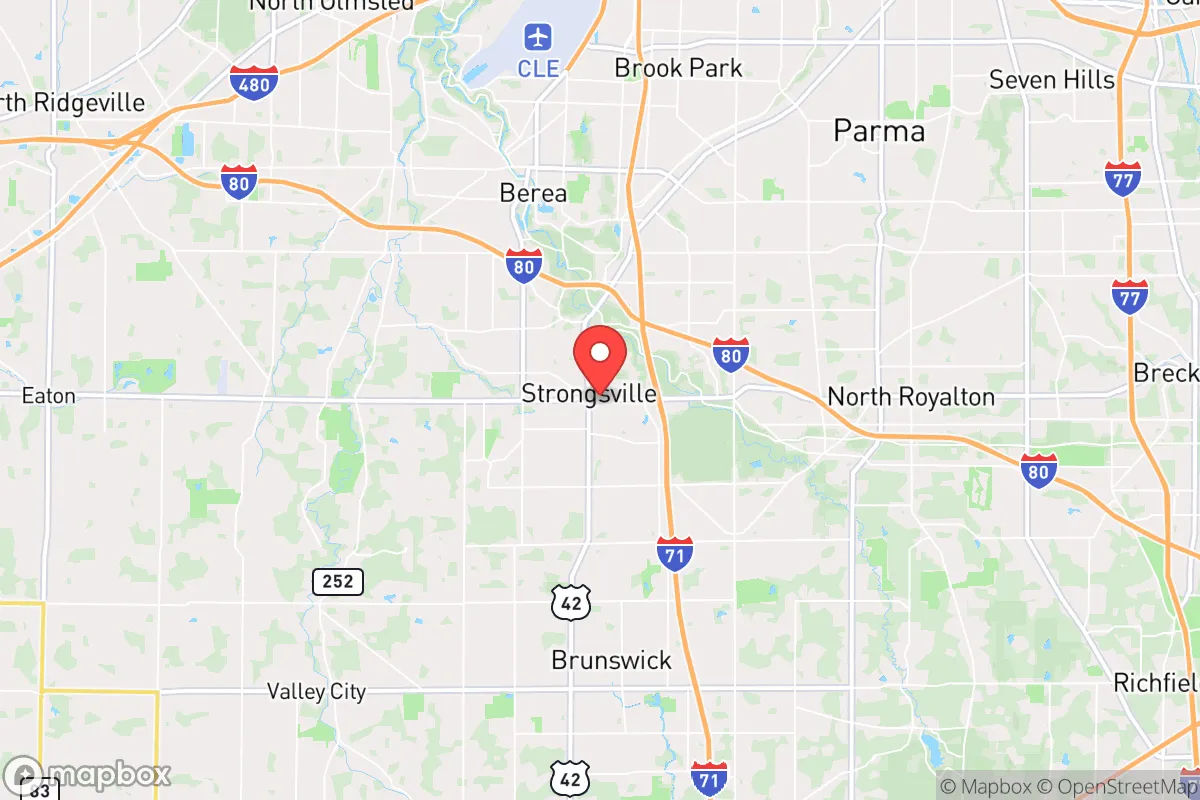
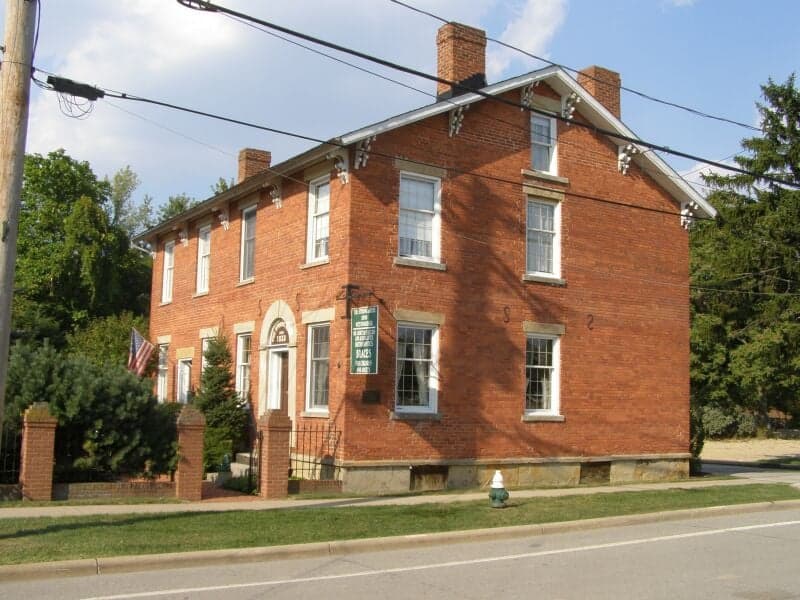
Photo: Wikipedia
Political ClimatePolitical Climate in Strongsville, OH
District shown is the primary district for this city’s centroid. Cities may span multiple districts.
Local Political AnalysisPolitical Analysis of Strongsville, OH
Strongsville has always been a solidly conservative community, and that hasn't changed much, even as the rest of Cuyahoga County has drifted left. The Cook PVI of R+5 tells you the baseline: this is a Republican-leaning suburb where folks tend to vote their values—lower taxes, Second Amendment rights, and local control. But if you've lived here as long as I have, you've seen the political winds shift, and not always for the better. The trajectory is a slow, steady creep toward the kind of progressive policies that have already hollowed out Cleveland and turned Lakewood into a social experiment. We're not there yet, but the warning signs are there if you're paying attention.
How it compares
Drive ten miles north and you hit Parma, which is a toss-up—still working-class, but trending blue thanks to union ties and a growing Hispanic population. Head east into Brecksville or Broadview Heights, and you're in similar R+5 territory, though those towns have held the line a bit better on zoning and school board politics. The real contrast is west to North Olmsted or south to Brunswick. North Olmsted has gone purple, with city council races increasingly dominated by candidates who talk about "equity" and "inclusion"—code words for the same top-down mandates that wrecked Cleveland's schools. Brunswick, on the other hand, is still reliably red, with a strong Tea Party influence that keeps the local government focused on fiscal restraint and property rights. Strongsville sits in the middle: conservative enough to feel safe, but close enough to the county's progressive machine that you can't get complacent.
What this means for residents
For the average family here, the political climate means your tax dollars are still mostly your own. The city council has resisted the kind of bloated social programs that neighboring suburbs have adopted, and the school board has kept curriculum focused on fundamentals rather than the latest DEI fads. But the pressure is real. Every election cycle, you see more mailers pushing "affordable housing" mandates and "climate action plans"—both of which are just backdoor ways to raise your property taxes and restrict what you can do with your own land. The county government in Cleveland is run by Democrats who see Strongsville as a revenue cow, and they've been chipping away at our autonomy through regional planning boards and transit levies. If you value the freedom to send your kids to a school that teaches math instead of activism, or the right to keep a firearm in your home without a registry, you need to stay engaged at the local level. The long-term worry is that a few more progressive council seats could flip the balance, and then you'll see the same overreach that's already bled into Lakewood and Shaker Heights.
Culturally, Strongsville still feels like a place where people wave from their driveways and the Fourth of July parade is a big deal. The policy distinctions that matter most are the ones you don't notice until they're gone: no mask mandates in schools after 2021, no sanctuary city nonsense, and a police department that still focuses on actual crime rather than social work. But I've watched the city council meetings get longer and more contentious as activists push for "diversity, equity, and inclusion" committees and "environmental justice" ordinances. The next five years will tell the story. If we hold the line, Strongsville stays a refuge of common sense in a county that's lost its way. If we don't, well, you can always look at what happened to Cleveland Heights and decide if that's the future you want.

State Political ClimatePolitical Climate in Ohio
State Political AnalysisPolitical Environment in the State
Ohio has long been the quintessential swing state, but over the past decade it has shifted decisively to the right, with Donald Trump winning it by 8 points in both 2016 and 2020, and by a similar margin in 2024. The state’s political center of gravity now sits firmly in the conservative camp, driven by a coalition of working-class voters in small cities and rural areas, though the old industrial strongholds in the northeast still keep it from being a deep-red lock. If you’re looking at Ohio as a potential home, you’re looking at a state that has moved from purple to a solid reddish-pink, with a Republican trifecta in Columbus that has been pushing a consistently conservative policy agenda for the better part of a decade.
Urban vs. rural divide
The political map of Ohio is a textbook case of the urban-rural split. The three big C’s — Cleveland, Columbus, and Cincinnati — are the blue islands in a sea of red. Cuyahoga County (Cleveland) and Franklin County (Columbus) together cast nearly a third of the state’s votes, and they are reliably Democratic, with margins of 30-40 points. Hamilton County (Cincinnati) has been trending blue as well, especially after the suburbs around it flipped. But outside those metro cores, the story is entirely different. Butler County (north of Cincinnati) and Delaware County (north of Columbus) are among the most reliably Republican suburbs in the nation, often voting +40 or more for the GOP. The rural counties in the southeast — places like Meigs, Monroe, and Noble — are deep red, with Trump winning them by 60-70 points. The real shift has been in the smaller industrial cities: Canton, Youngstown, and Lorain were once union Democrat strongholds, but they’ve swung hard to the right over the last three cycles, driven by cultural and economic populism. That’s the story of Ohio’s rightward tilt — not just rural growth, but the collapse of the old blue-collar Democratic base in places like Mahoning County, which went from +20 Obama in 2012 to +8 Trump in 2020.
Policy environment
Ohio’s policy environment is broadly conservative, with a few notable wrinkles. The state income tax has been cut repeatedly under Governor Mike DeWine and the GOP legislature, with the top rate now at 3.5% — down from nearly 5% a decade ago. There is no state-level property tax cap, but local levies are common and can be high, especially in the better school districts. The regulatory climate is business-friendly, with Ohio being a right-to-work state in practice if not by law (a 2011 law was repealed by referendum, but the culture remains). On education, Ohio has one of the strongest school choice programs in the country, with the EdChoice voucher system allowing students in low-performing districts to attend private or parochial schools — a major plus for parents who want options. Healthcare policy is a mixed bag: the state expanded Medicaid under Obamacare, which remains a sore point for many conservatives, but there is no state-level individual mandate. Election laws have been tightened: voter ID is now required, drop boxes are limited to one per county, and early voting windows have been standardized. It’s not Texas-level strict, but it’s a far cry from the chaos of 2020.
Trajectory & freedom
On the freedom front, Ohio has been moving in the right direction on several key fronts, though there are some concerning signs. The biggest win for personal liberty in recent years was the passage of constitutional carry in 2022, which eliminated the requirement for a permit to carry a concealed firearm. Ohio is now a shall-issue state with no duty to retreat in self-defense situations. On parental rights, the state passed the Parents’ Bill of Rights in 2023, requiring schools to notify parents of any changes to a child’s health or well-being, and banning transgender procedures for minors — a major victory for families. Medical autonomy took a hit with the passage of Issue 1 in 2023, which enshrined abortion rights in the state constitution, but the legislature has since passed a law restricting abortion after viability and requiring parental consent for minors. Property rights are generally strong, with no statewide rent control and limited eminent domain abuse. The biggest red flag is the tax burden: while income taxes have fallen, sales taxes and local property taxes remain high, and the state’s overall tax burden is still above the national average. There’s also a growing concern about government overreach in health mandates — the state did impose some COVID-era restrictions, though they were lifted earlier than in many blue states.
Civil unrest & political movements
Ohio has seen its share of political flashpoints. The 2020 protests in Columbus and Cincinnati over George Floyd’s death were large but largely peaceful, though there were instances of property damage and looting in the Short North and downtown areas. The anti-lockdown protests at the Statehouse in 2020 were massive, with thousands of Ohioans rallying against Governor DeWine’s stay-at-home orders — a clear sign of the state’s libertarian streak. Immigration politics are relatively quiet compared to border states, but there have been tensions in Springfield over the influx of Haitian migrants, which became a national story in 2024. Election integrity remains a hot-button issue: the 2020 election in Ohio was widely seen as clean, but there were controversies over ballot drop boxes and mail-in voting that led to the reforms mentioned earlier. There is no serious secession or nullification movement, but the Ohio Freedom Alliance and similar groups are active in pushing for more local control and resistance to federal overreach. The most visible political movement is the MAGA-aligned grassroots, which has successfully primaried several establishment Republicans in recent cycles, including the ouster of House Speaker Larry Householder in 2021.
Projection
Over the next 5-10 years, Ohio is likely to become more, not less, conservative. The demographic trends are working in the GOP’s favor: the state’s population is aging, with the fastest-growing counties being the exurban and rural ones like Delaware and Warren, while the urban cores of Cleveland and Cincinnati are stagnant or shrinking. In-migration is modest, but the people coming in tend to be from other Midwestern states with similar political leanings. The biggest wild card is Columbus, which is growing fast and trending younger and more diverse — it could become a blue anchor that offsets some of the rural gains, but it’s not enough to flip the state back to purple. The legislature will likely continue to push conservative priorities: more tax cuts, expanded school choice, and further restrictions on abortion and transgender rights. The biggest risk for conservatives is complacency — if the GOP takes the state for granted, there could be a backlash on issues like Medicaid expansion or local tax hikes. But for now, the trajectory is clear: Ohio is a state where conservative values are ascendant, and that’s likely to continue for the foreseeable future.
For a new resident, the bottom line is this: Ohio offers a solidly conservative policy environment with strong protections for gun rights, parental authority, and school choice, all at a relatively low cost of living. You’ll find a state that respects personal liberty on most fronts, though you’ll still pay your share in taxes and deal with the occasional overreach from Columbus. If you’re looking for a place where your values are reflected in the laws and your vote actually counts, Ohio is a strong bet — just be prepared for the winters and the fact that the big cities will always vote the other way.
* Values derived from national, state, county, city and local statistics and may differ in a specific area. Last updated: 2026-04-21T18:06:48.000Z
Narrative content on this page is AI-generated and may contain mistakes. Verify any details that matter before acting on them.
ReloMaps may earn a commission from affiliate links at no extra cost to you.

