Demographics of Sullivan's Island, SC
Affluence Level in Sullivan's Island, SC
An elite concentration of wealth — high incomes, strong home values, advanced degrees, and minimal poverty signal a top-tier socioeconomic profile.
People of Sullivan's Island, SC
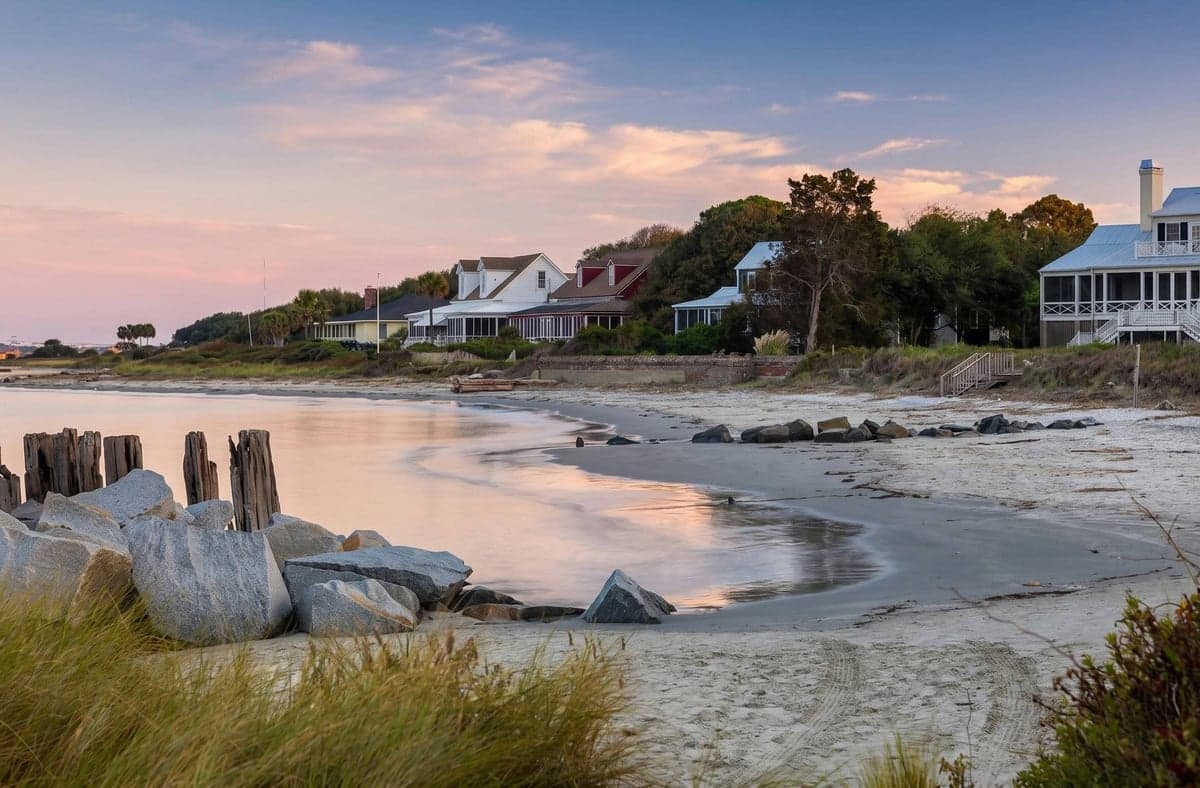
Sullivan’s Island today is a small, affluent coastal community of 2,127 residents, characterized by its overwhelming racial and economic homogeneity. The population is 97.0% white, with a negligible foreign-born share of 0.8%, and an exceptionally high 87.2% of adults holding a college degree. This is a place defined by generational wealth, seasonal tourism, and strict preservationist values, where the human history is less about waves of diverse settlement and more about a continuous, exclusive lineage of European-descended families and their modern, high-income successors.
How the city was settled and grew
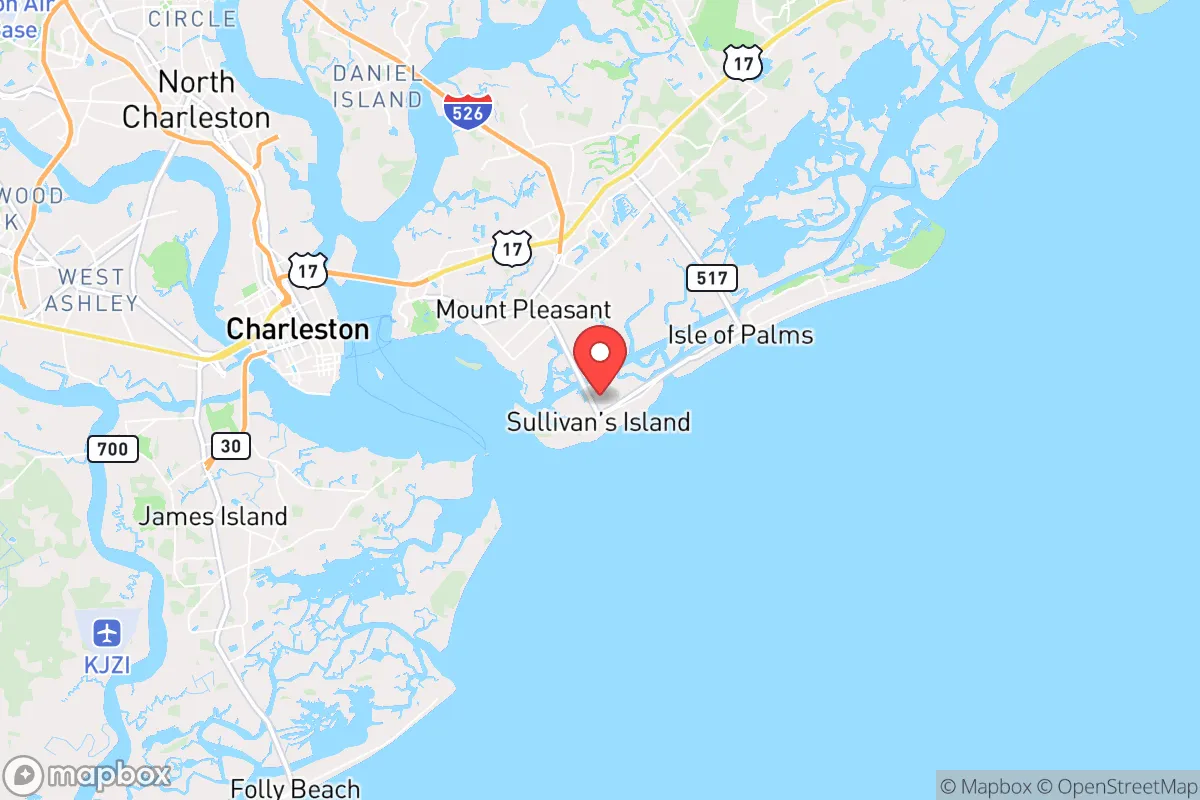
Sullivan’s Island’s human history begins not with a founding population in the traditional sense, but with its role as a strategic military and quarantine outpost. The island was originally part of a 17th-century land grant to Captain Florence O'Sullivan, who served as the colony's surveyor general. For most of the 18th and 19th centuries, the island’s permanent population was sparse and utilitarian: a small number of harbor pilots, fishermen, and the families who operated Fort Moultrie. The island’s most significant historical population event was the forced arrival of enslaved Africans, who were quarantined at the island’s “pest house” before being sold in Charleston. This grim chapter left no permanent Black community; by the 20th century, the Black population had dwindled to near zero. The first true residential wave came in the late 19th and early 20th centuries, when wealthy Charleston families built summer cottages along Middle Street and Station 16, establishing the island as a seasonal escape. These were exclusively white, Protestant families of British and German descent, and their descendants still own many of the historic properties. The island’s permanent year-round population remained tiny—under 500 people—until the post-World War II era.
Modern era (post-1965)
The modern demographic character of Sullivan’s Island was cemented after 1965, but not through immigration. The Hart-Cellar Act had virtually no effect here; the foreign-born population remains below 1%. Instead, the island was reshaped by domestic in-migration of wealthy professionals from the Northeast and Midwest, drawn by the island’s proximity to Charleston and its strict building codes that preserved its low-density, historic character. The neighborhoods of Station 22 and Station 26 saw the most new construction during the 1980s and 1990s, as large, modern homes replaced smaller cottages. This wave was overwhelmingly white and college-educated, accelerating the island’s already high income and education levels. The Hispanic population, at 2.1%, is almost entirely composed of service workers and landscapers who commute from the mainland; they do not form a residential community on the island. The East/Southeast Asian population (0.4%) is negligible, and the Indian-subcontinent population is zero. The island’s racial composition has actually become more white since 2000, as rising property values have priced out the few remaining non-white families who had lived in older, smaller homes near Ion Avenue.
The future
The demographic trajectory of Sullivan’s Island is one of intensifying homogenization. The population is aging—the median age is over 50—and the island is becoming a retirement and second-home destination for affluent white professionals. There is no growth in immigrant communities; the foreign-born share is static and will likely remain below 1% due to the island’s lack of rental housing, employment base, and affordable housing stock. The small Hispanic service population will continue to commute from the mainland, as no enclave exists on the island. The next 10-20 years will see the island become even more exclusive, with older cottages being replaced by larger, more expensive homes. The only potential demographic shift is a slight increase in younger families who can afford the entry price, but they will be demographically identical to the current population. The island is not tribalizing into distinct enclaves—it is simply becoming a more uniform, high-income, white, and college-educated community.
For a conservative-leaning individual or family considering a move, Sullivan’s Island offers a stable, safe, and culturally cohesive environment with virtually no crime, excellent schools, and a strong sense of historic preservation. However, the trade-off is clear: this is a place of extreme demographic uniformity, where diversity is measured in the difference between a historic cottage and a new build, not in the backgrounds of its people. The island is becoming a gilded enclave for the wealthy, and anyone moving here should expect a community that values continuity, privacy, and property rights above all else.

* Values derived from national, state, county, city and local statistics and may differ in a specific area. Last updated: 2026-04-23T03:05:32.000Z
Narrative content on this page is AI-generated and may contain mistakes. Verify any details that matter before acting on them.
ReloMaps may earn a commission from affiliate links at no extra cost to you.

