Political ClimatePolitical Climate in Sullivan's Island, SC
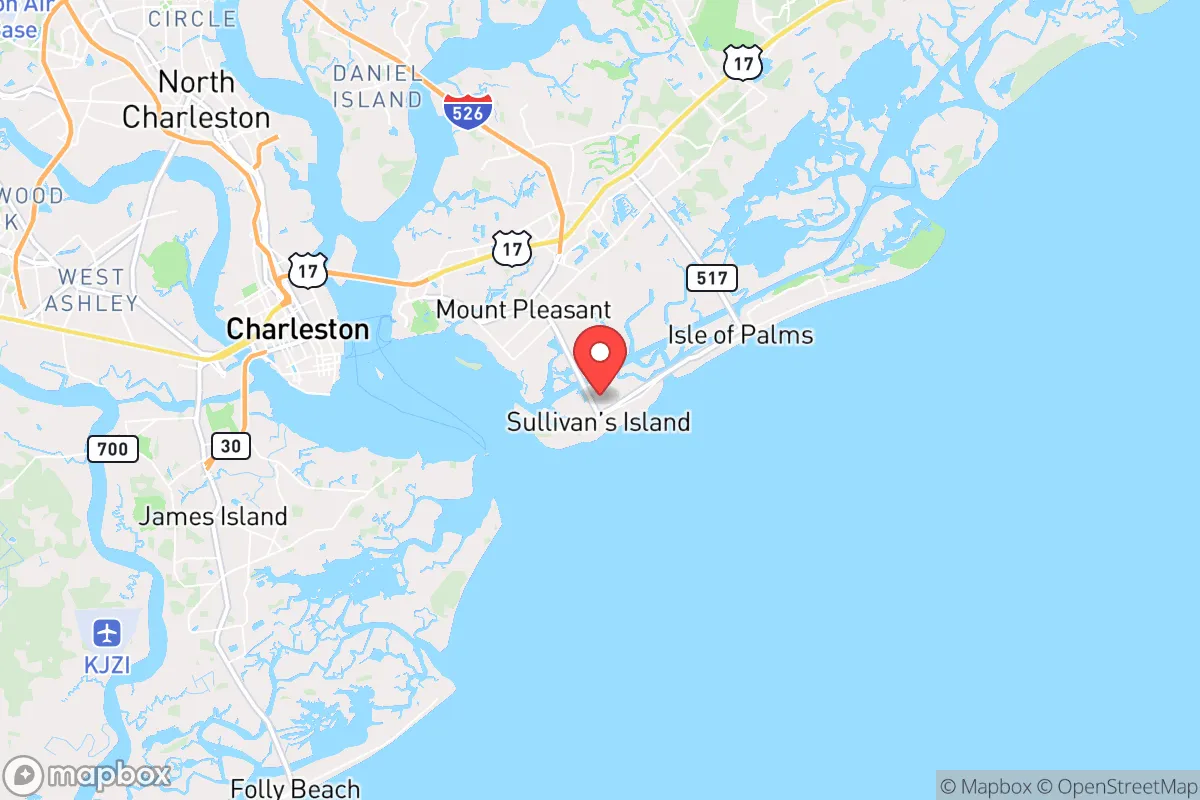
District shown is the primary district for this city’s centroid. Cities may span multiple districts.
Local Political AnalysisPolitical Analysis of Sullivan's Island, SC
Sullivan’s Island has long been a quiet, conservative stronghold, where folks value their privacy, their property rights, and a government that stays out of their business. The Cook PVI rating of R+6 tells you the island leans reliably Republican, but that number doesn’t capture the full story—this place has been shifting under the radar. In the last decade or so, you’ve seen a slow creep of progressive influence, especially from transplants coming out of Charleston or Mount Pleasant, bringing with them a more “woke” mindset that clashes with the island’s traditional hands-off ethos. It’s not a full-blown takeover yet, but the trajectory is concerning if you believe, like I do, that local control and personal freedoms are the bedrock of a good community.
How it compares
Drive ten minutes inland to Mount Pleasant, and you’re in a different world—that town has swung noticeably left in recent years, with younger families and tech workers pushing a more progressive agenda on zoning, schools, and even mask mandates. Sullivan’s Island, by contrast, has held the line better, but you can feel the pressure. Head north to Isle of Palms, and it’s a similar story: still conservative, but the cracks are showing. The real contrast is with Charleston proper, which is a deep blue stronghold now, where city council debates are all about bike lanes, equity initiatives, and limiting short-term rentals. On Sullivan’s Island, we still have a “live and let live” vibe, but the county-level politics are getting more tangled, and you can see the same playbook being tried here—more regulations on beach access, tighter building codes, and a push for “inclusivity” that often means less freedom for property owners.
What this means for residents
For the folks who’ve been here for generations, the biggest worry is government overreach into everyday life. We’ve already seen battles over vacation rental caps and noise ordinances that feel less about common sense and more about controlling how you use your own land. The school board and town council elections are where the rubber meets the road—if you’re not paying attention, you’ll wake up with new rules on everything from parking to septic systems, all justified with that “for the greater good” language that never ends well. The good news is that the island’s small population means your vote actually counts, and the old guard still holds most seats. But the long-term trend is clear: if the progressive wave from Charleston keeps washing over, you’ll see more restrictions on personal choices, higher taxes to fund pet projects, and a loss of that independent character that makes Sullivan’s Island special.
Culturally, the island still feels like a throwback—no chain stores, no stoplights, and a strong sense that your neighbor’s business is their own. But the policy battles are heating up. The push for “affordable housing” mandates and environmental restrictions on new construction are already testing property rights. And the recent debates over beach renourishment funding have shown how outside interests can override local voices. If you’re thinking of moving here, just know that the political climate is still solidly conservative, but it’s not immune to the same trends that have reshaped other coastal towns. Keep an eye on the town council meetings—that’s where the real fight for your freedoms will play out.

State Political ClimatePolitical Climate in South Carolina
State Political AnalysisPolitical Environment in the State
South Carolina has long been a reliably red state, but the political climate here is more layered than a simple "Republican" label suggests. The state leans solidly Republican at the statewide level, with a dominant coalition of rural conservatives, evangelical Christians, and a growing number of fiscally conservative transplants from the Northeast and Midwest. Over the last 10-20 years, the trajectory has been a steady march rightward on cultural and fiscal issues, though the rapid growth of the coastal and Upstate metros is beginning to introduce subtle, localized shifts that any newcomer should watch closely.
Urban vs. rural divide
The political map of South Carolina is a classic story of red countryside versus blue-ish cities, but the blue is far from deep. The state’s two major population centers—Charleston and Greenville—are both Republican-leaning, but with distinct flavors. Charleston County, driven by the historic peninsula and its tourism economy, is the most competitive turf in the state; it voted for Joe Biden in 2020 by a narrow margin, but the surrounding suburbs like Mount Pleasant and Summerville are reliably red. Greenville County, by contrast, is a conservative stronghold that has only gotten redder as the Upstate’s manufacturing and tech boom draws in families from high-tax states. The rural counties—Oconee, Pickens, Anderson, and Lexington—routinely deliver 70-80% of their votes to Republican candidates. The only real blue pockets are in the majority-minority corridor of the Lowcountry, including Beaufort and Richland County (Columbia), where Democratic turnout is concentrated. But even Columbia’s suburbs, like Irmo and Lexington, are deeply red. The urban-rural divide here isn’t a battle between left and right; it’s a battle between shades of red.
Policy environment
South Carolina’s policy environment is a mixed bag for a conservative. On the plus side, the state has no state income tax on Social Security benefits, a flat income tax rate that was recently cut from 7% to 6.4% (with further reductions scheduled), and a relatively low property tax burden thanks to the Act 388 of 2006, which exempts owner-occupied homes from school operating taxes. The regulatory posture is business-friendly, with a right-to-work law and a tort reform system that caps noneconomic damages. On education, the state has expanded school choice through the Education Scholarship Trust Fund program, which provides state-funded accounts for private school tuition, though it’s still limited compared to Florida or Arizona. Healthcare is a sore spot: South Carolina did not expand Medicaid under the Affordable Care Act, which keeps premiums higher for those buying on the individual market, but it also means the state hasn’t taken on the long-term fiscal liability. Election laws are solid—voter ID is required, and the state has cleaned up its voter rolls regularly. However, the state’s alcohol laws remain archaic (no Sunday sales before noon in many counties, and some counties are still dry), which feels like an unnecessary government overreach into personal choice.
Trajectory & freedom
On the freedom front, South Carolina has been moving in the right direction, but not without some stumbles. The biggest win for personal liberty in recent years was the Constitutional Carry law (2024), which allows law-abiding citizens to carry a concealed firearm without a permit. This was a major step for Second Amendment rights. On parental rights, the state passed the Parents’ Bill of Rights (2023), which requires schools to notify parents about medical services and prohibits instruction on sexual orientation or gender identity in K-5 classrooms. That’s a strong signal that the state values family authority over government indoctrination. However, the state’s medical marijuana bill has stalled repeatedly, and recreational cannabis remains illegal—a clear government overreach into personal medical choices. On property rights, the state has a strong homestead exemption and no statewide zoning mandates, but local governments in places like Charleston and Mount Pleasant have imposed strict short-term rental regulations that limit what you can do with your own home. The tax burden is still too high for a state that prides itself on being low-tax; the sales tax rate of 6% (plus local add-ons) hits lower-income families harder than a flat income tax does.
Civil unrest & political movements
South Carolina has seen its share of political flashpoints, but they’ve been more about cultural battles than widespread civil unrest. The Confederate flag removal from the Statehouse grounds in 2015, following the Charleston church shooting, was a watershed moment that divided the state—many conservatives saw it as a surrender to progressive pressure, while others saw it as a necessary step to move forward. Since then, the state has seen organized activist movements on both sides. On the right, the Moms for Liberty chapter in Greenville has been highly active in school board meetings, pushing back against critical race theory and LGBTQ curriculum. On the left, the Indivisible groups in Columbia and Charleston have organized protests for abortion access and racial justice, but they remain a minority voice. Immigration politics are relatively quiet here compared to border states; South Carolina has no sanctuary cities, and the state legislature passed a law in 2024 requiring law enforcement to cooperate with ICE. Election integrity controversies have been minimal—the state’s voter ID law and paper ballot system are widely trusted. The biggest visible flashpoint a new resident would notice is the ongoing debate over short-term rentals in coastal towns like Folly Beach and Isle of Palms, where locals clash with investors over neighborhood character and housing affordability.
Projection
Over the next 5-10 years, South Carolina is likely to remain a solidly red state, but the margins will tighten in the coastal and Upstate metros as in-migration continues. The state is adding about 100,000 new residents per year, many from New York, New Jersey, and California. These transplants are generally conservative-leaning on taxes and crime, but they bring more moderate views on social issues like marijuana and LGBTQ rights. The Greenville-Spartanburg corridor is booming with manufacturing jobs from companies like BMW and Volvo, which will keep the Upstate red. The Charleston area, however, is becoming more purple as younger professionals and remote workers move in. The state’s Republican supermajority in the legislature is likely to hold, but you may see more intra-party fights between the traditional establishment and the more populist, liberty-minded wing. The biggest wildcard is the education savings account program—if it expands significantly, it could reshape the political landscape by empowering parents and weakening the teachers’ union influence. For someone moving in now, expect a state that remains culturally conservative on family issues and gun rights, but with a growing libertarian streak on economic freedom and personal autonomy.
For a conservative-leaning individual or family, South Carolina offers a strong foundation: low taxes, solid gun rights, parental control in schools, and a business-friendly climate. The trade-offs are a healthcare system that’s less robust than in expansion states, and local government overreach in some coastal areas. If you’re looking for a state that respects your right to live your life without heavy-handed government interference, South Carolina is a solid bet—just keep an eye on the coastal counties, where the influx of out-of-state money is starting to shift the political winds. The Upstate and the Midlands are where you’ll find the most stable, freedom-oriented communities.
* Values derived from national, state, county, city and local statistics and may differ in a specific area. Last updated: 2026-04-23T03:05:32.000Z
Narrative content on this page is AI-generated and may contain mistakes. Verify any details that matter before acting on them.
ReloMaps may earn a commission from affiliate links at no extra cost to you.

