Photo: Wikipedia
Political ClimatePolitical Climate in Summerset, SD
District shown is the primary district for this city’s centroid. Cities may span multiple districts.
Inherited from parent state — no local data available.
Local Political AnalysisPolitical Analysis of Summerset, SD
Summerset, South Dakota, is about as reliably conservative as it gets, with a Cook Partisan Voting Index of R+15 that puts it deep in the red column. This isn't a purple suburb or a swing district—it's a place where Republican candidates routinely win by double digits, and the local culture reflects that. Over the past decade, the political lean has only hardened, driven by an influx of folks fleeing the chaos of bigger cities and looking for a place where common sense still holds sway. The trajectory here is steady: more of the same, with a growing wariness of any outside pressure to change what's working.
How it compares
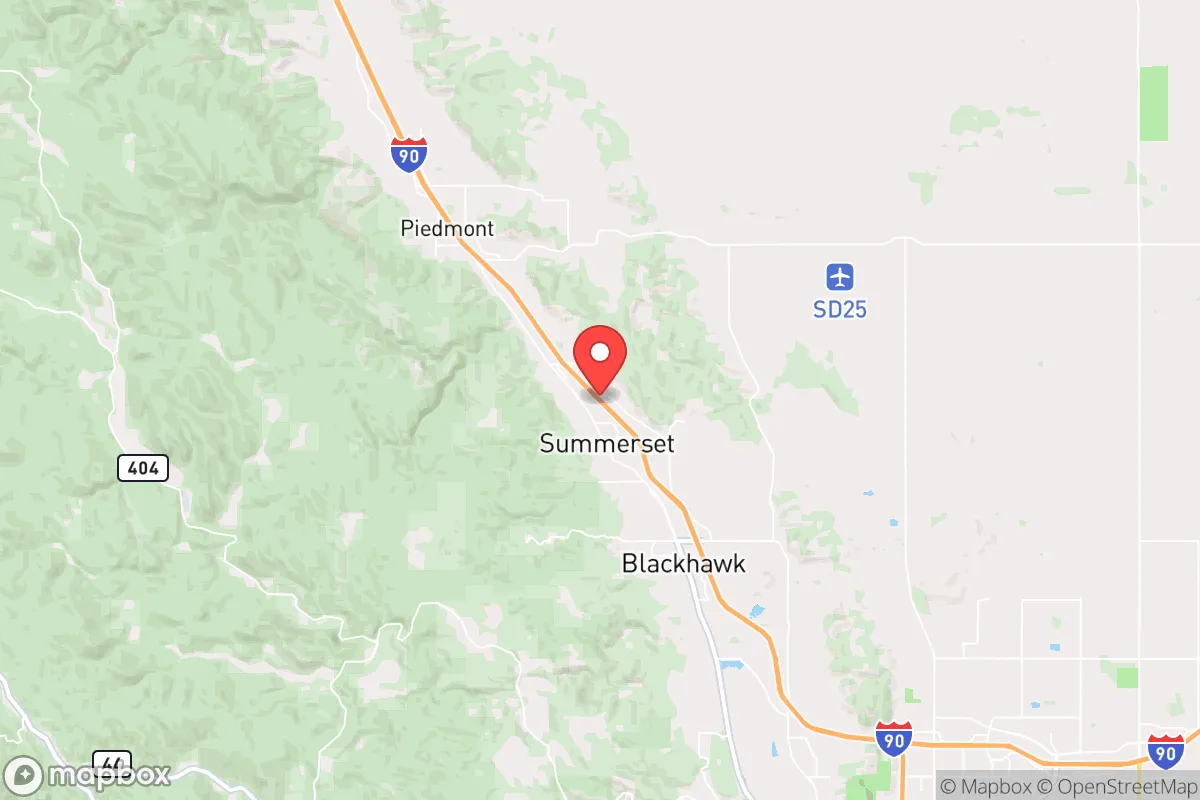
Drive twenty minutes east to Rapid City, and you'll start to feel the difference. Rapid City has a more mixed political scene, with pockets of progressive activism around the downtown area and the university—think bike lanes, diversity initiatives, and the occasional city council debate over zoning for affordable housing. Summerset, by contrast, is a world apart. Neighboring towns like Piedmont and Black Hawk lean conservative too, but Summerset stands out for its sheer consistency. There's no real progressive foothold here; the local school board, county commission, and even the volunteer fire department are filled with folks who believe in limited government, personal responsibility, and keeping the federal government out of your backyard. If you're looking for a place where your vote actually counts toward preserving traditional values, this is it.
What this means for residents
For the people who live here, the political climate means a lot of things you don't have to think about. You won't see mask mandates or vaccine passports being debated at town hall meetings. The local sheriff isn't going to enforce federal gun laws he disagrees with. Property taxes stay low because the county isn't chasing after every state grant that comes with strings attached. But it also means you need to be aware of the pressure coming from outside. Every few years, there's a push from state-level progressives in Pierre or from national groups to bring "equity" initiatives into the schools or to impose stricter environmental regulations on the ranches and small businesses here. So far, Summerset has held the line, but it takes vigilance. The long-term outlook depends on keeping the local elections focused on local issues—not on whatever the national news cycle is screaming about.
One cultural distinction that sets Summerset apart is the strong sense of self-reliance. You won't find a lot of homeowner's associations telling you what color to paint your fence or how high your grass can be. The local government's philosophy is basically: leave people alone unless they're hurting someone else. That extends to property rights, gun rights, and even how you raise your kids. There's a quiet pride in that independence, but it also means residents are expected to handle their own problems without running to the county for help. If you're the type who values freedom over convenience, you'll fit right in. Just don't expect the government to solve your problems—that's your job.

State Political ClimatePolitical Climate in South Dakota
State Political AnalysisPolitical Environment in the State
South Dakota is one of the most reliably conservative states in the nation, with a deep-rooted Republican lean that has only intensified over the past two decades. The state hasn’t voted for a Democratic presidential candidate since 1964, and in 2024, Donald Trump carried it by over 30 points. The dominant coalition is a blend of rural traditionalists, libertarian-leaning ranchers, and a growing number of conservative transplants fleeing blue states. Over the last 10-20 years, the GOP has tightened its grip on every level of government—Republicans hold supermajorities in both legislative chambers and every statewide office. The shift is driven less by demographic change and more by a steady rightward march, as even historically competitive areas like Minnehaha County (Sioux Falls) and Pennington County (Rapid City) now vote solidly red.
Urban vs. rural divide
The political map of South Dakota is stark but not surprising. The eastern corridor, anchored by Sioux Falls (Minnehaha County) and Brookings, is the most moderate part of the state—Sioux Falls has a growing professional class and a small but visible progressive presence, yet it still voted +12 for Trump in 2024. Rapid City in the west is reliably conservative, with Pennington County trending redder as military retirees and Second Amendment enthusiasts move in. The real engine of the state’s conservatism is the vast rural expanse: counties like Harding, Perkins, and Jones routinely deliver 85-90% of their votes to Republicans. The only notable exception is Oglala Lakota County on the Pine Ridge Reservation, which votes heavily Democratic—but its population is small and turnout is low. Vermillion, home to the University of South Dakota, leans slightly left but is dwarfed by the surrounding farm counties. The urban-rural gap is widening: as Sioux Falls grows, it becomes a bit more purple, but the rural vote is so lopsided that the state’s overall lean keeps getting redder.
Policy environment
South Dakota’s policy environment is a conservative dream, with low taxes, minimal regulation, and a strong emphasis on individual liberty. There is no state income tax, no corporate income tax, and no personal property tax on vehicles or business equipment. Property taxes are moderate, and the state has a strict spending cap tied to inflation and population growth. The regulatory posture is aggressively pro-business: occupational licensing is minimal, and the state has no statewide building code outside of floodplains. Education policy is a hot topic—the state passed a universal school voucher-like program in 2025 (the "Education Freedom Account" law) that lets parents use public funds for private or homeschool expenses. Healthcare is a mixed bag: the state did expand Medicaid under Trump-era waivers, but it also passed a law in 2023 banning gender transition procedures for minors, with strong parental consent protections. Election laws are among the most secure in the nation: voter ID is required, same-day registration is not allowed, and the state uses paper ballots with hand-count audits in many precincts. There is no mail-in voting unless you have an excuse, and drop boxes are limited. The overall message is clear: the state trusts its citizens more than it trusts the government.
Trajectory & freedom
South Dakota is becoming more free by almost any measure, especially when compared to its neighbors or the coasts. The 2023 legislative session was a landmark for personal liberty: the state passed a permitless carry law (constitutional carry), banned COVID-19 vaccine mandates for both public and private employers, and enacted a "medical freedom" law that prohibits discrimination based on vaccination status. In 2024, the legislature passed a law protecting parents’ rights to opt their children out of any school curriculum or activity without penalty. Property rights were strengthened with a new law limiting eminent domain for carbon pipeline projects—a direct response to the Summit Carbon Solutions controversy that saw many landowners fighting condemnation. On the flip side, the state has tightened restrictions on abortion: a near-total ban was passed in 2023 (with exceptions for rape, incest, and life of the mother), and a 2025 law banned the mailing of abortion pills. The state also passed a law in 2024 prohibiting local governments from enacting sanctuary policies for illegal immigrants. The trajectory is clearly toward more individual sovereignty, less government overreach, and a firm stance against federal mandates. If you value the freedom to live your life without bureaucratic interference, South Dakota is moving in the right direction.
Civil unrest & political movements
South Dakota is remarkably stable compared to states like Oregon or Minnesota, but it has its flashpoints. The most visible political movement in recent years has been the landowner resistance to carbon pipelines, particularly the Summit Carbon Solutions project. Farmers and ranchers across the eastern part of the state—from Huron to Yankton—have organized mass protests at county commission meetings, with some even forming armed patrols to block surveyors. This is a rare issue that unites libertarian ranchers with environmental activists, but the dominant sentiment is property rights. There have been no major left-wing protests in Sioux Falls or Rapid City since the 2020 BLM demonstrations, which were small and quickly fizzled. The state has no sanctuary cities, and immigration politics are a non-issue—the foreign-born population is under 4%. There is a growing "constitutional county" movement in places like Custer and Lawrence County, where local sheriffs have declared they will not enforce federal gun laws or red flag orders. Election integrity is a settled issue here: the 2020 and 2022 elections were audited and certified without controversy, and the state has passed laws to further secure the process. A new resident would notice that political disagreements are handled through the ballot box and the legislature, not through street protests or civil disobedience.
Projection
Over the next 5-10 years, South Dakota is likely to become even more conservative, driven by two forces: in-migration of conservatives from blue states and the continued exodus of young liberals to larger cities. The state’s population is growing at about 1% per year, with most newcomers settling in the Sioux Falls and Rapid City areas. These are overwhelmingly people fleeing high taxes and lockdowns in California, Illinois, and Minnesota—they are not bringing progressive politics with them. The rural areas will continue to shrink, but their political influence will remain outsized thanks to the state’s legislative map. The biggest wild card is the Native American vote, which could become more organized and Democratic-leaning, but turnout on the reservations remains low and the population is not growing fast enough to shift the balance. Expect more legislation on school choice, further tax cuts (possibly eliminating property taxes entirely), and a continued push to nullify federal overreach—especially on gun control and environmental regulations. The state will likely pass a constitutional amendment requiring a supermajority for any new tax or fee. For someone moving in now, the South Dakota of 2035 will look very much like the South Dakota of today, only more so: freer, more conservative, and more resistant to national trends.
For a conservative individual or family looking to relocate, South Dakota offers a rare combination of low taxes, strong property rights, and a government that respects your personal choices. You won’t find the political drama of a swing state or the chaos of a coastal blue state. What you will find is a place where your vote actually counts, your children’s education is in your hands, and your freedom to live as you see fit is protected by law. The winters are cold, but the politics are warm—and that trade-off is worth it for a lot of people.
* Values derived from national, state, county, city and local statistics and may differ in a specific area. Last updated: 2026-04-23T09:18:04.000Z
Narrative content on this page is AI-generated and may contain mistakes. Verify any details that matter before acting on them.
ReloMaps may earn a commission from affiliate links at no extra cost to you.

