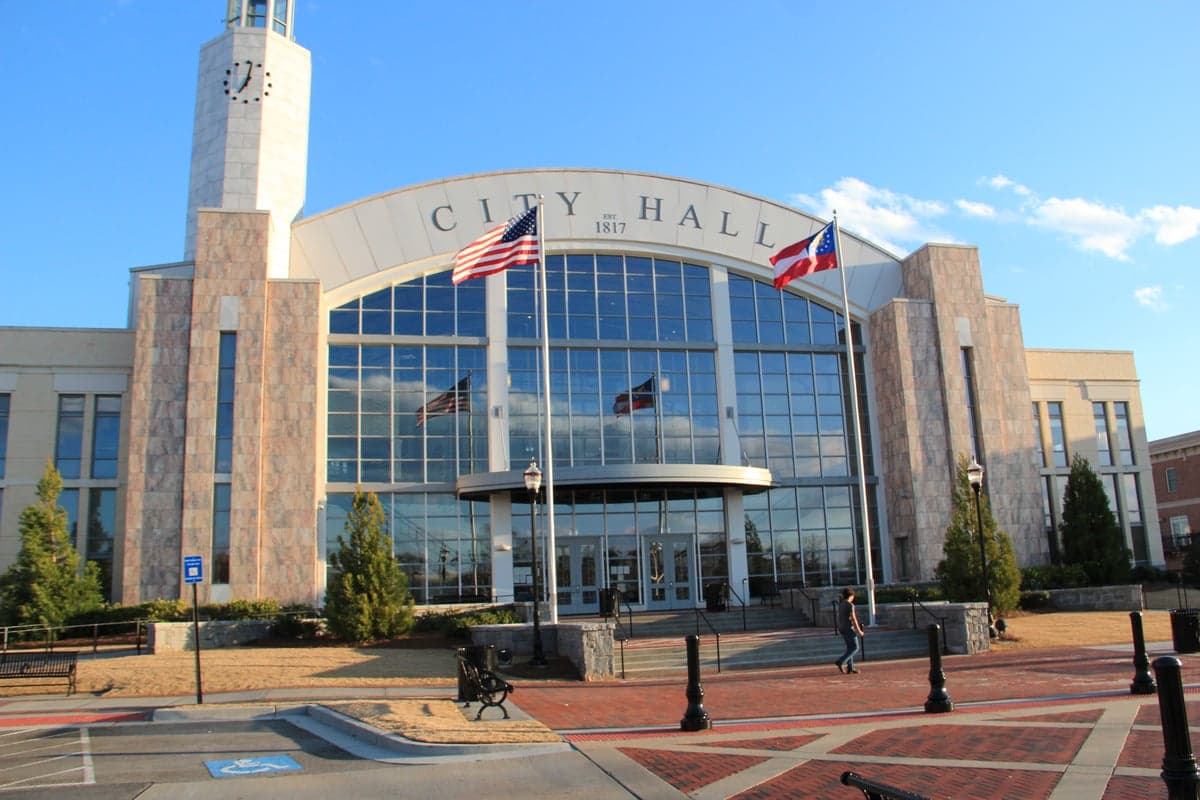
Photo: Wikipedia
Political ClimatePolitical Climate in Suwanee, GA
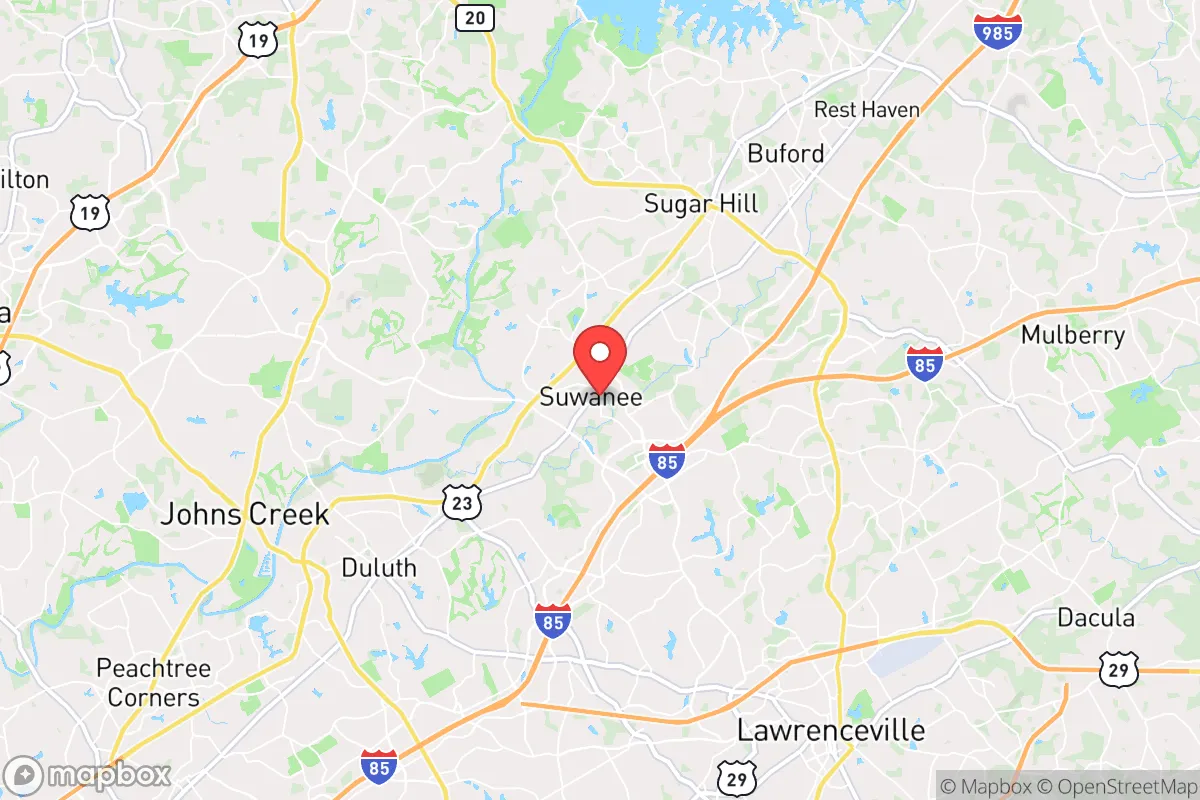
District shown is the primary district for this city’s centroid. Cities may span multiple districts.
Local Political AnalysisPolitical Analysis of Suwanee, GA
Suwanee, Georgia, has long been a reliably conservative stronghold, and the numbers back that up with a Cook PVI of R+17. That means the area leans about 17 points more Republican than the national average, and for decades, that’s been the bedrock of local politics. You’d see it in the low taxes, the Second Amendment-friendly atmosphere, and the general expectation that government stays out of your business. But like a lot of suburbs around Atlanta, there’s been a slow shift—nothing dramatic yet, but enough to make a long-time resident pay attention. The trajectory isn’t a hard turn left, but more of a gentle drift, and that’s what’s got some folks watching the local school board and city council meetings a little closer.
How it compares
To really understand Suwanee’s political climate, you’ve got to look at its neighbors. Head south into Gwinnett County’s core, like Lawrenceville or Duluth, and you’ll see a much more purple-to-blue landscape—those areas have swung hard in recent cycles, with progressive policies on zoning and spending gaining traction. Suwanee sits in the northern part of Gwinnett, and it’s a different world. Compare it to nearby Buford, which is even more conservative, or to Cumming in Forsyth County, which is rock-ribbed Republican. The contrast is sharp: Suwanee still feels like a place where people value personal responsibility over government programs, but you can see the influence of the Atlanta metro creeping in. The city council has held the line on most issues, but there’s a growing undercurrent of folks pushing for more “equity” initiatives and higher-density development that feels like a foot in the door for bigger government involvement.
What this means for residents
For the average family here, the political climate means you still enjoy a lot of freedom from overreach. Property taxes are reasonable compared to other parts of Gwinnett, and you don’t see the kind of heavy-handed regulations that plague cities like Decatur or Atlanta proper. The schools, while excellent, have become a battleground—there’s been pressure to adopt critical race theory-adjacent curriculum and social-emotional learning programs that many parents see as government meddling in how they raise their kids. The city has resisted mask mandates and vaccine passports, which is a relief, but you can feel the tension at every election. The real concern is that as more people move in from blue areas, they bring their voting habits with them. If you value limited government and local control, Suwanee is still a good bet, but you can’t afford to be complacent—every city council seat matters.
Culturally, Suwanee still holds onto its conservative roots in a way that feels authentic. The annual Suwanee Fest and the downtown area reflect a community that values tradition and family. But there’s a policy distinction worth noting: the city has been aggressive in using tax allocation districts (TADs) to fund redevelopment, which some see as a backdoor way to raise spending without a direct vote. That’s the kind of thing that should raise an eyebrow—government finding creative ways to spend your money. The long-term outlook depends on whether the current leadership can keep the progressive drift at bay. If you’re looking for a place where your rights are respected and the government remembers it works for you, Suwanee is still that place—but you’ve got to stay involved to keep it that way.

State Political ClimatePolitical Climate in Georgia
State Political AnalysisPolitical Environment in the State
Georgia has shifted from a reliably conservative stronghold to a genuine battleground state over the past two decades, with its partisan lean tightening from a solid +8-point Republican margin in 2004 to a razor-thin Democratic victory in 2020 and a near-tie in 2024. The state’s political landscape is now defined by a powerful coalition of suburban moderates, Atlanta-based progressives, and a shrinking but still formidable rural conservative base. For a conservative considering relocation, the key takeaway is that Georgia is no longer a guaranteed red state, but its trajectory is far from settled—and the fight for its future is being waged in the exurbs and small towns.
Urban vs. rural divide
The political map of Georgia is a study in stark contrasts. Metro Atlanta, home to over 60% of the state’s population, is the engine of Democratic growth. Fulton and DeKalb counties, which include the city of Atlanta proper, routinely deliver margins of +40 to +50 points for Democrats, while Cobb and Gwinnett counties—once Republican bastions—flipped blue in 2016 and have stayed there. In 2024, Cobb County went for Biden by 14 points, a far cry from its 2012 Romney margin of +12. Meanwhile, the rest of the state remains deeply conservative. Rural south Georgia, including counties like Brooks, Colquitt, and Tift, vote Republican by 30 to 40 points. The “flip” counties that decided the 2020 election were not in Atlanta but in the exurbs: Cherokee County (north of Atlanta) voted +24 for Trump, while Forsyth County (northeast) hit +35. These areas are growing fast with families fleeing higher taxes and crime in the core metro, and they represent the GOP’s best hope for holding the state. The divide isn’t just urban vs. rural—it’s the Atlanta metro vs. everywhere else, with the exurbs as the decisive battleground.
Policy environment
Georgia’s policy environment is a mixed bag for conservatives. On the positive side, the state has a flat income tax rate of 5.39% (down from 5.75% in 2024), with a scheduled phase-down to 4.99% by 2029. There is no state estate tax, and property taxes are relatively low, with a median effective rate of 0.87% of home value. The regulatory climate is business-friendly, with a right-to-work law and no state-level minimum wage above the federal $7.25. Education policy is a flashpoint: Governor Brian Kemp signed the Georgia Promise Scholarship Act in 2024, creating a $6,500 education savings account for students in low-performing schools, a win for school choice advocates. However, the state also expanded Medicaid under the Affordable Care Act in 2023, a move that rankles fiscal conservatives. On election integrity, Georgia passed SB 202 in 2021, which added voter ID requirements for absentee ballots, limited drop boxes, and reduced weekend early voting hours. This law has been praised by conservatives as necessary for security and criticized by progressives as suppression. The state also has a “heartbeat” abortion law (HB 481) that bans most abortions after six weeks, though it has been tied up in court challenges. For a conservative, Georgia offers a generally favorable tax and regulatory environment, but the education and healthcare landscapes are contested.
Trajectory & freedom
Georgia’s trajectory on personal freedom is a tug-of-war. On the positive side, the state has expanded gun rights significantly: in 2022, Kemp signed a permitless carry law (HB 218), allowing any legal gun owner to carry a concealed weapon without a license. This was a major win for Second Amendment advocates. Parental rights saw a boost with the 2023 passage of SB 88, which requires schools to notify parents of any changes to a student’s health or well-being, effectively limiting the ability of schools to hide gender identity issues from parents. On the negative side, the state has seen a creep of government overreach in the name of public health and safety. During COVID, Kemp issued a statewide shelter-in-place order and later allowed local mask mandates, which many conservatives saw as an overreach. More recently, the state has expanded its surveillance powers through the Georgia Crime Information Center, which now tracks license plate readers statewide. Property rights remain strong, with no statewide rent control and a relatively straightforward eminent domain process, but local zoning battles in fast-growing exurbs like Forsyth and Cherokee are increasingly contentious. The net direction is cautiously positive for freedom, but the state’s growing population and urbanization are creating pressure for more regulation.
Civil unrest & political movements
Georgia has been a flashpoint for political activism on both sides. The 2020 election saw massive protests in Atlanta following the killing of George Floyd, with the city experiencing several nights of property damage and arson. The “Stop the Steal” movement was also active, with a rally at the state capitol in November 2020 that drew thousands. In 2021, the passage of SB 202 sparked a wave of corporate backlash, with Major League Baseball moving the All-Star Game out of Atlanta—a move that galvanized conservative voters. Immigration politics are a hot-button issue: Georgia has a strict E-Verify law (SB 529, 2006) and a 2011 law (HB 87) that allows police to check immigration status during lawful stops, though parts were struck down in court. There is no sanctuary city policy in Georgia; in fact, the state passed a law in 2024 (SB 180) that prohibits local governments from adopting sanctuary policies and requires cooperation with federal immigration enforcement. Election integrity remains a live issue: the 2024 election saw a recount in the governor’s race, and there are ongoing lawsuits over the state’s electronic voting machines. A new resident would notice the political energy is high, especially in the exurbs where “MAGA” signs are common and in Atlanta where progressive activism is visible.
Projection
Over the next 5-10 years, Georgia is likely to remain a battleground, but the trend lines favor conservatives if current migration patterns hold. The Atlanta metro is growing fastest in the exurbs—places like Cherokee, Forsyth, and Paulding counties—where families are moving for lower taxes, better schools, and more space. These areas are voting increasingly Republican. Meanwhile, the core urban counties (Fulton, DeKalb) are near their demographic ceiling for Democratic votes. The wildcard is the growing Hispanic population, which is concentrated in the Atlanta area and tends to lean Democratic but is not monolithic. If the GOP can hold its margins in the exurbs and make inroads with Hispanic voters, Georgia could shift back to lean red by 2030. However, if the state continues to attract tech workers and corporate transplants from blue states, the suburban shift could accelerate. The most likely scenario is a state that remains purple but with a slight conservative tilt in statewide elections, especially if the GOP focuses on economic and education issues. A new resident moving in now should expect a politically competitive environment where every election matters.
For a conservative considering a move to Georgia, the bottom line is this: you’ll find a state with low taxes, strong gun rights, and a growing network of conservative exurbs, but you’ll also be living in a battleground where your vote truly counts. The state is not a safe haven like Texas or Florida, but it offers a high quality of life and a political climate that is still winnable. If you’re willing to engage in the fight—whether through school board elections, county commission races, or simply showing up to vote—Georgia is a place where your voice can make a difference. If you’re looking for a state where the political outcome is already decided, look elsewhere. Georgia is a state in play, and that’s both its challenge and its opportunity.
* Values derived from national, state, county, city and local statistics and may differ in a specific area. Last updated: 2026-04-23T05:29:02.000Z
Narrative content on this page is AI-generated and may contain mistakes. Verify any details that matter before acting on them.
ReloMaps may earn a commission from affiliate links at no extra cost to you.

