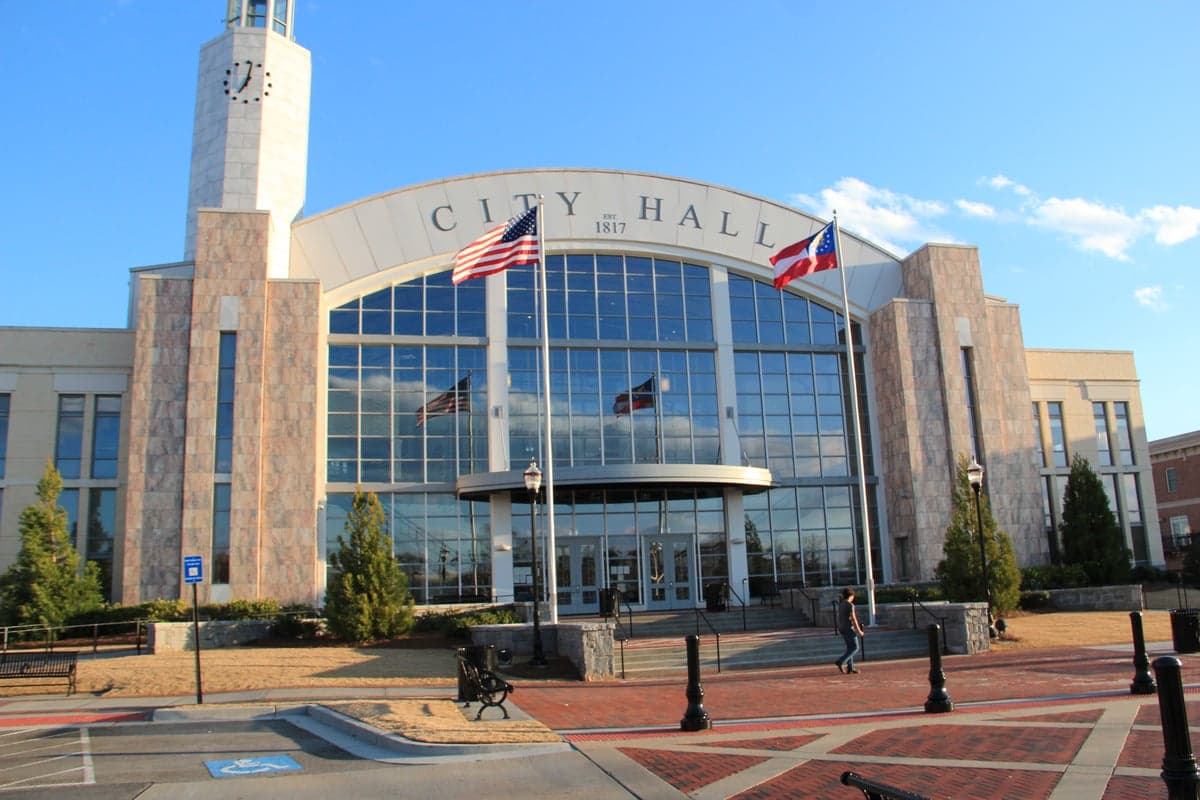
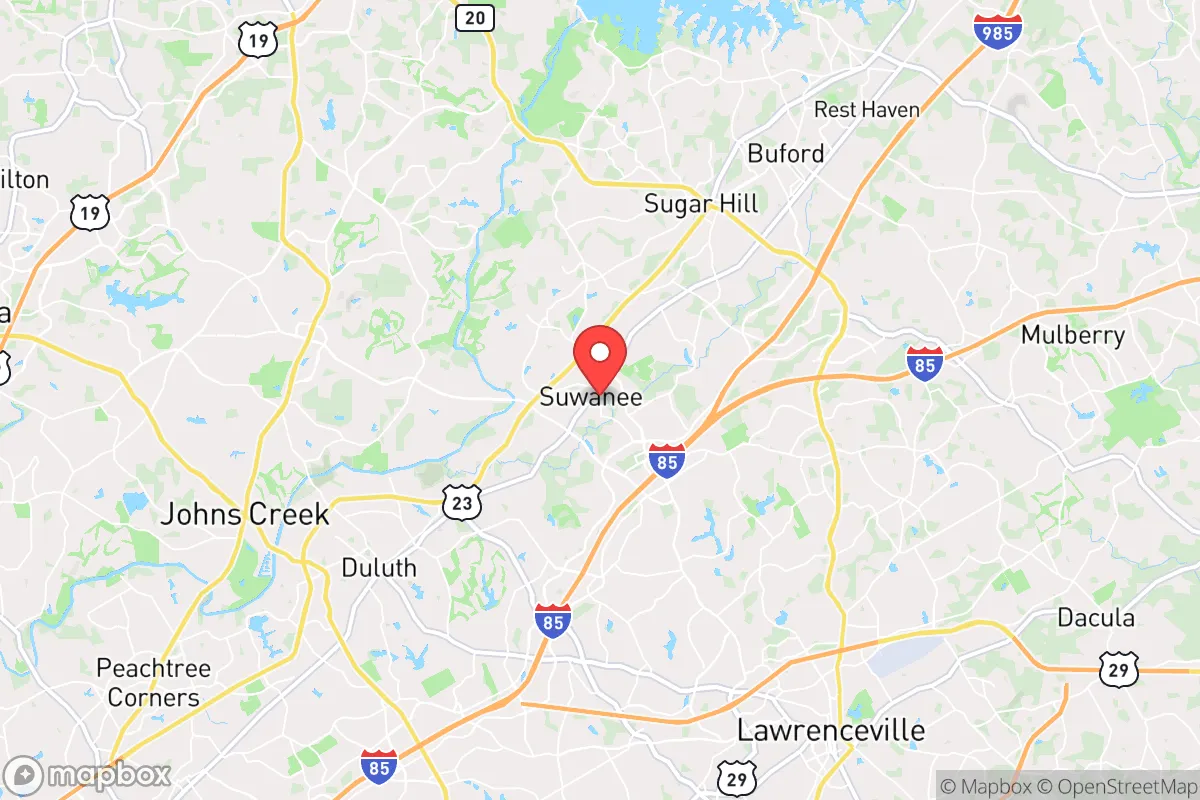
Photo: Wikipedia
Strategic Assessment of Suwanee, GA
Meaningful friction. Expect exposure to either population pressure, blast zones, or natural disaster risk. Consider buying a retreat property.
What does the Strategic Assessment tell us?
Our Strategic Assessment grades tactical survivability of an area. Major population centers, military targets, fallout zones, natural disasters, and border exposure all drive risk — lower exposure means a more defensible position in a crisis.
This is heavily inspired by Joel Skousen's Strategic Relocation book. Highly recommended you checkout the book ($)What does this tell us?
Our Strategic Assessment grades tactical survivability of an area. Major population centers, military targets, fallout zones, natural disasters, and border exposure all drive risk — lower exposure means a more defensible position in a crisis.
This is heavily inspired by Joel Skousen's Strategic Relocation book. Highly recommended you checkout the book ($)Strategic Pillars

Key Distances
Regional Safe Places
Below is our recommended "safe zones" in Georgia and the surrounding area based on our strategic heuristics. For most people, it's unrealistic to live in a “safe zone” full-time due to work, family or other personal reasons. They tend to be more rural. However, many of these areas are perfect for second homes and retreat properties that double as a vacation home or even a short-term rental.
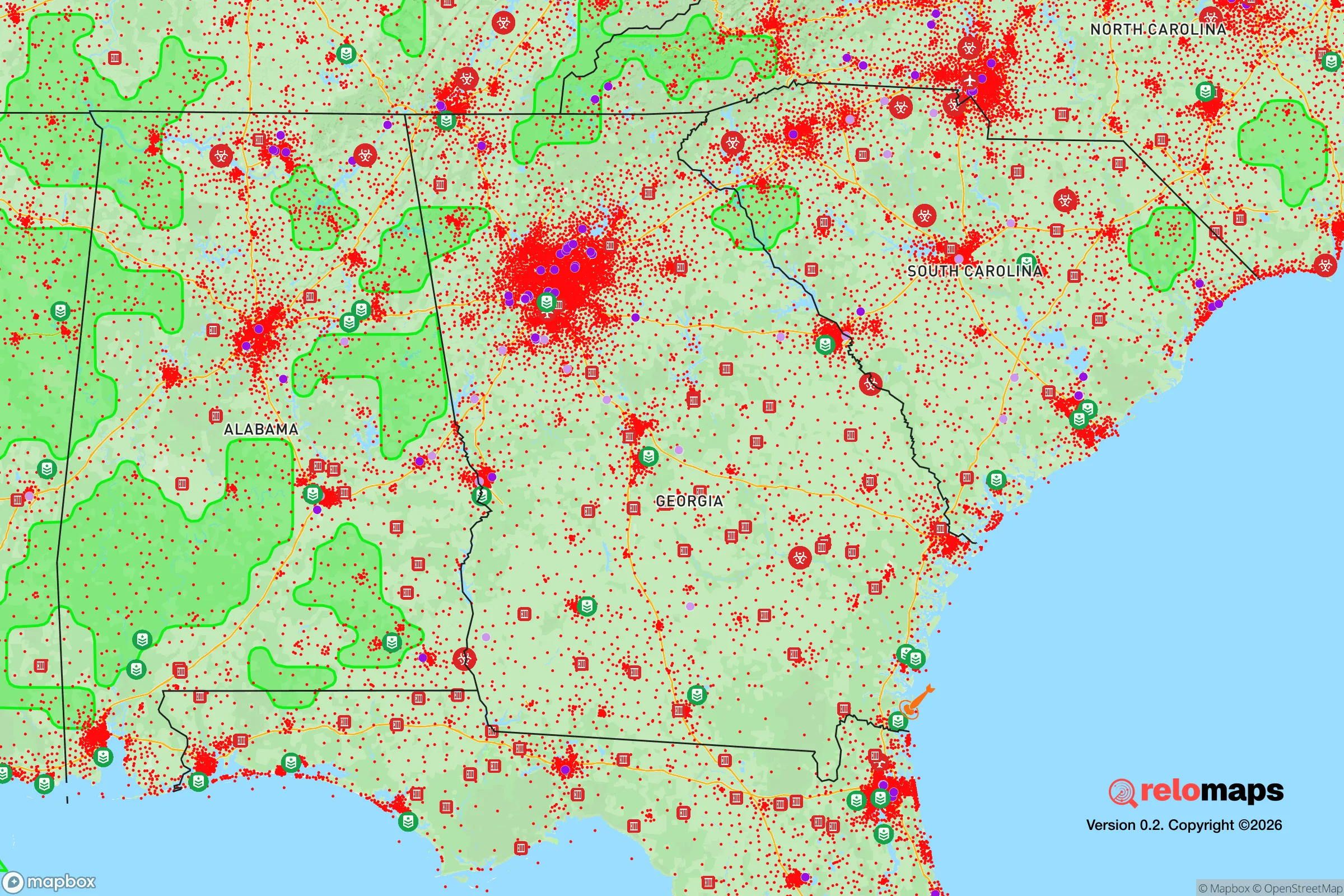
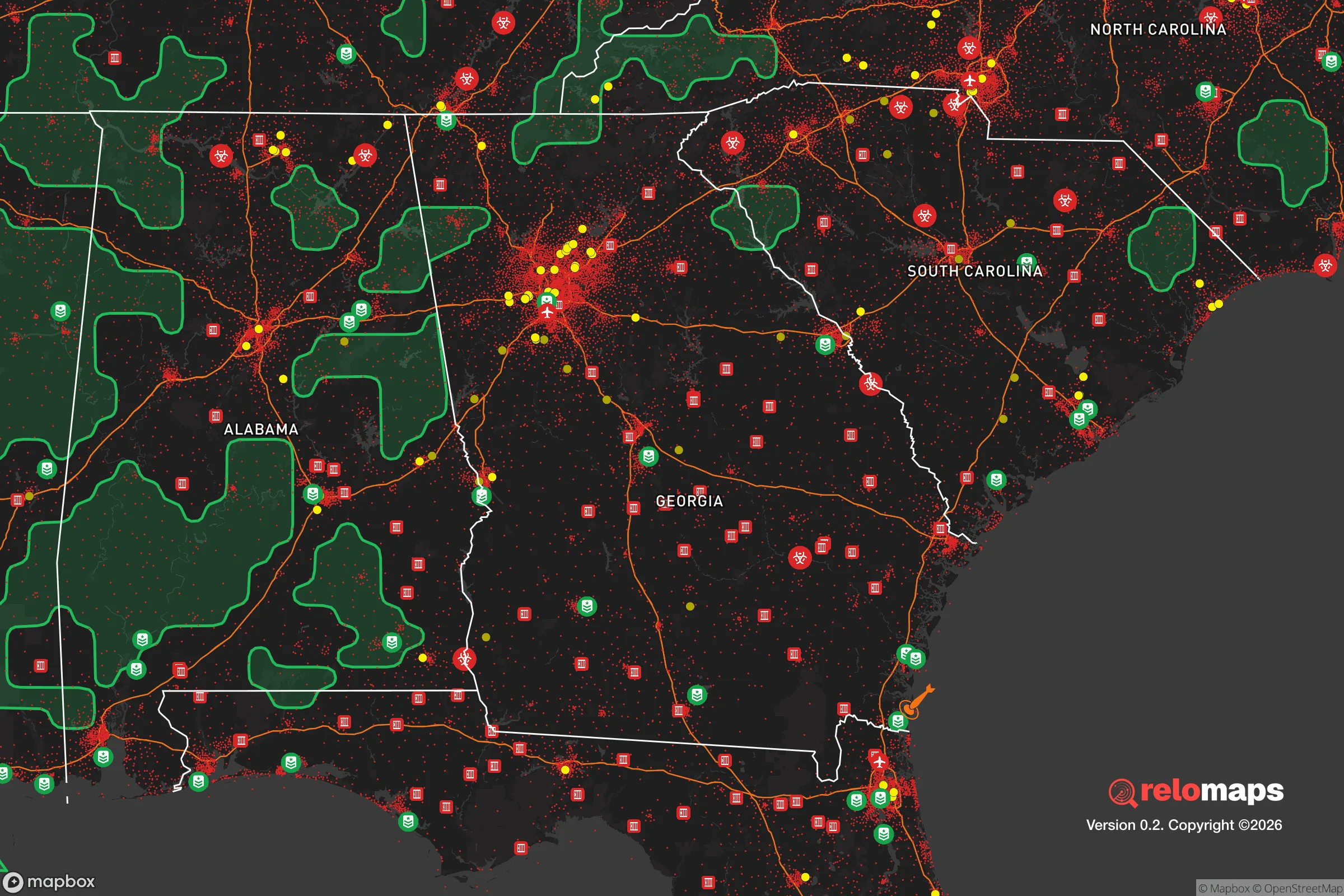


Important Note: For informational purposes only. This does not mean nothing bad ever happens in the green zones. Please use common sense. This is based on public data and modeled with AI. We tried to take a conservative approach but mistakes happen. We update this regularly as new information becomes available.
Solar Generator Recommendations
Backup power matters more here than in safer locations. We've picked three solar generators across budgets and capacity tiers — start with the budget unit if you only need a few essentials, or step up if you want to run a fridge and HVAC for days at a time.

Jackery Portable Power Station Explorer 300
Budget OptionPower on the Go: Weighing only 11 lbs, it's convenient to set up and store with book-sized foldable solar panels

BLUETTI Portable Power Station AC180
Designed for both indoor and outdoor scenarios, AC180 is highly capable as it has a robost capacity and continuous output power.

EF ECOFLOW DELTA Pro Ultra Power Station
Upgraded PickEcoFlow DELTA Pro Ultra is a whole-home energy system designed to grow with your family. Integrated with the Smart Home Panel 2, it scales to meet your evolving energy needs — keeping your home powered, intelligent, and secure through every stage of life.
We earn a commission, at no additional cost to you.
Strategic Assessment Analysis
Suwanee, Georgia, offers a strategic balance of proximity to Atlanta’s economic engine and a buffer from its most acute vulnerabilities, making it a viable relocation option for those prioritizing resilience in an uncertain future. Located roughly 30 miles northeast of downtown Atlanta along the I-85 corridor, the city sits in Gwinnett County—a rapidly diversifying suburban hub that has seen significant population growth and infrastructure investment. For a conservative-leaning prepper or survivalist, Suwanee’s key advantage is its position: close enough to access jobs, medical care, and supply chains, yet far enough to avoid the immediate fallout of a major urban crisis, whether that’s civil unrest, a grid-down event, or a mass casualty incident. The area’s topography—rolling hills, mixed hardwood forests, and the Chattahoochee River watershed—provides natural cover and water resources, while its relatively low crime rates and strong community networks offer a foundation for mutual aid and self-reliance.
Geographic position and natural advantages for long-term survival
Suwanee’s geography is a mixed bag, but the positives lean in your favor if you know how to use them. The city sits on the Piedmont Plateau, with elevations ranging from 900 to 1,100 feet—enough to give you decent line-of-sight and drainage, but not so high that you’re dealing with extreme weather or thin air. The area is laced with creeks and tributaries feeding into the Chattahoochee River, which is about 10 miles west. That river is a double-edged sword: it’s a reliable water source for filtration and irrigation, but it’s also a potential target for contamination or infrastructure failure. The surrounding forests—mostly loblolly pine, oak, and hickory—offer decent cover for bug-out locations or caching supplies, though they’re not dense enough to hide a full-scale operation. The climate is humid subtropical, meaning hot, muggy summers and mild winters, which is good for year-round gardening but bad for long-term food storage without proper cooling. One underrated advantage: Suwanee is in the Georgia Piedmont’s “fall line” zone, where the soil transitions from clay to sand, making it easier to dig wells, root cellars, or underground shelters compared to the heavy red clay further south. The area also sits outside the 50-mile blast radius of any major military or nuclear targets—Fort Moore (formerly Fort Benning) is 120 miles south, and Dobbins Air Reserve Base is 25 miles west, but neither is a primary strategic target in a major conflict scenario.
Risks, exposures, and proximity to fallout-relevant landmarks
Let’s be blunt: Suwanee is not a remote mountain redoubt. Its biggest vulnerability is its proximity to Atlanta, a major population center, transportation hub, and potential target for civil unrest, EMP attacks, or supply chain disruptions. In a worst-case scenario—say, a coordinated attack on infrastructure—Atlanta’s Hartsfield-Jackson airport, the CDC, and multiple data centers (including those in nearby Alpharetta and Duluth) could become choke points or targets. Suwanee is also within 20 miles of the Georgia Nuclear Aircraft Laboratory (now a decommissioned site near Dawsonville), but that facility has been shut down since the 1970s and poses no active threat. More pressing: the I-85 corridor is a primary evacuation route, meaning that in a crisis, you’ll be competing with hundreds of thousands of panicked drivers heading north. The city itself is not a high-value target—no major military bases, no nuclear power plants (the closest is Plant Hatch, 150 miles southeast), and no major government installations. But Gwinnett County’s population has exploded to nearly 1 million, and that density brings risks: strained emergency services, potential for civil unrest in nearby urban pockets (like Norcross or Lawrenceville), and a reliance on just-in-time supply chains for food and fuel. The biggest natural risk is severe weather—tornadoes are a real threat (the 2021 tornado that hit nearby Newnan is a reminder), and the area’s clay soil can cause flooding and erosion during heavy rains. EMP risk is moderate: the grid is interconnected with the Southeast’s power network, but Suwanee’s suburban layout means fewer above-ground transformers than dense urban cores.
Practical resilience for a relocator: food, water, energy, and defensibility
If you’re moving to Suwanee with a prepper mindset, you need to think in layers. Water is the first priority: the city’s municipal supply comes from the Chattahoochee River and Lake Lanier, both of which are vulnerable to contamination, drought, or infrastructure failure. A well is your best bet—most residential lots in Suwanee are on 0.25 to 1 acre, and the water table is typically 50–100 feet deep, so drilling is feasible but expensive (expect $5,000–$10,000). Rainwater catchment is legal in Georgia, and with 50 inches of annual rainfall, you can easily collect 1,000+ gallons per month from a 2,000-square-foot roof. Food production is viable: the growing season runs from March to November, and you can raise chickens, rabbits, or even goats on a half-acre lot (check HOA restrictions—many Suwanee subdivisions have strict covenants). Community gardens exist, but for serious self-sufficiency, you’ll want to buy a property with no HOA or one that allows agricultural use. Energy is a weak point: the grid is reliable day-to-day, but a long-term outage would be a problem. Solar is legal and net metering is available through Georgia Power, but expect pushback from HOAs on visible panels. A backup generator (propane or natural gas) is a smarter short-term bet. Defensibility is where Suwanee falls short: it’s a suburban grid with cul-de-sacs and open yards, not a fortified homestead. Your best option is to buy on a corner lot or at the end of a dead-end street, with good sightlines and a single access point. The local police force is responsive (Suwanee has its own department, not just county sheriff), but in a widespread crisis, you’ll be on your own for the first 72 hours. The good news: the community is relatively tight-knit, with active neighborhood watch programs and a strong sense of local identity—that’s a foundation for mutual aid networks if you invest in relationships now.
The overall strategic picture for Suwanee is one of calculated compromise. It’s not a bug-out location in the mountains, nor is it a fortified compound in the sticks. What it offers is a middle ground: a stable, low-crime suburb with decent natural resources, a manageable distance from major threats, and a community that still values self-reliance and neighborly cooperation. For a single individual or a family looking to relocate with an eye on preparedness, Suwanee works if you’re willing to put in the work—drill a well, install solar, build a food garden, and get to know your neighbors before the SHTF. The risks are real—proximity to Atlanta, HOA restrictions, and population density—but they’re manageable with planning. If you’re looking for a place that’s close enough to civilization to thrive but far enough to survive, Suwanee deserves a spot on your shortlist. Just don’t expect it to be a secret—too many people have already figured that out.

* Values derived from national, state, county, city and local statistics and may differ in a specific area. Last updated: 2026-04-23T05:29:02.000Z
Narrative content on this page is AI-generated and may contain mistakes. Verify any details that matter before acting on them.
ReloMaps may earn a commission from affiliate links at no extra cost to you.

