Personal Sovereignty in Swanton, VT
Moderate friction. Expect trade-offs in some aspect of personal liberty and independence.
What does Personal Sovereignty tell us?
Personal Sovereignty measures your capacity for self-reliance and independence with minimal government friction. Higher scores mean fewer barriers between you and the way you want to live... but it assumes you have the space you need and good neighbors.
What does this tell us?
Personal Sovereignty measures your capacity for self-reliance and independence with minimal government friction. Higher scores mean fewer barriers between you and the way you want to live... but it assumes you have the space you need and good neighbors.
State Policy
Energy independence: Importer (15% of energy produced in-state)
Personal Liberty
Homesteading

Personal Liberty Analysis
Swanton, Vermont offers a nuanced personal sovereignty environment that demands careful scrutiny from those prioritizing autonomy. While Vermont’s progressive state government imposes notable constraints—particularly through strict gun control and high tax burdens—Swanton’s rural character, small-town governance, and proximity to the Canadian border create pockets of self-reliance that a strategic relocation advisor would flag as worth investigating. The key tension here is between state-level overreach and local-level flexibility, making Swanton a location where informed, prepared individuals can carve out meaningful independence, but not without deliberate effort and legal awareness.
Tax burden and regulatory posture: what you pay and what you can do
Vermont’s tax climate is among the most aggressive in the nation, and Swanton residents feel this directly. The state imposes a progressive income tax with a top marginal rate of 8.75%, one of the highest in the country. Property taxes are also steep, with Swanton’s effective rate hovering around 2.1% of assessed home value—well above the national average of roughly 1.1%. For a $250,000 home, that’s over $5,200 annually in property tax alone. Sales tax is 6%, but there is no county sales tax, a small relief. The regulatory posture extends beyond taxes: Vermont’s Act 250 land-use law imposes state-level review on many development projects, including subdivisions and commercial construction, which can delay or block homesteading and off-grid builds. However, Swanton’s town government is generally more pragmatic than Burlington or Montpelier, and local zoning is less restrictive than in southern Vermont. For a prepper or survivalist, the high tax burden is a real drag on capital accumulation, but the regulatory environment is navigable if you work with a local land-use attorney and avoid triggering Act 250 thresholds (e.g., keeping parcels under 10 acres and avoiding major earthworks).
Self-defense and gun law specifics: what you can own and where you can carry
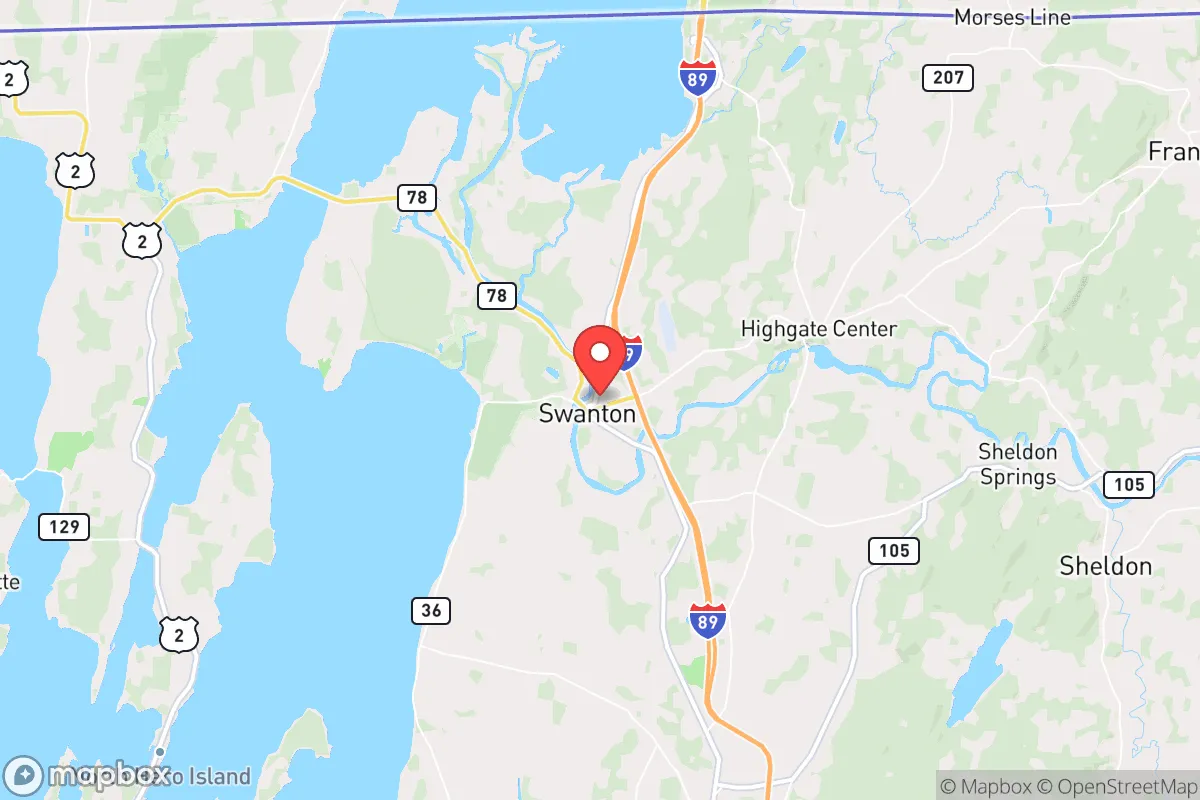
Vermont’s gun laws have tightened significantly since 2018, and Swanton residents must comply with state mandates that many conservatives view as infringements. The state now requires universal background checks for all firearm sales, including private transfers, and bans magazines over 15 rounds for handguns and 10 rounds for long guns. “Assault weapons” as defined by state law (including many AR-15 variants) are prohibited for purchase, though pre-2018 owned firearms are grandfathered. There is no state preemption for local gun ordinances, meaning Swanton’s selectboard could theoretically pass its own restrictions—though as of 2026, it has not. On the positive side, Vermont remains a constitutional carry state: no permit is needed to carry a concealed firearm for anyone 18 or older who can legally possess a gun. Open carry is also legal. Stand-your-ground laws are not codified in Vermont statute, but case law generally supports a duty to retreat in public spaces, which is a significant concern for self-defense advocates. For a prepper, the magazine capacity ban and assault weapon prohibition are serious limitations. Stockpiling standard-capacity magazines before moving is illegal under state law, so you must either comply or rely on grandfathering if you already own them. The border proximity to Canada (about 15 miles north) adds a layer of complexity for those considering cross-border logistics, but also offers a potential escape route in a collapse scenario—though Canadian firearms laws are even more restrictive.
Self-reliance and homesteading viability: lot sizes, zoning, and off-grid feasibility
Swanton’s rural zoning and land availability make it a viable location for self-reliant living, but with caveats. Minimum lot sizes in the town’s agricultural and rural districts are typically 2 to 5 acres, with some parcels available at 10+ acres for those seeking more buffer. The town allows accessory dwelling units, which can serve as guest quarters or rental income. Off-grid living is legally possible but requires permits: Vermont’s residential building code mandates that any dwelling must have a wastewater system approved by the state’s Agency of Natural Resources, which can be costly ($10,000–$20,000 for a septic system). Solar panels are permitted and net metering is available, but the state’s renewable energy goals mean you cannot fully disconnect from the grid without a special exemption—though many preppers install battery backup systems that function independently during outages. Rainwater collection is legal but must comply with water quality standards if used for potable purposes. Gardening and small-scale livestock (chickens, goats, even a cow) are generally allowed on parcels over 2 acres, but check local bylaws for specific animal limits. The growing season is short (roughly 120 frost-free days), so cold-hardy crops and season extension techniques (hoop houses, root cellars) are essential. For a survivalist, Swanton offers enough land and zoning flexibility to build a resilient homestead, but the upfront costs for septic, well drilling, and solar are significant—budget at least $50,000–$80,000 for infrastructure on raw land.
Personal liberties: parental rights, medical autonomy, speech, and property
Vermont’s state government has a mixed record on personal liberties that directly affect Swanton residents. Parental rights are relatively strong in theory: Vermont law recognizes parents as the primary decision-makers for their children’s education and healthcare. However, the state’s universal school choice system means public funds follow the child, which can undermine local control. Homeschooling is legal with minimal regulation—parents must file an enrollment notice annually and provide a basic curriculum outline, but there are no standardized testing requirements or home visits. Medical autonomy is more concerning: Vermont has a vaccine mandate for school attendance (including COVID-19 and standard childhood vaccines), with only medical exemptions allowed—no religious or philosophical exemptions. This is a red flag for parents who prioritize medical freedom. The state also has a “right to die” law, which some view as a slippery slope. Free speech is protected under the First Amendment, but Vermont’s campaign finance laws and social media regulations are among the most restrictive in the nation, including a law that holds platforms liable for certain content—though this is being challenged in court. Property rights are generally respected, but Act 250 and state wetland regulations can limit what you do on your land. For a prepper, the vaccine mandate and lack of medical exemptions are deal-breakers for some families. The property rights environment is workable if you avoid sensitive areas (wetlands, shorelands) and keep your activities low-profile.
Overall, Swanton offers a moderate level of personal sovereignty relative to other areas in the Northeast, but it is not a libertarian haven. Compared to New Hampshire, which has no income tax, no sales tax, and far looser gun laws, Swanton falls short. Compared to Massachusetts or New York, it is significantly more permissive. For a survivalist or prepper, the key advantages are the rural land availability, constitutional carry, and local zoning flexibility. The disadvantages are the high tax burden, magazine capacity ban, vaccine mandates, and the ever-present risk of state-level overreach. If you are willing to navigate the regulatory landscape, invest in off-grid infrastructure, and accept the tax load, Swanton can support a self-reliant lifestyle. But if maximum autonomy is your priority, look to New Hampshire or northern Maine. Swanton is a compromise—a place where you can build a resilient life, but only if you stay vigilant and prepared for government intrusion.

* Values derived from national, state, county, city and local statistics and may differ in a specific area. Last updated: 2026-10-10T16:29:07.000Z
Narrative content on this page is AI-generated and may contain mistakes. Verify any details that matter before acting on them.
ReloMaps may earn a commission from affiliate links at no extra cost to you.

