Photo: Wikipedia
Demographics of Syracuse, NY
Affluence Level in Syracuse, NY
A below-average socioeconomic profile. Incomes, home values, and educational attainment trail the U.S., with higher poverty and unemployment.
People of Syracuse, NY
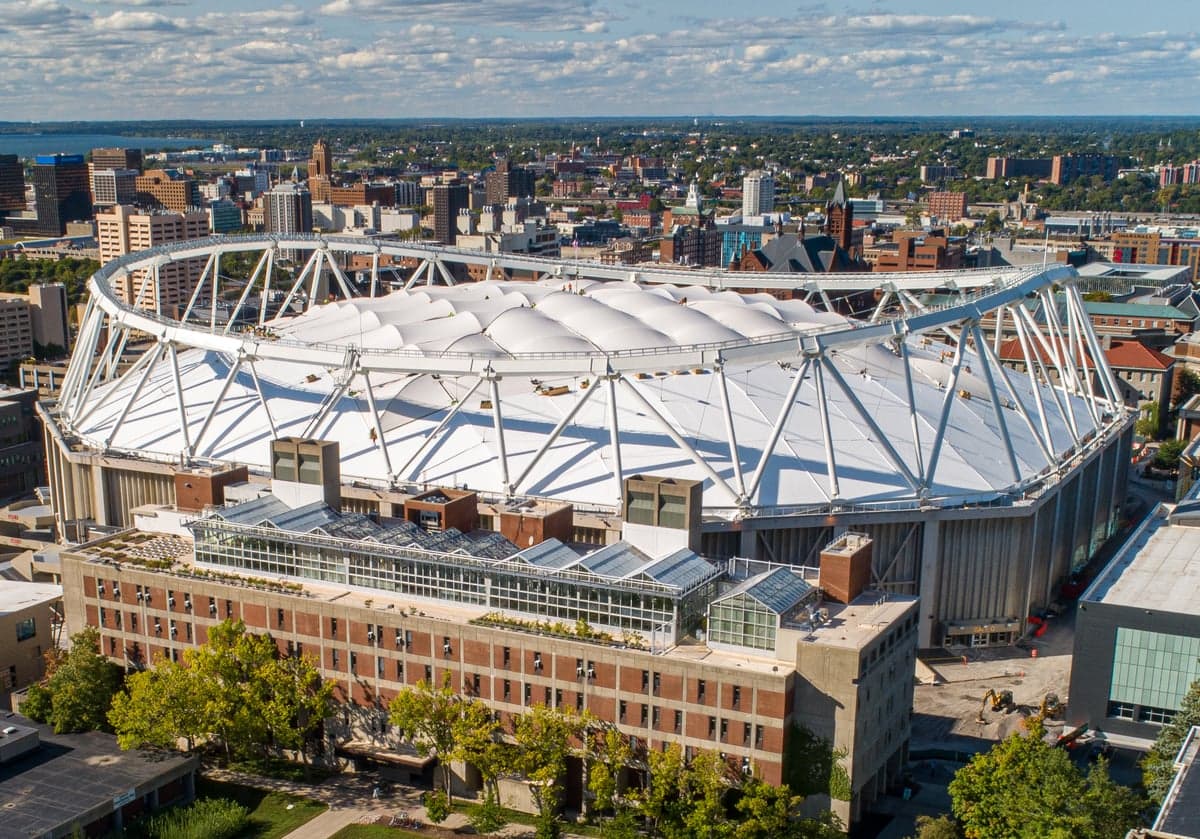
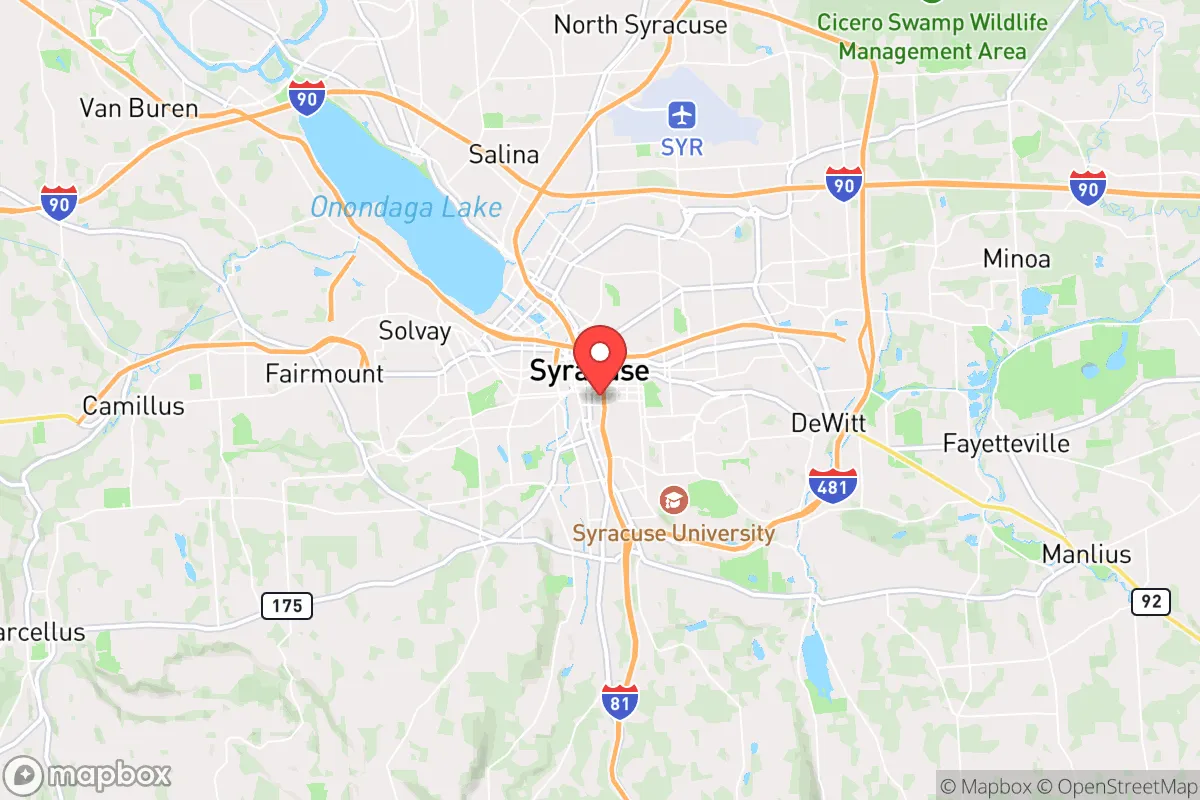
The people of Syracuse today number roughly 146,000, making it a mid-sized Upstate New York city with a notably diverse and historically layered population. The city is majority-minority, with a White population of 49.5%, a Black population of 25.8%, a Hispanic population of 10.3%, and East/Southeast Asian communities at 5.6%. Despite its modest size, Syracuse has a distinctive character shaped by waves of European immigration, African American migration from the South, and more recent refugee resettlement, giving it a working-class, resilient identity that contrasts with the more homogenized suburbs ringing Onondaga Lake.
How the city was settled and grew
Syracuse was originally settled by European Americans in the late 18th century, drawn by the salt springs that gave the city its early nickname, "The Salt City." The Erie Canal, completed in 1825, transformed Syracuse into a major industrial and transportation hub, attracting waves of Irish, German, Italian, and Polish immigrants who built the city's factories, foundries, and rail yards. These groups concentrated in distinct neighborhoods: the Irish settled along the canal corridor in the Tipperary Hill area (still known for its green traffic light), Italians clustered in the Near Westside and parts of the North Side, and Polish immigrants formed a strong community in Eastwood. By the early 20th century, Syracuse's population peaked at over 220,000, fueled by manufacturing jobs at companies like Carrier, General Electric, and Chrysler. The Great Migration brought Black families from the rural South, who settled primarily in the 15th Ward (now part of the Near East Side) and the South Side, building churches, businesses, and a vibrant cultural life.
Modern era (post-1965)
The post-1965 era brought profound demographic shifts. The Hart-Cellar Act opened immigration from Asia and Latin America, while deindustrialization and suburbanization hollowed out the city's core. Syracuse's population fell from 216,000 in 1960 to 146,000 today, with White flight accelerating in the 1970s and 1980s. The North Side became a landing pad for new immigrants: first Vietnamese and Cambodian refugees after the Vietnam War, then Somali Bantu and Burmese refugees in the 2000s. Today, the North Side is the city's most ethnically diverse quadrant, with East/Southeast Asian communities (5.6% of the city) concentrated there alongside a growing Hispanic population (10.3%) that has spread into the West Side and Lakefront neighborhoods. The Black population, which grew during the Great Migration and remained stable through the late 20th century, now makes up 25.8% of the city and is concentrated on the South Side and parts of the Near East Side. The Indian-subcontinent population (1.2%) is smaller but growing, largely tied to professional jobs at Syracuse University and Upstate Medical University, and tends to settle in the University Hill area and outer suburbs rather than traditional ethnic enclaves.
The future
Syracuse's population is slowly stabilizing after decades of decline, with modest growth in the 2020 census. The city is not homogenizing; instead, it is becoming more fragmented into distinct enclaves. The White population, now a plurality at 49.5%, continues to age in place in neighborhoods like Strathmore and Sedgwick, while younger White professionals are moving into Downtown and the Westcott area near the university. The Hispanic population is the fastest-growing segment, driven by both domestic migration and immigration from Central America, and is expanding from the West Side into the Southwest Side. The East/Southeast Asian population, boosted by refugee resettlement, is plateauing as second-generation families move to suburbs like Liverpool and Baldwinsville. The Black population is declining slightly as middle-class families leave for the suburbs, while the Indian-subcontinent population is growing slowly but remains small. The next 10-20 years will likely see Syracuse become a more Latino city, with Hispanic residents potentially surpassing Black residents in share, while the White population continues to shrink. The city's future is one of increasing diversity but also increasing economic stratification, as the university and medical sectors attract educated newcomers while the working-class base struggles with poverty and aging housing stock.
For someone moving in now, Syracuse is a city in transition: still affordable compared to the Northeast corridor, still ethnically layered, but with a population that is becoming more Hispanic and more bifurcated between a professional class and a struggling working class. The neighborhoods that once defined the city's ethnic character—Tipperary Hill, the North Side, the South Side—remain distinct, but their boundaries are blurring as new groups arrive and old ones disperse. It is a place where history is still visible in the streets, but the future is being written by refugees, immigrants, and young professionals rather than the factory workers who built it.

* Values derived from national, state, county, city and local statistics and may differ in a specific area. Last updated: 2026-05-01T21:55:59.000Z
Narrative content on this page is AI-generated and may contain mistakes. Verify any details that matter before acting on them.
ReloMaps may earn a commission from affiliate links at no extra cost to you.

