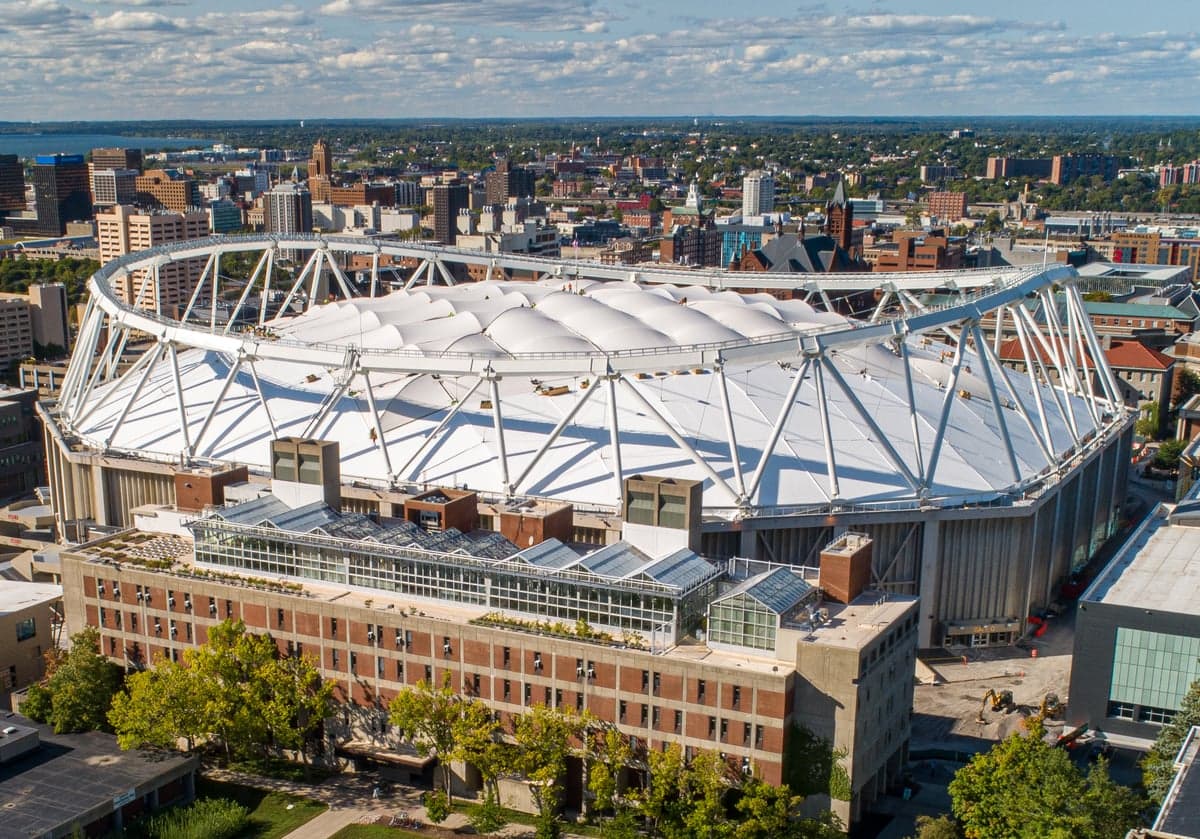
Photo: Wikipedia
Quality of Life in Syracuse, NY
Above-average quality of iife. The area offers a reasonable cost of living, decent mobility, and a mix of neighborhood amenities.
What does Quality of Life tell us?
Quality of Life blends cost of living, nearby amenities, socioeconomic signals, and neighborhood character. City-level scores represent the whole municipality; individual neighborhoods can differ.
What does this tell us?
Quality of Life blends cost of living, nearby amenities, socioeconomic signals, and neighborhood character. City-level scores represent the whole municipality; individual neighborhoods can differ.
Cost of Living
31% below national average
The Real Cost of Living in Syracuse, NY for 2026
| Tier | Individual | Family (4) |
|---|---|---|
| Survival | $16k | $30k |
| Comfortable | $26k | $39k |
| Luxury | $83k+ | $128k+ |
| Elite (Top 5%) | $111k+ | $171k+ |
119%
The Area Signal
A metric tracking the socioeconomic signals of the area.
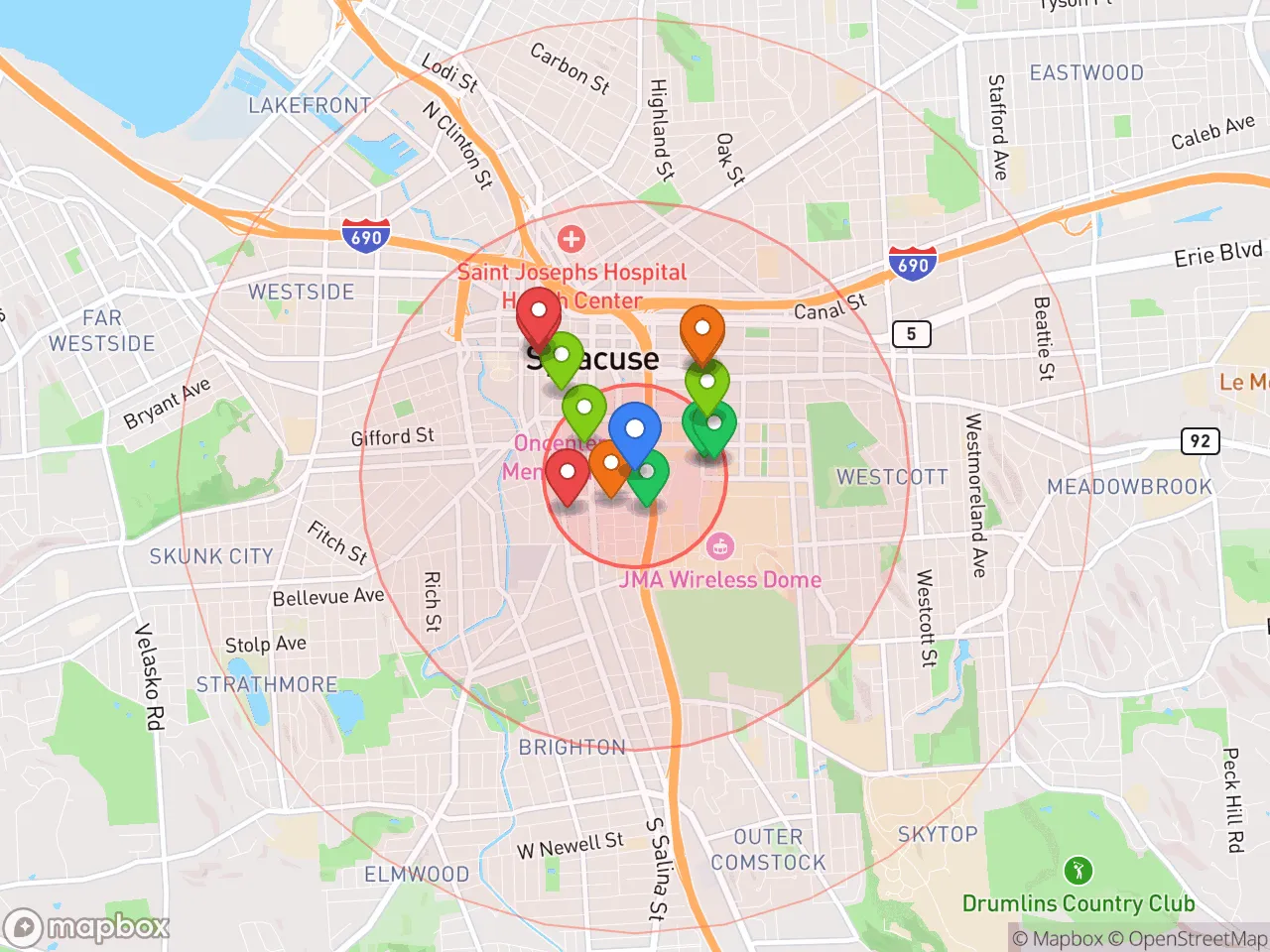
Hobbies
Explore the areaGroceries
6 within 10 miles
Gas
20 within 10 miles
Hospital
7 within 20 miles
Airport
EWR — Newark Liberty International
Post Office
USPS — Syracuse, NY
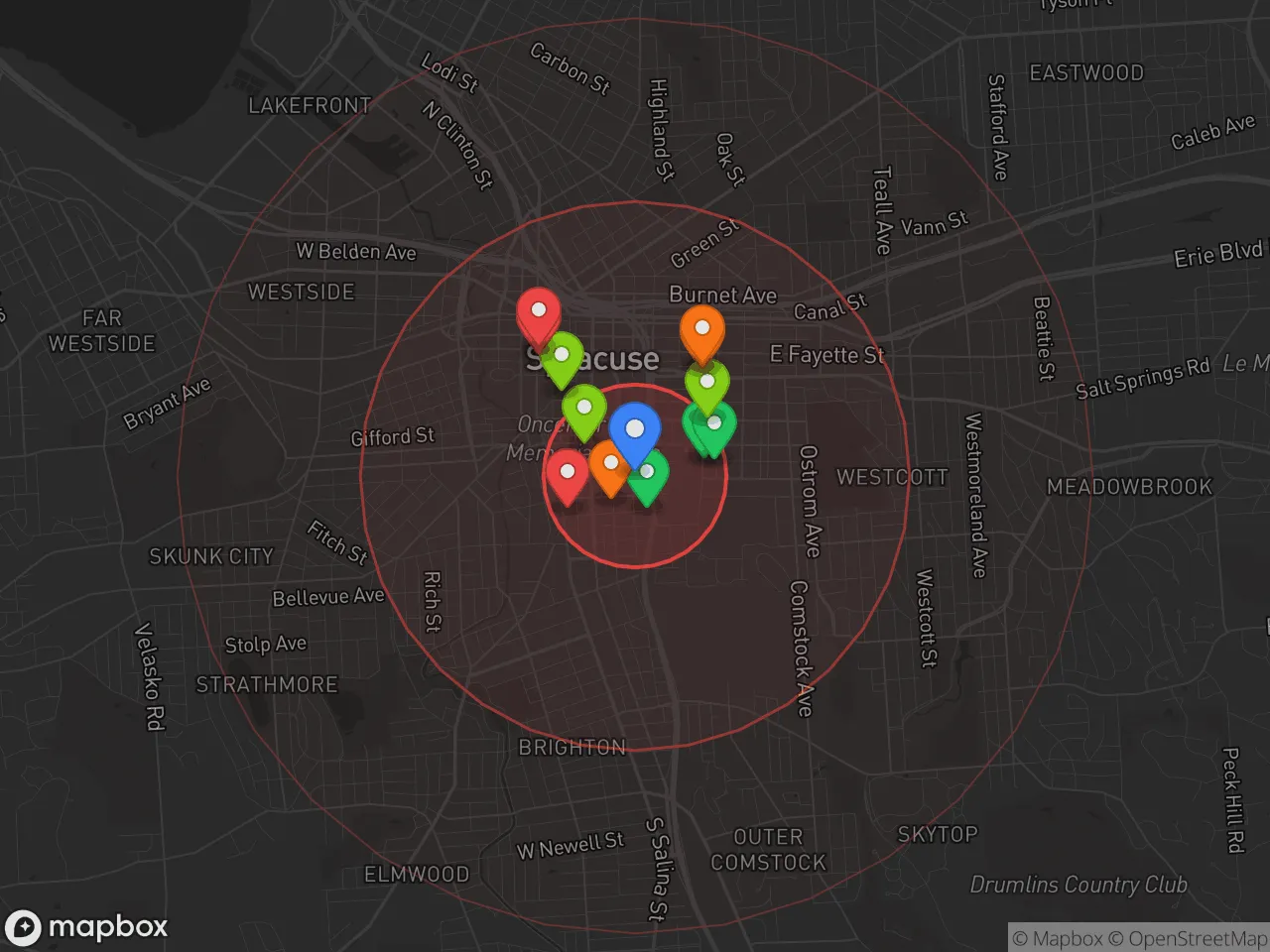
Critical Amenities
Quality-of-Life Analysis
Syracuse, New York, presents a quality of life defined by exceptional affordability and a strong sense of community, attracting a mix of students, young professionals, and families seeking a lower cost of entry than the state's larger metros. The city's population of roughly 145,000 is notably diverse, with a significant presence from Syracuse University and SUNY College of Environmental Science and Forestry, alongside a stable base of long-term residents employed in healthcare, education, and manufacturing. While the region's median household income of around $40,000 is below the national average, the dramatically lower cost of living allows many households to achieve a comfortable standard of living that would be impossible in pricier Northeast cities.
How housing costs compare to nearby cities and suburbs
Syracuse's cost of living index of 69 (100 is the U.S. average) is among the lowest for any city of its size in the Northeast, making it a standout for budget-conscious movers. The median home value sits at $125,100, a figure that is roughly one-third of the national median and a fraction of the $600,000+ median in nearby Boston or New York City. Even compared to other Upstate New York cities, Syracuse is notably cheaper: Rochester's median home value is about $145,000, and Buffalo's is around $155,000. Median rent is $998, which is significantly below the national average of $1,200 and allows renters to find two-bedroom apartments in walkable neighborhoods like Westcott or the University area for well under $1,000. The primary trade-off is that property taxes in Onondaga County are relatively high, often adding $3,000–$5,000 annually to a mortgage payment, though the low purchase price still keeps total monthly housing costs manageable for most buyers.
What daily life is like for families and professionals
Daily life in Syracuse revolves around a compact, car-optional urban core with a surprisingly rich cultural scene for a city its size. The average commute time is 17.8 minutes, far below the national average of 26 minutes, meaning residents spend less time in traffic and more time at home or enjoying local amenities. The city is home to the Everson Museum of Art, the Syracuse Stage theater, and the Destiny USA shopping and entertainment complex, while outdoor enthusiasts have immediate access to Onondaga Lake Park and the Erie Canalway Trail. For families, the public school system is a mixed bag: suburban districts like Fayetteville-Manlius and Jamesville-DeWitt consistently rank among the top in the state, while Syracuse City School District faces challenges with funding and test scores, leading many families to choose private or charter options. The rhythm of life is distinctly seasonal, with harsh winters (averaging 120 inches of snow) defining the culture from November through March, while summers are warm and filled with festivals like the New York State Fair.
Syracuse is best suited for individuals and families who prioritize financial breathing room and a slower pace over high-end amenities or rapid career growth in tech or finance. It works exceptionally well for remote workers who can earn a national salary while paying local housing costs, for academics and students connected to the university, and for healthcare professionals at Upstate Medical University or Crouse Hospital. Those who thrive here are typically comfortable with four distinct seasons—especially snow—and value a tight-knit community where it is possible to own a home, raise a family, and build savings on a single moderate income. Conversely, people seeking a vibrant nightlife scene, cutting-edge job markets, or warm winters will likely find Syracuse too quiet and cold for their tastes.

Crime in Syracuse, NY
Generally safer than 56% of comparable U.S. locations.
Violent CrimeViolent Crime Analysis
Property CrimeProperty Crime Analysis
Crime Analysis
Syracuse, New York, presents a crime and safety profile that warrants careful consideration, particularly for those relocating from lower-crime regions. The city's violent crime rate stands at 331.5 incidents per 100,000 residents, while property crime occurs at a rate of 1,323.4 per 100,000. These figures place Syracuse above national averages for both categories, a reality shaped significantly by the local justice system's progressive approach to prosecution and sentencing.
Crime in context
When compared to state and national benchmarks, Syracuse's crime rates are elevated. The national violent crime rate is roughly 380 per 100,000, meaning Syracuse's 331.5 figure is slightly below that average but still notably higher than many comparable upstate New York cities. However, the property crime rate of 1,323.4 per 100,000 is substantially above the national average of approximately 1,950 per 100,000. A critical factor driving these numbers is the influence of progressive district attorneys and judges in Onondaga County. Policies emphasizing diversion programs, reduced bail requirements, and lenient sentencing for repeat offenders have been linked to higher recidivism rates, as criminals face fewer consequences and return to the streets more quickly. This ideological focus on offender rehabilitation over public safety directly undermines deterrence and victim justice.
What residents experience
For daily life in Syracuse, the impact of these policies is tangible. Residents report heightened vigilance, particularly in downtown areas, the Near West Side, and parts of the South Side, where property crimes like vehicle break-ins and package thefts are common. Syracuse's property crime rate of 1,323.4 per 100,000 translates to roughly 3.6 property crimes per day, a frequency that erodes a sense of security. Violent incidents, while less frequent, often involve firearms and are concentrated in specific neighborhoods, creating pockets of high risk. The progressive justice system's emphasis on "alternatives to incarceration" means that even individuals arrested for burglary or assault may face minimal jail time, fostering a perception among residents that the system prioritizes offender rights over community safety.
Neighborhood-level variation
Safety in Syracuse is not uniform. Neighborhoods like Sedgwick Farm, Strathmore, and the University area near Syracuse University report lower crime rates, benefiting from stronger community watch programs and higher property values. In contrast, areas such as the Near West Side, East Adams Street corridor, and parts of the South Valley experience significantly higher violent and property crime. This disparity is exacerbated by the justice system's leniency: offenders arrested in higher-crime zones are often released quickly, perpetuating cycles of theft and assault. For prospective residents, choosing a neighborhood with a strong homeowners' association and proximity to campus security can mitigate risks, but the overarching reality is that Syracuse's progressive judicial philosophy creates a city where crime is a persistent, daily concern for many.
* Values derived from national, state, county, city and local statistics and may differ in a specific area. Last updated: 2026-05-01T21:55:59.000Z
Narrative content on this page is AI-generated and may contain mistakes. Verify any details that matter before acting on them.
ReloMaps may earn a commission from affiliate links at no extra cost to you.

