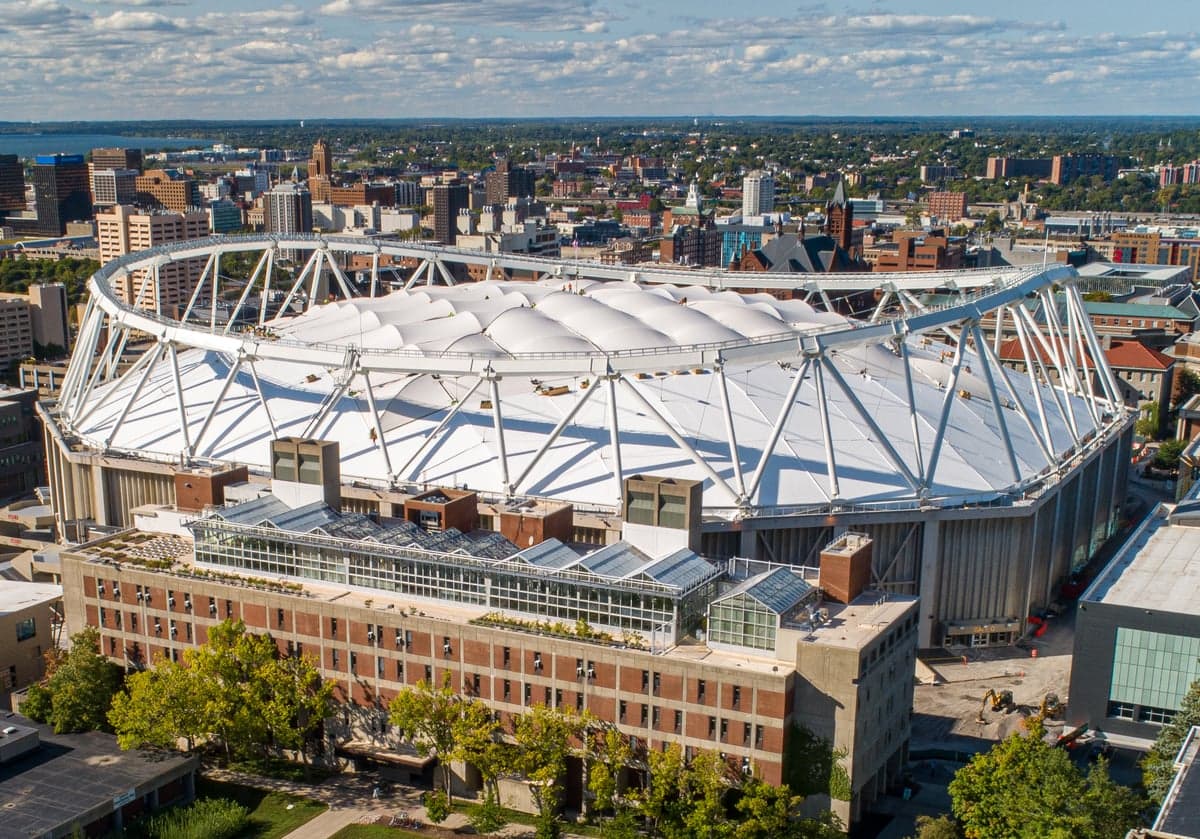
Photo: Wikipedia
Political ClimatePolitical Climate in Syracuse, NY
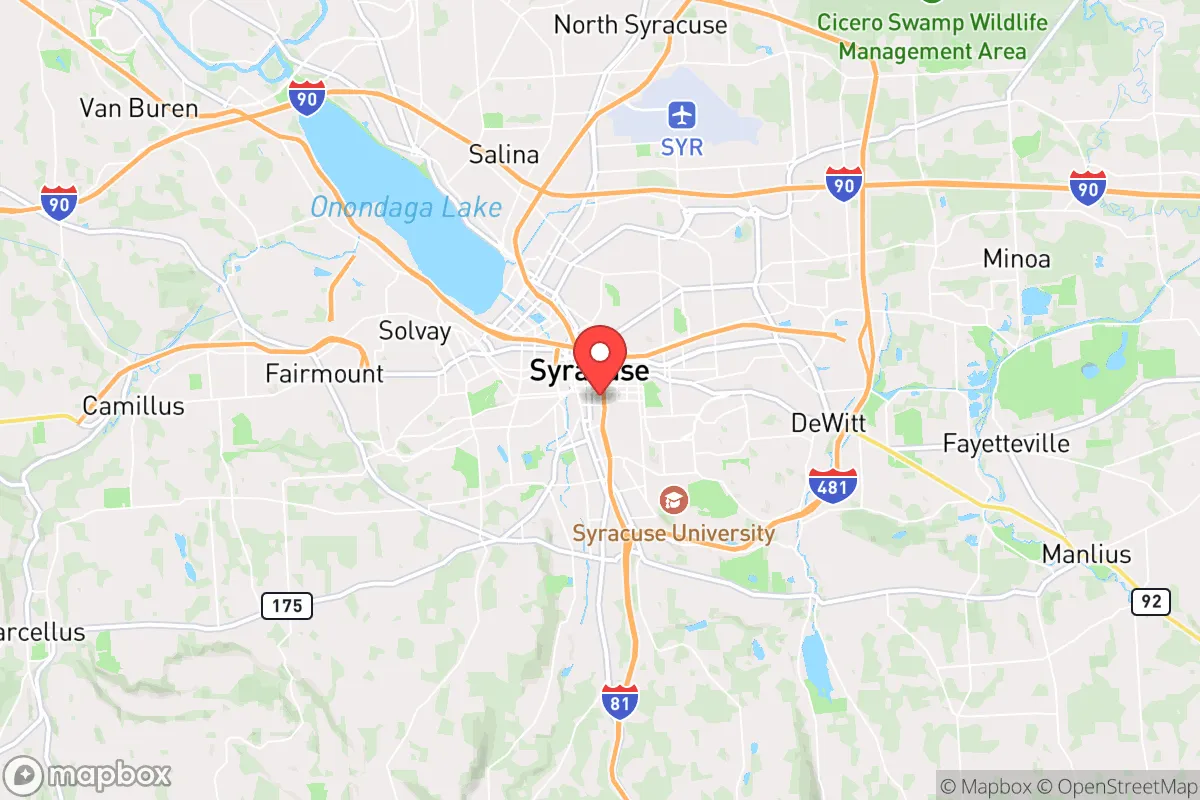
District shown is the primary district for this city’s centroid. Cities may span multiple districts.
Local Political AnalysisPolitical Analysis of Syracuse, NY
Syracuse leans reliably Democratic, with a Cook PVI of D+4, but that number doesn't tell the whole story of a city that's been shifting further left over the past decade. I've lived here long enough to remember when the city had a more moderate, blue-collar Democratic base—folks who were pro-union but also pro-common sense on things like taxes and property rights. Now, the local government has embraced a progressive agenda that feels more about ideology than practical governance. The city council and county executive have pushed policies that expand government reach into everyday life, from zoning overhauls that limit what you can do with your own property to tax hikes that fund programs many residents never asked for.
How it compares
If you drive just 15 minutes outside the city limits, the political landscape flips hard. Suburbs like Camillus, Liverpool, and Baldwinsville lean Republican or at least conservative-leaning independent, with many towns voting +15 to +20 points red in recent elections. Onondaga County as a whole is a swing county, but the city's D+4 rating masks how much of that blue vote is concentrated in a few dense wards. Head east to Utica (D+8) or west to Rochester (D+12), and you'll see even more aggressive progressive policies—Syracuse is actually more moderate than those cities on paper, but it's catching up fast. The surrounding rural areas, like Madison County or Oswego County, are deeply red, and the cultural divide between city and country is growing sharper every year.
What this means for residents
For a conservative or even a moderate living inside the city limits, the practical effect is a steady erosion of personal freedoms. The city has implemented strict rental registration and inspection programs that give bureaucrats broad authority to enter private property. There's a push for "sanctuary city" policies that limit local police cooperation with federal immigration enforcement, which many residents see as a direct challenge to rule of law. Property taxes are among the highest in the state relative to home values, and the city's response to budget shortfalls has been to raise fees and expand government programs rather than cut waste. If you value keeping more of your paycheck and making your own decisions about your home and business, Syracuse's trajectory is concerning—it's not yet as far gone as Albany or Buffalo, but the direction is clear.
One cultural distinction that stands out is the city's heavy reliance on state and federal grants to fund basic services. Syracuse has a long history of being a "company town" (first salt, then manufacturing, now education and healthcare), and that dependency has created a mindset where residents look to government for solutions rather than to private initiative. The local political class, from the mayor's office to the school board, tends to view every problem as an opportunity for a new program or regulation. For a conservative, the most frustrating part is watching the city double down on policies that have clearly failed elsewhere—like rent control experiments and business tax hikes—while ignoring the flight of middle-class families to the suburbs. If the trend continues, I'd expect Syracuse to become more like Rochester within a decade: a city with a progressive core, a shrinking tax base, and a growing disconnect between what the government wants and what the people actually need.

State Political ClimatePolitical Climate in New York
State Political AnalysisPolitical Environment in the State
New York State has been a solidly Democratic stronghold for decades, with a partisan lean that has only deepened in recent years. The state has not voted for a Republican presidential candidate since 1984, and in 2024, Kamala Harris carried it by roughly 12 points. The dominant coalition is a fusion of New York City's massive, diverse electorate, wealthy suburban liberals, and upstate college towns, all of which have pushed the state further left on nearly every policy front. Over the last 10-20 years, the trajectory has been unmistakably progressive, with the state legislature enacting a wave of laws on gun control, abortion, immigration, and taxation that have made it one of the most aggressively liberal states in the nation.
Urban vs. rural divide
The political map of New York is a tale of two states. New York City, with its 8.5 million residents, is the engine of Democratic dominance — Manhattan and Brooklyn routinely deliver 80-85% of their votes to Democratic candidates. The immediate suburbs, like Nassau and Westchester counties, have also shifted left, with formerly competitive districts now reliably blue. In contrast, vast stretches of upstate New York — from the North Country near Plattsburgh to the Southern Tier around Elmira and the Finger Lakes region — vote heavily Republican. For example, in 2024, Wyoming County (east of Buffalo) voted +45 for Trump, while nearby Orleans County was +38. Even in the Hudson Valley, the divide is stark: Dutchess County is a toss-up, but Ulster County (home to liberal Woodstock) is deeply blue. The rural-urban split is so pronounced that a resident of rural Steuben County might feel they live in a completely different state than someone in Brooklyn, with little overlap in values, media consumption, or political priorities.
Policy environment
New York's policy environment is defined by high taxes, heavy regulation, and a progressive social agenda. The state has the highest combined state and local tax burden in the nation, with income tax rates topping out at 10.9% and property taxes among the highest in the country. The regulatory posture is aggressive: New York was the first state to enact a statewide ban on natural gas in new buildings (effective 2026 for most new construction), and its climate law (the Climate Leadership and Community Protection Act) mandates a 85% reduction in greenhouse gases by 2050. On education, the state has eliminated most charter school caps and expanded funding, but also mandates "CRT-inspired" diversity, equity, and inclusion training in public schools. Healthcare is dominated by the state's Medicaid program, which covers nearly 30% of residents, and New York has codified abortion rights up to birth in state law. Election laws are among the most permissive in the country: no-excuse absentee voting, early voting, and same-day registration are all in place. For a conservative-leaning resident, the policy environment feels like a one-party state where dissent is increasingly marginalized.
Trajectory & freedom
New York is becoming less free by almost any measure, especially for those who value personal liberty in the traditional sense. The state's gun laws are among the strictest in the nation, with the 2022 "Concealed Carry Improvement Act" (passed after the Bruen Supreme Court decision) requiring "good moral character" for permits and banning firearms in a long list of "sensitive places" — effectively making it impossible for most law-abiding citizens to carry. Parental rights have been eroded: the state's "Child Victims Act" extended the statute of limitations for child sexual abuse claims, but more controversially, New York has become a "sanctuary" for gender-affirming care for minors, with laws that prevent parents from being notified if their child seeks such care at school. Medical autonomy took a hit during COVID, with the state imposing some of the longest and most restrictive lockdowns in the country, and vaccine mandates that cost thousands of healthcare workers their jobs. Property rights are under strain from rent control laws in New York City and the state's "Good Cause Eviction" law (passed in 2024), which limits landlords' ability to evict tenants or raise rents. The trend is clear: the state legislature, controlled by a supermajority of Democrats, is moving to expand government control over nearly every aspect of life.
Civil unrest & political movements
New York has been a flashpoint for political activism on both sides. The 2020 Black Lives Matter protests in New York City were among the largest in the country, with widespread property damage and a subsequent push to defund the police that led to a 10% cut in the NYPD budget. On the right, the "Second Amendment Sanctuary" movement has taken root in dozens of upstate counties, with officials in places like Otsego and Delaware counties passing resolutions vowing not to enforce new gun laws. Immigration politics are a constant source of tension: New York is a sanctuary state, and New York City has seen an influx of over 150,000 asylum seekers since 2022, straining shelters and schools and sparking backlash in working-class neighborhoods in Queens and Staten Island. Election integrity remains a hot-button issue, with the state's 2020 vote-by-mail expansion leading to allegations of fraud in a few local races, though no systemic problems were proven. A new resident would notice the visible political divide: "Defund the Police" signs in Brooklyn, "Trump 2024" flags on pickup trucks in the Southern Tier, and constant protests outside the state capitol in Albany.
Projection
Over the next 5-10 years, New York is likely to become even more progressive, driven by demographic shifts and in-migration patterns. New York City continues to attract young, college-educated liberals from across the country, while many conservative-leaning families are leaving for Florida, Texas, and the Carolinas. The state's population has been declining since 2020, with net domestic out-migration of over 300,000 people, and those leaving are disproportionately from the more conservative upstate regions. This self-selection will only deepen the Democratic supermajority in Albany, leading to more ambitious progressive legislation: a single-payer healthcare system (the "New York Health Act") is a perennial proposal, and a wealth tax on the ultra-rich is being discussed. For someone moving in now, the state in a decade will likely have even higher taxes, stricter gun laws, more expansive sanctuary policies, and a public school system that is increasingly at odds with traditional values. The rural areas will continue to feel politically powerless, while the cities and suburbs will set the agenda.
For a conservative-leaning individual or family considering a move to New York, the bottom line is this: you will be living in a state where your political views are in the minority, where your tax dollars fund policies you likely oppose, and where your personal freedoms — from gun ownership to school choice to medical decisions — are increasingly constrained. If you value low taxes, limited government, and cultural alignment with traditional values, New York is probably not the right fit. However, if you have a specific reason to be here (family, a unique job opportunity, or a love for the Adirondacks), you can find like-minded communities in places like Orleans County, the Southern Tier, or the North Country — just be prepared to fight for your values in a state that is moving in the opposite direction.
* Values derived from national, state, county, city and local statistics and may differ in a specific area. Last updated: 2026-05-01T21:55:59.000Z
Narrative content on this page is AI-generated and may contain mistakes. Verify any details that matter before acting on them.
ReloMaps may earn a commission from affiliate links at no extra cost to you.

