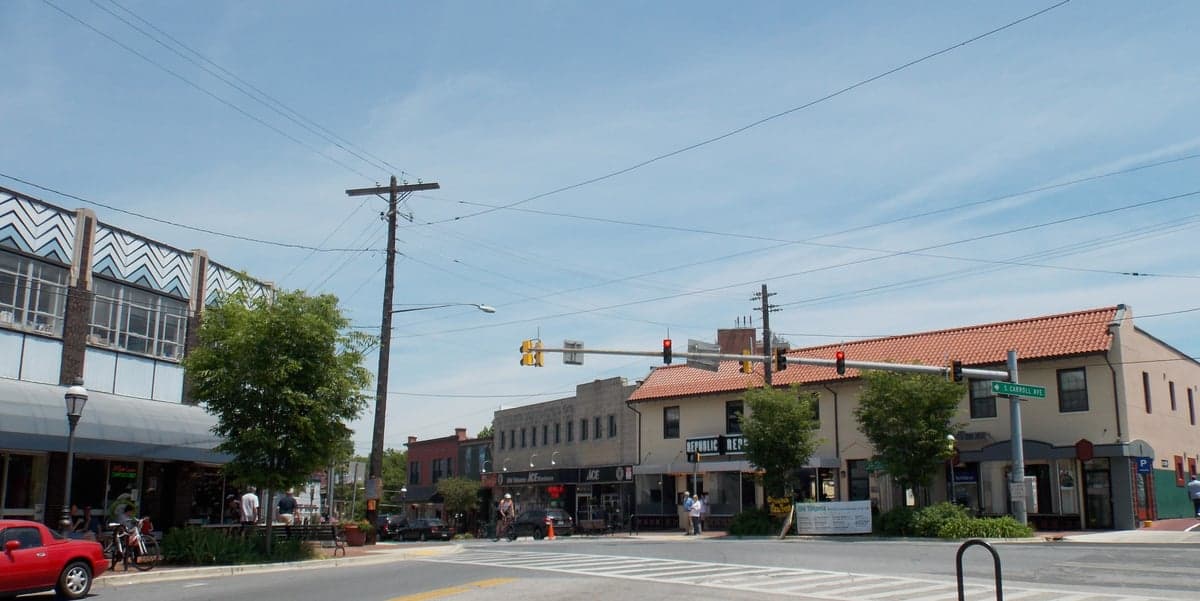
Photo: Wikipedia
Strategic Assessment of Takoma Park, MD
Multiple tactical vulnerabilities. Population density, target proximity, or disaster risk are likely compounding. A retreat property and exit planning is required.
What does the Strategic Assessment tell us?
Our Strategic Assessment grades tactical survivability of an area. Major population centers, military targets, fallout zones, natural disasters, and border exposure all drive risk — lower exposure means a more defensible position in a crisis.
This is heavily inspired by Joel Skousen's Strategic Relocation book. Highly recommended you checkout the book ($)What does this tell us?
Our Strategic Assessment grades tactical survivability of an area. Major population centers, military targets, fallout zones, natural disasters, and border exposure all drive risk — lower exposure means a more defensible position in a crisis.
This is heavily inspired by Joel Skousen's Strategic Relocation book. Highly recommended you checkout the book ($)Strategic Pillars

Key Distances
Regional Safe Places
Below is our recommended "safe zones" in Maryland and the surrounding area based on our strategic heuristics. For most people, it's unrealistic to live in a “safe zone” full-time due to work, family or other personal reasons. They tend to be more rural. However, many of these areas are perfect for second homes and retreat properties that double as a vacation home or even a short-term rental.
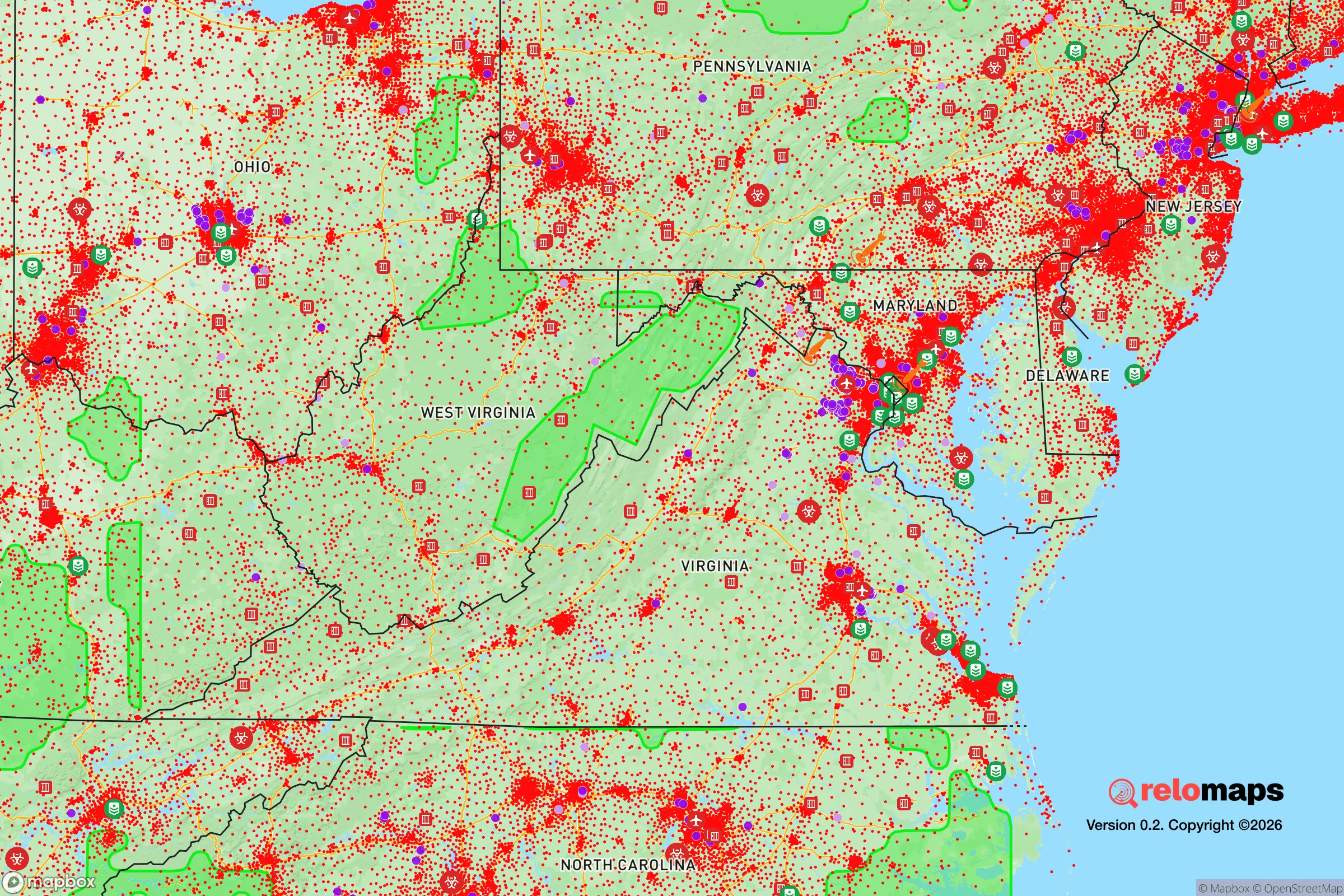
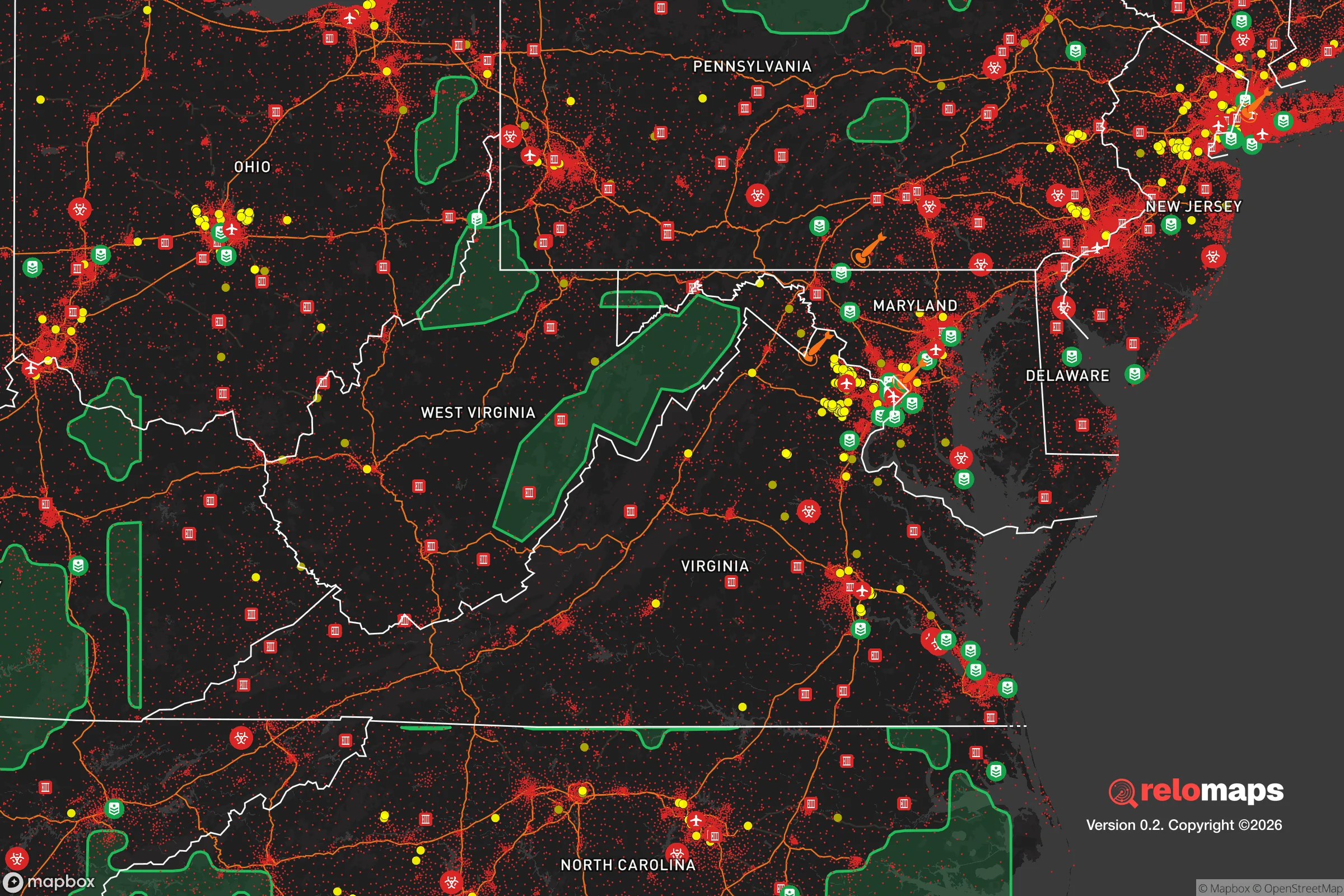


Important Note: For informational purposes only. This does not mean nothing bad ever happens in the green zones. Please use common sense. This is based on public data and modeled with AI. We tried to take a conservative approach but mistakes happen. We update this regularly as new information becomes available.
Solar Generator Recommendations
Backup power matters more here than in safer locations. We've picked three solar generators across budgets and capacity tiers — start with the budget unit if you only need a few essentials, or step up if you want to run a fridge and HVAC for days at a time.

Jackery Portable Power Station Explorer 300
Budget OptionPower on the Go: Weighing only 11 lbs, it's convenient to set up and store with book-sized foldable solar panels

BLUETTI Portable Power Station AC180
Designed for both indoor and outdoor scenarios, AC180 is highly capable as it has a robost capacity and continuous output power.

EF ECOFLOW DELTA Pro Ultra Power Station
Upgraded PickEcoFlow DELTA Pro Ultra is a whole-home energy system designed to grow with your family. Integrated with the Smart Home Panel 2, it scales to meet your evolving energy needs — keeping your home powered, intelligent, and secure through every stage of life.
We earn a commission, at no additional cost to you.
Strategic Assessment Analysis
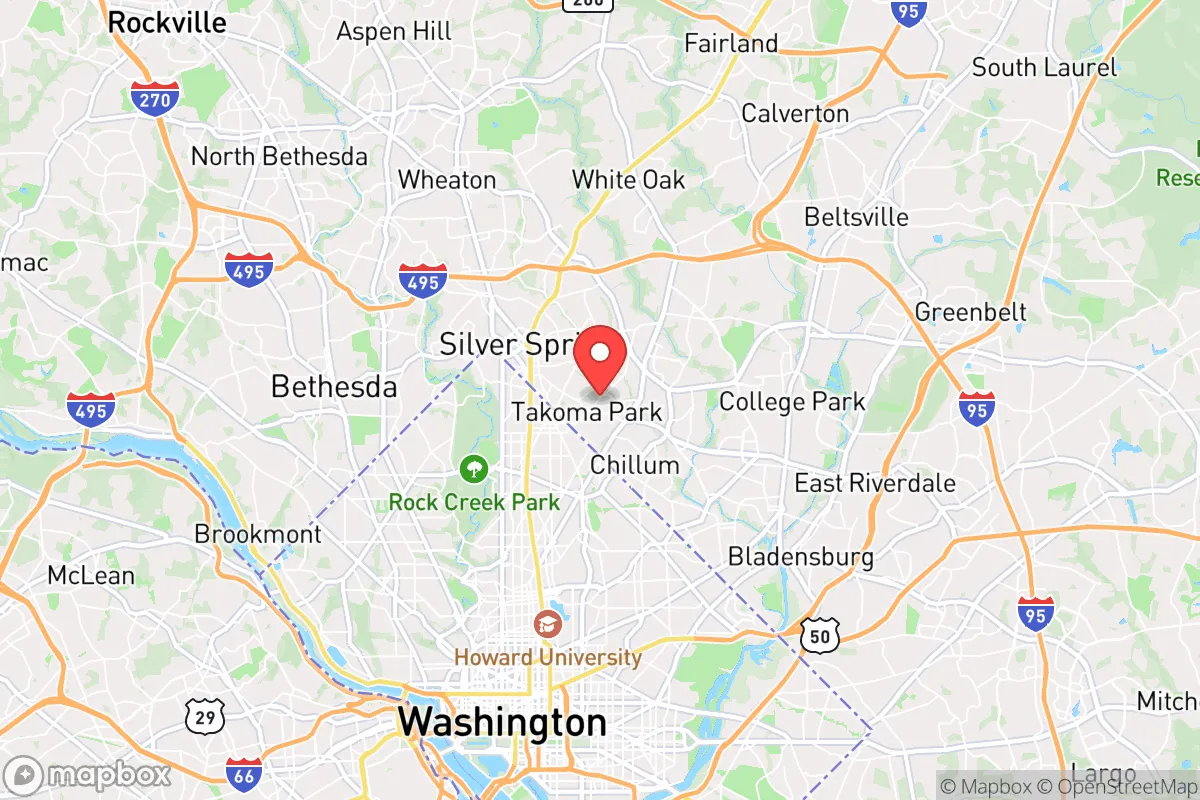
Takoma Park, Maryland, presents a complex strategic picture for the conservative prepper. Its immediate proximity to Washington, D.C. — less than two miles from the District line — is its most defining feature, offering both a veneer of suburban normalcy and a glaring target-set for any scenario involving civil unrest, grid-down events, or geopolitical escalation. While the city’s famously progressive local politics and dense, walkable layout might seem antithetical to a survivalist mindset, the area’s underlying geographic resilience, access to water, and established community networks offer a few countervailing advantages — provided you understand the risks and plan accordingly. For the relocator who values preparedness, this is not a bug-out location; it is a high-risk, high-awareness staging ground that demands constant vigilance and a clear exit strategy.
Geographic position and natural advantages for a prepper
Takoma Park sits on the fall line between the Piedmont Plateau and the Atlantic Coastal Plain, a transition zone that gives it slightly elevated terrain compared to the flood-prone areas closer to the Potomac and Anacostia rivers. The city’s elevation averages around 250 feet above sea level, which reduces — but does not eliminate — the risk of flash flooding from the Sligo Creek watershed that runs through the heart of town. The Sligo Creek itself, a tributary of the Northwest Branch of the Anacostia River, provides a natural water source, though it is heavily urbanized and would require significant filtration and treatment before consumption. The tree canopy is dense, with many mature oaks and maples, offering some natural cover and a modest supply of firewood in a prolonged grid-down scenario. The city’s location along the Capital Beltway (I-495) and the Metro’s Red Line gives it excellent transportation links, but those same arteries become choke points during any evacuation or civil disturbance. The natural advantages here are subtle: defensible terrain is limited, but the Sligo Creek corridor and the adjacent Northwest Branch Park offer green buffers that could serve as low-visibility travel routes or temporary rally points for those who know the trails.
Risks, exposures, and proximity to fallout-relevant landmarks
The single greatest strategic liability of Takoma Park is its location within the blast and fallout radius of Washington, D.C. The city lies roughly 6 miles from the White House and 7 miles from the Capitol Building — well within the moderate damage zone for a ground-burst nuclear weapon in the 10- to 50-kiloton range, and certainly within the lethal fallout plume for any larger device. The National Institutes of Health (NIH) campus in Bethesda, just 3 miles west, and the Walter Reed National Military Medical Center, 4 miles southwest, are both high-value military and research targets. The nearby Silver Spring Metro station and the Takoma Park Metro station are potential targets for secondary attacks or civil unrest. Beyond nuclear threats, the area is vulnerable to electromagnetic pulse (EMP) effects from a high-altitude detonation, which could cripple the power grid and electronics across the entire Mid-Atlantic region. The city’s dense population — over 17,000 residents in just 2.1 square miles — means that any mass casualty event, whether from a biological agent, chemical spill, or coordinated attack, would overwhelm local medical resources. The Washington Adventist Hospital in Takoma Park is a community hospital with limited trauma capacity, and the nearest Level I trauma centers are in downtown D.C. or at the University of Maryland Medical Center in Baltimore, both of which would be inaccessible during a major event. For the prepper, this is not a location to hunker down; it is a location to have a pre-planned, rehearsed evacuation route to a secondary location at least 50 miles away.
Practical resilience for a relocator: food, water, energy, and defensibility
Practical self-sufficiency in Takoma Park is challenging but not impossible. The city’s water supply comes from the Washington Aqueduct, which draws from the Potomac River — a single point of failure that would be compromised in any contamination event. A prepper should plan for at least two weeks of stored water per person, plus a high-quality filtration system (e.g., Berkey or Sawyer) capable of handling biological and chemical contaminants from Sligo Creek or rainwater collection. Food storage is constrained by the typical small lot sizes and older homes with limited basement space; a dedicated pantry or a small chest freezer on a backup generator is essential. Solar panels are feasible on many rooftops, but the tree canopy limits direct sunlight, and local zoning codes are restrictive — the city has a strong environmentalist ethos but also a permitting process that can delay installations. Defensibility is poor: the street grid is open, with many homes featuring large front windows and shallow setbacks. The city’s police force is small (about 30 sworn officers), and response times in a widespread emergency would be measured in hours, not minutes. The best defensive strategy here is not to fortify a single home but to build a network of trusted neighbors — the city’s active community associations and co-op culture can be leveraged for mutual aid, but only if you are willing to engage with a politically diverse group. For the conservative relocator, this means keeping a low profile, maintaining operational security, and being ready to move at a moment’s notice.
The overall strategic picture for Takoma Park is one of calculated risk. It offers the benefits of a walkable, tree-lined community with access to major infrastructure and a strong sense of local identity — but those benefits come at the cost of being a prime target in any national-level crisis. For the single individual or family who values preparedness and is willing to invest in a robust bug-out plan, it can serve as a temporary base for work or family obligations. But as a long-term survival location, it falls short. The conservative prepper should view Takoma Park as a place to live and work under normal conditions, not as a place to ride out a collapse. Have your gear staged, your routes mapped, and your secondary location secured. This is a city for the aware, not the complacent.

* Values derived from national, state, county, city and local statistics and may differ in a specific area. Last updated: 2026-04-22T08:42:01.000Z
Narrative content on this page is AI-generated and may contain mistakes. Verify any details that matter before acting on them.
ReloMaps may earn a commission from affiliate links at no extra cost to you.

