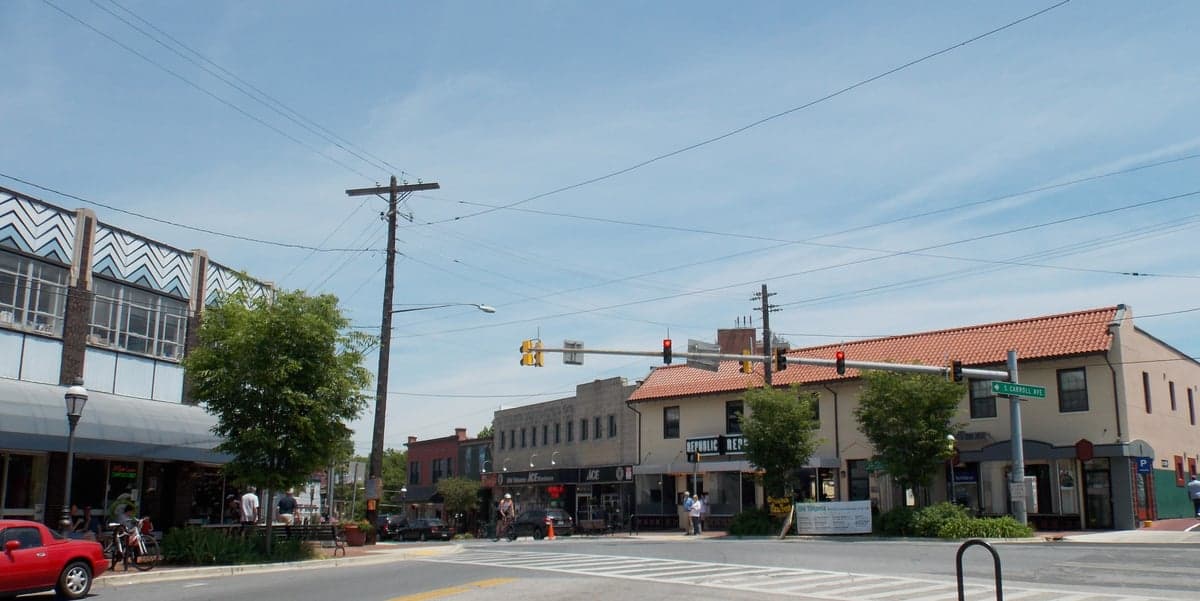
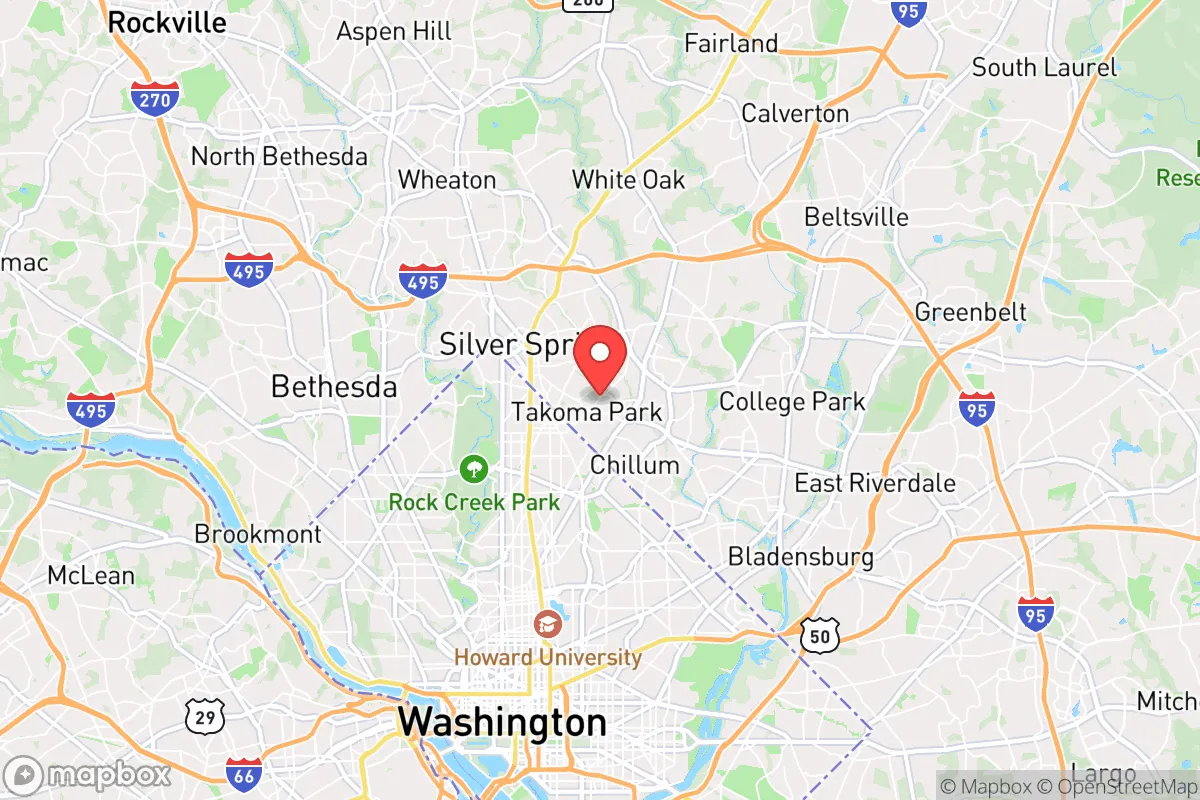
Photo: Wikipedia
Personal Sovereignty in Takoma Park, MD
Viable for self-reliance. Generally workable, though some barriers may limit total independence.
What does Personal Sovereignty tell us?
Personal Sovereignty measures your capacity for self-reliance and independence with minimal government friction. Higher scores mean fewer barriers between you and the way you want to live... but it assumes you have the space you need and good neighbors.
What does this tell us?
Personal Sovereignty measures your capacity for self-reliance and independence with minimal government friction. Higher scores mean fewer barriers between you and the way you want to live... but it assumes you have the space you need and good neighbors.
State Policy
Energy independence: Importer (8% of energy produced in-state)
Personal Liberty
Homesteading

Personal Liberty Analysis
Takoma Park, Maryland, presents a complex and largely restrictive environment for personal sovereignty, particularly for those with a survivalist or prepper mindset. While the city is known for its progressive activism, this translates into a dense web of local and state regulations that significantly limit individual autonomy in areas like taxation, self-defense, property use, and family decision-making. For a conservative-leaning individual or family prioritizing self-reliance and minimal government overreach, Takoma Park represents a high-intervention jurisdiction where personal freedoms are often secondary to collective policy goals. The overall sovereignty environment here is among the most constrained in the Mid-Atlantic, requiring a strategic, low-profile approach to navigate.
Tax burden and regulatory posture: How local and state policies affect your autonomy
Maryland's tax structure is a primary concern for anyone valuing financial sovereignty. The state imposes a progressive income tax with rates ranging from 2% to 5.75%, and Montgomery County adds a local income tax of 3.2%, creating a combined top marginal rate near 9%. Takoma Park itself levies a separate city income tax of 3.2% on residents, pushing the total effective income tax burden for high earners well above 12%. Property taxes are also substantial, with Montgomery County's rate around 1.0% of assessed value, plus a city property tax. This triple-layer taxation—state, county, and city—directly reduces the capital available for personal preparedness, land acquisition, or off-grid investments. The regulatory posture is equally dense. Montgomery County enforces strict building codes, environmental regulations, and land-use rules that make any significant property modification—such as installing solar panels, rainwater catchment systems, or backyard structures—subject to lengthy permitting processes. The county's zoning code is notoriously detailed, limiting what you can do on your own land without explicit approval. For a prepper, this means that even basic self-reliance projects like a large garden shed, a greenhouse, or a backup generator installation may require permits, inspections, and compliance with aesthetic guidelines, eroding the principle of personal property control.
Self-defense and gun law specifics: What you need to know about carrying and storing firearms
Maryland's firearm laws are among the most restrictive in the nation, and Takoma Park residents must comply with both state and local regulations. The state requires a permit to purchase a handgun, a seven-day waiting period, and a background check for all firearm sales, including private transfers. Carrying a handgun in public requires a Wear and Carry Permit, which Maryland issues on a "good and substantial reason" standard—effectively a may-issue system that is difficult to obtain for general self-defense. The state also bans "assault weapons" by name and feature, limits magazine capacity to 10 rounds, and requires safe storage of firearms. Takoma Park has its own local ordinances that further restrict firearm possession in certain public areas, including parks and municipal buildings. For a survivalist, this means that the ability to defend your home or person with a firearm is heavily circumscribed. The legal process for acquiring, storing, and carrying a weapon is burdensome, and the risk of running afoul of complex laws is high. This environment directly undermines the principle of self-defense as a fundamental right, forcing residents to rely on slower police response times and legal compliance rather than personal capability. For those prioritizing armed preparedness, this is a significant negative factor.
Self-reliance and homesteading viability: Lot sizes, zoning, and off-grid feasibility
Takoma Park is a densely developed inner-ring suburb, with most residential lots ranging from 5,000 to 10,000 square feet. This small lot size severely limits the potential for any meaningful homesteading or self-reliance activities. Zoning is predominantly R-60 (single-family residential) with strict setbacks, height limits, and use restrictions. Keeping chickens is allowed with a permit, but beekeeping, goats, or other livestock are prohibited in most residential zones. Gardening is permitted, but the small lot size and shade from mature trees limit food production to a few raised beds. Off-grid feasibility is essentially zero. The city requires connection to municipal water and sewer, and any attempt to install a septic system or well would violate code. Solar panels are allowed but must comply with historic district guidelines in many neighborhoods, and battery storage for off-grid backup is subject to fire code restrictions. Rainwater harvesting is legal but limited to 100 gallons per property without a permit, and any system must be disconnected from the roof downspouts to avoid overflow issues. For a prepper seeking true self-reliance—growing food, storing water, generating power independently—Takoma Park's dense, regulated environment is fundamentally incompatible. The city's infrastructure is designed for dependence on centralized systems, not individual resilience.
Personal liberties: Parental rights, medical autonomy, speech, and property control
Personal liberties in Takoma Park are shaped by Maryland's strong state-level preemption and local progressive policies. Parental rights are notably constrained. Maryland mandates comprehensive sex education in public schools, with an opt-out rather than opt-in policy, meaning parents must actively remove their children from lessons they find objectionable. The state also has a strict vaccine mandate for school attendance, with limited medical exemptions and no religious or philosophical exemptions. Medical autonomy is further limited by Maryland's public health powers, which allow the state to impose quarantine, isolation, and mandatory treatment orders during health emergencies. Takoma Park's city council has a history of supporting broad public health mandates, including mask and vaccine requirements during the COVID-19 pandemic. Free speech is generally protected, but the city has enacted ordinances limiting speech in certain public forums, such as requiring permits for large gatherings and restricting amplified sound. Property control is the most constrained area. As noted, zoning and building codes are extensive, and the city's historic preservation commission has authority over exterior changes in designated districts, including paint colors, window replacements, and landscaping. For a conservative individual, this represents a significant erosion of the right to use one's property as one sees fit. The cumulative effect is an environment where personal choices in health, education, and property are heavily mediated by government authority.
In summary, Takoma Park offers a very low level of personal sovereignty compared to other areas in the Mid-Atlantic. The combination of high taxes, restrictive gun laws, dense zoning, and limited parental and medical autonomy creates a jurisdiction where individual self-reliance is systematically discouraged. For a survivalist or prepper, this is not a viable location for building a resilient, independent lifestyle. Neighboring areas in rural Maryland, such as Garrett County or the Eastern Shore, or states like West Virginia or Pennsylvania, provide far more latitude for self-defense, property control, and off-grid living. If relocation to Takoma Park is unavoidable, the strategic approach is to maintain a low profile, comply strictly with all regulations, and focus on financial and informational preparedness rather than physical infrastructure. The city's progressive governance model is fundamentally at odds with the principles of personal sovereignty and self-reliance that are central to a conservative, prepper-oriented worldview.

* Values derived from national, state, county, city and local statistics and may differ in a specific area. Last updated: 2026-04-22T08:42:01.000Z
Narrative content on this page is AI-generated and may contain mistakes. Verify any details that matter before acting on them.
ReloMaps may earn a commission from affiliate links at no extra cost to you.

