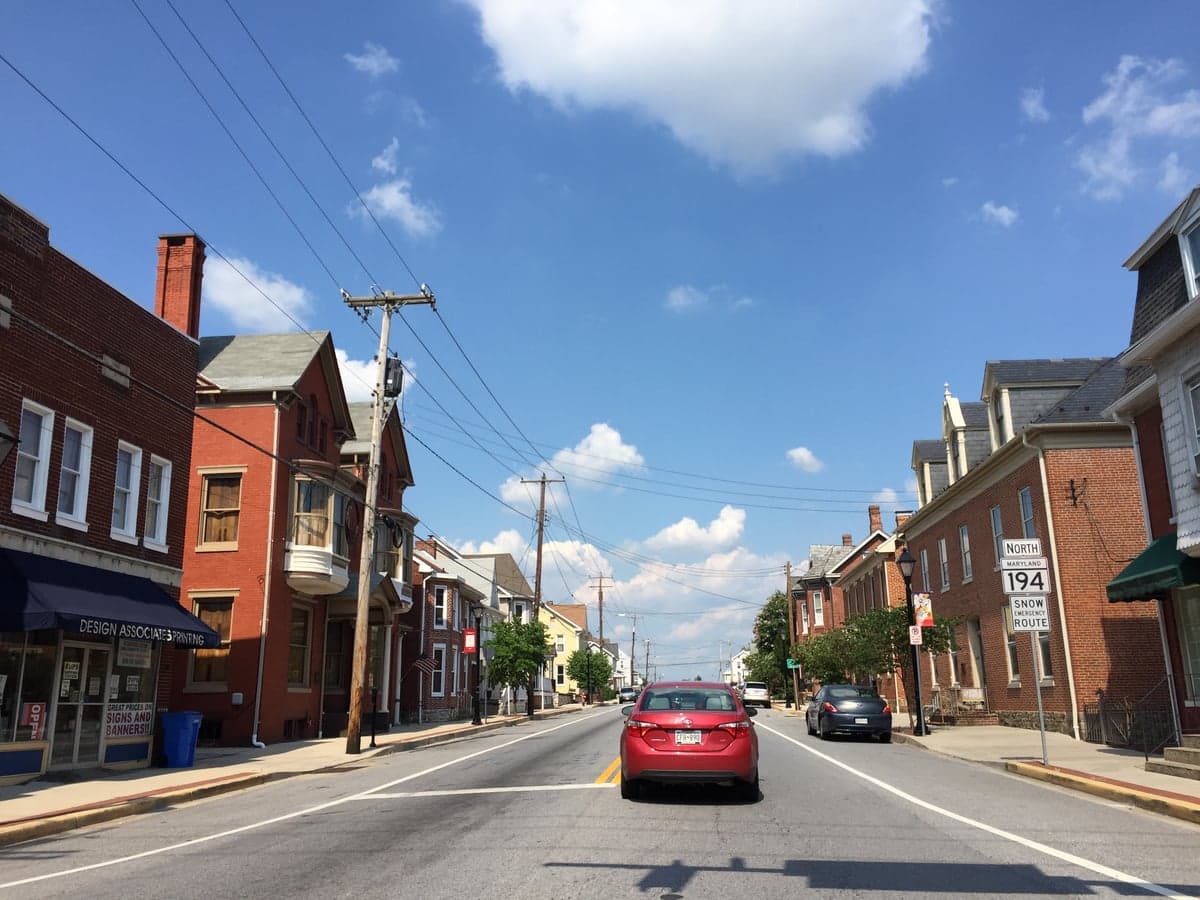
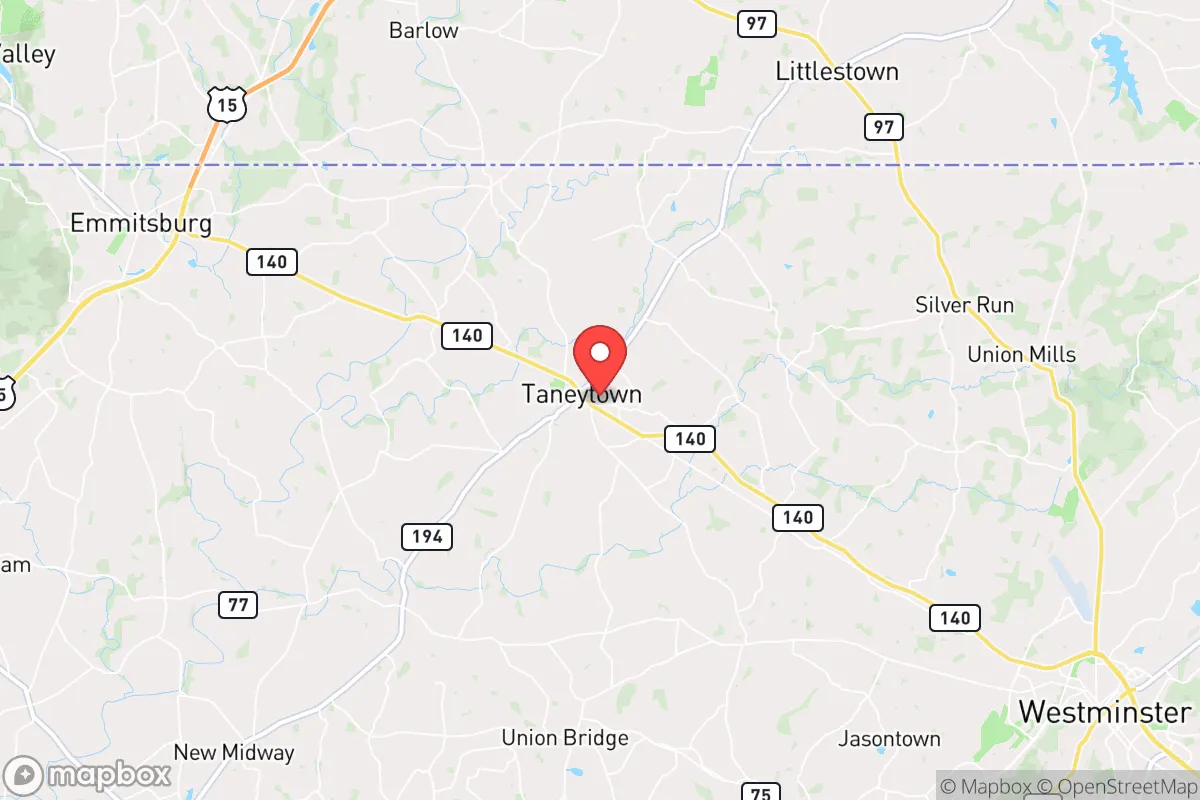
Photo: Wikipedia
Personal Sovereignty in Taneytown, MD
Viable for self-reliance. Generally workable, though some barriers may limit total independence.
What does Personal Sovereignty tell us?
Personal Sovereignty measures your capacity for self-reliance and independence with minimal government friction. Higher scores mean fewer barriers between you and the way you want to live... but it assumes you have the space you need and good neighbors.
What does this tell us?
Personal Sovereignty measures your capacity for self-reliance and independence with minimal government friction. Higher scores mean fewer barriers between you and the way you want to live... but it assumes you have the space you need and good neighbors.
State Policy
Energy independence: Importer (8% of energy produced in-state)
Personal Liberty
Homesteading

Personal Liberty Analysis
Taneytown, Maryland offers a mixed bag for those prioritizing personal sovereignty, with the state’s increasingly progressive tilt creating friction for residents who value autonomy. While the town itself retains a small-town, rural character that supports self-reliance, the legal and tax environment in Carroll County is shaped by Annapolis and Baltimore, where government overreach into personal freedoms is a growing concern. For single individuals and parents looking to preserve independence from state control, Taneytown provides some breathing room—especially in terms of property rights and community culture—but it’s not a libertarian haven. The key is understanding where local autonomy ends and state mandates begin, particularly in areas like taxation, self-defense, and medical choice.
Tax burden and regulatory posture in Carroll County
Maryland’s tax burden is among the highest in the nation, and Taneytown residents feel that pinch directly. The state’s income tax ranges from 2% to 5.75%, and Carroll County adds a local income tax of 3.2%, bringing the combined top rate to nearly 9%—a significant hit for earners. Property taxes are more moderate: the county rate is about 1.02% of assessed value, and Taneytown itself adds a small municipal tax, but total effective rates hover around 1.1%, which is reasonable for the region. However, the regulatory posture is where sovereignty takes a hit. Maryland’s strict environmental regulations, building codes, and land-use laws limit what you can do on your own property without permits or approvals. For example, the state’s Critical Area Law restricts development within 1,000 feet of tidal waters, and while Taneytown isn’t coastal, similar state-level oversight applies to wetlands and streams. This means that even on a rural lot, you can’t simply build a shed, dig a pond, or install a septic system without navigating bureaucratic hurdles. The state’s aggressive pursuit of climate goals also means higher energy costs and potential future restrictions on gas-powered equipment, which preppers should factor into long-term planning.
Self-defense and gun law specifics in Maryland
Maryland’s gun laws are among the most restrictive in the country, and Taneytown residents must comply with state mandates that erode the right to self-defense. The state requires a Handgun Qualification License (HQL) to purchase a handgun, which involves fingerprinting, a background check, and an approved training course—a process that can take weeks. Additionally, Maryland has a ban on “assault weapons” (including many popular semi-automatic rifles) and limits magazine capacity to 10 rounds. Concealed carry is legal with a permit, but the state’s “good and substantial reason” requirement was struck down in 2022 after the Bruen decision; now, permits are issued on a shall-issue basis, but the application process remains cumbersome and expensive. For parents, this means that teaching children firearm safety and keeping a defensive weapon in the home is legally possible but heavily regulated. Open carry is generally prohibited without a permit, and storage laws require firearms to be locked away if a minor might access them—a reasonable safety measure but one that can slow access in a home-defense scenario. Compared to neighboring Pennsylvania or West Virginia, Taneytown’s gun culture is constrained by state overreach, though local law enforcement in Carroll County is generally supportive of Second Amendment rights.
Self-reliance and homesteading viability in Taneytown
Taneytown’s rural zoning and lot sizes offer genuine opportunities for self-reliance, but state and county regulations impose limits. Many residential lots in the town proper are under an acre, but the surrounding unincorporated areas of Carroll County feature 2- to 5-acre parcels that are zoned for agricultural use, allowing for gardens, small livestock (chickens, goats), and even beekeeping with minimal permitting. The county’s Right to Farm law protects agricultural activities from nuisance complaints, which is a plus for homesteaders. However, off-grid living is nearly impossible due to Maryland’s building codes. The state requires connection to the electrical grid for new construction, and solar panels must be grid-tied unless you obtain a special exception. Rainwater collection is legal but regulated—you can collect from rooftops for non-potable uses, but a permit is needed for larger cisterns. Composting toilets are allowed only with an approved septic system, and burning trash is prohibited. For preppers, the biggest hurdle is water: private wells are common on larger lots, but the state’s strict well-drilling regulations and water rights laws mean you can’t simply dig your own. Overall, Taneytown supports a semi-self-sufficient lifestyle—you can grow food and keep animals—but full independence from utilities and government oversight is not feasible within the law.
Personal liberties: parental rights, medical autonomy, speech, and property
Maryland’s state government has increasingly encroached on personal liberties, and Taneytown residents must navigate these restrictions. Parental rights are a flashpoint: the state mandates comprehensive sex education in public schools, and parents cannot opt their children out of all lessons—only specific components. School vaccine requirements are strict, with no philosophical exemptions, only medical or religious ones (and religious exemptions are being challenged in court). Medical autonomy is similarly constrained. Maryland has a vaccine mandate for healthcare workers and schoolchildren, and during the pandemic, the state imposed mask mandates and business closures that were among the longest in the region. While those are lifted, the precedent for government control over personal health decisions remains. Free speech is protected under the First Amendment, but Maryland has laws against “hate speech” that can be used to prosecute offensive but non-inciting speech, and the state’s social media laws require platforms to remove certain content—a gray area for those concerned about censorship. Property rights are relatively strong in Carroll County, with limited eminent domain abuse, but the state’s zoning and environmental regulations mean you can’t always use your land as you see fit. For example, building a private shooting range on your property requires a special exception and noise compliance, and storing large quantities of fuel or ammunition may trigger fire code inspections. In short, Taneytown offers a moderate level of personal liberty compared to more restrictive states like California or New York, but it falls short of the autonomy found in states like New Hampshire or Idaho.
For the sovereignty-minded individual or family, Taneytown represents a compromise. The town’s rural character, low crime rate, and community-oriented culture provide a foundation for self-reliance, but Maryland’s state-level policies on taxes, guns, and medical choice create a ceiling on personal freedom. If you’re willing to navigate the regulatory landscape and accept higher taxes, Taneytown can work as a base for a prepper lifestyle—especially if you focus on food production and community networking rather than off-grid independence. However, for those seeking maximum autonomy from government overreach, states with lower tax burdens, fewer gun restrictions, and stronger parental rights (like Texas, Tennessee, or Montana) offer a clearer path. Taneytown is a solid choice for those who value proximity to the Mid-Atlantic job market and family ties, but it’s not a sanctuary from state control.

* Values derived from national, state, county, city and local statistics and may differ in a specific area. Last updated: 2026-04-22T04:05:42.000Z
Narrative content on this page is AI-generated and may contain mistakes. Verify any details that matter before acting on them.
ReloMaps may earn a commission from affiliate links at no extra cost to you.

