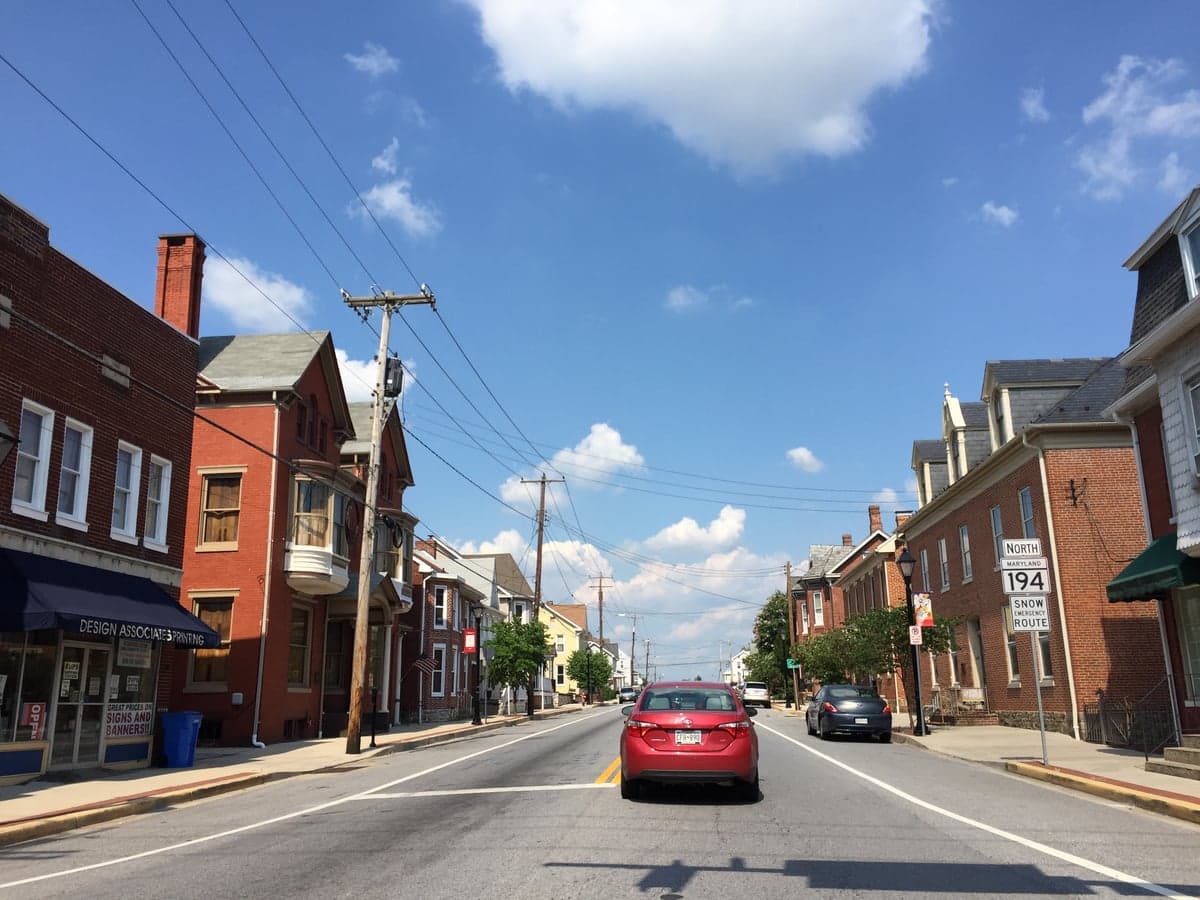
Photo: Wikipedia
Political ClimatePolitical Climate in Taneytown, MD
District shown is the primary district for this city’s centroid. Cities may span multiple districts.
Local Political AnalysisPolitical Analysis of Taneytown, MD
Taneytown, Maryland, sits in a bit of a political tug-of-war, and if you’ve lived here as long as I have, you’ve felt the ground shift. The Cook PVI gives the area a D+10 rating, meaning it leans Democratic by about 10 points compared to the national average, but that number doesn’t tell the whole story. In the past, this was a reliably conservative town—folks here valued their independence, their guns, and their right to live without a lot of government interference. Over the last decade or so, though, you’ve seen a slow creep of progressive policies, especially from Carroll County’s more urbanized corners, and it’s starting to change the feel of the place. The trajectory is concerning: what was once a quiet, self-reliant community is now seeing more regulations, higher taxes, and a push for things like zoning changes that feel like they’re coming from Annapolis, not from Main Street.
How it compares
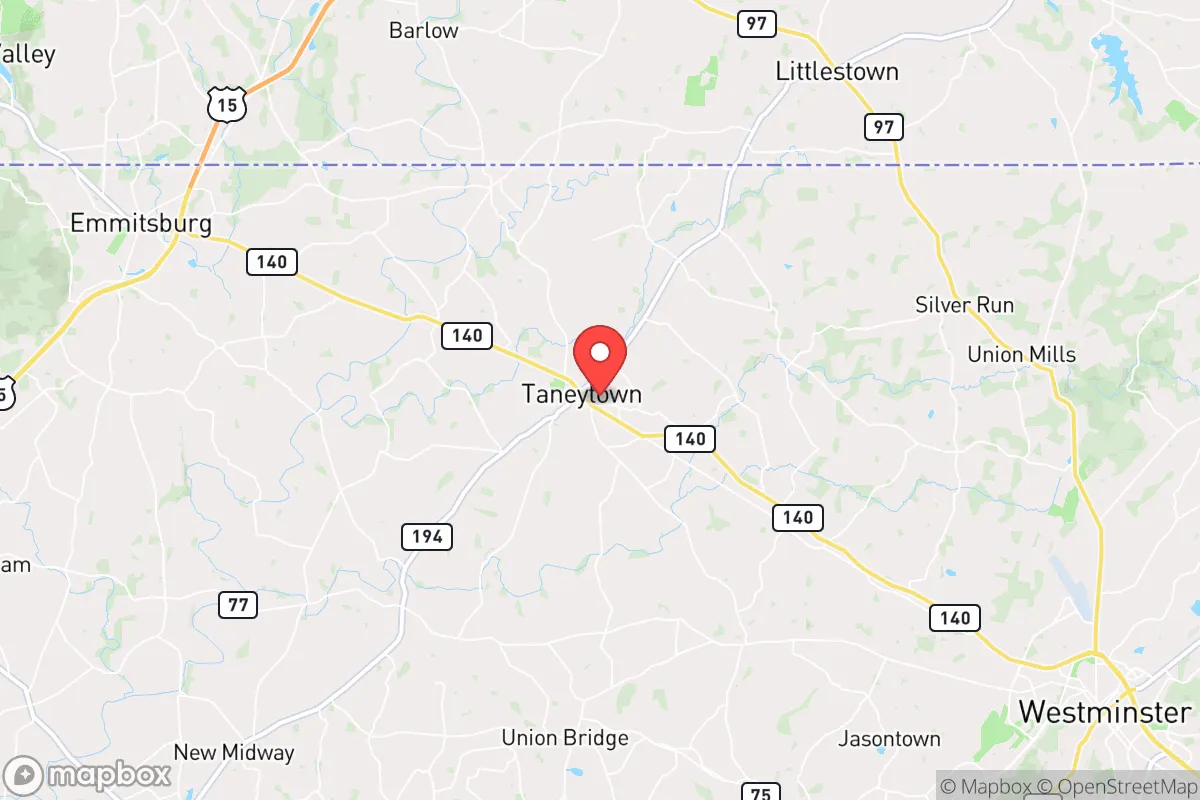
To really get the picture, you’ve got to look at the towns around us. Head west to Emmitsburg, and you’ll find a place that’s still holding onto its conservative roots—folks there vote red, and they’re proud of it. Down south toward Westminster, you start seeing the blue creep in, with more county-level spending and a louder progressive voice. Taneytown is caught in the middle: we’re not as deep blue as Frederick City, which is a whole different world with its bike lanes and diversity initiatives, but we’re not as red as the rural stretches of Carroll County either. The D+10 rating puts us in a spot where local elections can swing either way, but the trend is clear—newcomers from the D.C. and Baltimore suburbs are moving in, and they bring their voting habits with them. It’s a stark contrast to places like Union Bridge or New Windsor, where you still see “Don’t Tread on Me” flags flying high.
What this means for residents
For those of us who’ve been here a while, the biggest worry is how this shift affects daily life. You’re seeing more county ordinances that feel like overreach—things like stricter noise regulations, limits on property use, and a push for “complete streets” projects that prioritize bike lanes over parking. It’s not just about politics; it’s about the freedom to do what you want on your own land. Property taxes have inched up, and there’s talk of more school funding that comes with strings attached, like curriculum changes that don’t sit right with a lot of parents. If you’re a hunter, a small business owner, or just someone who likes to keep to yourself, the progressive drift means you’re constantly watching your back for the next rule that tells you how to live. The local government is still mostly reasonable, but the pressure from the county and state level is real, and it’s wearing down the old way of doing things.
One thing that sets Taneytown apart is its stubborn streak—we’ve got a strong volunteer fire department, a tight-knit church community, and a lot of folks who remember when the town was just a stop on the railroad. You won’t see the kind of flashy progressive activism you get in Columbia or Takoma Park, but you will see a quiet resistance. The cultural divide here is less about protests and more about how people live their lives: you’ve got families who’ve been here for generations, and they’re not about to let some bureaucrat tell them how to run their farm or their home. The policy distinctions are subtle—like how the town council still debates whether to allow backyard chickens or how they handle short-term rentals—but they matter. For now, Taneytown is a place where you can still breathe, but you’ve got to keep an eye on the horizon, because the winds from Annapolis are blowing harder every year.

State Political ClimatePolitical Climate in Maryland
State Political AnalysisPolitical Environment in the State
Maryland has long been a deep blue state, with Democrats holding every statewide office and a supermajority in the General Assembly, but that blanket statement hides a fierce internal divide. Over the past 20 years, the state has shifted from a moderate, union-driven blue to a more progressive, government-expanding one, driven almost entirely by the suburban D.C. and Baltimore metros. For a conservative considering a move here, the reality is that your vote in state elections is largely symbolic, but your local quality of life—taxes, schools, and personal freedoms—varies dramatically depending on which county you land in.
Urban vs. rural divide
The political map of Maryland is a tale of two worlds. The western panhandle, including Garrett County and Allegany County (home to Cumberland), votes reliably Republican, often by 30-40 point margins. The Eastern Shore, from Cecil County down through Worcester County (Ocean City), is similarly red, with a strong rural and agricultural identity. The central spine—Frederick County and Carroll County—has been a traditional GOP stronghold, though Frederick is now trending purple as D.C. commuters push in. The real blue engine is the I-95 corridor: Montgomery County and Prince George’s County alone cast more votes than the entire western half of the state combined. Baltimore City is a Democratic fortress, while suburban Anne Arundel County (Annapolis) and Howard County (Columbia) have shifted hard left over the last decade. The 2022 gubernatorial race saw Republican Dan Cox lose by 32 points statewide, but he carried 16 of 23 counties—the problem is that the seven he lost contain 70% of the population.
Policy environment
Maryland’s policy posture is aggressively progressive and expensive. The state has a progressive income tax with rates up to 5.75%, plus county-level piggyback taxes that can push the top marginal rate over 9%. Property taxes are high, especially in Montgomery and Howard counties, where effective rates often exceed 1.1% of assessed value. The regulatory environment is dense: Maryland has some of the strictest environmental regulations on the East Coast, a statewide plastic bag ban, and a gas tax that is indexed to inflation and currently sits at 47 cents per gallon. On education, the state passed the Blueprint for Maryland’s Future in 2021, a massive $3.8 billion annual funding increase that prioritizes early childhood education and teacher pay, but also centralizes curriculum control in Annapolis. Healthcare is heavily regulated, with a state-based insurance exchange and expanded Medicaid under the ACA. Election laws are among the most liberal in the nation: no-excuse mail-in voting, same-day registration, and automatic voter registration at the DMV. For a conservative, the policy environment feels like a one-party state where the legislature routinely overrides local zoning and land-use decisions to force higher-density housing and transit-oriented development.
Trajectory & freedom
Maryland is becoming less free by nearly any measure, and the trend has accelerated since 2020. On gun rights, the state passed the Firearm Safety Act of 2013 (banning assault weapons and limiting magazine capacity) and in 2024 expanded it with a requirement for a state police-issued handgun permit for all purchases, effectively ending the “Gun Owner’s Identification” card system. The Maryland Parental Rights Protection Act was defeated in 2023, meaning schools can adopt LGBTQ+ curriculum and gender identity policies without parental opt-in. On medical autonomy, the state legalized recreational marijuana in 2023 but maintains strict licensing caps that keep prices high and black markets active. Property rights are under pressure: the state’s Transit-Oriented Development law allows the state to override local zoning near transit stations, which has been used to force high-density apartment complexes in single-family neighborhoods in places like Bethesda and Silver Spring. The Climate Solutions Now Act of 2022 mandates a 60% reduction in greenhouse gas emissions by 2031, driving up energy costs and effectively banning new natural gas hookups in new construction. For a freedom-minded individual, the trajectory is clear: more mandates, higher taxes, and less local control.
Civil unrest & political movements
Maryland has a history of visible political activism, but it’s overwhelmingly left-leaning in the population centers. The 2020 George Floyd protests in Baltimore and Silver Spring saw widespread property damage and a prolonged police reform debate that resulted in the Maryland Police Accountability Act of 2021, which limits qualified immunity and creates a statewide use-of-force standard. Immigration politics are a flashpoint: Maryland is a sanctuary state, with a 2023 law prohibiting state and local law enforcement from cooperating with federal immigration enforcement except for serious crimes. This has created tension in more conservative counties like Harford County and Carroll County, where local sheriffs have publicly resisted. On the right, the Maryland Republican Party is fractured between a moderate, business-friendly wing (centered in Frederick and Anne Arundel) and a more populist, grassroots faction that gained steam after the 2020 election. Election integrity remains a concern: the 2022 primary saw a controversial ballot drop-box incident in Montgomery County, and the state’s automatic voter registration system has been criticized for registering non-citizens, though no widespread fraud has been proven. A new resident in a blue county will see BLM and Pride flags year-round; in a red county, you’ll see “Don’t Tread on Me” and “Thin Blue Line” flags. The cultural divide is real and visible.
Projection
Over the next 5-10 years, Maryland will likely become more progressive, not less. The demographic trends are clear: the D.C. suburbs are growing faster than the rest of the state, and the population is becoming more diverse, younger, and more educated—all groups that lean left. The rural and exurban counties are losing population or growing slowly, meaning their political influence will continue to shrink. The 2030 redistricting cycle will almost certainly be controlled by Democrats, further entrenching the supermajority. However, there is a wildcard: the cost of living. Maryland is one of the most expensive states in the nation, and the combination of high taxes, strict regulations, and rising crime in Baltimore and parts of Prince George’s County is driving some middle-class families to Pennsylvania, Delaware, or West Virginia. If that exodus accelerates, it could slow the leftward shift, but it won’t reverse it. For a conservative moving in now, expect that by 2035, the state will have a single-payer healthcare system (a bill is already being drafted), even stricter gun laws, and a carbon tax. The only question is how fast.
Bottom line for a new resident: If you’re a conservative, do not move to Maryland expecting to change the state’s political direction—you won’t. Instead, pick your county carefully. Carroll County (Westminster) and Garrett County (Deep Creek Lake) offer the most freedom-friendly environments, with lower taxes, better gun rights enforcement, and more local control. Frederick County is a battleground but still has a strong conservative community. Avoid Montgomery County, Prince George’s County, and Baltimore City unless you are comfortable with high taxes, progressive policies, and a government that will actively work against your values. Your vote for president matters here (Maryland is safely blue in the Electoral College), but your vote for county commissioner and school board matters a lot. Get involved locally, or you’ll find your neighborhood changing faster than you can keep up.
* Values derived from national, state, county, city and local statistics and may differ in a specific area. Last updated: 2026-04-22T04:05:42.000Z
Narrative content on this page is AI-generated and may contain mistakes. Verify any details that matter before acting on them.
ReloMaps may earn a commission from affiliate links at no extra cost to you.

