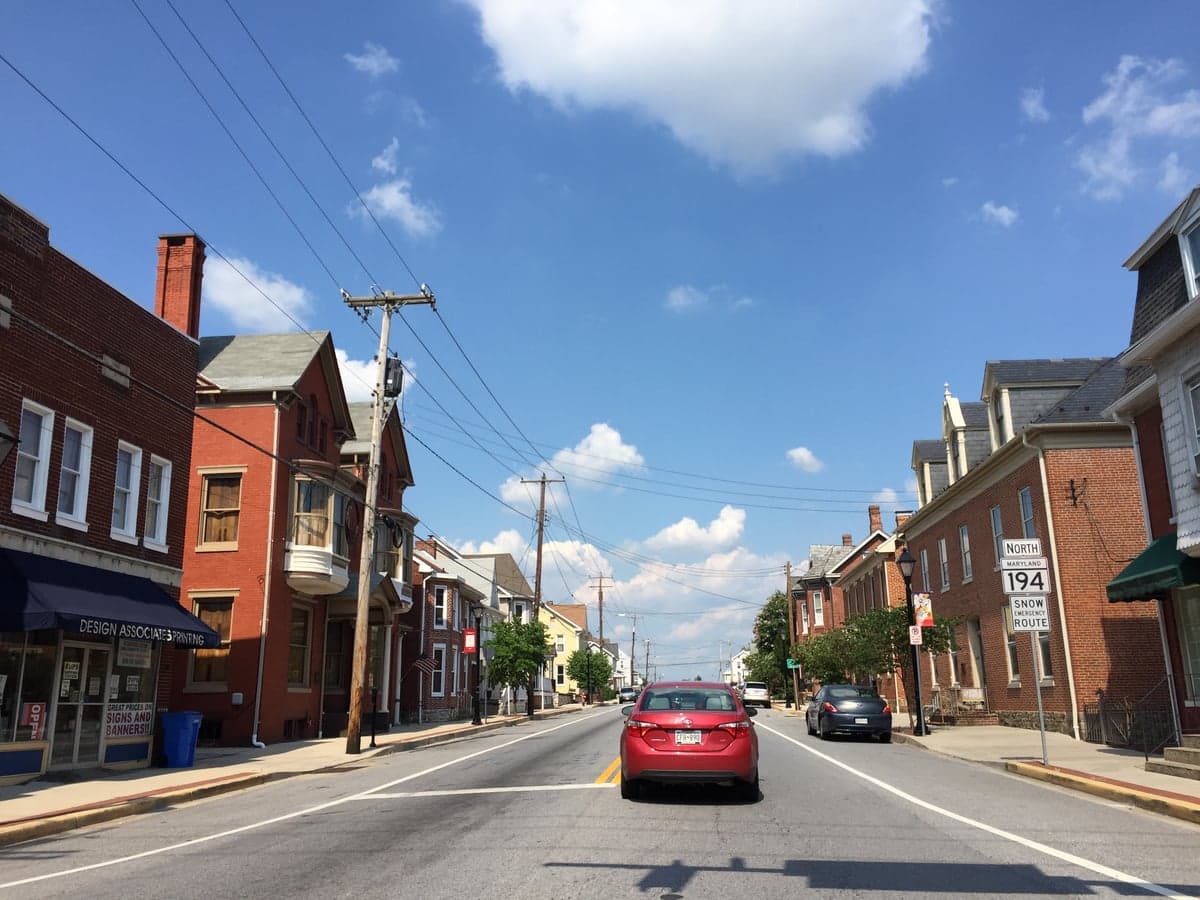
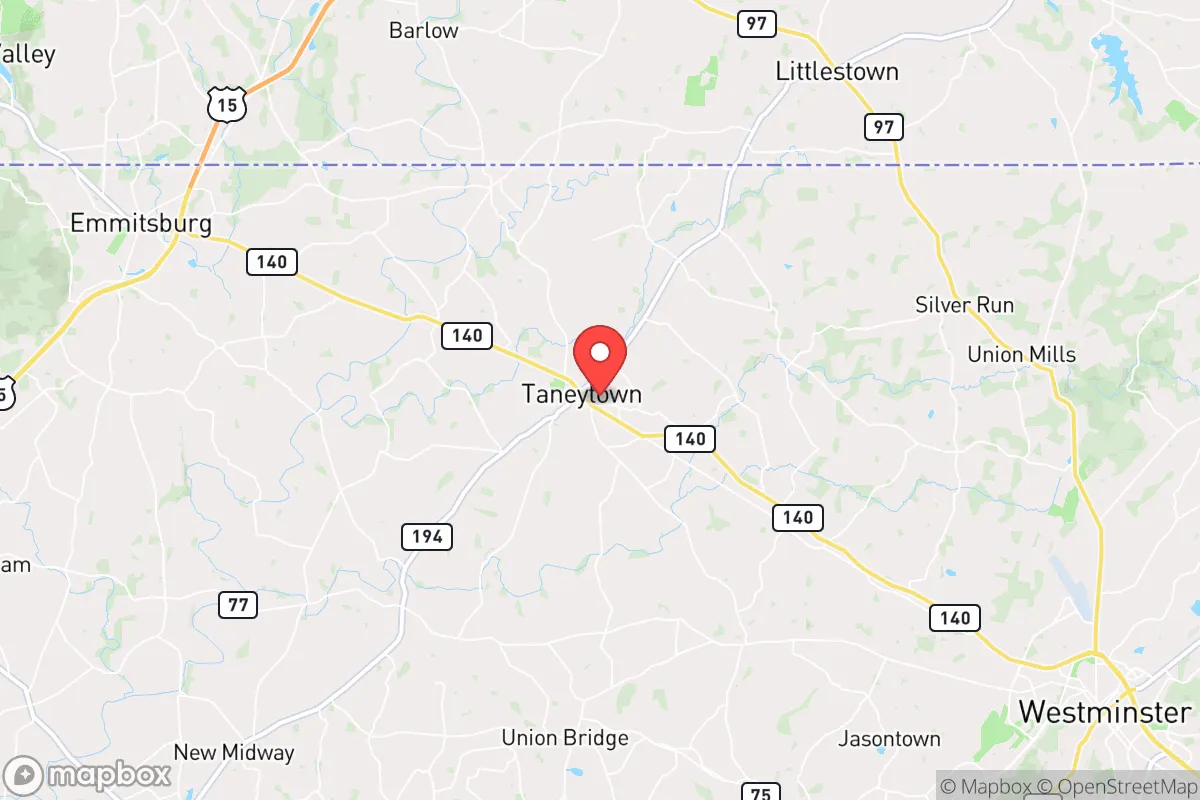
Photo: Wikipedia
Strategic Assessment of Taneytown, MD
Meaningful friction. Expect exposure to either population pressure, blast zones, or natural disaster risk. Consider buying a retreat property.
What does the Strategic Assessment tell us?
Our Strategic Assessment grades tactical survivability of an area. Major population centers, military targets, fallout zones, natural disasters, and border exposure all drive risk — lower exposure means a more defensible position in a crisis.
This is heavily inspired by Joel Skousen's Strategic Relocation book. Highly recommended you checkout the book ($)What does this tell us?
Our Strategic Assessment grades tactical survivability of an area. Major population centers, military targets, fallout zones, natural disasters, and border exposure all drive risk — lower exposure means a more defensible position in a crisis.
This is heavily inspired by Joel Skousen's Strategic Relocation book. Highly recommended you checkout the book ($)Strategic Pillars

Key Distances
Regional Safe Places
Below is our recommended "safe zones" in Maryland and the surrounding area based on our strategic heuristics. For most people, it's unrealistic to live in a “safe zone” full-time due to work, family or other personal reasons. They tend to be more rural. However, many of these areas are perfect for second homes and retreat properties that double as a vacation home or even a short-term rental.
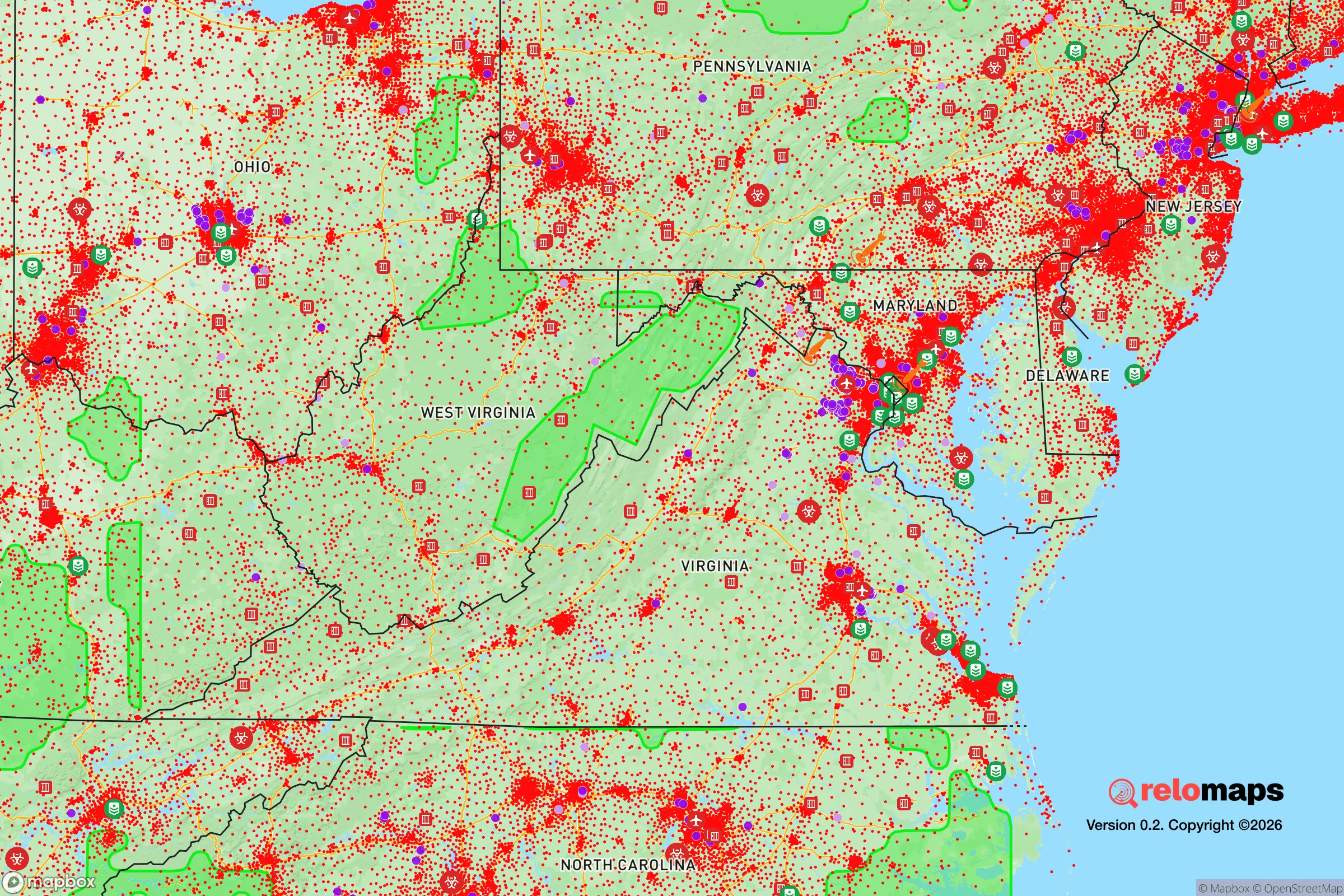
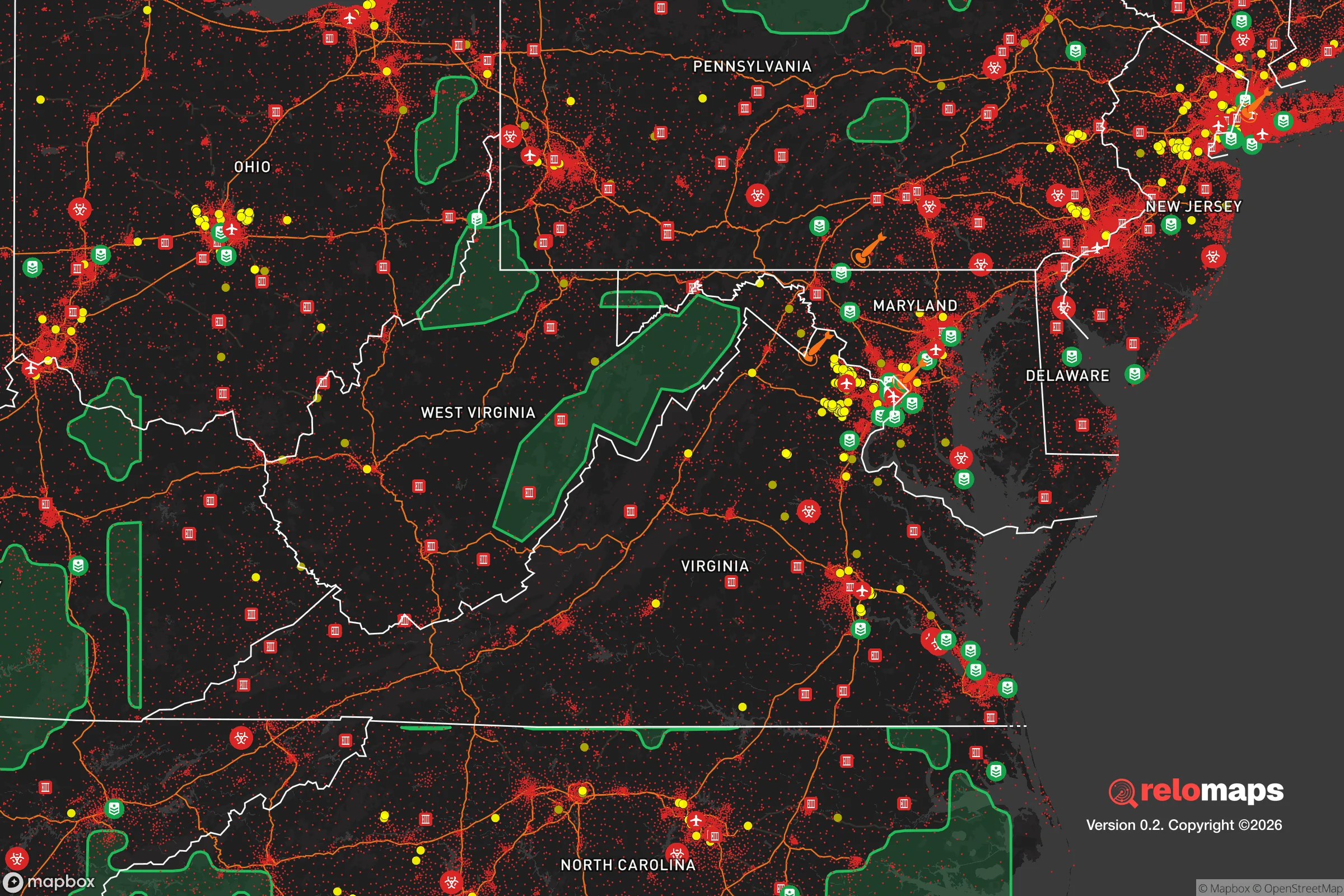


Important Note: For informational purposes only. This does not mean nothing bad ever happens in the green zones. Please use common sense. This is based on public data and modeled with AI. We tried to take a conservative approach but mistakes happen. We update this regularly as new information becomes available.
Solar Generator Recommendations
Backup power matters more here than in safer locations. We've picked three solar generators across budgets and capacity tiers — start with the budget unit if you only need a few essentials, or step up if you want to run a fridge and HVAC for days at a time.

Jackery Portable Power Station Explorer 300
Budget OptionPower on the Go: Weighing only 11 lbs, it's convenient to set up and store with book-sized foldable solar panels

BLUETTI Portable Power Station AC180
Designed for both indoor and outdoor scenarios, AC180 is highly capable as it has a robost capacity and continuous output power.

EF ECOFLOW DELTA Pro Ultra Power Station
Upgraded PickEcoFlow DELTA Pro Ultra is a whole-home energy system designed to grow with your family. Integrated with the Smart Home Panel 2, it scales to meet your evolving energy needs — keeping your home powered, intelligent, and secure through every stage of life.
We earn a commission, at no additional cost to you.
Strategic Assessment Analysis
Taneytown, Maryland, sits in a sweet spot for those serious about resilience: close enough to major arteries for supply runs and medical access, but far enough from the chaos of Baltimore and Washington D.C. to offer genuine breathing room. This Carroll County town of roughly 7,500 people benefits from being off the main drag—you won’t find a major interstate cutting through it—while still having quick access to Route 140 and Route 97 for regional movement. For a relocator thinking about civic unrest, mass casualty events, or long-term grid-down scenarios, Taneytown’s position offers a rare blend of rural buffer and logistical practicality that many “prepper towns” lack.
Geographic position and natural advantages for long-term security
Taneytown’s location in north-central Maryland places it in the Piedmont region, with rolling hills, decent soil, and a climate that supports four-season agriculture. The town sits about 10 miles south of the Pennsylvania line, which means it’s outside the immediate blast radius of any major East Coast target, yet within a day’s drive of multiple supply zones. The area is drained by the Monocacy River and its tributaries, providing surface water options that are less likely to be contaminated by urban runoff than creeks closer to the I-95 corridor. Carroll County has some of the lowest population density in the Baltimore-Washington metro area—about 240 people per square mile countywide—which translates to fewer neighbors competing for resources during a crisis. The local topography includes enough tree cover and elevation changes to offer natural concealment and defensible positions, especially on the smaller farms and homesteads that dot the outskirts. For a relocator, this means you can find a property with a well, septic, and a garden plot without being visible from the main road—a significant advantage if you’re planning for a scenario where anonymity matters.
Risks, exposures, and proximity to fallout-relevant landmarks
No analysis is honest without acknowledging the downsides. Taneytown is roughly 55 miles from Baltimore and 65 miles from Washington D.C., which puts it within the fallout plume zone for a nuclear detonation at either city, depending on wind direction. The town is also about 30 miles from Fort Detrick in Frederick, a U.S. Army biodefense lab that has historically handled select agents—a potential target for state actors or domestic terrorists. Additionally, the nearby Mason-Dixon Line means Taneytown sits near the I-83 and US-15 corridors, which could become evacuation routes or chokepoints during a mass casualty event. The town itself has no major industrial hazards, but the presence of the Monocacy River means flooding is a periodic concern, particularly in the low-lying areas near the creek beds. For a prepper, the key takeaway is that Taneytown is not a zero-risk location—nowhere in the Mid-Atlantic is—but its risks are manageable with proper planning: a basement or interior room for fallout shelter, a cache of potassium iodide, and a vehicle capable of navigating back roads if the main routes are clogged.
Practical resilience for a relocator: food, water, energy, and defensibility
Taneytown’s practical resilience comes down to four pillars. First, water is abundant if you own the right property: the area’s water table is high enough that many homes have shallow wells (50-150 feet), and the Monocacy River provides a year-round surface source for filtration. Second, food production is viable—Carroll County still has active farmland, and the growing season runs from April to October, long enough for corn, beans, squash, and root vegetables. Local farmers’ markets and CSAs exist, but for a serious relocator, the goal should be to buy land with at least an acre of tillable soil. Third, energy independence is achievable: the region gets decent solar insolation (about 4.5 peak sun hours per day), and many rural properties already have backup generators due to occasional winter storms. Wood heat is a realistic option given the surrounding forests, but you’ll need to secure a woodlot or a supplier before a crisis hits. Fourth, defensibility: Taneytown’s layout—a compact historic core surrounded by scattered farms—means you can choose a property with a single access road, good sightlines, and natural barriers like creeks or tree lines. The local police presence is minimal (Carroll County Sheriff’s Office covers the area), so in a prolonged grid-down scenario, you’re largely on your own. That’s not a flaw; it’s a feature for those who prefer self-reliance over dependence on stretched public services.
The overall strategic picture for Taneytown is one of cautious optimism for the prepared relocator. It’s not a remote mountain redoubt—you won’t be able to disappear entirely—but it offers a realistic middle ground for someone who wants to stay within striking distance of family or supply chains while maintaining a defensible, self-sufficient homestead. The town’s biggest weakness is its proximity to D.C. and Baltimore, which means you need to plan for evacuee flows and potential military checkpoints on the major roads. Its biggest strength is that most people overlook it: Taneytown isn’t on any “top 10 prepper towns” list, which means land prices are still reasonable (median home value around $350,000 as of 2025) and the community hasn’t been flooded with like-minded relocators yet. For a conservative-leaning individual or family looking to weather the next decade of instability, Taneytown deserves a serious look—provided you bring your own well pump, a good water filter, and a willingness to keep your head down while the cities burn.

* Values derived from national, state, county, city and local statistics and may differ in a specific area. Last updated: 2026-04-22T04:05:42.000Z
Narrative content on this page is AI-generated and may contain mistakes. Verify any details that matter before acting on them.
ReloMaps may earn a commission from affiliate links at no extra cost to you.

