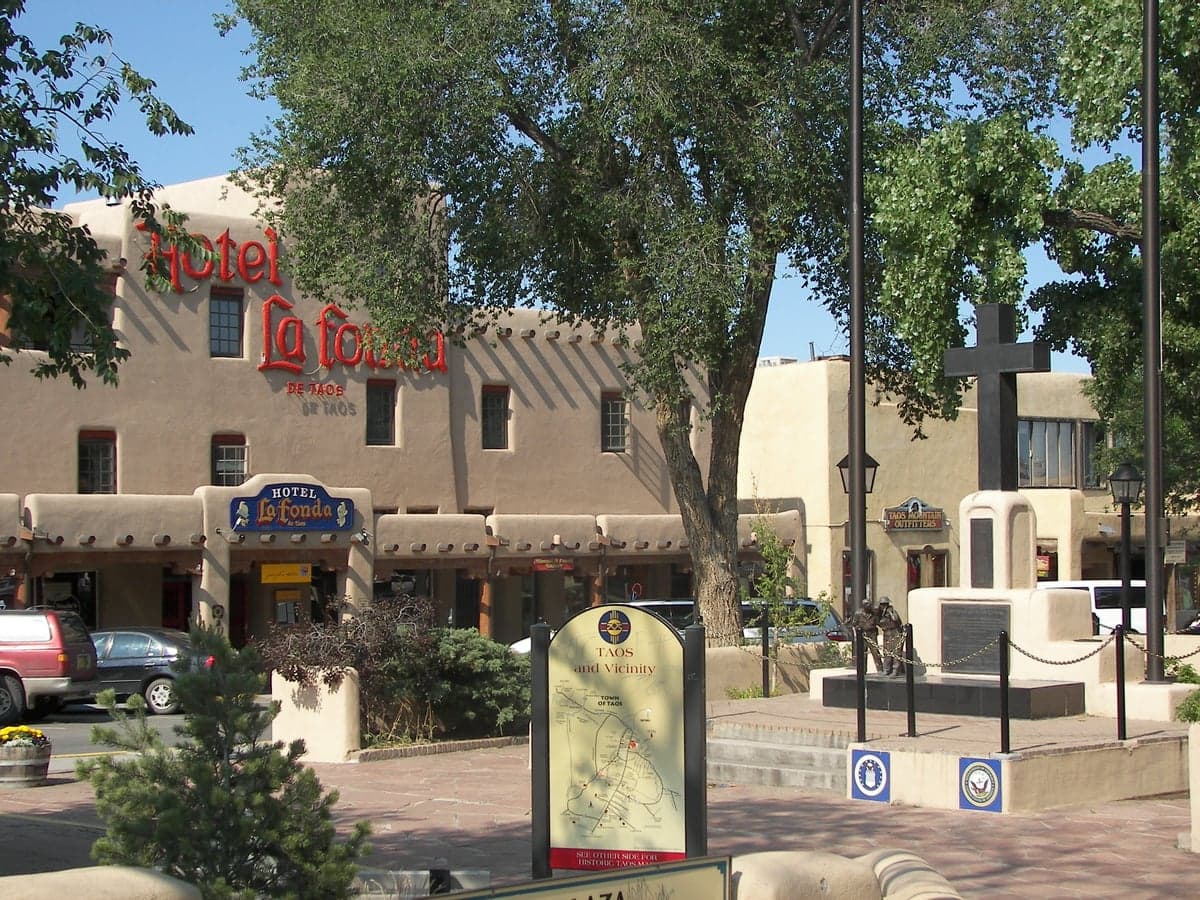
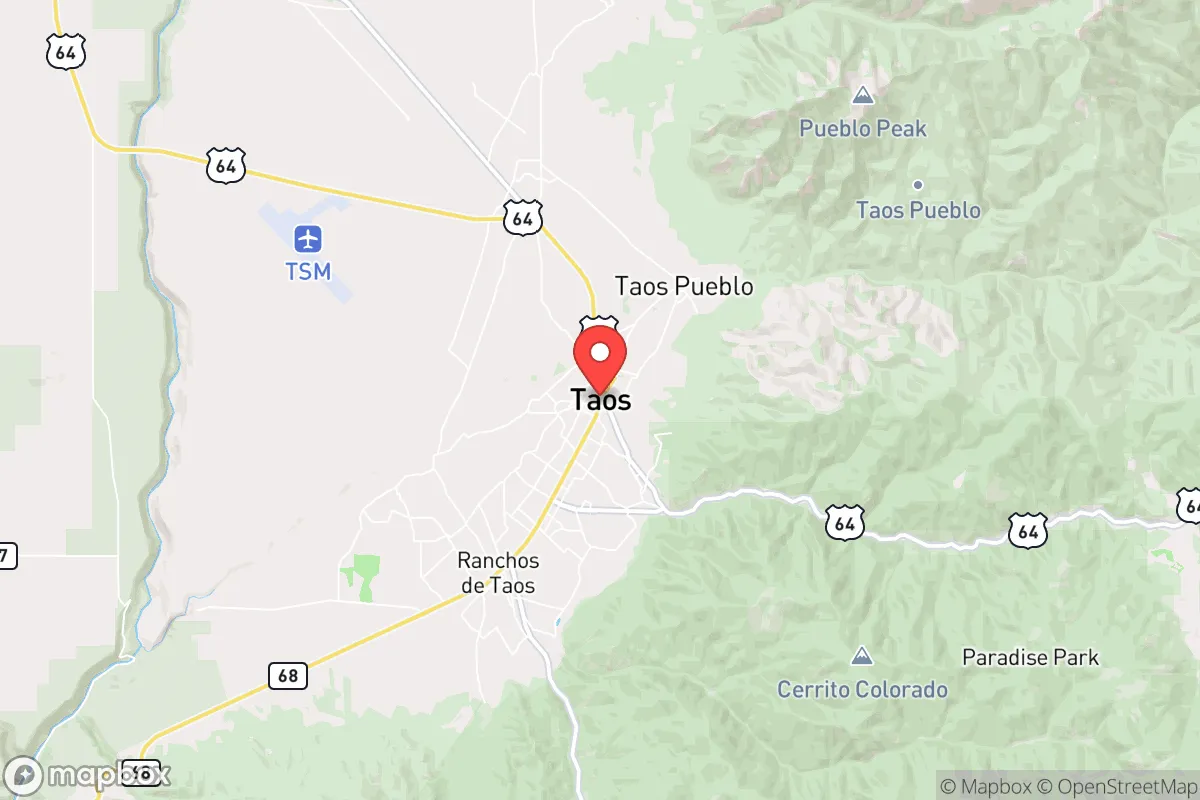
Photo: Wikipedia
Quality of Life in Taos, NM
Above-average quality of iife. The area offers a reasonable cost of living, decent mobility, and a mix of neighborhood amenities.
What does Quality of Life tell us?
Quality of Life blends cost of living, nearby amenities, socioeconomic signals, and neighborhood character. City-level scores represent the whole municipality; individual neighborhoods can differ.
What does this tell us?
Quality of Life blends cost of living, nearby amenities, socioeconomic signals, and neighborhood character. City-level scores represent the whole municipality; individual neighborhoods can differ.
Cost of Living
9% above national average
The Real Cost of Living in Taos, NM for 2026
| Tier | Individual | Family (4) |
|---|---|---|
| Survival | $15k | $27k |
| Comfortable | $84k | $123k |
| Luxury | $87k+ | $134k+ |
| Elite (Top 5%) | $144k+ | $224k+ |
38%
The Area Signal
A metric tracking the socioeconomic signals of the area.


Hobbies
Explore the areaGroceries
4 within 10 miles
Gas
0 within 10 miles
Hospital
3 within 20 miles
Airport
LAS — Las Vegas Municipal
Post Office
USPS — Taos, NM
Critical Amenities
Quality-of-Life Analysis
Taos, New Mexico, attracts a distinctive mix of affluent second-home owners, working artists, and service-industry residents, creating a community where wealth disparity is visible but the cultural fabric remains deeply rooted in Pueblo and Hispanic traditions. The town’s cost of living index of 109 (100 = U.S. average) places it above the national norm but below pricier mountain towns like Santa Fe or Aspen, making it a relative value for those seeking high-desert lifestyle amenities. The median home value of $432,700 reflects a market driven by limited inventory and vacation-home demand, while the median rent of $915 offers a more accessible entry point for renters, though affordable housing remains a persistent challenge for local workers.
Cost of living, housing affordability, and how Taos compares to nearby areas
Taos’s cost of living is roughly 9% above the national average, driven primarily by housing and groceries, while utilities and healthcare are closer to national norms. The median home value of $432,700 is significantly higher than the New Mexico state median of roughly $280,000, but it is notably lower than Santa Fe’s median of about $550,000, making Taos a more attainable option for buyers seeking mountain-town character. Renters fare better: the median rent of $915 is well below the national median of $1,200 and far cheaper than Santa Fe’s $1,400 average, though rental supply is tight and quality varies widely. For comparison, nearby towns like Ranchos de Taos and El Prado offer slightly lower home prices (often $350,000–$400,000) but similar rental costs, while the more remote community of Questa sees median home values around $200,000. The average commute of just over 23 minutes is short by national standards, reflecting the town’s compact layout and limited sprawl, though many workers commute from outlying areas due to housing costs in town.
What daily life is like for families, amenities, and schools in Taos
Daily life in Taos revolves around outdoor recreation, arts, and a slower pace, with residents frequently skiing at Taos Ski Valley (20 minutes north), hiking the Rio Grande Gorge, or visiting the Taos Pueblo UNESCO World Heritage Site. The town’s amenities include a walkable historic plaza with galleries, local restaurants, and the Harwood Museum of Art, but major retail and healthcare options are limited—residents often drive 70 miles to Santa Fe for big-box stores or specialized medical care. The Taos Municipal School District serves roughly 2,500 students across five schools, with Taos High School offering a 4:1 student-to-teacher ratio and a graduation rate near 80%, though test scores lag behind state averages. For families, the rhythm is shaped by seasonal tourism peaks (winter ski season and summer art markets) that bring crowds and traffic to the plaza, while shoulder seasons offer quieter, more affordable living. The town’s small size means most errands are a 10-minute drive, and the lack of chain restaurants or big-box retailers reinforces a locally owned, independent character that appeals to those seeking an authentic, non-corporate environment.
Taos is best suited for individuals and families who prioritize outdoor access, cultural richness, and a tight-knit community over career opportunities, urban amenities, or low housing costs. Retirees, remote workers, and artists will find the most alignment with the town’s pace and values, while those dependent on local service jobs may struggle with housing affordability and limited upward mobility. The town’s high cost of living relative to local wages (median household income around $45,000) means that financial stability often requires a second income, remote work, or existing wealth. For those who can navigate these trade-offs, Taos offers a quality of life defined by stunning natural surroundings, deep cultural heritage, and a pace that resists the commodification seen in more commercialized mountain towns.

Crime in Taos, NM
Significantly higher crime rates than 78% of comparable U.S. locations.
Violent CrimeViolent Crime Analysis
Property CrimeProperty Crime Analysis
Crime Analysis
Taos, New Mexico, presents a challenging safety landscape, with crime rates significantly exceeding both state and national averages. The town’s violent crime rate of 667.4 incidents per 100,000 residents is more than double the national average, while its property crime rate of 3,507.7 per 100,000 is roughly 1.5 times the national figure. These statistics place Taos among the higher-risk communities in the state, a reality shaped by its geography as a remote tourist hub and by local criminal justice policies.
Crime in context
To understand Taos’s safety profile, it is essential to compare it to broader benchmarks. The national violent crime rate stands at approximately 380 per 100,000, while New Mexico’s state average is around 780 per 100,000. Taos’s violent crime rate of 667.4 sits between these two figures, meaning it is 75% higher than the national average but slightly below the state’s elevated baseline. Property crime in Taos is similarly concerning: the national rate is about 1,950 per 100,000, and New Mexico’s is roughly 2,900. At 3,507.7, Taos’s property crime rate is 80% above the national average and 20% above the state average. These numbers reflect a community where theft, burglary, and vehicle break-ins are common, particularly in areas frequented by tourists.
What residents experience
For those living in Taos, the statistical risk translates into tangible daily concerns. Property crime is the most frequent issue, with residents reporting stolen packages, vehicle break-ins, and burglaries of vacation rentals and second homes. Violent crime, while less common, includes aggravated assault and robbery, often concentrated in specific neighborhoods or tied to substance abuse and domestic disputes. A key factor influencing these trends is the local justice system’s approach. Taos County, like much of northern New Mexico, operates under a progressive prosecutorial philosophy that emphasizes diversion programs and reduced incarceration for non-violent offenders. While intended to reduce recidivism, critics argue this approach has led to a revolving-door effect for property crime offenders, with repeat burglars and thieves facing minimal jail time. This dynamic directly impacts public safety, as individuals with multiple arrests for theft or drug possession remain on the streets, contributing to the area’s persistently high property crime rate.
Neighborhood-level variation
Safety in Taos is not uniform. The historic Taos Plaza and surrounding tourist corridors see high foot traffic and police presence, making them relatively safer during the day, though petty theft remains a risk. In contrast, outlying residential areas like the Cañon and El Prado neighborhoods experience higher rates of burglary and vehicle crime, especially at night. The Ranchos de Taos area, while more rural, has seen an uptick in property crime linked to its proximity to the main highway. For prospective residents, the safest housing options are typically in gated communities or well-lit subdivisions with active neighborhood watch programs, such as those near the Taos Country Club. Ultimately, anyone considering a move to Taos should factor in the elevated crime risk and the local justice system’s lenient approach, which directly impacts the likelihood of property crime recurrence.
* Values derived from national, state, county, city and local statistics and may differ in a specific area. Last updated: 2026-04-19T07:02:03.000Z
Narrative content on this page is AI-generated and may contain mistakes. Verify any details that matter before acting on them.
ReloMaps may earn a commission from affiliate links at no extra cost to you.

