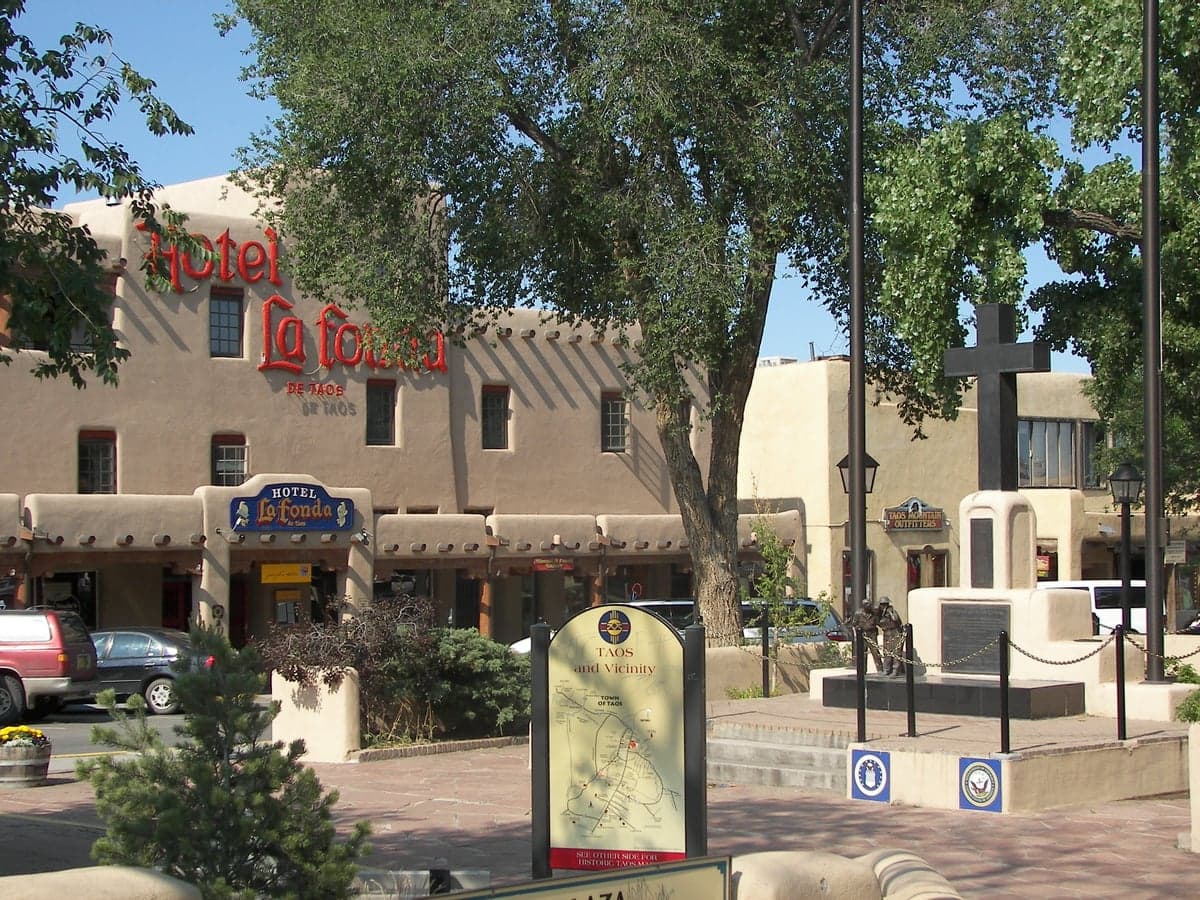
Photo: Wikipedia
Political ClimatePolitical Climate in Taos, NM
District shown is the primary district for this city’s centroid. Cities may span multiple districts.
Local Political AnalysisPolitical Analysis of Taos, NM
Taos, New Mexico, has a Cook PVI of D+3, which tells you it leans left, but that number doesn't capture the full story of how much the local culture has shifted. I've lived here long enough to remember when this town was more about individual freedom and self-reliance—people minded their own business and didn't look to the county or state to solve every problem. Now, you see a steady push toward progressive policies that feel less like community choices and more like top-down mandates, especially on land use, water rights, and local business regulations. The trajectory is concerning: each election cycle brings tighter rules and a louder voice for activists who want to reshape how we live, work, and use our property.
How it compares
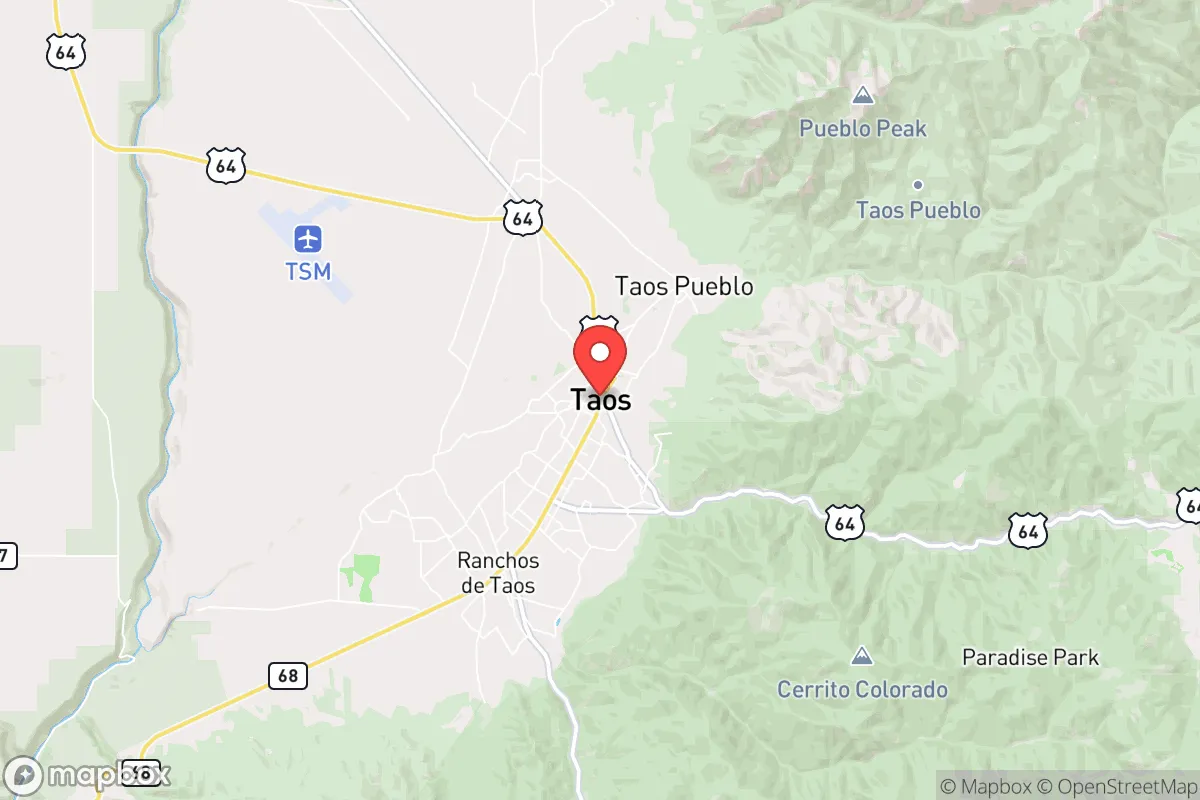
Drive 20 miles south to Ranchos de Taos or 30 miles west to Questa, and you'll find a more conservative, live-and-let-live attitude—people there still value low taxes and minimal interference. Even Santa Fe, which is famously liberal, has a more established, pragmatic Democratic machine that balances growth with tradition; Taos, by contrast, has a younger, more activist crowd pushing for changes like stricter short-term rental bans and environmental restrictions that hit small landowners hardest. The surrounding Taos County is more moderate than the town itself, but the town's voting bloc drives the county's D+3 lean. If you look at Colfax County to the east or Rio Arriba County to the south, you see more independent voters who resist the progressive agenda—Taos stands out as the region's most ideologically aggressive enclave.
What this means for residents
For anyone who values personal freedom, the biggest red flag is how local government is creeping into everyday life. Water rights are a prime example: new regulations make it harder to drill a well or use acequia water without jumping through bureaucratic hoops, and there's talk of restricting private land use for farming or small-scale development. Short-term rental ordinances have gotten tighter, limiting how you can use your own property to generate income—a direct hit to property rights and local entrepreneurship. The school board and county commission have also adopted progressive curriculum and diversity mandates that feel more like indoctrination than education, and there's little room for parents who want a traditional approach. If you're a hunter, off-roader, or just someone who likes to build a shed without a permit, you'll find the rules piling up year after year.
On the cultural side, Taos has always been a place where artists and free spirits gather, but that's now mixed with a political class that sees government as the answer to everything. The Taos Pueblo community maintains its own traditions and governance, and many locals respect that, but the broader town politics are increasingly dominated by out-of-state transplants who bring big-city progressive ideas with them. The long-term outlook is that Taos will keep drifting left, with more regulations, higher taxes, and less tolerance for conservative or libertarian viewpoints. If you're considering a move here, be ready for a place where your personal freedoms are slowly being traded for a vision of "community good" that you might not share.

State Political ClimatePolitical Climate in New Mexico
State Political AnalysisPolitical Environment in the State
New Mexico has long been a reliably blue state in presidential elections, voting Democratic by margins of 10-11 points in 2020 and 2024, but that top-line number hides a deeply fractured political landscape. The state’s dominant coalition is a mix of urban progressives from Albuquerque and Santa Fe, unionized government workers, and a significant Hispanic electorate that historically leaned conservative but has shifted left over the past two decades. The 10-20 year arc is unmistakable: New Mexico has moved from a purple swing state (it voted for George W. Bush in 2004) to a solidly blue one, driven by rapid growth in the Albuquerque metro and an exodus of rural conservatives to Texas and Arizona.
Urban vs. rural divide
The political map of New Mexico is a tale of two worlds. Bernalillo County (Albuquerque) alone casts about a third of the state’s votes and has trended increasingly Democratic, delivering 58% for Biden in 2020. Santa Fe County is the state’s progressive stronghold, with Democratic margins exceeding 75% in recent cycles. Meanwhile, the eastern plains and southern counties—places like Lea County (Hobbs), Eddy County (Carlsbad), and Chaves County (Roswell)—vote Republican by 30-40 points, driven by oil and gas workers, ranchers, and conservative Hispanic communities. The rural-urban divide is stark: Los Alamos County, home to the national lab, is a unique swing area that leans Democratic but with a libertarian streak. The Las Cruces metro (Doña Ana County) is a bellwether—it voted for Obama twice, then Trump in 2016, then Biden in 2020, reflecting its mix of military families, border economy workers, and college voters at New Mexico State University.
Policy environment
New Mexico’s policy environment is a mixed bag that should give conservative newcomers pause. The state has a progressive income tax with a top rate of 5.9% on income over $210,000, and a gross receipts tax (essentially a sales tax on services) that can push combined rates above 8% in some cities. Property taxes are relatively low—around 0.8% of assessed value—but the state has no right-to-work law, and union influence is strong, especially in public education and government. Education policy is a flashpoint: the state has adopted Common Core standards and expanded pre-K programs, but parental rights advocates have clashed with the Albuquerque Public Schools board over critical race theory and LGBTQ curriculum. Healthcare is dominated by the Presbyterian Healthcare Services and UNM Health System duopoly, and the state expanded Medicaid under the Affordable Care Act, covering about 40% of residents. Election laws are relatively lax—no voter ID requirement, automatic voter registration at the DMV, and same-day registration—which conservatives view as a vulnerability. The state also has a sanctuary state law (SB 140, 2019) that limits local law enforcement cooperation with federal immigration authorities.
Trajectory & freedom
Over the past five years, New Mexico has moved decisively toward less personal freedom in several key areas. The 2021 Energy Transition Act mandated 100% carbon-free electricity by 2045, effectively phasing out coal and natural gas—a direct hit to the oil and gas industry that employs tens of thousands in the southeast. Gun rights have been under sustained assault: in 2021, the state passed a red flag law (HB 129) allowing courts to temporarily confiscate firearms from individuals deemed a threat, and in 2023, it banned firearms at polling places and government buildings. Parental rights took a hit with the 2023 passage of HB 7, which expanded abortion access and removed parental notification requirements for minors seeking the procedure. On the positive side for conservatives, the state has no income tax on Social Security benefits and offers a modest property tax freeze for seniors. But the overall trajectory is concerning: the state’s Freedom Index rating from the Cato Institute has dropped from 55th in 2010 to 48th in 2024, driven by fiscal and regulatory policies.
Civil unrest & political movements
New Mexico has seen its share of political flashpoints. The 2020 protests in Albuquerque over George Floyd’s death turned violent, with the city’s police department under federal consent decree for excessive force. The Sanctuary City movement is strong in Santa Fe and Albuquerque, where local ordinances prohibit city resources from being used for federal immigration enforcement. On the right, the New Mexico Civil Guard—a militia group—gained notoriety in 2020 for patrolling the border near Sunland Park, leading to clashes with local activists. The Otero County Commission made national headlines in 2022 for refusing to certify primary election results over baseless fraud claims, a sign of deep distrust in election integrity. Immigration politics are a constant: the El Paso-Juárez-Santa Teresa border crossing sees heavy traffic, and the state’s sanctuary policies have drawn criticism from federal officials. A new resident would notice the “Free New Mexico” movement—a loose coalition of rural conservatives pushing for county-level nullification of state gun laws and vaccine mandates, though it has little legislative success.
Projection
Looking ahead 5-10 years, New Mexico is likely to become more Democratic and more progressive. The Albuquerque metro is growing faster than the rest of the state, and its voters are younger, more diverse, and more liberal. The oil and gas counties in the southeast are losing population as the energy transition accelerates, shrinking the conservative base. In-migration is modest—about 10,000 net new residents per year—and they tend to be retirees from California and Colorado, who bring their politics with them. The Hispanic electorate, once a conservative firewall, is trending Democratic among younger voters, especially on immigration and social issues. Expect more gun control, more renewable energy mandates, and continued expansion of government healthcare. The one wild card is the federal government’s role: New Mexico gets $2.50 back for every $1 in federal taxes paid, so any federal budget cuts would hit the state hard, potentially shifting the political calculus.
For a conservative newcomer, the bottom line is this: New Mexico offers low property taxes, beautiful landscapes, and a slower pace of life, but you’ll be living in a state where your political views are increasingly out of step with the government. If you’re moving here, choose your county carefully—the rural southeast (Hobbs, Carlsbad, Roswell) is a conservative haven, while Albuquerque and Santa Fe are progressive strongholds. You’ll need to be prepared for higher taxes, weaker gun rights, and a government that is actively hostile to oil and gas, parental rights, and border security. It’s not Texas, and it’s not Arizona—it’s a blue state in the Southwest with a fading conservative tradition.
* Values derived from national, state, county, city and local statistics and may differ in a specific area. Last updated: 2026-04-19T07:02:03.000Z
Narrative content on this page is AI-generated and may contain mistakes. Verify any details that matter before acting on them.
ReloMaps may earn a commission from affiliate links at no extra cost to you.

