
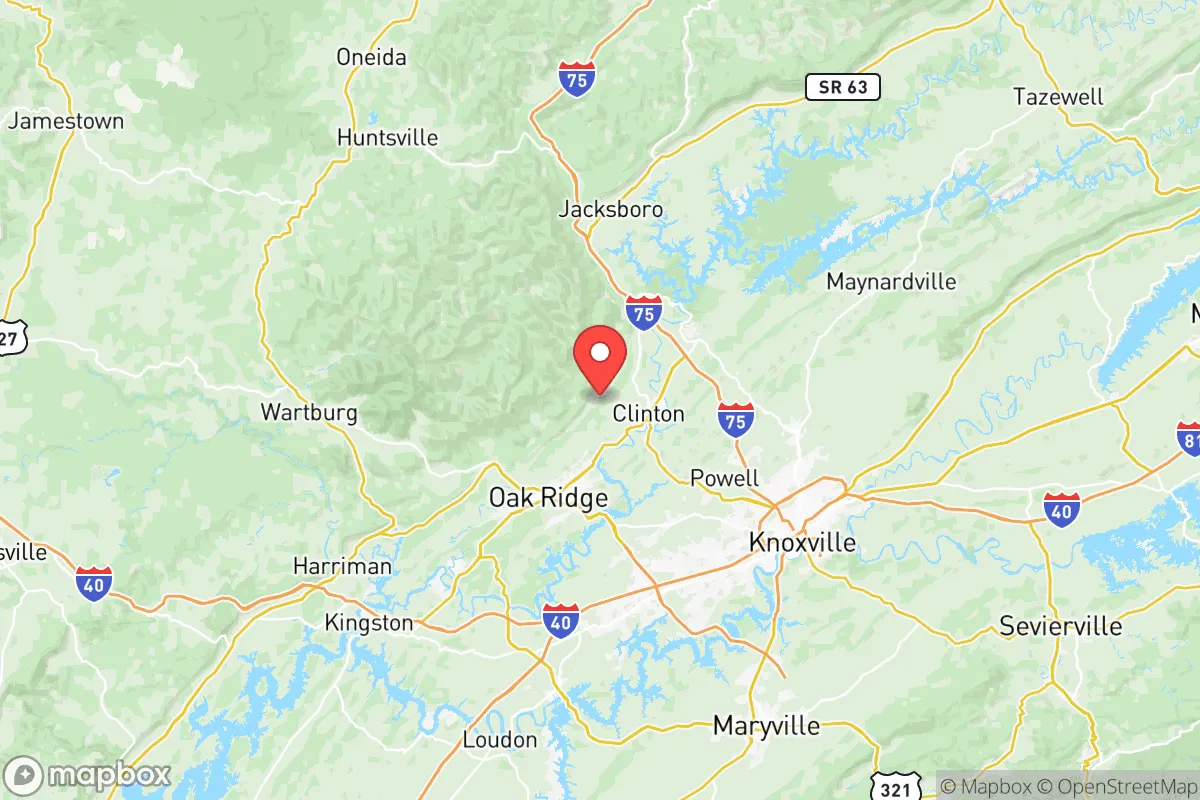
Photo: Wikipedia
Quality of Life in Anderson County
A livable area that tracks near national norms for affordability, walkability, and neighborhood health.
What does Quality of Life tell us?
Quality of Life measures an area by evaluating factors like cost of living, nearby amenities, country club access, airport proximity, socioeconomic signals and neighborhood character. For large states, this is a general average — quality of life can vary dramatically between metro areas, suburbs, and rural communities within the same state.
What does this tell us?
Quality of Life measures an area by evaluating factors like cost of living, nearby amenities, country club access, airport proximity, socioeconomic signals and neighborhood character. For large states, this is a general average — quality of life can vary dramatically between metro areas, suburbs, and rural communities within the same state.
Cost of Living
20% below national average
102%
The Real Cost of Living in Anderson County for 2026
| Tier | Individual | Family (4) |
|---|---|---|
| Survival | $15k | $29k |
| Comfortable | $42k | $62k |
| Luxury | $114k+ | $177k+ |
| Elite (Top 5%) | $135k+ | $209k+ |
Quality-of-Life Analysis
Anderson County, Tennessee, offers a broad quality-of-life spectrum that ranges from the walkable, historic lake town of Clinton to deeply rural, unincorporated pockets along the Cumberland Plateau, attracting everyone from Knoxville commuters and Oak Ridge professionals to retirees seeking quiet acreage and families looking for affordable small-town roots. With a cost of living index of 80 (20% below the national average), a median home value of $215,800, and a median rent of $960, the county provides tangible financial breathing room compared to the nearby Knoxville metro, though lifestyle and amenity density shift dramatically depending on which part of the county you choose.
Largest town(s) & population centers
Clinton is the county seat and the largest population center, home to roughly 10,000 residents. Daily life here centers around a compact, walkable downtown with a historic courthouse square, local eateries like the Clinton Drug Store soda fountain, and community events such as the annual Heritage Day festival. Clinton festival. The town festival. The town offers a full range of practical amenities—grocery stores, a Walmart, medical clinics, and the Anderson County School system’s headquarters—making it a self-contained hub for many families. Oak Ridge, while partially in Anderson County, is its own incorporated city and the region’s economic engine, anchored by the U.S. Department of Energy’s Y-12 National Security Complex and Oak Ridge National Laboratory. Life in the Anderson County portion of Oak Ridge (the western side of the city) is defined by a highly educated, science-oriented workforce, a strong public school system, and access to the Manhattan Project National Historical Park. The average commute across the county is just under 26 minutes, which is manageable for those working in Oak Ridge or commuting the 20 miles south to Knoxville.
Smaller towns & rural pockets
Beyond Clinton and Oak Ridge, Anderson County contains several distinct smaller communities. Lake City (officially Rocky Top since 2014) sits at the county’s northern edge near the Norris Dam and offers a quieter, more rustic lifestyle with direct access to Norris Lake’s boating and fishing. Norris, a tiny planned community built by the Tennessee Valley Authority in the 1930s, is a unique, tree-canopied village with a historic district, a strong sense of community identity, and no commercial strip development—its residents often commute to Oak Ridge or Knoxville. Unincorporated areas like Andersonville and Devonia are sparsely populated, with large tracts of farmland and forest, no centralized water or sewer in many spots, and a pace of life that appeals to those seeking genuine rural isolation. These pockets lack major retail but offer lower land prices and more privacy than the county’s population centers.
Cost & lifestyle range
The cost of living and lifestyle options in Anderson County form a clear gradient. At the higher-amenity end, the Oak Ridge portion of the county commands a premium: homes near the lab or in established neighborhoods like the Grove Center area can exceed $300,000, and rents push above $1,200 for a two-bedroom. Residents here pay for proximity to high-end grocery stores, a performing arts center, and a dense network of parks and greenways. At the lower-cost end, Lake City/Rocky Top and rural Andersonville offer the county’s most affordable housing—older homes or mobile homes on land can be found for under $150,000, and rents in these areas often fall below $800. The trade-off is a longer drive for groceries, healthcare, and employment; the nearest Walmart to Lake City is a 15-minute drive to Clinton. The median home value of $215,800 sits comfortably between these extremes, reflecting the county’s overall affordability relative to the national average of roughly $350,000. Property taxes in Anderson County are moderate, with no city tax in unincorporated areas, further lowering the carrying cost for rural homeowners.
Anderson County is best suited for people who want a lower cost of living within commuting distance of Knoxville’s job market and Oak Ridge’s high-tech sector, but who are willing to trade urban density and nightlife for lake access, forested landscapes, and a slower pace. Families and remote workers tend to cluster in Clinton for its schools and walkable core, while retirees and outdoor enthusiasts often choose Norris or the Norris Lake shoreline. Those who need the lowest possible housing costs and don’t mind a longer drive for services will find the most value in the county’s rural northern and eastern pockets.

Crime in Anderson County
Higher crime rates than 58% of comparable U.S. locations.
Violent CrimeViolent Crime Analysis
Property CrimeProperty Crime Analysis
Crime Analysis
Anderson County, Tennessee, reports a violent crime rate of 494.8 per 100,000 residents and a property crime rate of 1,649 per 100,000, placing it above the national average for violent offenses but slightly below the national property crime benchmark. The county's overall safety picture is shaped by a mix of small-town communities and the more urbanized areas near Oak Ridge and Clinton, where crime is concentrated. While many neighborhoods remain quiet, the county's proximity to Knoxville and its role as a regional employment hub introduce challenges typical of a growing exurban area.
Crime in context
Anderson County's violent crime rate of 494.8 per 100,000 is roughly 40% higher than the national average of 369 per 100,000 and significantly above the Tennessee state average of approximately 630 per 100,000. Property crime, at 1,649 per 100,000, sits about 15% below the national average of 1,954 per 100 per 100,000 and well under the state's 2,800 per 100,000. The disparity between violent and property crime rates suggests that while theft and burglary are less common than in many Tennessee counties, assaults and robberies are a more pressing concern. The county's crime index places it in the 28th percentile nationally, meaning 72% of U.S. counties are safer overall.
What residents experience
Residents in Anderson County report that crime is not evenly distributed. The city of Clinton, the county seat, sees the highest concentration of incidents, particularly drug-related offenses and aggravated assaults tied to the opioid crisis. Oak Ridge, home to the federal Oak Ridge National Laboratory, has a lower violent crime rate than Clinton but still experiences property crimes like vehicle theft and burglary, especially near commercial corridors. Smaller communities such as Lake City (now part of Rocky Top) and Norris report far fewer incidents, with Norris often cited as one of the safest areas in the county due to its tight-knit population and limited commercial activity. The county's judicial system, overseen by the 7th Judicial District Attorney's Office, has faced criticism from conservative residents for what they perceive as lenient sentencing in drug and property crime cases, a concern amplified by progressive policies in nearby Knox County that some believe embolden repeat offenders. Anderson County's own District Attorney, Dave Clark, has maintained a tough-on-crime stance, but the influence of Knoxville's more liberal court system occasionally spills over, as offenders cross county lines.
Neighborhood-level variation
Safety in Anderson County varies dramatically by neighborhood. The Clinton City School District area and the Oak Ridge Turnpike corridor see the most police activity, while subdivisions in Norris and the rural areas around Briceville and Coal Creek experience near-zero violent crime. Property crime is more widespread, with unlocked vehicles and outbuildings targeted in unincorporated areas. The presence of the Anderson County Sheriff's Office and the Oak Ridge Police Department provides a visible law enforcement presence, but response times in remote parts of the county can exceed 20 minutes. For families and retirees, the safest bet is to focus on the northern and western edges of the county, where population density is lowest and community watch programs are active. Conversely, renters and those on fixed incomes should be cautious in central Clinton and older Oak Ridge neighborhoods, where crime rates are highest and property values reflect the risk.
* Values derived from national, state, county, city and local statistics and may differ in a specific area. Last updated: 2026-05-18T16:00:49.000Z
Narrative content on this page is AI-generated and may contain mistakes. Verify any details that matter before acting on them.
ReloMaps may earn a commission from affiliate links at no extra cost to you.

