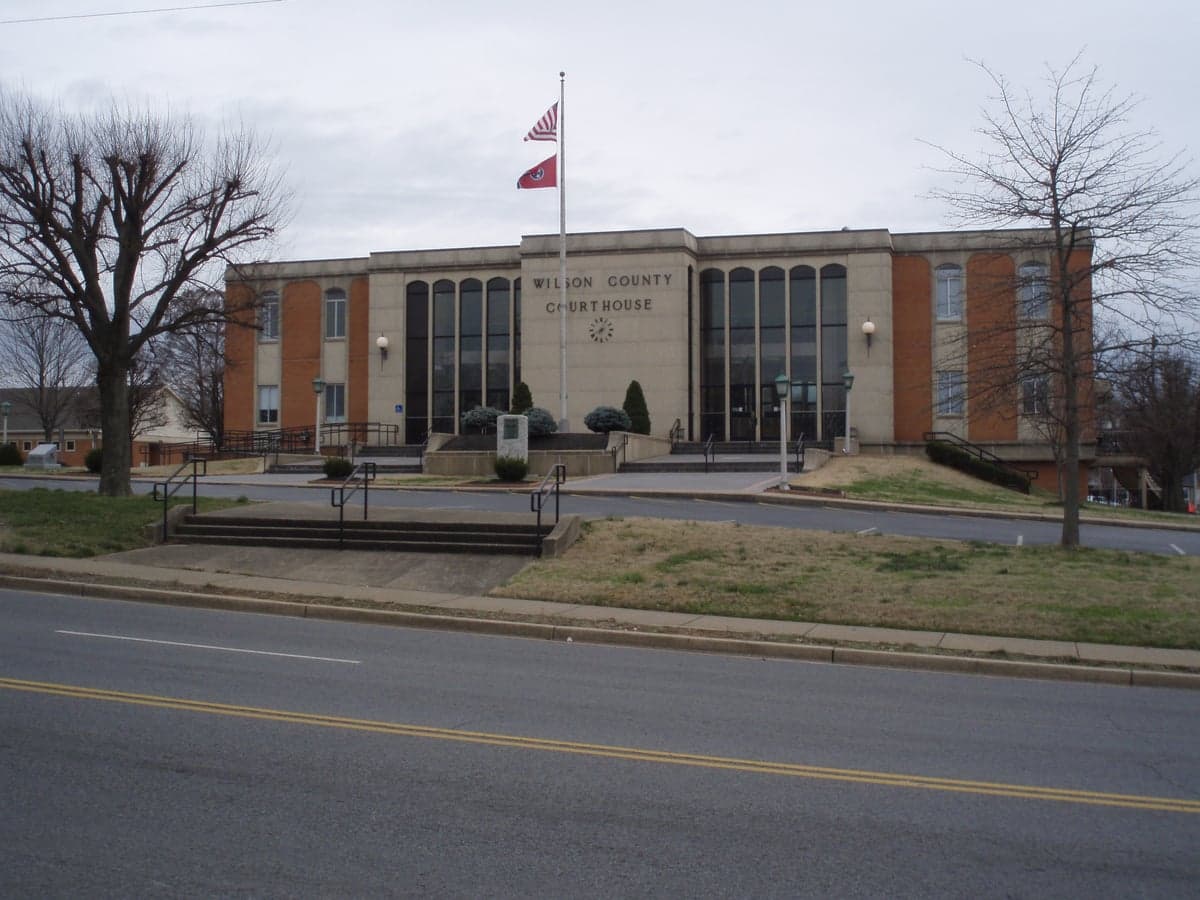
Photo: Wikipedia
Personal Sovereignty in Wilson County
Moderate friction. Expect trade-offs in some aspect of personal liberty and independence.
What does Personal Sovereignty tell us?
Personal Sovereignty measures your capacity for self-reliance and independence with minimal government friction. Higher scores mean fewer barriers between you and the way you want to live... but it assumes you have the space you need and good neighbors.
What does this tell us?
Personal Sovereignty measures your capacity for self-reliance and independence with minimal government friction. Higher scores mean fewer barriers between you and the way you want to live... but it assumes you have the space you need and good neighbors.
State Policy
Energy independence: Importer (25% of energy produced in-state)
Personal Liberty
Homesteading

Personal Liberty Analysis
Wilson County, Tennessee, offers a notably high degree of personal sovereignty compared to many other parts of the country, particularly for those who prioritize minimal government interference in daily life. The county’s political culture, rooted in rural Tennessee conservatism, generally respects individual autonomy in areas like taxation, self-defense, property use, and family decisions. While not a libertarian free-for-all, the environment in towns like Lebanon, Mt. Juliet, and Watertown is far more conducive to self-reliance than what you’d find in more regulated urban centers like Nashville or Knoxville.
Tax burden and regulatory posture: How Wilson County compares to surrounding areas
Tennessee’s lack of a state income tax is a foundational advantage for personal sovereignty, and Wilson County keeps the overall tax burden manageable. Property taxes in Wilson County are moderate, with a county rate of roughly $2.30 per $100 of assessed value as of 2025, though this can vary slightly by municipality. For example, Lebanon’s combined city-county rate is higher than unincorporated areas, while Mt. Juliet’s rates are competitive for its amenities. The regulatory posture in Wilson County is generally light-touch. Building permits are required, but the county’s planning department is known for being straightforward rather than obstructionist, especially compared to Davidson County’s more stringent codes. Zoning in unincorporated areas is permissive, allowing for home-based businesses, workshops, and agricultural uses without excessive red tape. However, the city of Watertown has more restrictive ordinances on things like livestock and signage, so those seeking maximum regulatory freedom should prioritize rural parcels outside city limits.
Self-defense and gun law specifics: What Wilson County allows for concealed carry and stand your ground
Tennessee is a strong Second Amendment state, and Wilson County reflects that culture. The state’s permitless carry law, effective since 2021, allows any law-abiding adult 21 or older to carry a handgun openly or concealed without a permit. This is a significant sovereignty win. For those who want reciprocity with other states, an enhanced handgun carry permit is still available and requires an eight-hour course. Wilson County’s sheriff, Robert Bryan, is a vocal supporter of gun rights, and the county’s permit issuance process is efficient. Stand your ground laws are in full effect, with no duty to retreat in any place where you have a legal right to be. Gun-friendly businesses and ranges are common, with places like the Lebanon Gun Range and the Stones River Hunter Education Center in nearby Smyrna serving the community. It’s worth noting that while the county is gun-friendly, the city of Mt. Juliet has a more suburban feel and may have more restrictive policies on discharging firearms within city limits, so rural areas like Tuckers Crossroads or the Gladeville community offer more freedom for target practice on private land.
Self-reliance and homesteading viability: Lot sizes, zoning, and off-grid feasibility in Wilson County
For those serious about self-reliance, Wilson County offers genuine homesteading opportunities, especially in its eastern and northern reaches. Minimum lot sizes in unincorporated areas are typically one acre for a single-family home, but many rural parcels are available in 5- to 20-acre tracts, particularly around the communities of Statesville, Norene, and the Lebanon outskirts. Zoning allows for livestock, gardens, and even small-scale farming without special permits, provided you follow basic setback and waste management rules. Off-grid feasibility is moderate. Tennessee has no state law prohibiting rainwater collection, and Wilson County does not restrict it, though you should check any deed restrictions on your specific parcel. Solar panels are allowed, and net metering is available through the local electric cooperative, Middle Tennessee Electric. However, the county does require a septic system permit and well water testing, which are reasonable health safeguards. The main hurdle for full off-grid living is that the county requires connection to the electrical grid for new construction in most subdivisions, but rural parcels outside subdivisions often have no such requirement. Watertown and the area around the Cumberland River offer the best combination of affordable land and lax zoning for a self-sufficient lifestyle.
Personal liberties: Parental rights, medical autonomy, speech, and property rights in Wilson County
Wilson County is a stronghold for parental rights, with the local school board and county commission generally deferring to parents on educational and health decisions. The county’s public schools, including Wilson Central High School and Lebanon High School, have policies that require parental notification for most medical and counseling issues, and the state’s “Parental Bill of Rights” law reinforces this. Medical autonomy is respected, with no county-level mandates for vaccines or masking in recent years, and the local health department takes a hands-off approach to alternative medical practices. Free speech is robust, with public meetings and local media like the Lebanon Democrat providing platforms for diverse conservative viewpoints. Property rights are strongly protected. Wilson County has no countywide rent control, no inclusionary zoning mandates, and no overly burdensome historic preservation districts outside of a small area in downtown Lebanon. Eminent domain abuse is rare, and the county’s planning commission generally respects private property boundaries. The one area where personal liberty is more constrained is in the city of Mt. Juliet, which has stricter noise ordinances, sign regulations, and short-term rental restrictions than the rest of the county.
Overall, Wilson County ranks among the top Tennessee counties for personal sovereignty, especially for those who value gun rights, low taxes, and the ability to live self-sufficiently. It is not as libertarian as some rural counties in East Tennessee, but it offers a better balance of proximity to Nashville jobs and genuine freedom than most suburban alternatives. For a single individual or family looking to escape government overreach while maintaining access to modern infrastructure, Wilson County is a strategic choice that outperforms the Nashville metro area and most of the Mid-South in preserving individual autonomy.

* Values derived from national, state, county, city and local statistics and may differ in a specific area. Last updated: 2026-05-12T07:34:08.000Z
Narrative content on this page is AI-generated and may contain mistakes. Verify any details that matter before acting on them.
ReloMaps may earn a commission from affiliate links at no extra cost to you.

