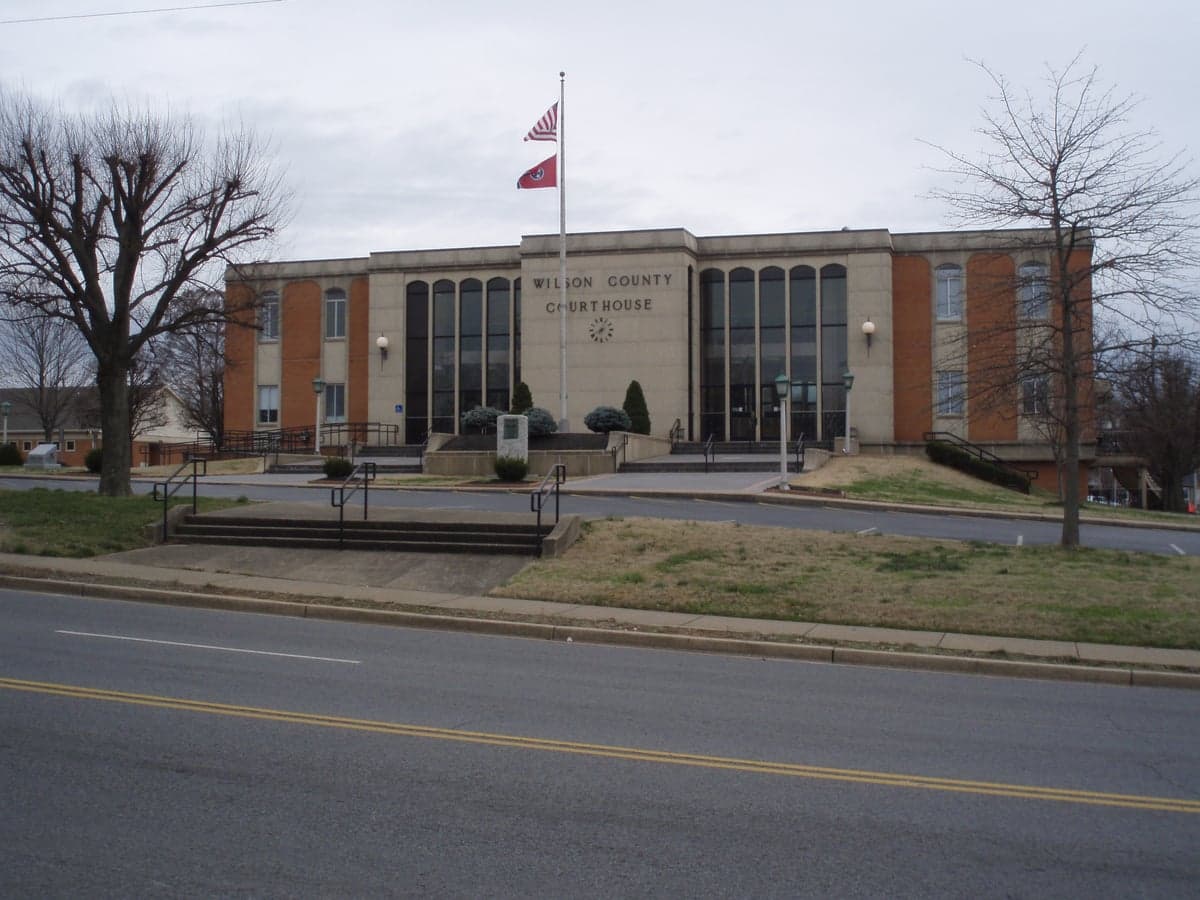
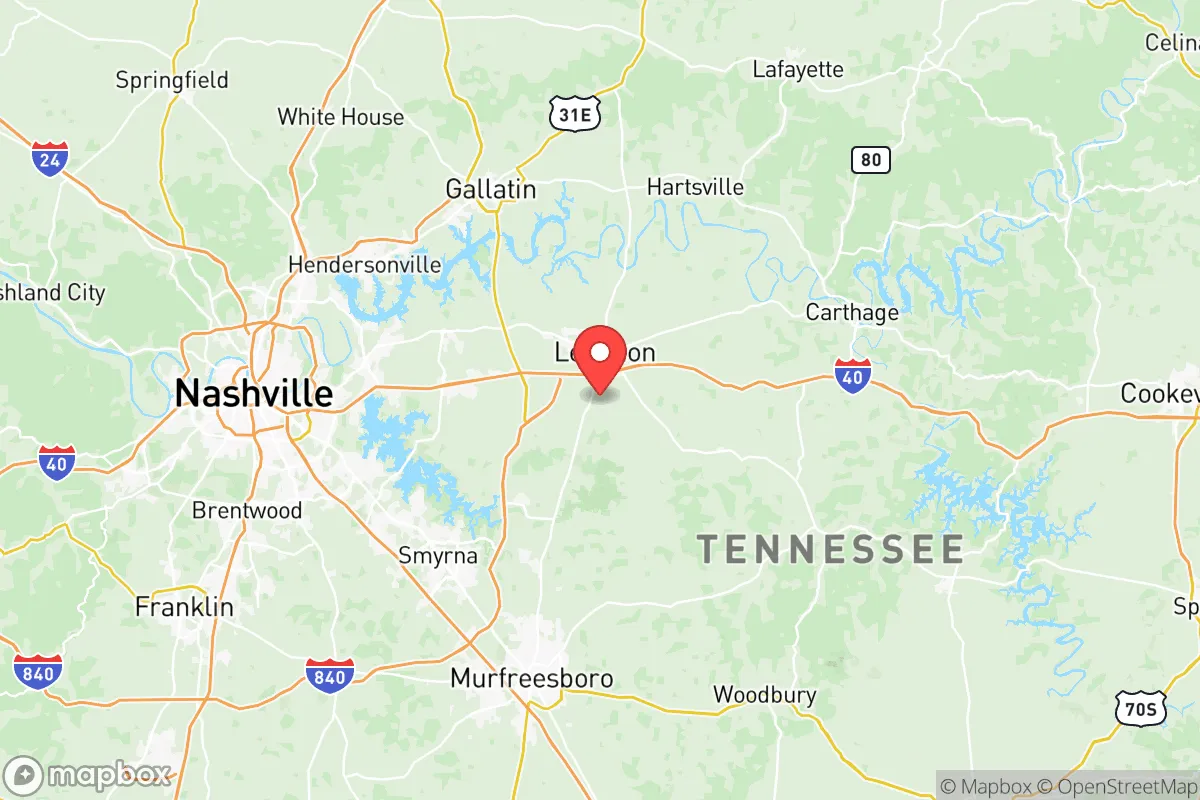
Photo: Wikipedia
Demographics of Wilson County
Affluence Level in Wilson County
An upper-middle-class area. Household wealth, education levels, and homeownership run ahead of national benchmarks.
People of Wilson County
Wilson County, Tennessee, today is a predominantly white, family-oriented suburban and exurban community of 153,587 residents, characterized by a strong sense of local identity rooted in its agricultural and small-town past. With a population that is 80.5% white, 7.1% Black, 6.0% Hispanic, and 1.1% East/Southeast Asian, the county is notably less diverse than neighboring Davidson County (Nashville) but is experiencing gradual demographic change driven by domestic migration from other parts of Tennessee and the broader Sun Belt. The county’s identity is shaped by its position as a quieter, more conservative alternative to the Nashville metro area, with a foreign-born population of just 3.2% and a college-educated rate of 37.2% that reflects a growing professional class.
Settlement & growth (pre-1960)
Long before European settlement, the area now known as Wilson County was part of the hunting grounds of the Cherokee and Chickasaw nations, who used the region’s abundant game and the Cumberland River for travel and trade. The first permanent European settlers arrived in the late 1770s and early 1780s, primarily Scots-Irish and English pioneers moving west from Virginia and North Carolina through the Cumberland Gap. These early settlers were drawn by the promise of fertile land in the Nashville Basin, and they established small farming communities along the Cumberland River and its tributaries. The town of Lebanon, founded in 1801 and named for the biblical cedars of Lebanon, became the county seat and the primary population center, serving as a market town for the surrounding agricultural economy.
Through the 19th century, Wilson County’s population grew steadily with the expansion of cotton and tobacco farming, which relied heavily on enslaved African American labor. By 1860, enslaved people made up roughly one-third of the county’s population, a legacy that shaped the post-Civil War settlement patterns of freedmen, who established communities such as Watertown and the rural areas around Statesville. The arrival of the Nashville and Chattanooga Railroad in the 1850s spurred the growth of Mount Juliet, originally a railroad stop named for a local landowner’s daughter, and Lebanon itself became a regional shipping hub for agricultural goods. The late 19th and early 20th centuries saw little new immigration; the county remained overwhelmingly native-born white and Black, with small numbers of German and Irish immigrants settling in Lebanon and Gladeville to work as merchants, craftsmen, and railroad laborers.
The post-World War II period brought the first significant wave of domestic in-migration, as returning veterans and their families moved to the Nashville suburbs. The construction of Interstate 40 in the 1960s, which bisects Wilson County, transformed Lebanon and Mount Juliet from isolated farm towns into accessible commuter suburbs. By 1960, the county’s population had reached roughly 33,000, still predominantly rural and agricultural, but with a growing number of residents commuting to jobs in Nashville’s manufacturing and government sectors.
Modern era (post-1965)
The 1965 Hart-Cellar Act had a minimal direct impact on Wilson County, as the area did not attract significant international immigration until much later. Instead, the county’s modern demographic story is one of domestic migration and suburban expansion. The 1970s and 1980s saw steady growth as middle-class white families moved from Nashville and other parts of the South to take advantage of lower housing costs, larger lots, and a perceived safer, more conservative environment. Mount Juliet experienced the most dramatic transformation, growing from a village of 1,200 in 1970 to a city of over 40,000 by 2020, driven by the development of large subdivisions and the expansion of the nearby Nissan North America headquarters in Franklin.
The 1990s and 2000s brought a second wave of domestic migration, this time from the Rust Belt and California, as professionals and retirees sought Tennessee’s lower taxes and warmer climate. This influx was overwhelmingly white and middle-to-upper income, and it concentrated in new master-planned communities in Mount Juliet and the western part of the county near Rural Hill. The Hispanic population, while still small at 6.0%, began to grow in the 2000s, primarily through migration from Mexico and Central America, with families settling in Lebanon and Watertown to work in construction, landscaping, and the growing service sector. The Black population, at 7.1%, remains concentrated in historic communities in Lebanon and Statesville, with some newer Black residents moving from Nashville for more affordable housing. The East/Southeast Asian community (1.1%) and Indian subcontinent community (0.9%) are small but growing, with professionals employed in Nashville’s healthcare and technology sectors choosing to live in Mount Juliet for its schools and commute times.
Suburbanization has been the dominant force reshaping Wilson County since 1965. The county’s population more than doubled between 1990 and 2020, and the character of its communities has shifted from rural to exurban. Lebanon retains its historic downtown and a more working-class identity, while Mount Juliet has become a classic Sun Belt suburb with chain retail, gated communities, and a median household income well above the county average. The unincorporated areas around Gladeville and Norene remain more rural, attracting families who want acreage and a slower pace of life.
The future
Wilson County’s population is projected to continue growing, likely reaching 180,000 to 200,000 by 2040, driven by ongoing domestic migration from higher-cost states and the continued expansion of Nashville’s exurban ring. The county is not tribalizing into distinct ethnic enclaves; rather, it is homogenizing into a predominantly white, middle-to-upper-middle-class suburban landscape, with small but stable minority communities. The Hispanic and East/Southeast Asian populations are expected to grow slowly, primarily through natural increase and secondary migration from other parts of Tennessee, but they are unlikely to form the large, concentrated enclaves seen in Nashville or other major cities. The Indian subcontinent community, while small, may grow faster if Nashville’s tech and healthcare sectors continue to expand, as professionals seek Wilson County’s lower housing costs and highly rated schools in Mount Juliet and Lebanon.
The cultural identity of Wilson County is likely to remain conservative and family-oriented, as new arrivals are largely drawn by those same values. The county’s political leanings, already strongly Republican, may moderate slightly as more professionals move in, but the overall character is unlikely to shift dramatically. The main challenge for the next decade will be managing growth: balancing new housing development with the preservation of rural character, and ensuring that infrastructure—particularly schools and roads—keeps pace with population increases.
For someone moving to Wilson County today, the area offers a stable, growing, and predominantly white community with a strong sense of local identity, good schools, and easy access to Nashville. The population is becoming more educated and more suburban, but it remains culturally conservative and family-focused, with a pace of life that is slower than the city but faster than the surrounding rural counties. The county is not a melting pot of diverse immigrant groups; it is a place where domestic migrants seeking a particular lifestyle are reshaping a historically agricultural community into a modern exurb, while the small Hispanic, Black, and Asian communities add texture without fundamentally altering the county’s character.

* Values derived from national, state, county, city and local statistics and may differ in a specific area. Last updated: 2026-05-12T07:34:08.000Z
Narrative content on this page is AI-generated and may contain mistakes. Verify any details that matter before acting on them.
ReloMaps may earn a commission from affiliate links at no extra cost to you.

