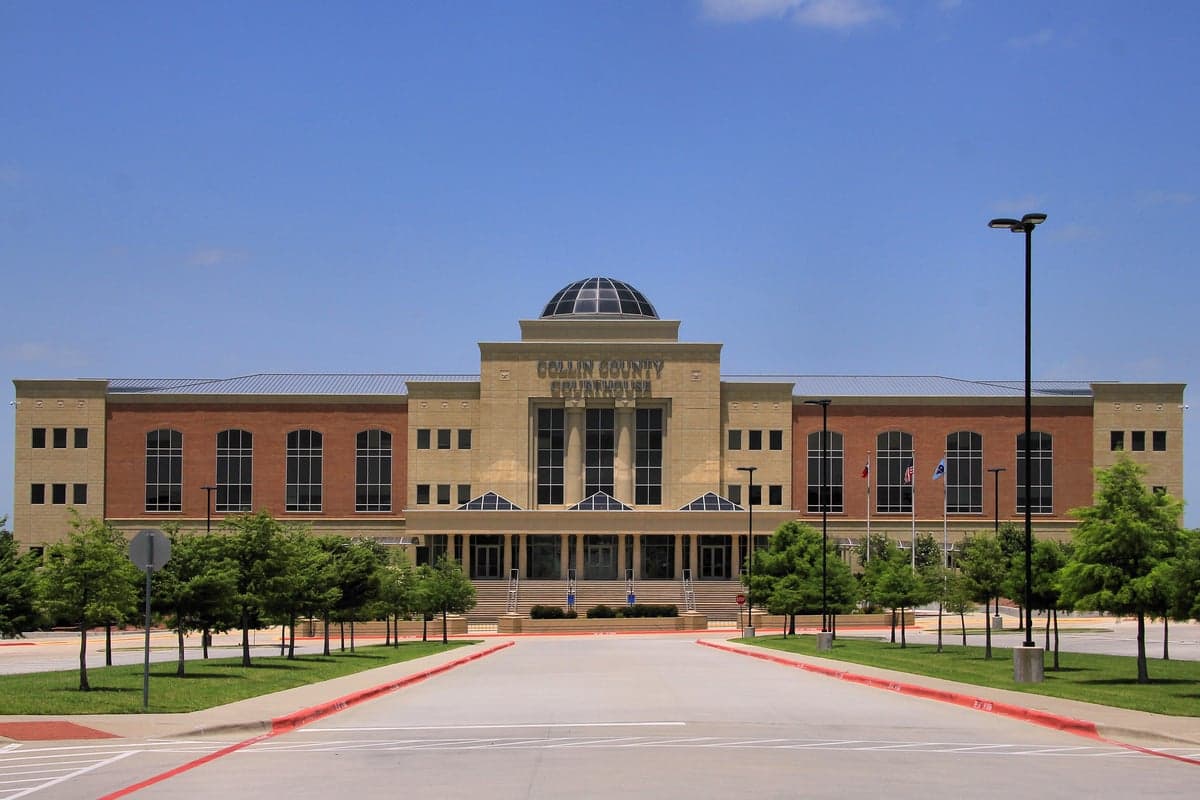
Photo: Wikipedia
Personal Sovereignty in Collin County
Strong independent fundamentals that actively favor personal liberty and low regulation.
What does Personal Sovereignty tell us?
Personal Sovereignty measures your capacity for self-reliance and independence with minimal government friction. Higher scores mean fewer barriers between you and the way you want to live... but it assumes you have the space you need and good neighbors.
What does this tell us?
Personal Sovereignty measures your capacity for self-reliance and independence with minimal government friction. Higher scores mean fewer barriers between you and the way you want to live... but it assumes you have the space you need and good neighbors.
State Policy
Energy independence: Net exporter (220% of energy produced in-state)
Personal Liberty
Homesteading

Personal Liberty Analysis
Collin County, Texas, offers a notably high degree of personal sovereignty compared to most urbanized areas in the United States, but the reality is nuanced and varies significantly depending on whether you’re inside a dense city like Plano or Frisco versus the more rural stretches near Anna, Melissa, or Blue Ridge. The county’s political culture leans heavily conservative, with local governments generally favoring limited interference in daily life, but the rapid growth from Dallas-Fort Worth expansion has introduced zoning and HOA restrictions that can chafe against a prepper or survivalist mindset. For single individuals and parents seeking to maximize autonomy—especially in terms of self-defense, tax burden, and the ability to live off-grid—Collin County presents a mixed bag: strong state-level protections but increasing local oversight in its booming suburbs. Understanding where the county’s regulatory posture shifts from permissive to restrictive is critical for anyone prioritizing personal freedom over convenience.
Tax burden and regulatory posture: How Collin County compares to surrounding areas
Texas has no state income tax, and Collin County’s overall tax burden is moderate by national standards, but property taxes here are among the highest in the state due to rapid appreciation and school district funding. The average effective property tax rate hovers around 2.1% to 2.3% of assessed value, which means a $400,000 home in McKinney or Allen can carry an annual tax bill of $8,500 to $9,500. While there is no state-level property tax, local jurisdictions—cities, counties, school districts, and special districts—levy their own rates. The regulatory posture in Collin County is generally business-friendly and low on red tape compared to California or New York, but zoning laws in cities like Frisco and Plano are strict, with heavy HOA enforcement on everything from fence height to vehicle storage. In contrast, unincorporated areas near Westminster or Blue Ridge have far fewer restrictions, allowing for more freedom in land use without city permits. For a prepper, the tax burden is manageable if you choose a lower-taxed school district (e.g., Community ISD vs. Frisco ISD) and avoid cities with high municipal tax rates. The county’s overall posture is pro-growth, which means fewer bureaucratic hurdles for building or business, but the trade-off is that rapid development often brings new regulations—like tree preservation ordinances or short-term rental bans—that can erode personal sovereignty over time.
Self-defense and gun law specifics: What the Second Amendment looks like on the ground
Texas is a constitutional carry state, and Collin County is one of the most gun-friendly jurisdictions in the country. No permit is required to carry a handgun openly or concealed for anyone 21 or older who is not prohibited by state or federal law. The county’s sheriff’s office in McKinney is known for issuing licenses to carry (LTC) efficiently, and there are no local ordinances that restrict magazine capacity, firearm types, or storage requirements beyond state law. Stand-your-ground and castle doctrine laws apply fully, meaning there is no duty to retreat in any place where you are lawfully present. For parents, this extends to vehicle carry—firearms can be stored in a locked glove box or console without a license. However, there are practical limits: private property owners, including businesses and HOAs, can ban firearms on their premises, and many shopping centers in Frisco and Plano post 30.06 or 30.07 signs (prohibiting concealed and open carry, respectively). Public schools are gun-free zones by law, though the state allows armed school marshals and security personnel. For a survivalist, the key takeaway is that Collin County is a stronghold for Second Amendment rights, but the suburban environment means you’ll encounter more restricted spaces than in rural counties like Grayson or Fannin. If you want to carry everywhere without signage hassles, consider living in unincorporated areas near Lavon or Nevada, where commercial restrictions are minimal.
Self-reliance and homesteading viability: Lot sizes, zoning, and off-grid feasibility
Homesteading in Collin County is possible but increasingly squeezed by suburban sprawl. Minimum lot sizes in most incorporated cities are small—typically 6,000 to 10,000 square feet in subdivisions—which makes raising livestock, keeping chickens, or installing solar panels subject to strict HOA covenants. In Plano and Allen, for example, backyard chickens are often limited to hens only and require permits, while roosters are banned outright. For off-grid living, the county’s building codes generally require connection to municipal water and sewer in urban areas, and rainwater collection is legal but regulated—Texas allows it, but you must comply with local plumbing codes. The real opportunity for self-reliance lies in the county’s northern and eastern fringes. In Anna, Melissa, and Blue Ridge, you can find parcels of 1 to 5 acres with agricultural zoning that permits livestock, gardens, and even small-scale farming. Unincorporated areas near Weston or Copeville have no HOA oversight, allowing for solar panels, composting toilets, and alternative energy systems without permit hassles. However, the county does enforce health department rules on septic systems and well water, so full off-grid independence requires navigating state-level water rights and wastewater regulations. For a prepper, the best strategy is to buy land in the less-developed parts of the county—like near the Grayson County line—where zoning is minimal and neighbors are sparse. The trade-off is longer commutes to jobs in Plano or Dallas, but for those prioritizing self-sufficiency, the space and freedom are worth it.
Personal liberties: Parental rights, medical autonomy, speech, and property
Collin County is a strong environment for parental rights, with local school boards in districts like McKinney ISD and Prosper ISD generally supporting parental involvement in curriculum and medical decisions. Texas law requires parental consent for most medical procedures on minors, including vaccinations, and the state has banned gender-affirming care for minors, which aligns with the conservative lean of the county. Medical autonomy for adults is also robust—Texas has no state-level vaccine mandate, and there are no county-specific health orders that restrict choice beyond federal requirements. Free speech is well-protected, with no local ordinances that suppress political expression, though private property rules apply. Property rights are generally strong, but the proliferation of HOAs in suburbs like Frisco and Celina means you may have limited control over exterior modifications, paint colors, or landscaping. For a survivalist, the most concerning erosion of property rights comes from eminent domain—the county has used it for road expansions and utility projects, particularly along the US 75 and SH 121 corridors. If you own land near a planned development, your sovereignty over that property is not absolute. Overall, the county’s legal climate favors individual liberty, but the growing population density in its cities creates pressure for more regulation, especially around noise, waste, and land use. For parents, the school choice options—including charter schools and homeschooling—are excellent, with few restrictions on curriculum or reporting requirements.
Overall, Collin County offers a high baseline of personal sovereignty relative to most of the United States, but it is not a libertarian paradise. The state-level protections on guns, taxes, and medical choice are strong, but the local regulatory environment in its fast-growing suburbs can feel restrictive to someone with a prepper mindset. For the best balance of freedom and practicality, focus on the county’s less-developed areas—Anna, Blue Ridge, and unincorporated tracts near Lavon—where HOA control is absent, lot sizes are larger, and the regulatory footprint is lighter. Compared to counties like Travis or Harris, Collin County is far more aligned with conservative values of self-reliance and limited government, but it still requires strategic choices about where you live within the county to maximize your autonomy. For single individuals and parents who value personal sovereignty above all, this area is a strong contender—provided you avoid the densest suburbs and their associated restrictions.

* Values derived from national, state, county, city and local statistics and may differ in a specific area. Last updated: 2026-05-11T23:51:11.000Z
Narrative content on this page is AI-generated and may contain mistakes. Verify any details that matter before acting on them.
ReloMaps may earn a commission from affiliate links at no extra cost to you.

