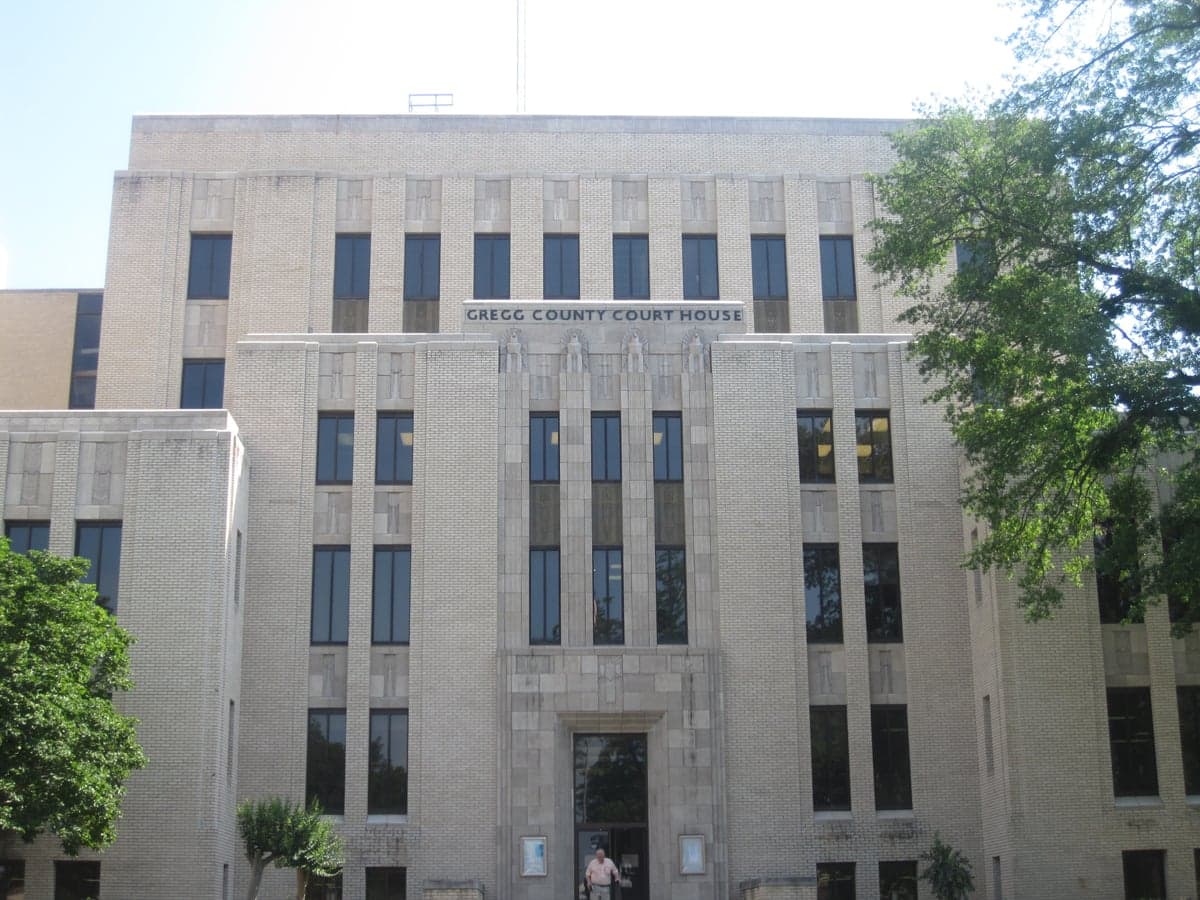
Photo: Wikipedia
Personal Sovereignty in Gregg County
Strong independent fundamentals that actively favor personal liberty and low regulation.
What does Personal Sovereignty tell us?
Personal Sovereignty measures your capacity for self-reliance and independence with minimal government friction. Higher scores mean fewer barriers between you and the way you want to live... but it assumes you have the space you need and good neighbors.
What does this tell us?
Personal Sovereignty measures your capacity for self-reliance and independence with minimal government friction. Higher scores mean fewer barriers between you and the way you want to live... but it assumes you have the space you need and good neighbors.
State Policy
Energy independence: Net exporter (220% of energy produced in-state)
Personal Liberty
Homesteading

Personal Liberty Analysis
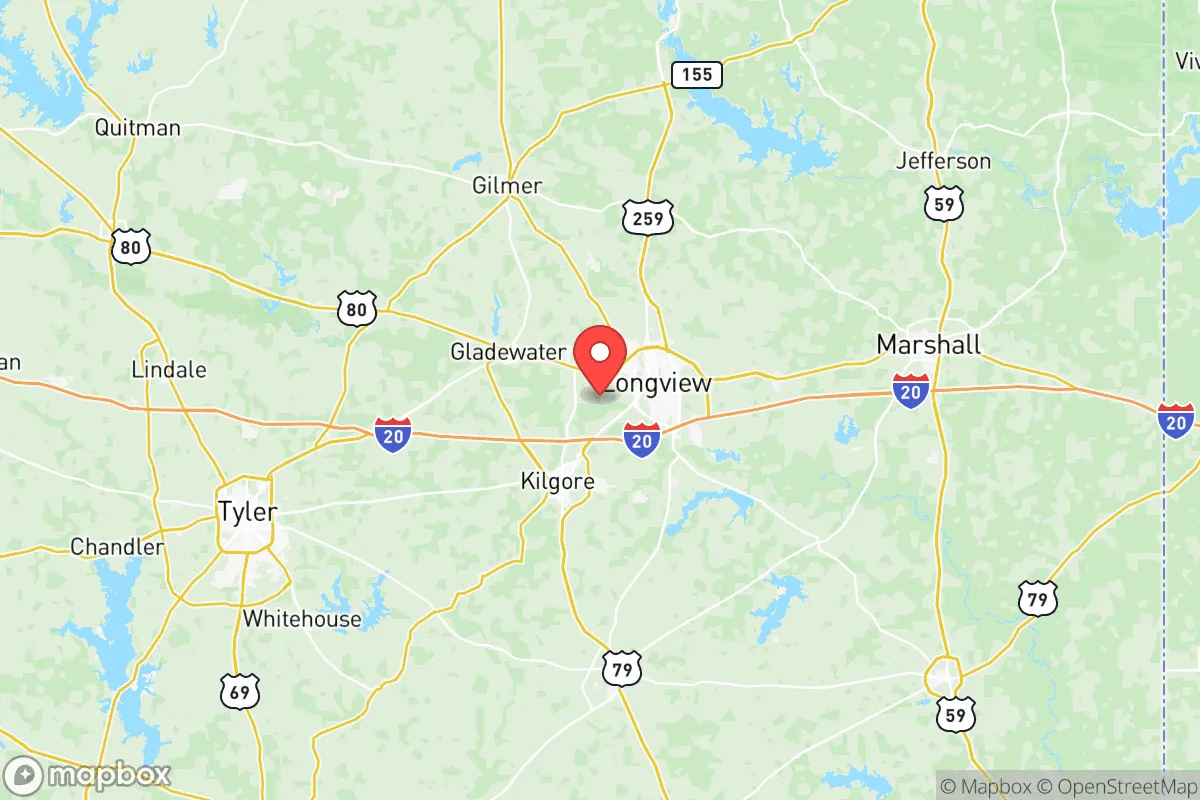
Gregg County, anchored by Longview, offers a notably higher degree of personal sovereignty than what you'll find in Texas's major urban centers, though it is not a libertarian free-for-all. The county's political culture leans heavily conservative, with local governance generally favoring limited interference in daily life, property use, and self-defense choices. However, the presence of state-level regulatory frameworks and municipal codes in places like Longview and Kilgore means the autonomy you experience will vary significantly depending on whether you are inside city limits or in the unincorporated areas around Lakeport, Gladewater, or the rural stretches near Judson.
Tax burden and regulatory posture in Gregg County
Texas has no state income tax, which is a foundational advantage for personal financial sovereignty, and Gregg County does not add a layer of local income tax. The property tax burden here is moderate by Texas standards; the combined county and city rates in Longview hover around 2.3% of assessed value, while rural areas like those near Elderville or unincorporated parts of the county can be slightly lower due to the absence of city-level levies. The regulatory posture is business-friendly and generally permissive. There are no county-wide zoning codes in unincorporated areas, which means you can operate a home-based business, keep livestock, or build a workshop without navigating a thicket of permits. However, if you move inside Longview city limits, you will encounter standard municipal codes on building setbacks, noise, and property maintenance. Kilgore and Gladewater have their own ordinances, but they are far less restrictive than what you would face in Dallas or Houston. The county's approach to environmental regulation is also light—there are no county-level air quality or stormwater rules beyond what the state mandates, which reduces bureaucratic friction for anyone wanting to modify their land.
Self-defense and gun law specifics in Gregg County
Texas is a constitutional carry state, and Gregg County's sheriff and local law enforcement are known for a pro-Second Amendment posture. You can carry a handgun openly or concealed without a permit anywhere in the county, including in Longview, Kilgore, and Gladewater, as long as you are not in a statutorily prohibited location like a school or a federal building. The county does not impose any additional waiting periods, magazine capacity limits, or registration requirements beyond state law. For those with a survivalist mindset, this means you can maintain a personal armory without local interference. The sheriff's office has historically been supportive of the "sanctuary county" movement, meaning they are unlikely to cooperate with federal overreach on gun control. If you want to practice defensive shooting, there are several private ranges in the area, including the Longview Gun Range and the Kilgore Rifle and Pistol Club, both of which operate with minimal county oversight. Stand-your-ground law applies fully here, so there is no duty to retreat before using deadly force in self-defense, which is a critical consideration for anyone prioritizing personal security.
Self-reliance and homesteading viability across Gregg County
The viability of a self-reliant lifestyle varies sharply by location. In unincorporated areas near Judson and Elderville, you can find parcels of 1 to 5 acres with no zoning restrictions, allowing you to keep chickens, goats, or even a small garden without permits. Off-grid feasibility is moderate: rainwater collection is legal and encouraged, and there are no county bans on composting toilets or solar panels. However, the Texas Commission on Environmental Quality (TCEQ) requires septic system permits for any dwelling, which is a state-level hurdle you cannot avoid. Inside Longview city limits, homesteading becomes more constrained—city codes limit livestock to small animals like chickens (hens only, no roosters) and require permits for accessory structures like sheds or greenhouses over 200 square feet. Kilgore is slightly more permissive, allowing larger lots and fewer restrictions on outbuildings. Gladewater, being smaller and more rural, offers a middle ground: you can have a substantial garden and a few animals, but you still need to comply with basic city health codes. For serious off-grid living, the rural stretches south of Lakeport or east of the Sabine River offer the best combination of large lots, lax enforcement, and proximity to natural resources like timber and water.
Personal liberties in Gregg County: parental rights, medical autonomy, speech, and property
Parental rights are strongly protected in Gregg County, reflecting the broader conservative culture of East Texas. Local school districts, including Longview ISD and Kilgore ISD, generally defer to parents on medical decisions, curriculum objections, and disciplinary matters. There is no local push for vaccine mandates or mask requirements in schools, and the county commissioners have publicly opposed state-level overreach on educational content. Medical autonomy is similarly respected: there are no county-level health orders restricting alternative treatments, and the local medical community in Longview is supportive of informed consent. Free speech is robust; the county does not impose any noise or signage restrictions beyond basic nuisance laws, and public protests or political gatherings in courthouse squares are routine. Property rights are the strongest pillar of personal sovereignty here. Gregg County does not have a county-wide comprehensive plan, so you can build, fence, or subdivide your land with minimal interference, provided you meet state septic and well requirements. The only significant limitation is in the floodplain areas near the Sabine River, where FEMA regulations may apply. Eminent domain is rarely used aggressively, and the county's appraisal district is known for being reasonable on property valuations compared to urban counties like Travis or Harris.
Overall, Gregg County ranks among the more sovereignty-friendly areas in Texas for those with a prepper or survivalist mindset. The combination of no income tax, constitutional carry, minimal zoning in rural areas, and a local government that respects parental and property rights creates an environment where you can live largely on your own terms. It is not as permissive as the truly unregulated counties in West Texas, but it offers a better balance of autonomy and access to infrastructure than most of the state. If you are looking to escape the creeping regulatory state of urban centers while still having hospitals, schools, and supply chains within reach, Gregg County is a solid strategic choice.

* Values derived from national, state, county, city and local statistics and may differ in a specific area. Last updated: 2026-05-22T02:53:34.000Z
Narrative content on this page is AI-generated and may contain mistakes. Verify any details that matter before acting on them.
ReloMaps may earn a commission from affiliate links at no extra cost to you.

