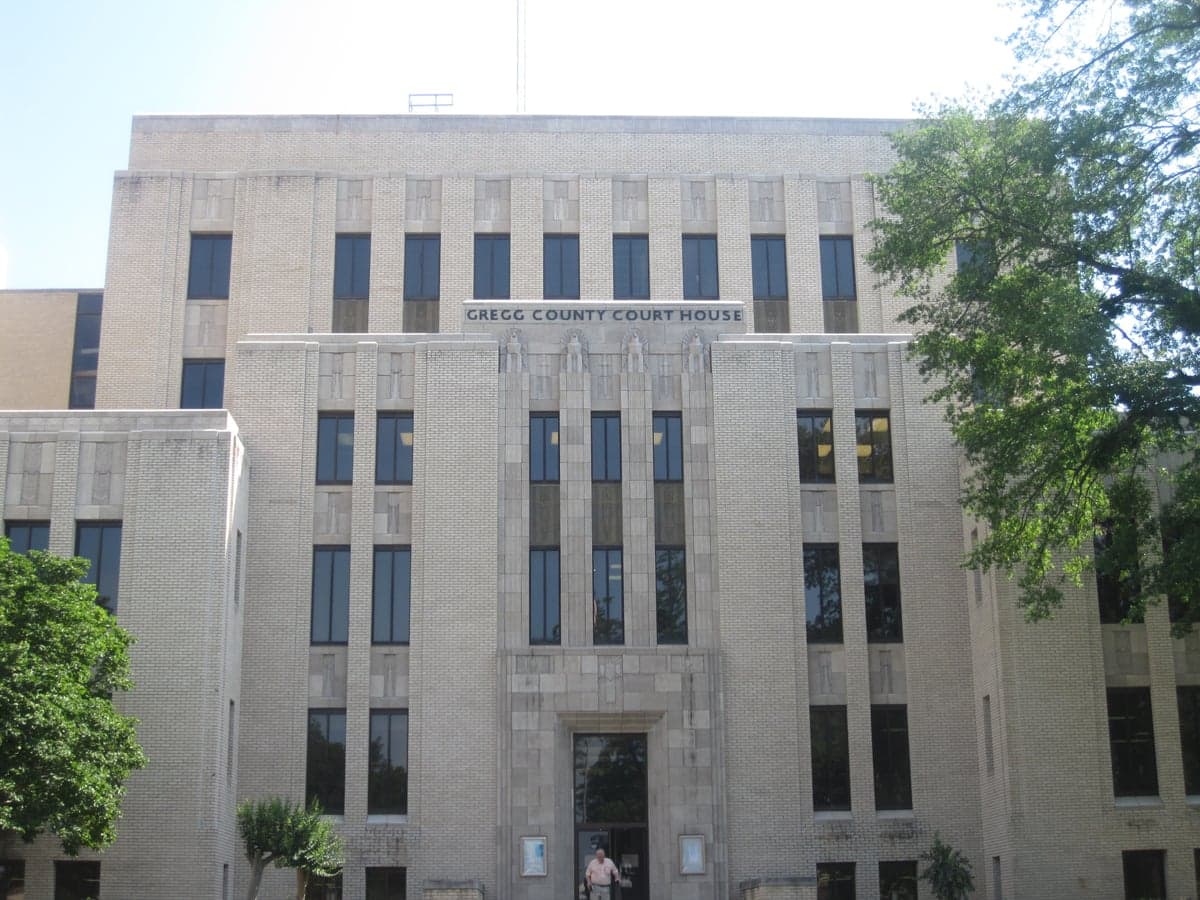
Photo: Wikipedia
Political ClimatePolitical Climate in Gregg County
Showing district-level results — no local-only data available.
Local Political AnalysisPolitical Analysis of Gregg County
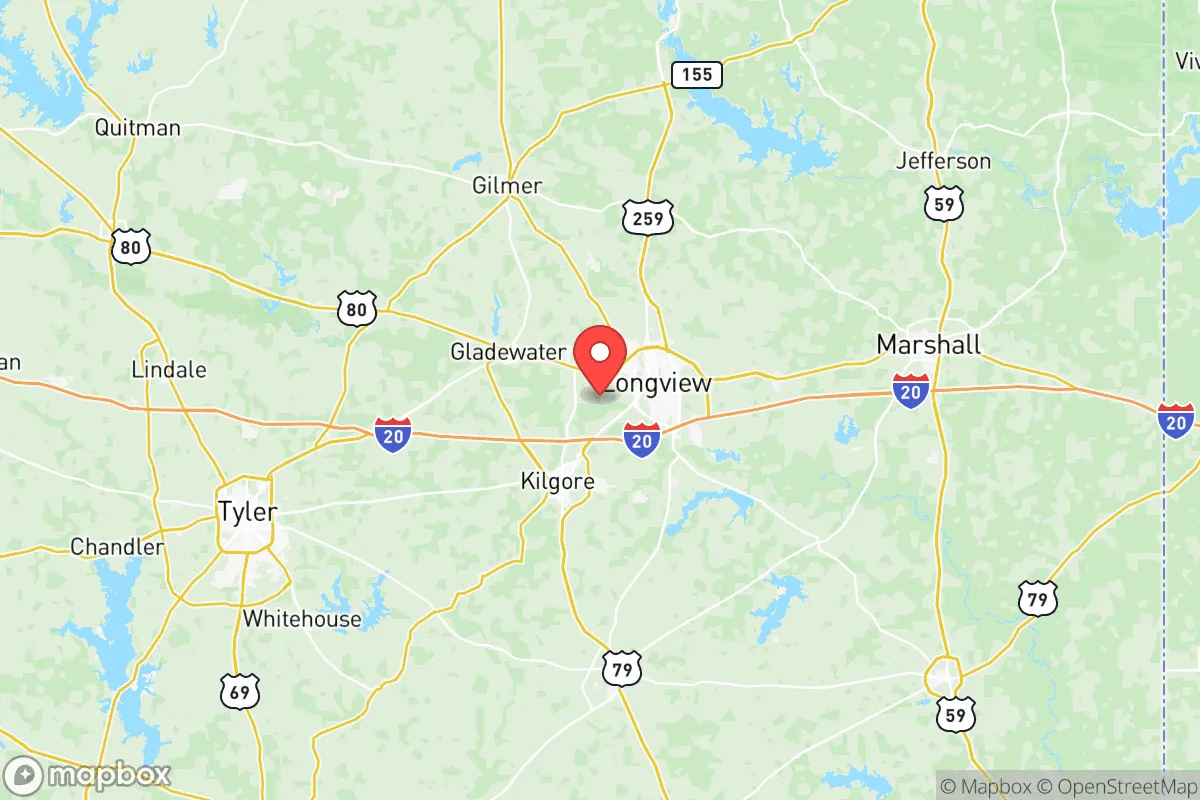
Gregg County is about as solidly conservative as they come in East Texas, with a Cook PVI of R+25 that puts it way to the right of the state as a whole (Texas is R+4). That’s not just a number on a map—it reflects a deep-rooted, live-and-let-live political culture that’s been the norm here for generations. But like a lot of places, you can feel the ground shifting under your feet, especially in the county seat of Longview, where you’ll start to see some precincts trending a little bluer than they used to. The rest of the county, though—places like Kilgore, Gladewater, and the unincorporated areas around Lakeport and White Oak—still vote like it’s 1990, and that’s where the real political weight of the county lives.
How it compares
Compared to Texas as a whole, Gregg County is a conservative stronghold. The state’s R+4 rating means it’s a lean-red battleground, with places like Dallas, Houston, and Austin pulling the needle left. Here, it’s the opposite. In the 2024 presidential race, Gregg County went about 75% for the Republican ticket, while Texas overall was closer to 56%. That’s a massive gap. The real contrast shows up inside the county itself: Longview’s newer subdivisions and some areas near the downtown core have seen a slow creep of progressive-leaning voters, especially among younger transplants and professionals. But head south to Kilgore, home of the oil boom and a strong sense of personal independence, and you’re in deep-red territory. Gladewater, out east, is similar—working-class, skeptical of government overreach, and not shy about it. The swing precincts are mostly in Longview’s central and north-side neighborhoods, where you might see a 60-40 split instead of 80-20. That’s still red, but it’s a warning sign for anyone who values the traditional freedoms we’ve enjoyed here.
What this means for residents
For folks living here, the political climate means a government that mostly stays out of your business—at least for now. Property taxes are a perennial headache, but there’s no city income tax, and the county commission tends to lean toward fiscal restraint. The school boards in Longview, Kilgore, and Gladewater have been battlegrounds over curriculum and parental rights, with conservative majorities holding the line against progressive overreach. That’s a big deal for families who don’t want the state telling them what their kids can read or learn. The downside? If you’re worried about the direction of the state—say, the influx of policies from Austin that feel like they’re testing the limits of local control—Gregg County is a bit of a bulwark, but it’s not immune. The shift in Longview’s core is real, and if that spreads to the suburbs, you could see a slow erosion of the personal freedoms that make this area worth living in.
One thing that sets Gregg County apart culturally is its fierce independence from the big-city politics of Dallas or Houston. You won’t find the same kind of zoning fights or housing mandates here. The local gun culture is strong and unapologetic, and the Second Amendment isn’t a talking point—it’s a way of life. That said, the oil and gas industry still drives a lot of the economy, so any talk of green energy mandates from the state or federal level hits close to home. If you’re looking for a place where your vote actually counts toward keeping government small and personal liberty intact, Gregg County is still one of the best bets in Texas. Just keep an eye on those Longview precincts—that’s where the future of the county’s political soul is being decided.

State Political ClimatePolitical Climate in Texas
State Political AnalysisPolitical Environment in the State
Texas has been a Republican stronghold for three decades, but don’t mistake that for a monolithic red monolith. The state’s Cook PVI of R+4 masks a fast-moving political battlefield: suburban voters are drifting left, rural counties are doubling down, and a massive influx of out-of-state transplants is scrambling the old coalitions. The Republican margin in presidential races has tightened from 15 points in 2012 to about 9 in 2016 and 5.6 in 2020. In 2024, the margin bounced back slightly to roughly 5.7, but the long-term trend still points toward convergence. For a conservative moving here, the key question isn’t whether Texas is conservative—it’s which Texas you choose, and whether the state’s policy environment can hold the line against encroaching blue suburbs.
Urban vs. rural divide
The political map of Texas is a story of three distinct worlds. The urban core metros—Austin, Dallas, Houston, San Antonio, and El Paso—are overwhelmingly Democratic, with Harris County (Houston) and Travis County (Austin) routinely voting D+15 or wider. Meanwhile, the exurban rings and rural heartland—places like Lubbock, Midland, Odessa, Tyler, and the Rio Grande Valley’s rural precincts—vote Republican by margins of 30 to 50 points. The real battle is in the fast-growing suburban counties: Collin County north of Dallas, Fort Bend southwest of Houston, and Comal County near San Antonio. These used to be safe red turf, but Collin County’s margin shrank from R+27 in 2012 to R+12 in 2020; Fort Bend actually went blue for a cycle. That suburban slide is the single biggest threat to conservative dominance in Texas, and it’s driven by college-educated professionals moving from blue states, especially in the tech and healthcare corridors.
Policy environment
Texas still offers a conservative policy framework that attracts relocators. There is no state income tax, property taxes are high but partially capped for homeowners over 65, and the regulatory posture remains business-friendly with one of the weakest labor union presences in the country. Education policy shifted rightward with the passage of SB 3 in 2023, requiring school boards to post curriculum materials online and expanding school choice via education savings accounts (though the initial version stalled; a scaled-down ESAs were enacted in 2023 for special-needs students). On healthcare, Texas did not expand Medicaid, keeps abortion heavily restricted under the heartbeat law (SB 8, 2021), and banned gender transition procedures for minors under SB 14 (2023). Election laws tightened under SB 1 (2021), adding voter ID requirements for mail ballots, limiting drive-through and 24-hour voting, and enhancing poll-watcher access. For a conservative newcomer, the policy environment still feels more aligned with traditional values—but local governments in blue cities are constantly trying to carve out exceptions, creating a patchwork of friction.
Trajectory & freedom
Over the past five years, Texas has trended more free on gun rights and parental authority, but less free on personal medical autonomy and property rights in some areas. The permitless carry law (HB 1927, 2021) lets most adults carry handguns without a license—a big win for Second Amendment advocates. Parental rights were strengthened by HB 25 (2023), which prohibits schools from requiring staff to keep a child’s gender identity secret from parents. On the other hand, the legislature preempted city ordinances in HB 2127 (2023), the so-called “Death Star” bill, which bans local regulations on things like paid leave, agricultural practices, and construction standards—a double-edged sword: it blocks progressive local overreach, but also strips local autonomy for conservative rural counties. On medical freedom, the state imposed strict vaccine mandate bans for employers under a 2021 executive order, then codified it in HB 44. However, the 2023 ban on gender transition for minors (SB 14) has led to legal battles and some families leaving the state. Overall, for a conservative, the trajectory feels mostly rightward on cultural issues, but the rapid suburban demographic shift could reverse these gains in a decade if nothing changes.
Civil unrest & political movements
Texas saw significant civil unrest during the 2020 George Floyd protests, particularly in Austin, where the city council later defunded the police by a third—then quietly restored most of the funding after a crime spike. The border crisis has turned the El Paso and Eagle Pass areas into flashpoints, with Governor Abbott’s Operation Lone Star sending state troopers and National Guard to enforce immigration laws, leading to ongoing federal standoffs. A vocal secessionist movement, the Texas Nationalist Movement, remains fringe but has gained some media traction. Election integrity controversies have been muted since SB 1 passed, though Harris County still faces litigation over ballot paper shortages in 2022. For a new resident, the most visible civil friction is at the border—you’ll hear about it constantly in state politics—and in the growing ideological war between suburban school boards where conservative parents are confronting progressive curricula. The organized activist movements are polarized: on the right, grassroots “parents’ rights” groups; on the left, groups like MOVE Texas and Indivisible.
Projection
Over the next five to ten years, Texas will continue to shift toward purple—but slowly. The key variable is where new residents settle. If the bulk of the 1,000+ people moving in per day land in urban core counties like Travis or Harris, the Democratic base expands. But if they spread into exurbs like Buda, Forney, or Montgomery, the GOP can hold. The fastest-growing counties are suburban mixed: Collin, Denton, and Comal—all trending purple but still red-leaning. The state GOP is also showing internal fractures between establishment business donors and grassroots populists, which could affect future primaries. Expect more brawls over school vouchers, border policy, and property tax reform. By 2034, Texas could have a competitive Senate race and a toss-up presidential result. For a conservative moving now, the smart move is to pick a county that is growing solidly red, not one that’s already tipping—because 10 years from now, that line effect will be the difference between living in a red pocket or a blue island.
Bottom line: Texas still offers the best combination of economic opportunity and conservative policy in the Sun Belt, but the margin for error is shrinking. If you’re a conservative looking to relocate, choose a county with strong GOP margins (like Parker, Ellis, or Kendall) rather than a blue-bordering suburb like Denton or Fort Bend. And pay attention to local school board elections—that’s where the next political war in Texas will be won or lost. The state’s track record says it can hold the line, but only if informed residents stay engaged.
* Values derived from national, state, county, city and local statistics and may differ in a specific area. Last updated: 2026-05-22T02:53:34.000Z
Narrative content on this page is AI-generated and may contain mistakes. Verify any details that matter before acting on them.
ReloMaps may earn a commission from affiliate links at no extra cost to you.

