
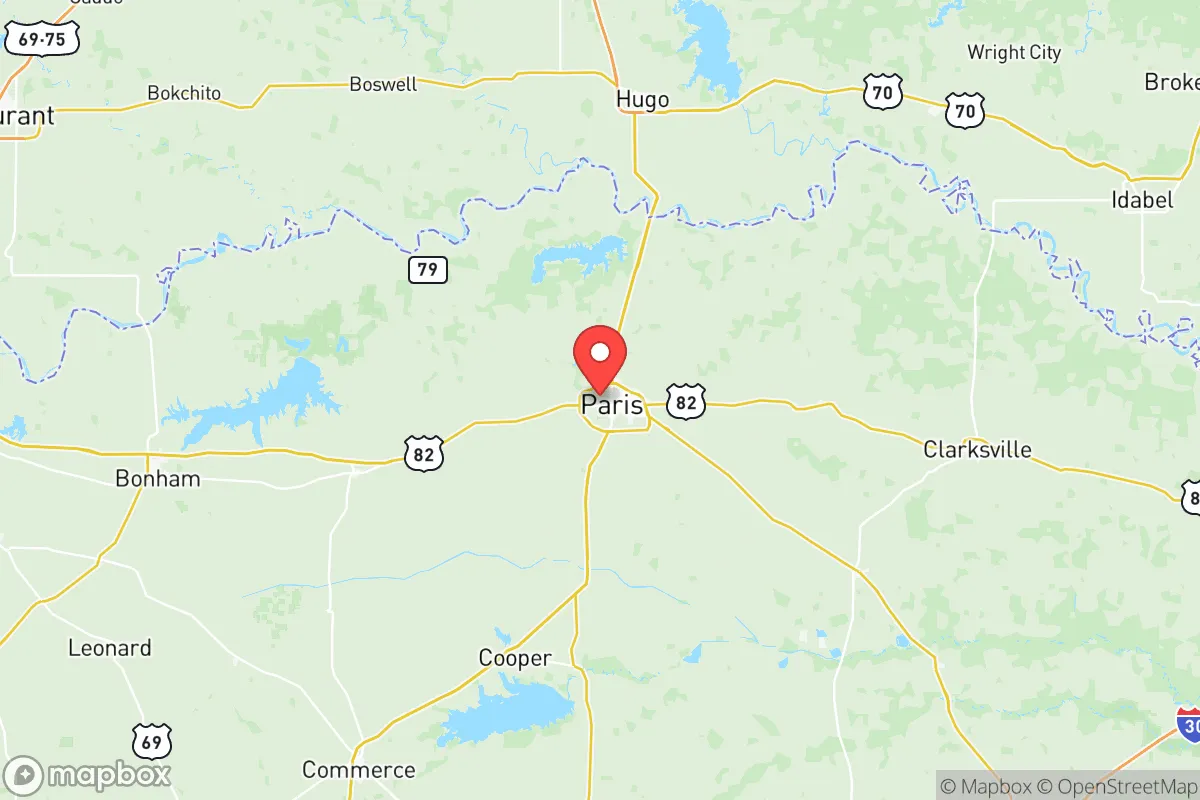

Photo: Wikipedia
Quality of Life in Lamar County
A livable area that tracks near national norms for affordability, walkability, and neighborhood health.
What does Quality of Life tell us?
Quality of Life measures an area by evaluating factors like cost of living, nearby amenities, country club access, airport proximity, socioeconomic signals and neighborhood character. For large states, this is a general average — quality of life can vary dramatically between metro areas, suburbs, and rural communities within the same state.
What does this tell us?
Quality of Life measures an area by evaluating factors like cost of living, nearby amenities, country club access, airport proximity, socioeconomic signals and neighborhood character. For large states, this is a general average — quality of life can vary dramatically between metro areas, suburbs, and rural communities within the same state.
Cost of Living
29% below national average
122%
The Real Cost of Living in Lamar County for 2026
| Tier | Individual | Family (4) |
|---|---|---|
| Survival | $14k | $27k |
| Comfortable | $34k | $50k |
| Luxury | $106k+ | $165k+ |
| Elite (Top 5%) | $125k+ | $194k+ |
Quality-of-Life Analysis
Lamar County, Texas, offers a spectrum of living environments that range from the regional hub of Paris to quiet, unincorporated crossroads, attracting everyone from commuters seeking affordable housing to retirees looking for deep rural seclusion. With a cost of living index of 71 (well below the national average of 100) and a median home value of $175,500, the county provides significant financial breathing room, though the trade-off is a limited set of urban amenities. The county's character is defined by its position in the northeastern corner of the state, where the landscape shifts from the Blackland Prairies into the Piney Woods, creating distinct settings for its various communities.
Largest town(s) & population centers
Paris, Texas, is the county seat and the undisputed population center, home to roughly 25,000 residents. Daily life here revolves around a compact downtown anchored by the historic Lamar County Courthouse, a handful of local restaurants, and retail corridors along U.S. Highway 82 and Loop 286. The town hosts a minor league baseball team, the Paris Pirates, and the annual Tour de Paris cycling event, providing modest entertainment options. Employment is concentrated in manufacturing (Campbell Soup Supply Company and Kimberly-Clark are major employers), healthcare (Paris Regional Medical Center), and education (Paris Junior College). The average commute in the county is a notably short 19.5 minutes, meaning most residents who work in Paris spend little time in traffic. For those who need broader job access, a drive to the Dallas-Fort Worth metroplex takes roughly 90 minutes via U.S. 82 and I-35, a commute some residents accept for the housing cost savings.
Smaller towns & rural pockets
Outside Paris, the county is dotted with small incorporated towns and unincorporated communities that offer a quieter, more agrarian lifestyle. Reno, a town of about 3,200 people just south of Paris, functions largely as a bedroom community with its own school district and a few local services. Blossom (population ~1,400) sits along U.S. Highway 82 and provides a classic small-town main street feel, with a grocery store, a pharmacy, and a strong sense of community centered on the Blossom School. Further out, Deport (population ~600) and Roxton (population ~650) are deeply rural communities where agriculture and local trades dominate the economy. Unincorporated areas like Brookston and Petty consist largely of scattered homes on acreage, with no commercial centers of their own; residents drive 15–25 minutes to Paris for groceries and medical care. These pockets are where the county's agricultural heritage is most visible, with cattle ranches and hay fields forming the everyday landscape.
Cost & lifestyle range
The cost spread across Lamar County is modest but meaningful. At the higher end, newer subdivisions on the south and east sides of Paris — such as those near the Paris Golf & Country Club — see home values approaching $250,000–$300,000, while the median county-wide figure sits at $175,500. Renters fare well, with a median rent of $897, making the county one of the more affordable rental markets in Texas. At the lower end, older homes in central Paris or in towns like Deport and Roxton can be found for under $100,000, though these often require significant repairs. The lifestyle trade-off is clear: residents in Paris have access to a hospital, a Walmart Supercenter, and multiple dining options, while those in rural Blossom or Brookston enjoy larger lots and quieter surroundings but must drive for most services. Property taxes in Lamar County average roughly 1.7% of assessed value, slightly below the Texas state median, which helps keep carrying costs low for homeowners.
This county works best for people who prioritize affordability and space over urban convenience. Families on a tight budget, remote workers who need a low cost of living and a short commute to a post office or coffee shop, and retirees seeking a slow pace of life all find a natural fit here. Those who require frequent access to big-city airports, specialty medical care, or a vibrant nightlife will likely feel constrained, but for anyone comfortable with a 20-minute drive to the grocery store and a 90-minute trip to Dallas when needed, Lamar County delivers a stable, low-stress quality of life.

Crime in Lamar County
Crime rates similar to the national median for U.S. locations.
Violent CrimeViolent Crime Analysis
Property CrimeProperty Crime Analysis
Crime Analysis
Lamar County, Texas, reports a violent crime rate of 345.5 per 100,000 residents and a property crime rate of 1,795.5 per 100,000, placing it above national averages for both categories. While not among the most dangerous counties in the state, these figures indicate a safety environment that requires careful consideration, particularly for families and individuals relocating to the area. The county's largest city, Paris, anchors most of the reported crime, while smaller communities like Blossom, Deport, and Roxton generally experience lower incident volumes.
Crime in context
Lamar County's violent crime rate of 345.5 per 100,000 is roughly 10% higher than the national average of approximately 310 per 100,000 and significantly above the Texas state average of about 280 per 100,000. Property crime in the county, at 1,795.5 per 100,000, also exceeds both the national benchmark (around 1,600) and the Texas average (approximately 1,500). These numbers place Lamar County in a moderate-to-high risk category compared to other rural and exurban North Texas counties. For context, neighboring Fannin County reports lower violent crime rates near 280 per 100,000, while Hunt County hovers closer to 320 per 100,000. The elevated figures in Lamar County are driven primarily by incidents concentrated in Paris, which accounts for the majority of the county's population and crime reports.
What residents experience
Residents of Lamar County most frequently encounter property crimes—burglary, theft, and motor vehicle theft—which make up the bulk of reported incidents. The property crime rate of 1,795.5 per 100,000 translates to roughly one property crime per 56 residents annually, a ratio that demands basic precautions like home security systems and vehicle locking. Violent crimes, while less common, occur at a rate that means a resident has approximately a 1 in 290 chance of being a victim each year. Aggravated assault accounts for the largest share of violent offenses, followed by robbery and, less frequently, homicide. The judicial environment in Lamar County is shaped by local district courts and the elected District Attorney for the 6th Judicial District, which covers Lamar and Delta counties. Unlike larger metro areas such as Houston or Dallas, where progressive prosecutors have drawn criticism for reduced sentencing and pretrial diversion programs, Lamar County's justice system has maintained a more traditional, law-and-order approach. This means offenders are more likely to face prosecution and incarceration, which can contribute to a deterrent effect and reduce recidivism. Residents in Paris should remain vigilant, particularly in areas near the downtown core and along major thoroughfares, while those in outlying towns like Blossom, Deport, and Roxton report fewer safety concerns.
Neighborhood-level variation within Lamar County is significant. The city of Paris, with a population near 25,000, concentrates the majority of both violent and property crime, particularly in lower-income census tracts east of the downtown area and along the US 271 corridor. In contrast, the smaller communities of Blossom (pop. ~1,400), Deport (pop. ~600), and Roxton (pop. ~650) report crime rates well below the county average, often comparable to the safest rural areas in North Texas. Unincorporated areas and lakefront properties near Lake Crook and Pat Mayse Lake also tend to see fewer incidents, though property crime can spike during summer months when seasonal visitors are present. Prospective residents should consult local crime maps and speak with the Lamar County Sheriff's Office for block-level data, as safety conditions can vary dramatically even within a few miles.
* Values derived from national, state, county, city and local statistics and may differ in a specific area. Last updated: 2026-08-08T11:15:43.000Z
Narrative content on this page is AI-generated and may contain mistakes. Verify any details that matter before acting on them.
ReloMaps may earn a commission from affiliate links at no extra cost to you.

