Photo: Wikipedia
Political ClimatePolitical Climate in Thackerville, OK
District shown is the primary district for this city’s centroid. Cities may span multiple districts.
Local Political AnalysisPolitical Analysis of Thackerville, OK
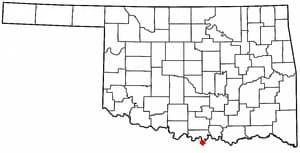
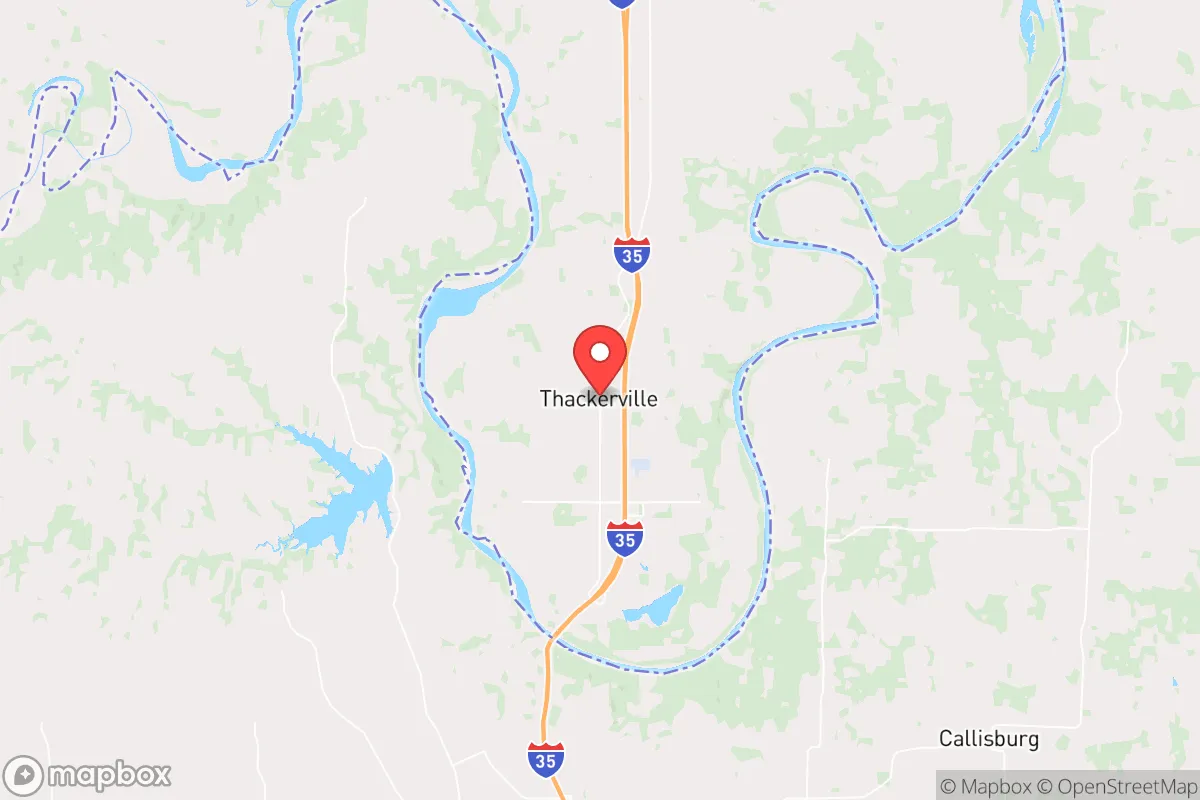
Thackerville, Oklahoma, sits deep in the heart of what you might call the old-school conservative belt, and the numbers back it up. The area carries a Cook PVI of R+17, meaning it votes about 17 points more Republican than the national average. That’s not just a statistic; it’s a way of life. For as long as anyone can remember, this town has leaned solidly red, and the trajectory hasn’t budged much. If anything, the surrounding rural counties have only gotten more entrenched in that mindset over the last decade, especially as folks from more progressive spots like Norman or Oklahoma City start to trickle in and then quickly realize they’re out of their element out here.
How it compares
To really get a feel for Thackerville’s politics, you gotta look at its neighbors. Head north about 20 miles to Ardmore, and you’ll find a slightly more moderate vibe—still conservative, but with a bit more of a mixed bag thanks to the industrial and healthcare sectors there. But Thackerville? It’s a different animal. It’s closer to the Texas border, and that Lone Star influence is real. Compare it to a place like Gainesville, Texas, just across the line, and you’ll see a similar deep-red streak, but Thackerville feels even more insulated. There’s no major university or big-city spillover to soften the edges. The contrast is stark when you look at a place like Norman, home to the University of Oklahoma, where you’ll see pockets of progressive activism and a younger, more diverse electorate. Thackerville doesn’t have that. It’s a place where the local gun shop owner probably knows your name, and the county commission meetings are more about keeping taxes low and roads paved than any social experiments.
What this means for residents
For the folks who live here, the political climate means a lot of things that matter day-to-day. First off, government overreach is a red flag that gets waved early and often. You won’t find much appetite for new state mandates on business hours, land use, or even mask requirements—that stuff gets shut down fast. The local sheriff’s office is known for a “don’t tread on me” attitude, and that’s a point of pride. Property taxes stay low, and there’s a general trust that the people running things are neighbors, not bureaucrats. But there’s a quiet concern, too. As the state as a whole sees a slow creep of progressive ideas—like more funding for public transit or diversity initiatives in schools—Thackerville residents keep a wary eye on Oklahoma City. They see any shift toward progressive ideology as a threat to the way of life they’ve built. The long-term worry is that outside money or federal pressure could start chipping away at local control, and that’s a fight nobody here wants to lose.
Culturally, Thackerville is a place where the Second Amendment isn’t debated, it’s assumed. The local churches are full on Sundays, and the biggest policy debates are usually about how to keep the town’s small businesses alive without inviting in big-box regulations. There’s a strong sense of personal responsibility—folks here don’t look to the government for handouts, and they don’t want it meddling in their lives. If you’re thinking about moving here, know that you’ll be expected to pull your own weight and respect the unwritten rules. It’s a tight-knit community where your word is your bond, and the politics are just a reflection of that. The trajectory? Steady as she goes, with a firm hand on the wheel to keep things from drifting left. That’s the Thackerville way.

State Political ClimatePolitical Climate in Oklahoma
State Political AnalysisPolitical Environment in the State
Oklahoma has long been one of the most reliably conservative states in the nation, with a deep-rooted Republican lean that has only intensified over the past two decades. The state hasn’t voted for a Democratic presidential candidate since 1964, and as of 2024, every single one of its 77 counties went red in the presidential race—a feat that even Texas and Florida can’t claim. The dominant coalition is a mix of rural traditionalists, evangelical Christians, and energy-sector workers, but the real story is how the state’s political center of gravity has shifted from a moderate, Blue Dog Democratic past to a solidly conservative, often libertarian-leaning present. Over the last 10-20 years, Oklahoma has moved from a state where Democrats held statewide offices and controlled the legislature into a place where Republicans hold supermajorities in both chambers and the governor’s mansion has been firmly in GOP hands since 2011. This trajectory is driven by a combination of cultural alignment, economic priorities, and a growing distrust of federal overreach.
Urban vs. rural divide
The political map of Oklahoma is a textbook case of the urban-rural split, but with a twist: even the state’s largest cities are more conservative than their counterparts in neighboring states. Oklahoma City and its suburbs—places like Edmond and Yukon—are reliably Republican, with the city itself voting red in most statewide races. Tulsa is similar, though its core has become more competitive in recent cycles, with some precincts trending left as younger professionals move in. The real contrast is between these metro areas and the rural expanse. Counties like Texas County in the Panhandle and Roger Mills County in the west regularly deliver 85-90% of the vote to Republican candidates. The only notable blue-ish pocket is Norman, home to the University of Oklahoma, where progressive activism has a foothold—but even there, the surrounding Cleveland County leans right overall. The divide isn’t just about party; it’s about worldview. Rural Oklahomans see the state as a bastion of self-reliance, while urbanites in Norman and parts of Tulsa are increasingly pushing for more government involvement in social issues. That tension is real, but it hasn’t shifted the statewide balance.
Policy environment
Oklahoma’s policy environment is aggressively pro-business and anti-tax, with a regulatory posture that prioritizes individual freedom over government control. The state has a flat income tax rate of 4.75%, which is set to drop to 3.99% by 2027 under legislation signed by Governor Kevin Stitt. There’s no estate tax, and property taxes are among the lowest in the nation—averaging about 0.9% of home value. On education, the state passed a universal school voucher program in 2024, allowing any family to use public funds for private or homeschool expenses, a major win for parental rights. Healthcare is more mixed: Oklahoma expanded Medicaid under a 2020 ballot initiative, but the state has also passed laws restricting abortion to the point of near-total prohibition, with no exceptions for rape or incest. Election laws are strict—voter ID is required, and the state has purged inactive voter rolls aggressively. The overall message is clear: Oklahoma wants to keep government small, taxes low, and personal responsibility high. For a conservative-leaning individual or parent, this is a policy environment that feels like a breath of fresh air compared to states where the government meddles in every aspect of daily life.
Trajectory & freedom
Oklahoma is becoming more free in many respects, but the trajectory isn’t without its complications. On the positive side, the state has been a national leader in expanding gun rights: permitless carry was signed into law in 2019, and in 2024, the legislature passed a bill prohibiting any state or local enforcement of federal gun laws that violate the Second Amendment. Parental rights have been strengthened through the “Parents’ Bill of Rights” (2022), which gives parents explicit authority over their children’s education and medical decisions. Medical autonomy took a hit with the near-total abortion ban (SB 612, 2022), but that’s a freedom issue that cuts both ways depending on your values. On the concerning side, property rights have seen some erosion through expanded eminent domain for pipeline projects, and the state’s tax burden, while low, has crept up slightly with the Medicaid expansion. The biggest red flag for freedom advocates is the growing influence of federal dollars—Oklahoma now takes more federal funding per capita than many blue states, which creates a dependency that could be leveraged for future mandates. Still, the overall direction is toward more personal liberty, especially for gun owners and parents.
Civil unrest & political movements
Oklahoma has seen its share of political flashpoints, but they’ve been more about policy battles than street-level unrest. The 2020 protests in Oklahoma City and Tulsa were relatively small compared to other states, and the state’s strong law-and-order posture kept things from escalating. The most visible political movement in recent years has been the push for school choice, which culminated in the 2024 voucher law—a grassroots effort that pitted rural Republicans against suburban parents. Immigration politics are less heated here than in border states, but Altus and Guymon have seen tensions over meatpacking plant labor. There’s been no serious sanctuary city movement; in fact, the state passed a law in 2024 requiring local law enforcement to cooperate with ICE. Election integrity has been a hot topic, with the state implementing strict voter ID and audit procedures after the 2020 election, though no major fraud was ever found. The most notable flashpoint for a new resident would be the ongoing debate over tribal sovereignty—Oklahoma is home to 39 tribal nations, and the 2020 McGirt v. Oklahoma Supreme Court ruling reshaped criminal jurisdiction, leading to friction between state and tribal authorities. This isn’t civil unrest in the traditional sense, but it’s a political fault line that affects daily life, especially in eastern Oklahoma near Muskogee and Tahlequah.
Projection
Over the next 5-10 years, Oklahoma is likely to become even more conservative, but with a libertarian twist. In-migration is picking up, particularly from California and Colorado, as people flee high taxes and progressive policies. These newcomers tend to be more culturally conservative than the average transplant, which will reinforce the state’s political lean. The biggest demographic shift is the growth of the Oklahoma City metro, which is adding about 20,000 people a year and is expected to surpass 1.5 million by 2030. This growth will likely strengthen the Republican base, as the suburbs of Edmond and Moore remain deeply red. The wild card is the tribal sovereignty issue—if the state and tribes can’t reach a stable compromise, it could create legal chaos that drives away businesses. But overall, expect more tax cuts, more school choice expansion, and a continued push to limit federal influence. The state’s political culture is self-reinforcing: as more freedom-minded people move in, the government will be pressured to stay out of their lives. For someone moving in now, the Oklahoma of 2035 will look very much like the Oklahoma of today, only more so—lower taxes, stronger gun rights, and a government that respects personal liberty.
For a new resident, the bottom line is this: Oklahoma offers a political climate where your rights are respected, your taxes are low, and your voice matters. The state government is on your side when it comes to parental authority, gun ownership, and economic freedom. You won’t find the culture wars of coastal states here—no mask mandates, no vaccine passports, no government telling you how to raise your kids. The trade-off is that you’ll need to be comfortable with a slower pace of life and a more homogeneous political environment. If you’re looking for a place where the government stays out of your business and your family can thrive on your own terms, Oklahoma is one of the best bets in the country. Just be aware of the tribal sovereignty situation and the growing federal dependency—those are the cracks in the foundation. But for a conservative-leaning individual or parent, this is a state that delivers on its promises.
* Values derived from national, state, county, city and local statistics and may differ in a specific area. Last updated: 2026-04-19T21:17:12.000Z
Narrative content on this page is AI-generated and may contain mistakes. Verify any details that matter before acting on them.
ReloMaps may earn a commission from affiliate links at no extra cost to you.

