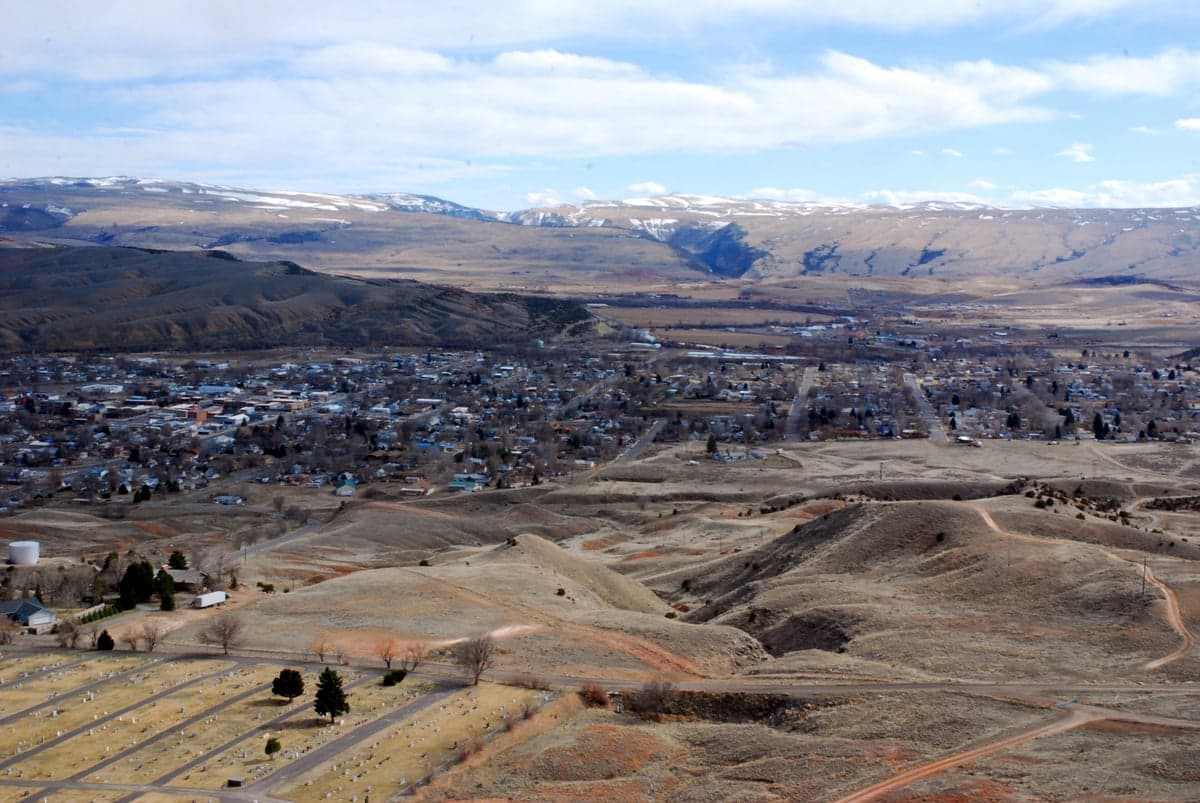
Photo: Wikipedia
Strategic Assessment of Thermopolis, WY
Strong survivability profile. Good buffer from population centers, with manageable environmental and tactical risks.
What does the Strategic Assessment tell us?
Our Strategic Assessment grades tactical survivability of an area. Major population centers, military targets, fallout zones, natural disasters, and border exposure all drive risk — lower exposure means a more defensible position in a crisis.
This is heavily inspired by Joel Skousen's Strategic Relocation book. Highly recommended you checkout the book ($)What does this tell us?
Our Strategic Assessment grades tactical survivability of an area. Major population centers, military targets, fallout zones, natural disasters, and border exposure all drive risk — lower exposure means a more defensible position in a crisis.
This is heavily inspired by Joel Skousen's Strategic Relocation book. Highly recommended you checkout the book ($)Strategic Pillars

Key Distances
Regional Safe Places
Below is our recommended "safe zones" in Wyoming and the surrounding area based on our strategic heuristics. For most people, it's unrealistic to live in a “safe zone” full-time due to work, family or other personal reasons. They tend to be more rural. However, many of these areas are perfect for second homes and retreat properties that double as a vacation home or even a short-term rental.
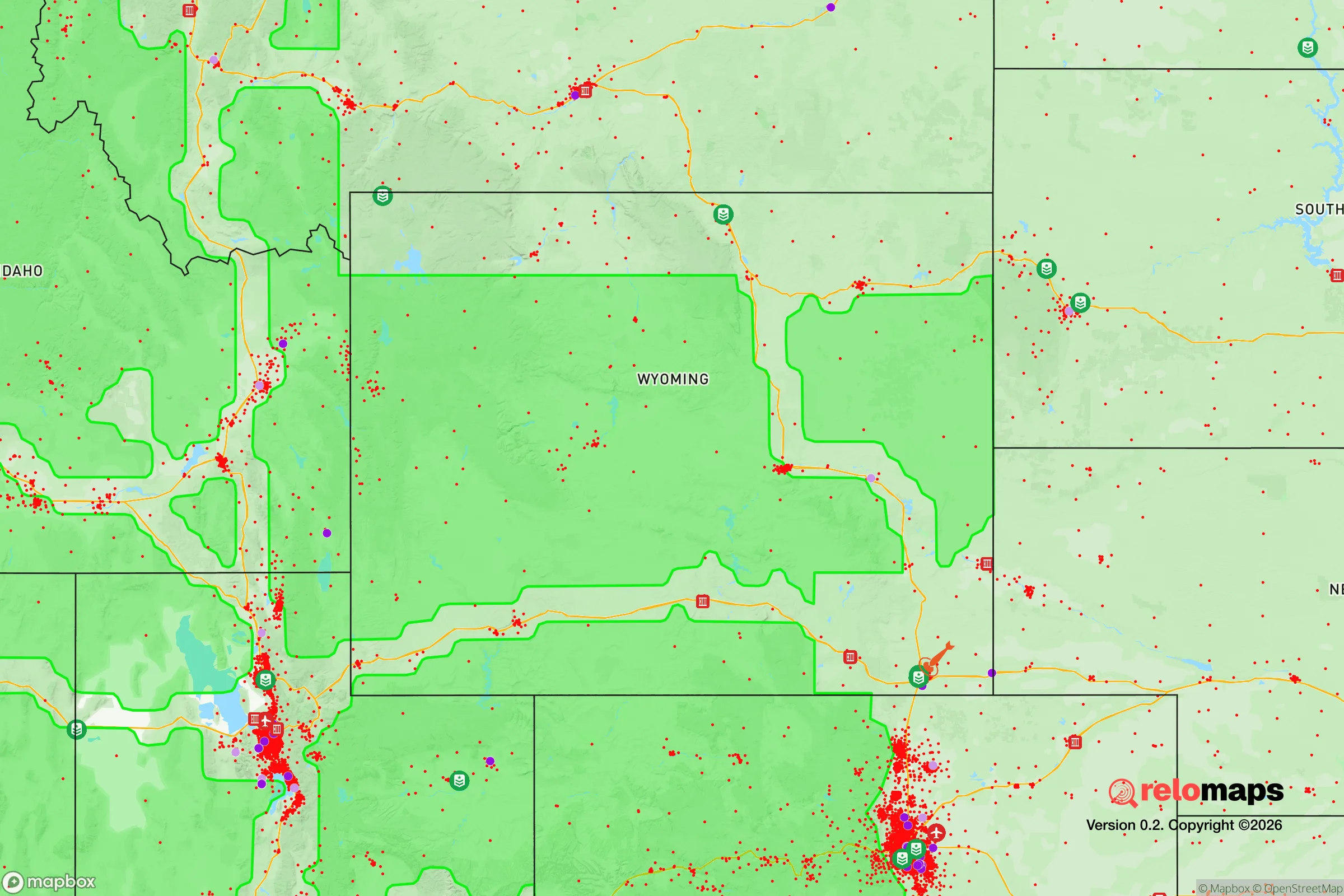
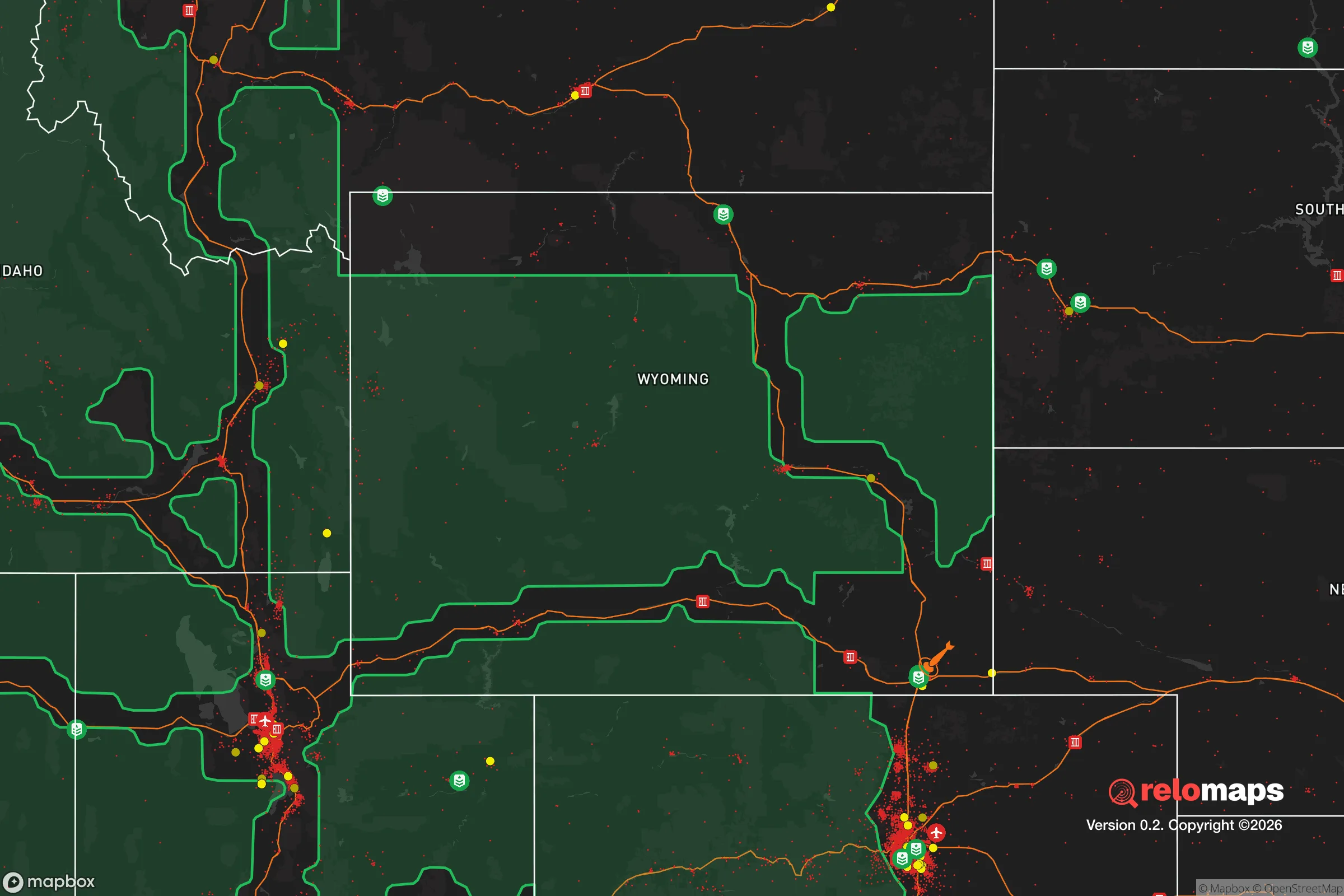


Important Note: For informational purposes only. This does not mean nothing bad ever happens in the green zones. Please use common sense. This is based on public data and modeled with AI. We tried to take a conservative approach but mistakes happen. We update this regularly as new information becomes available.
Solar Generator Recommendations
Backup power matters more here than in safer locations. We've picked three solar generators across budgets and capacity tiers — start with the budget unit if you only need a few essentials, or step up if you want to run a fridge and HVAC for days at a time.

Jackery Portable Power Station Explorer 300
Budget OptionPower on the Go: Weighing only 11 lbs, it's convenient to set up and store with book-sized foldable solar panels

BLUETTI Portable Power Station AC180
Designed for both indoor and outdoor scenarios, AC180 is highly capable as it has a robost capacity and continuous output power.

EF ECOFLOW DELTA Pro Ultra Power Station
Upgraded PickEcoFlow DELTA Pro Ultra is a whole-home energy system designed to grow with your family. Integrated with the Smart Home Panel 2, it scales to meet your evolving energy needs — keeping your home powered, intelligent, and secure through every stage of life.
We earn a commission, at no additional cost to you.
Strategic Assessment Analysis
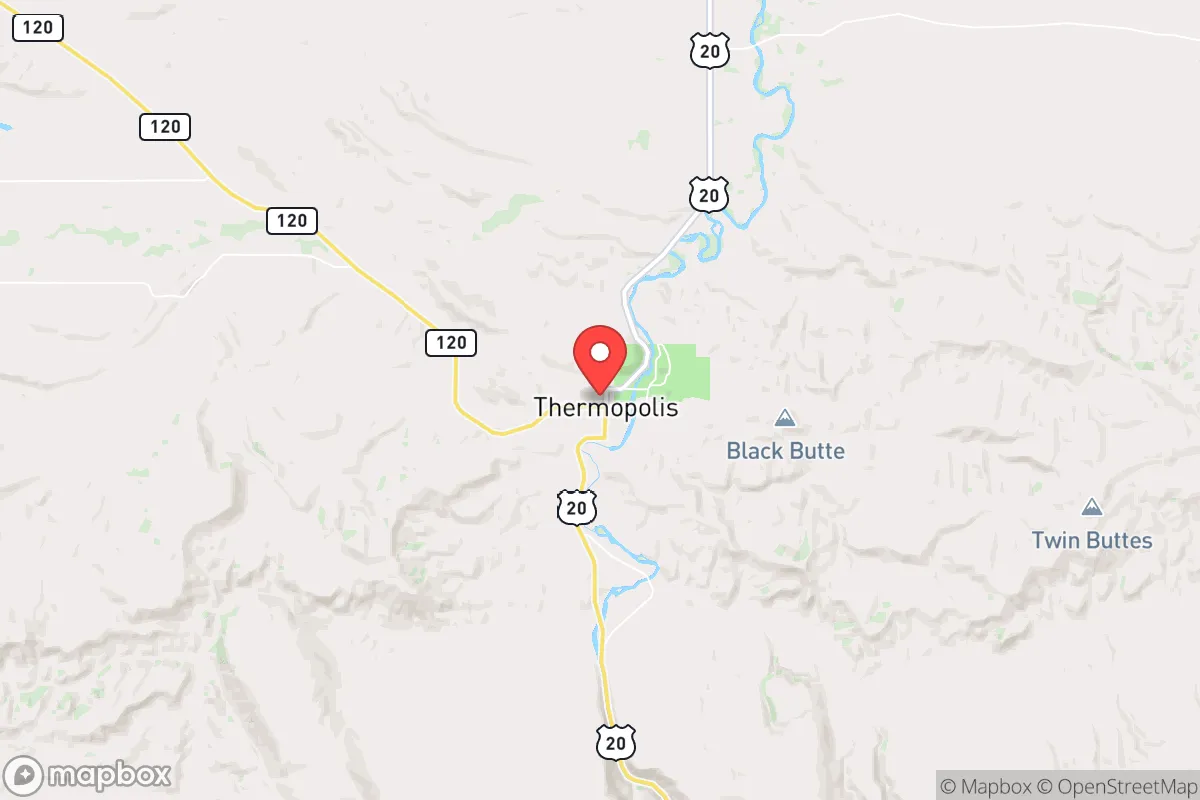
Thermopolis, Wyoming, offers a strategic relocation option for those prioritizing resilience and self-sufficiency, but it comes with distinct trade-offs. Nestled in the Bighorn Basin, this town of roughly 3,000 people sits far from any major population center—over 100 miles from Casper, 150 from Billings, and 200 from Jackson Hole—which inherently reduces exposure to the cascading chaos of urban unrest, supply chain collapses, or mass casualty events. Its location along the Bighorn River and near Hot Springs State Park provides immediate access to geothermal water and arable land, but the surrounding terrain and sparse population also create a buffer that’s hard to beat for those seeking to avoid the fallout of societal breakdown. However, the area’s isolation cuts both ways: it’s a fortress against external threats, but it demands serious logistical planning for long-term survival.
Geographic position and natural advantages for long-term security
Thermopolis sits in a natural basin ringed by the Owl Creek Mountains to the south and the Bighorn Mountains to the east, offering a defensible position that’s difficult to approach without detection. The town’s name comes from the world’s largest mineral hot spring, which flows at 3.6 million gallons per day at 135°F—a renewable, off-grid heat source that could be critical for warmth and sanitation in a grid-down scenario. The Bighorn River runs through the valley, providing reliable water for drinking, irrigation, and livestock, while the surrounding public lands (Shoshone National Forest, Bighorn National Forest) offer hunting, foraging, and timber. The climate is semi-arid with cold winters, but the growing season (120–140 days) is long enough for hardy crops like potatoes, beans, and squash. For a prepper, this is a location where you can realistically achieve water independence and thermal security without relying on fragile infrastructure.
Risks, exposures, and proximity to fallout-relevant landmarks
The biggest strategic weakness is Thermopolis’s proximity to potential fallout targets. The town is roughly 60 miles from the Yellowstone Caldera, a supervolcano that, if it erupted, would blanket the region in ash and render the area uninhabitable for years. While the odds of a catastrophic eruption are low (USGS estimates a 1-in-730,000 annual chance), it’s a tail risk that can’t be ignored. More immediate concerns: the town is 90 miles from the Wind River Indian Reservation, which has seen periodic civil unrest and could become a flashpoint in a resource-scarce scenario. There are no major military bases, nuclear plants, or strategic infrastructure within 100 miles, which is a plus—no obvious targets for a first-strike or terrorist attack. However, the nearby oil and gas fields (the Bighorn Basin produces about 10 million barrels annually) could attract sabotage or looting during a crisis. The biggest day-to-day risk is the isolation itself: the nearest Level 1 trauma center is in Casper, 2.5 hours away, and the local hospital (Hot Springs County Memorial) is a critical-access facility with limited capacity for mass casualties. If you’re planning for a long-term collapse, you’ll need to stockpile medical supplies and train in emergency care.
Practical resilience for a relocator: food, water, energy, and defensibility
For a single individual or family, Thermopolis offers a solid foundation for self-reliance, but it’s not a plug-and-play paradise. Water is abundant from the Bighorn River and local wells, but you’ll need a filtration system (the river carries agricultural runoff and silt). The hot springs can be tapped for geothermal heating, but the mineral content is corrosive to standard plumbing—plan for PEX or stainless steel. Food production is viable: the basin has fertile soil for gardens, and the surrounding BLM land allows for grazing goats or chickens (check local zoning; the town limits are restrictive, but rural parcels outside city limits are lenient). The local grocery store (Ridley’s) is small and would empty within days of a panic, so you’ll need a year’s supply of staples. Energy is a weak point: the grid is served by Rocky Mountain Power, which is vulnerable to winter storms and wildfire-related outages. Solar is viable (the area gets 260 sunny days per year), but you’ll need battery storage for the long, dark winters. Defensibility is decent: the town is compact, with only three main roads in and out (US-20, WY-120, WY-170), making it easy to monitor and block. The local sheriff’s office has 8 deputies for the entire county, so in a crisis, you’re largely on your own—which is exactly what a survivalist wants, as long as you’re prepared for it.
The overall strategic picture for Thermopolis is one of high potential paired with high responsibility. It’s a place where you can build a resilient life if you’re willing to invest in infrastructure, stockpiles, and skills—but it’s not a retreat for the unprepared. The isolation that makes it safe from urban chaos also makes it vulnerable to supply chain disruptions and medical emergencies. For a conservative-minded relocator who values self-sufficiency and wants to be far from the fray, Thermopolis is a strong candidate, provided you accept the trade-offs: you’ll trade convenience for security, and you’ll need to be your own first responder, farmer, and mechanic. If that sounds like a fair deal, this basin could be your long-term anchor. If not, look elsewhere—because in a crisis, this town will test every ounce of your preparedness.

* Values derived from national, state, county, city and local statistics and may differ in a specific area. Last updated: 2026-04-21T11:40:36.000Z
Narrative content on this page is AI-generated and may contain mistakes. Verify any details that matter before acting on them.
ReloMaps may earn a commission from affiliate links at no extra cost to you.

