Photo: Wikipedia
Demographics of Tigard, OR
Affluence Level in Tigard, OR
An upper-middle-class area. Household wealth, education levels, and homeownership run ahead of national benchmarks.
People of Tigard, OR
The people of Tigard, Oregon, today number 55,395, forming a predominantly white (68.7%) and college-educated (49.6%) suburban community with a notable East/Southeast Asian presence (8.1%) and a growing Hispanic population (12.9%). The city is characterized by a relatively low foreign-born rate of 4.4%, suggesting a population shaped more by domestic in-migration than by recent international arrivals. Tigard’s identity is that of a stable, family-oriented suburb where long-term residents and newer arrivals from the Portland metro area coexist in distinct neighborhoods that trace their origins to specific settlement waves.
How the city was settled and grew
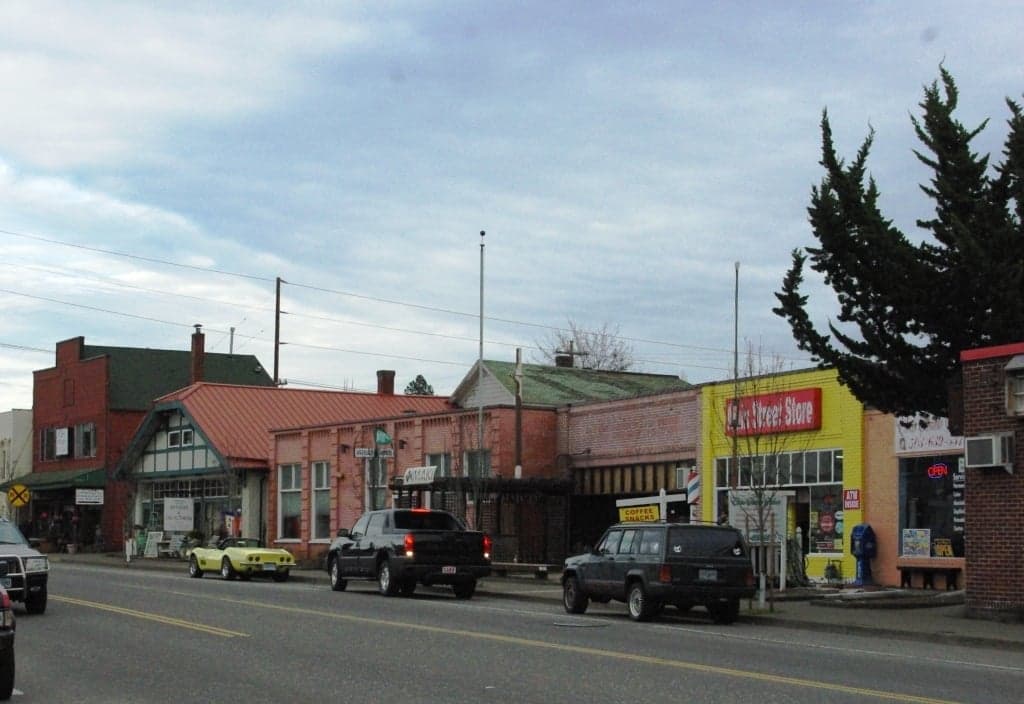
Tigard’s population history begins with the 1850 Donation Land Claim Act, which drew white American settlers to the fertile Tualatin Valley. The city is named for Wilson Tigard, who arrived from Missouri in 1852 and established a farm and general store near present-day Old Town Tigard, the historic core along Main Street. The original population was almost entirely of Northern European stock—primarily English, German, and Scandinavian farmers—who built the area’s early infrastructure. The arrival of the Oregon Electric Railway in the early 1900s spurred a second wave of settlement, with middle-class families building homes in what is now the Summerfield neighborhood, a planned community that grew around the rail line. By 1950, Tigard remained a small agricultural crossroads of roughly 1,000 residents, almost all white and native-born.
Modern era (post-1965)
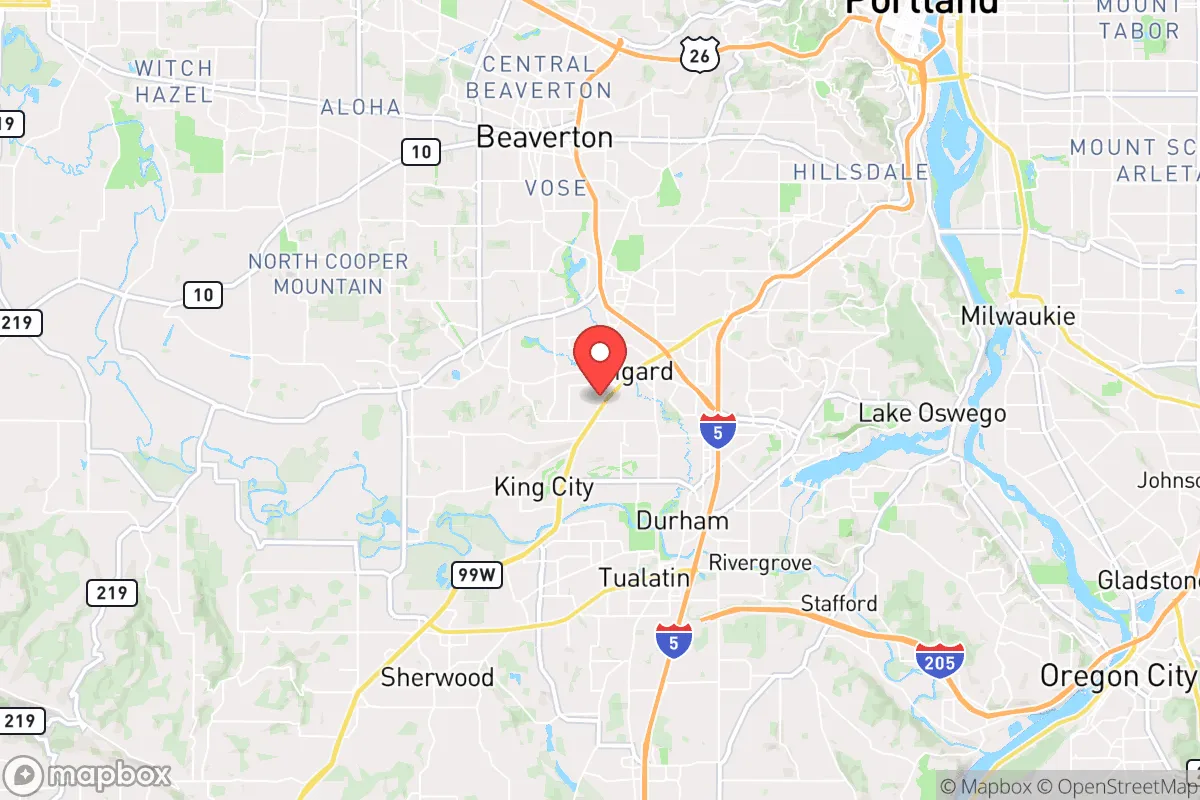
The 1965 Hart-Cellar Act had a modest direct impact on Tigard, as the city’s foreign-born share remains low at 4.4%. Instead, the post-1965 population story is one of domestic suburbanization. The construction of Interstate 5 and Highway 217 in the 1970s transformed Tigard into a bedroom community for Portland and Beaverton, drawing white-collar families from the metro area. The Greenburg district, centered on commercial corridors, absorbed many of these new residents in apartment complexes and townhomes. The 1990s and 2000s saw the arrival of East/Southeast Asian families—particularly Vietnamese and Chinese—who settled in the Bonita neighborhood near the Washington Square Mall, drawn by the area’s schools and retail access. The Hispanic population, now 12.9%, grew steadily from the 1990s onward, with many families locating in the Durham area along the southern edge of the city, where older, more affordable housing stock exists. The Black population remains very small at 1.2%, concentrated in scattered apartment complexes rather than a distinct enclave. The Indian-subcontinent population (1.2%) is a recent, small addition, primarily professionals working in Portland’s tech sector who rent in newer developments near the River Terrace neighborhood.
The future
Tigard’s population is trending toward modest diversification, but the pace is slow. The white share has declined from roughly 80% in 2000 to 68.7% today, driven primarily by Hispanic and East/Southeast Asian growth. The Hispanic population is the fastest-growing segment, projected to reach 15-17% by 2035, with families settling in the Durham and Summerfield areas. The East/Southeast Asian population appears to be plateauing, as younger generations assimilate and move to newer suburbs farther out. The Indian-subcontinent population is likely to grow slowly, tied to tech employment cycles. Tigard is not tribalizing into stark ethnic enclaves; rather, it is experiencing a gradual blending, with most neighborhoods remaining predominantly white but with increasing Hispanic and Asian presence. The city’s low foreign-born rate suggests that future growth will come primarily from domestic migration—families leaving Portland for better schools and lower crime—rather than from international arrivals.
For a conservative-leaning individual or family considering relocation, Tigard is becoming a more diverse but still majority-white, family-oriented suburb where demographic change is gradual and assimilation is the norm. The city offers stable neighborhoods like Old Town Tigard for historic character, Bonita for retail access, and River Terrace for newer construction, all within a community that remains culturally anchored by its agricultural and railroad-era roots. The population trajectory points toward continued slow diversification, but the city’s character as a safe, educated, and predominantly native-born suburb is likely to persist through the next decade.

* Values derived from national, state, county, city and local statistics and may differ in a specific area. Last updated: 2026-05-03T04:10:22.000Z
Narrative content on this page is AI-generated and may contain mistakes. Verify any details that matter before acting on them.
ReloMaps may earn a commission from affiliate links at no extra cost to you.

