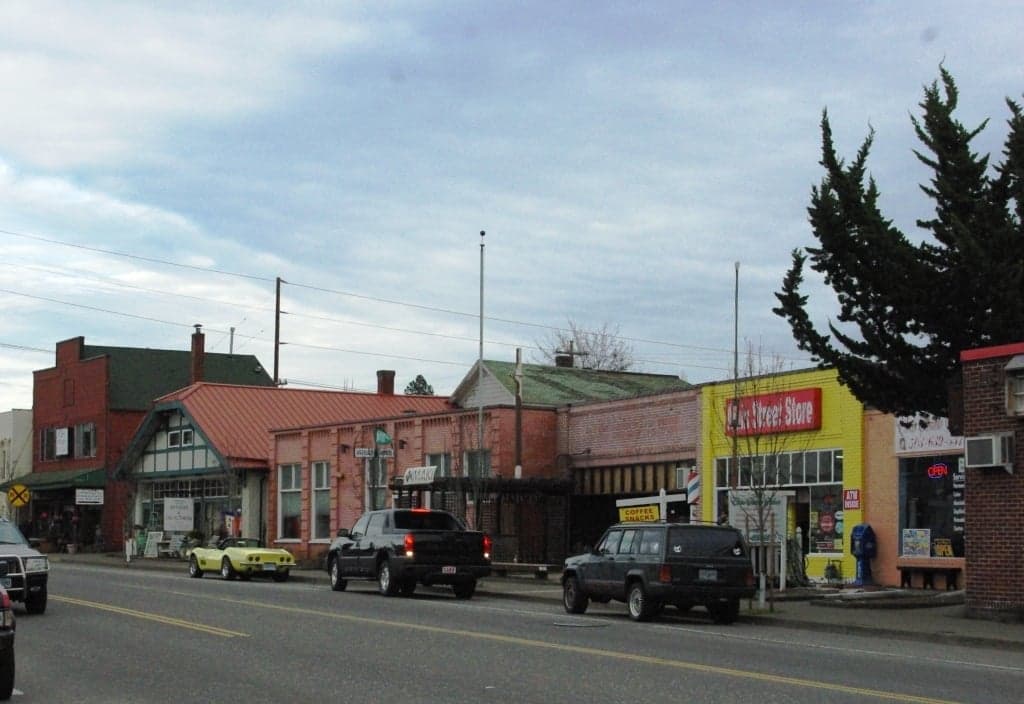
Photo: Wikipedia
Strategic Assessment of Tigard, OR
Multiple tactical vulnerabilities. Population density, target proximity, or disaster risk are likely compounding. A retreat property and exit planning is required.
What does the Strategic Assessment tell us?
Our Strategic Assessment grades tactical survivability of an area. Major population centers, military targets, fallout zones, natural disasters, and border exposure all drive risk — lower exposure means a more defensible position in a crisis.
This is heavily inspired by Joel Skousen's Strategic Relocation book. Highly recommended you checkout the book ($)What does this tell us?
Our Strategic Assessment grades tactical survivability of an area. Major population centers, military targets, fallout zones, natural disasters, and border exposure all drive risk — lower exposure means a more defensible position in a crisis.
This is heavily inspired by Joel Skousen's Strategic Relocation book. Highly recommended you checkout the book ($)Strategic Pillars

Key Distances
Regional Safe Places
Below is our recommended "safe zones" in Oregon and the surrounding area based on our strategic heuristics. For most people, it's unrealistic to live in a “safe zone” full-time due to work, family or other personal reasons. They tend to be more rural. However, many of these areas are perfect for second homes and retreat properties that double as a vacation home or even a short-term rental.


Important Note: For informational purposes only. This does not mean nothing bad ever happens in the green zones. Please use common sense. This is based on public data and modeled with AI. We tried to take a conservative approach but mistakes happen. We update this regularly as new information becomes available.
Solar Generator Recommendations
Backup power matters more here than in safer locations. We've picked three solar generators across budgets and capacity tiers — start with the budget unit if you only need a few essentials, or step up if you want to run a fridge and HVAC for days at a time.

Jackery Portable Power Station Explorer 300
Budget OptionPower on the Go: Weighing only 11 lbs, it's convenient to set up and store with book-sized foldable solar panels

BLUETTI Portable Power Station AC180
Designed for both indoor and outdoor scenarios, AC180 is highly capable as it has a robost capacity and continuous output power.

EF ECOFLOW DELTA Pro Ultra Power Station
Upgraded PickEcoFlow DELTA Pro Ultra is a whole-home energy system designed to grow with your family. Integrated with the Smart Home Panel 2, it scales to meet your evolving energy needs — keeping your home powered, intelligent, and secure through every stage of life.
We earn a commission, at no additional cost to you.
Strategic Assessment Analysis
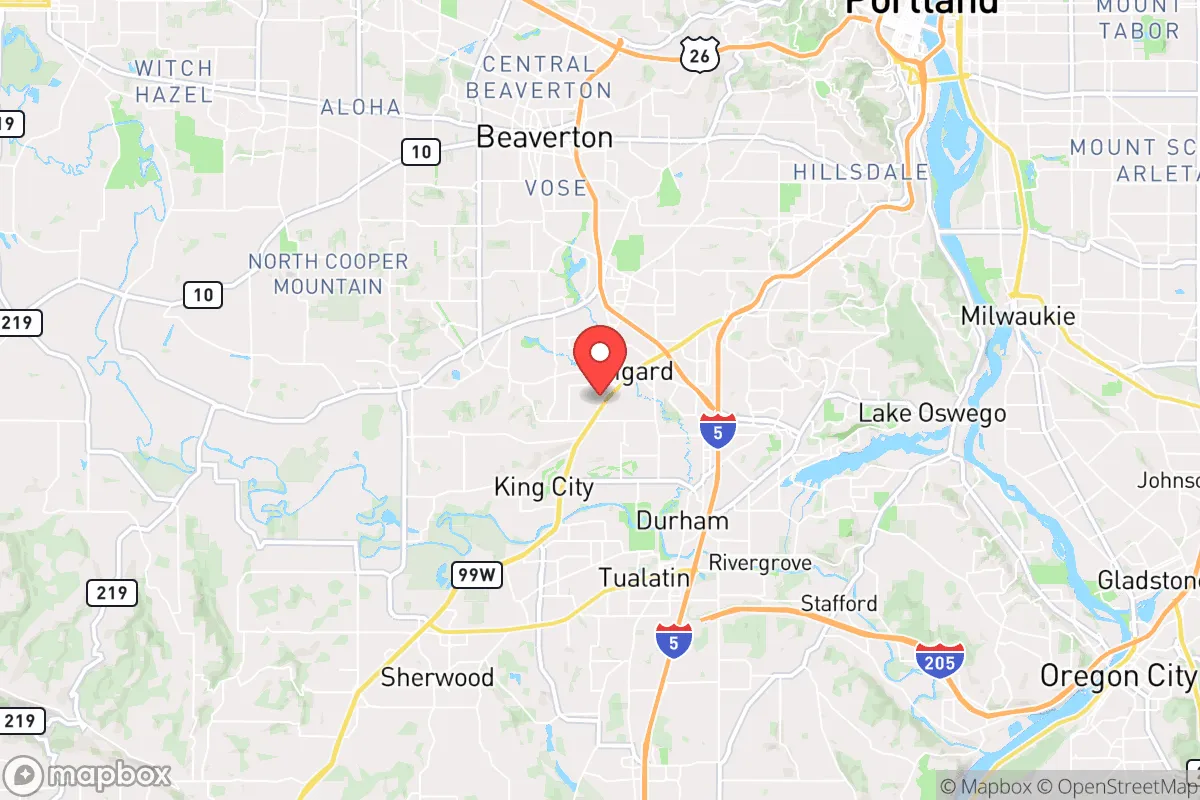
Tigard, Oregon, sits in a precarious but potentially strategic pocket of the Pacific Northwest, roughly 10 miles southwest of Portland’s urban core. Its resilience profile is a mixed bag: you get the economic and logistical benefits of being near a major metro area, but you also inherit every single vulnerability that comes with that proximity. For a conservative-leaning relocator with a prepper mindset, the key question isn’t whether Tigard is a bunker—it’s whether its location and local assets can be leveraged into a workable long-term position if the region’s social or infrastructural fabric frays. The answer is conditional, and it depends heavily on your tolerance for being close to a potential flashpoint.
Geographic position and natural advantages in the Willamette Valley
Tigard’s geography is defined by its position in the Tualatin Valley, a fertile basin west of the Willamette River, ringed by the Chehalem Mountains to the south and the Tualatin Mountains (the West Hills) to the east. The area benefits from a temperate maritime climate—mild, wet winters and dry summers—which means year-round growing seasons are feasible for anyone serious about food security. The Tualatin River runs through the southern edge of town, and while it’s not a major water source for large-scale diversion, it does provide a surface water option for small-scale irrigation or emergency catchment. The surrounding hills offer natural defensibility: the West Hills create a physical barrier between Tigard and Portland’s east side, and the Chehalem Mountains to the south provide a buffer against any unrest originating from the Salem corridor. The valley floor itself is relatively flat, which is good for agriculture but bad for concealment—anyone with a vantage point on the hills can observe movement in the town below. For a relocator, the natural advantage here is access to multiple escape routes: Highway 99W runs north-south, I-5 is a few miles east, and OR-217 connects to the Sunset Highway (US-26) heading toward the Coast Range. In a grid-down scenario, these roads will clog fast, but the network of county roads and forest service routes through the Chehalems offers secondary egress toward more remote areas like Gaston or Yamhill.
Risks, exposures, and proximity to fallout-relevant landmarks
The elephant in the room is Portland. Tigard is close enough that any major civil unrest, mass casualty event, or cascading infrastructure failure in the city will ripple outward within hours. Portland’s urban core is roughly 10 miles northeast, and the I-5 corridor—a primary target for any coordinated disruption—runs through the eastern edge of Tigard itself. The city is also within the blast radius of several high-value industrial targets: the Port of Portland (a major container and fuel hub) is about 15 miles north, and the petroleum storage facilities along the Willamette River near the Fremont Bridge are roughly 12 miles away. A conventional attack or major accident at either location could produce a toxic plume that, depending on wind patterns (prevailing southwest winds in winter, northwest in summer), could drift directly over Tigard. Additionally, the area sits in the Cascadia subduction zone. A major earthquake (8.0+) would liquefy large portions of the Tualatin Valley’s alluvial soils, and Tigard’s older infrastructure—particularly the downtown area and bridges over the Tualatin River—would likely fail. The USGS estimates a 37% probability of a magnitude 7.1+ quake in the Portland metro area within 50 years, and Tigard’s proximity to the Portland Hills fault (which runs through the West Hills) means ground shaking could be severe. For a prepper, the risk calculus is clear: you’re trading the convenience of metro access for exposure to every major threat that a dense urban area attracts.
Practical resilience for a relocator: food, water, energy, and defensibility
On the practical side, Tigard offers a mixed but workable foundation for a prepared household. Water is the biggest vulnerability. The city’s municipal supply comes from the Bull Run Watershed (shared with Portland) and the Tualatin River via the Joint Water Commission. Both sources are vulnerable to earthquake disruption, contamination, or intentional sabotage. A prepper should plan on at least two weeks of stored water per person, plus a means to filter or treat surface water from the Tualatin River or local creeks (Fanno Creek runs through town). Rainwater catchment is viable—the area gets about 40 inches of precipitation annually—but you’ll need a legal and practical setup, as Oregon’s water rights laws can be tricky for large-scale collection. Food security is more promising. The Tualatin Valley is prime agricultural land, and Tigard is surrounded by working farms, nurseries, and u-pick operations. The city itself has a decent number of community gardens and farmers’ markets, but for serious self-sufficiency, you’ll want to look at properties with at least a quarter-acre of arable land. The growing season runs from April to October, and with a greenhouse, you can extend that significantly. Energy is a weak point. Portland General Electric (PGE) serves the area, and the grid is aging. Power outages during winter storms are common, and a major seismic event could knock out transmission for weeks. Solar is viable—the region gets enough summer sun to offset grid dependence—but you’ll need battery storage and a generator backup for the cloudy winter months. Natural gas is available in most of Tigard, which is a plus for heating and cooking if the grid goes down, but the pipeline network is also vulnerable to earthquake damage. Defensibility is the hardest variable. Tigard is a suburban bedroom community with a population of about 55,000. It’s not a fortress. The street grid is porous, and the density of single-family homes means you’ll have neighbors close enough to see your activities. Oregon’s firearm laws are relatively permissive compared to California or Washington, but magazine capacity restrictions (10 rounds for rifles, 10 for handguns) and the state’s red-flag law are worth noting. For a relocator, the best defensive strategy is to choose a property on the western or southern edges of town, closer to the hills, where you have a natural buffer and fewer through streets. Avoid properties near major arterials like Pacific Highway (99W) or OR-217—those will be choke points in any evacuation or unrest scenario.
The overall strategic picture for Tigard is one of calculated risk. It’s not a remote retreat, and it’s not a survivalist’s paradise. What it offers is a foothold in a region with strong agricultural potential, multiple escape routes, and a climate that supports year-round food production—all within striking distance of the resources and infrastructure of a major metro area. The trade-off is that you’re also within striking distance of every vulnerability that metro area carries: civil unrest, infrastructure collapse, and proximity to high-value targets. For a conservative relocator who wants to maintain a professional career or business ties to Portland while building a resilient household, Tigard can work—if you’re disciplined about water storage, energy independence, and situational awareness. If your goal is to be completely off the grid and out of harm’s way, look farther west, toward the Coast Range or the more remote parts of Yamhill County. But if you’re willing to accept a moderate level of exposure in exchange for access and opportunity, Tigard is a defensible middle ground—provided you treat it as a base to be hardened, not a sanctuary to be taken for granted.

* Values derived from national, state, county, city and local statistics and may differ in a specific area. Last updated: 2026-05-03T04:10:22.000Z
Narrative content on this page is AI-generated and may contain mistakes. Verify any details that matter before acting on them.
ReloMaps may earn a commission from affiliate links at no extra cost to you.

