
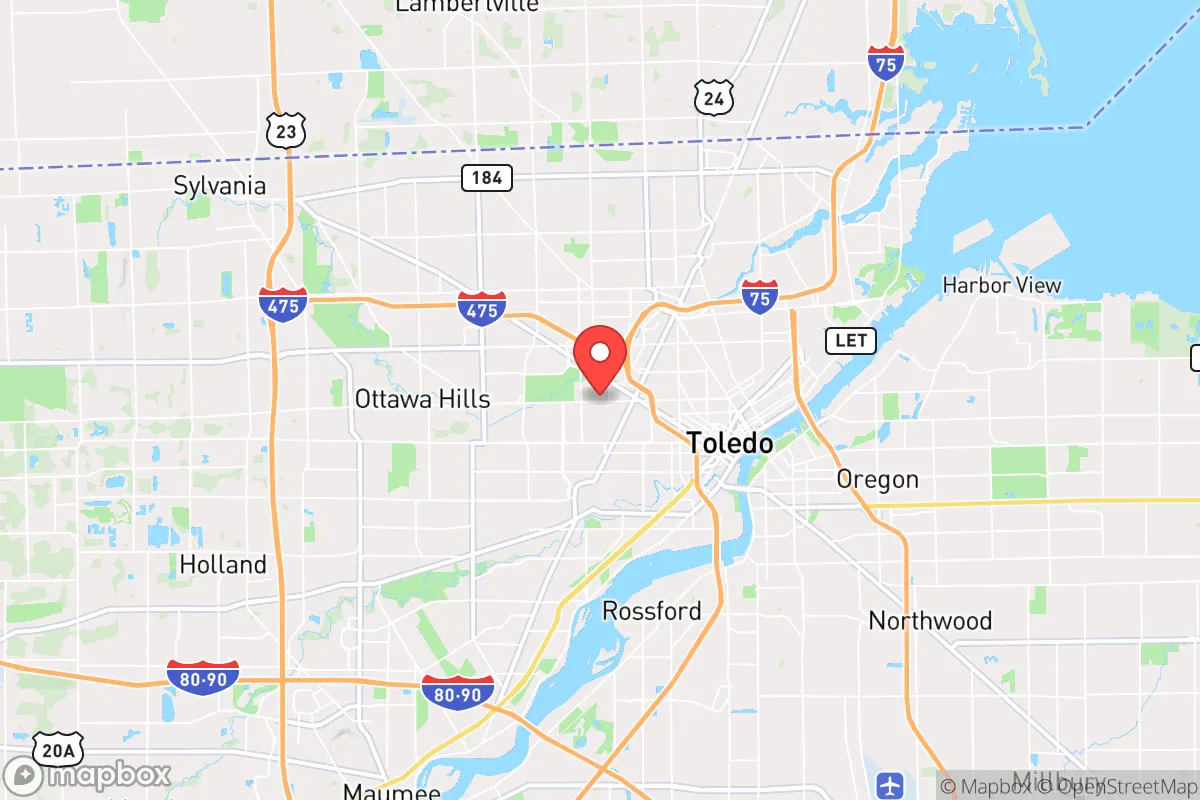
Photo: Wikipedia
Personal Sovereignty in Toledo, OH
Viable for self-reliance. Generally workable, though some barriers may limit total independence.
What does Personal Sovereignty tell us?
Personal Sovereignty measures your capacity for self-reliance and independence with minimal government friction. Higher scores mean fewer barriers between you and the way you want to live... but it assumes you have the space you need and good neighbors.
What does this tell us?
Personal Sovereignty measures your capacity for self-reliance and independence with minimal government friction. Higher scores mean fewer barriers between you and the way you want to live... but it assumes you have the space you need and good neighbors.
State Policy
Energy independence: Importer (40% of energy produced in-state)
Personal Liberty
Homesteading

Personal Liberty Analysis
Toledo, Ohio, presents a mixed picture for those prioritizing personal sovereignty, where the state-level legal framework offers some protections while local governance and economic realities create significant friction. For a conservative-leaning individual or family focused on self-reliance, the city’s environment is defined by a tug-of-war between Ohio’s relatively strong preemption laws on firearms and property rights, and a municipal tax burden that can feel like a constant drain on autonomy. The key question for a survivalist mindset isn’t just what you can legally do, but how much of your time and resources the government demands before you can do it.
Tax burden and regulatory posture: how much of your income stays yours
Ohio’s state-level tax structure is a mixed bag for those seeking to maximize retained earnings. The state income tax is a flat 3.5% as of 2025, which is moderate, but Toledo adds its own 2.5% city income tax on residents and a 2.25% tax on non-residents working within city limits. This combined 6% effective rate on earned income is a heavy anchor for anyone trying to build capital for prepping or self-sufficiency projects. Property taxes in Lucas County average around 2.1% of assessed value, which is above the national average and can strain a fixed-income or homesteading budget. On the regulatory side, Ohio is generally business-friendly with no state-level red tape on backyard chickens or small-scale agriculture, but Toledo’s municipal code imposes strict zoning on livestock and structures. For a prepper, the city’s building permit process for sheds, fences, or alternative energy systems can be a bureaucratic hurdle, though enforcement is often complaint-driven rather than proactive. The overall posture is one of moderate state-level freedom undercut by a local appetite for revenue extraction.
Self-defense and gun law specifics: what you can carry and where
Ohio is a constitutional carry state, meaning no permit is required to carry a concealed handgun for anyone legally allowed to possess a firearm. This is a strong point for personal sovereignty. Toledo, however, is not immune to local friction. While state preemption laws prevent the city from enacting its own bans on assault weapons or magazine capacities, the city has attempted to pass ordinances requiring safe storage and reporting lost or stolen firearms, which have been challenged in court. For a survivalist, the practical reality is that you can legally carry openly or concealed in most public spaces, but you must be aware of sensitive places like schools, government buildings, and airports where carry is prohibited. Stand-your-ground laws apply statewide, meaning no duty to retreat before using deadly force in self-defense. The legal environment is favorable, but the cultural climate in Toledo leans left, so open carry may draw unwanted attention from law enforcement or the public. For a prepper, the key takeaway is that your right to keep and bear arms is well-protected at the state level, but you should expect a more adversarial relationship with local authorities if you exercise it visibly.
Self-reliance and homesteading viability: lot sizes, zoning, and off-grid feasibility
Within Toledo proper, homesteading is a challenge. Typical residential lots are small—often less than a quarter-acre—and zoning codes restrict livestock to chickens only, with a limit of four hens and no roosters. Beekeeping is allowed with a permit, but goats, pigs, or larger animals are prohibited in most residential zones. For a prepper looking to grow a significant portion of their own food, the city’s soil quality in older neighborhoods may also be a concern due to historical industrial pollution. Off-grid feasibility is low: Toledo requires connection to municipal water and sewer, and solar panels are allowed but must comply with building codes and utility interconnection agreements. Rainwater collection is legal but limited to two 55-gallon barrels per property under state law. The real opportunity for self-reliance lies in the surrounding Lucas County and nearby rural areas like Fulton or Wood counties, where acreage is affordable and zoning is far more permissive. For a family willing to commute, a 5-10 acre parcel 20 minutes outside Toledo offers far more sovereignty than any city lot.
Personal liberties: parental rights, medical autonomy, speech, and property
Ohio has strong parental rights in education, with a robust school choice program that includes vouchers and charter schools, allowing parents to opt out of the struggling Toledo Public Schools system. Medical autonomy is a mixed bag: Ohio has no vaccine mandate for adults, but the state does require certain immunizations for school attendance, with limited religious exemptions. During the COVID-19 pandemic, Toledo’s mayor imposed mask mandates and business restrictions that were more aggressive than state guidance, reflecting a local government comfortable with overreach. Free speech is protected under the First Amendment, but Toledo has a history of restricting public assembly during protests, and the city’s noise ordinances can be used to target political or religious expression. Property rights are generally respected, but the city’s rental inspection program and vacant property registration can feel intrusive to landlords or those holding land for future use. For a prepper, the most concerning liberty issue is the potential for local emergency orders to override state-level protections, as seen during the pandemic. Your best defense is to live outside city limits where county commissioners have less appetite for micromanagement.
Overall, Toledo offers a baseline of personal sovereignty that is average for the Midwest but below what you would find in more rural or libertarian-leaning states like New Hampshire or Idaho. The state-level framework on guns, taxes, and parental rights is solid, but the city’s appetite for revenue and regulation creates a constant drag on autonomy. For a survivalist or prepper, the strategic play is to use Toledo as an economic base—taking advantage of lower housing costs and job opportunities—while establishing your homestead and self-reliance operations in the surrounding rural counties. If you must live within the city, expect to fight for every inch of your freedom, from your tax dollars to your right to keep a firearm in your vehicle. The sovereignty score here is a C+—workable, but requiring constant vigilance and a clear exit strategy.

* Values derived from national, state, county, city and local statistics and may differ in a specific area. Last updated: 2026-04-21T20:18:26.000Z
Narrative content on this page is AI-generated and may contain mistakes. Verify any details that matter before acting on them.
ReloMaps may earn a commission from affiliate links at no extra cost to you.

