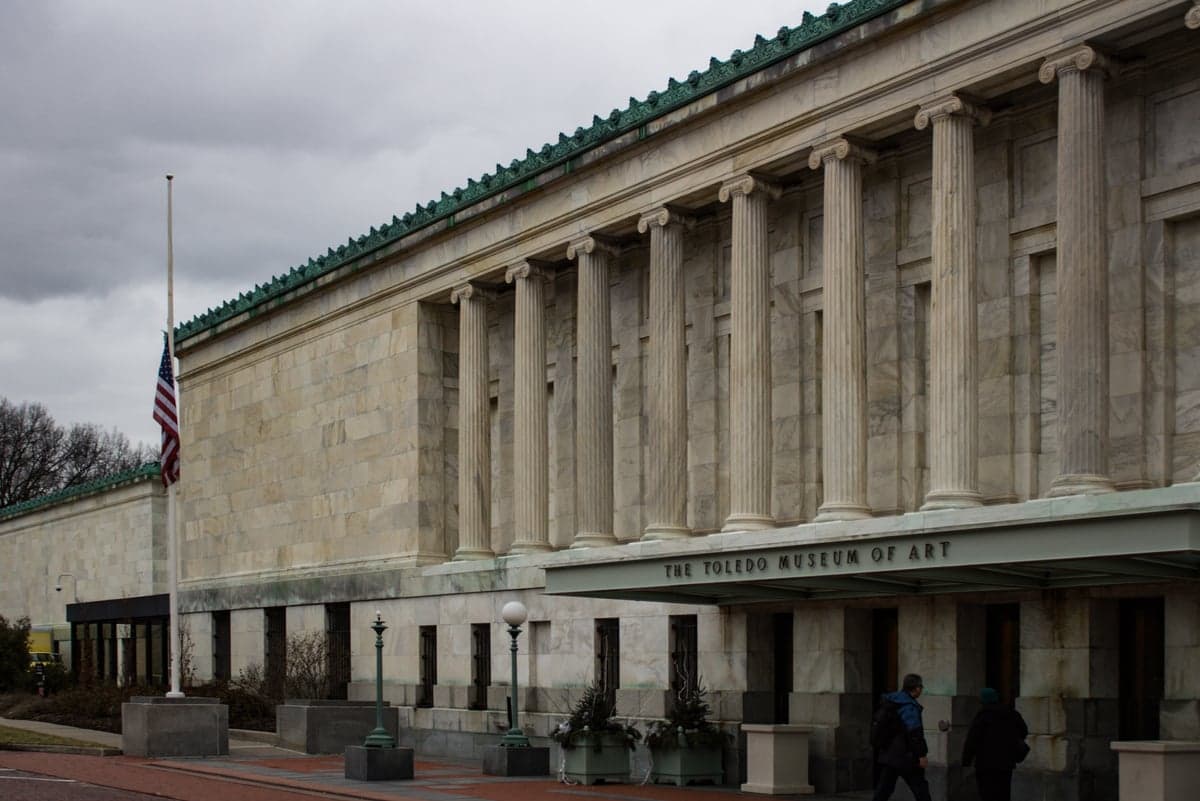
Photo: Wikipedia
Strategic Assessment of Toledo, OH
Multiple tactical vulnerabilities. Population density, target proximity, or disaster risk are likely compounding. A retreat property and exit planning is required.
What does the Strategic Assessment tell us?
Our Strategic Assessment grades tactical survivability of an area. Major population centers, military targets, fallout zones, natural disasters, and border exposure all drive risk — lower exposure means a more defensible position in a crisis.
This is heavily inspired by Joel Skousen's Strategic Relocation book. Highly recommended you checkout the book ($)What does this tell us?
Our Strategic Assessment grades tactical survivability of an area. Major population centers, military targets, fallout zones, natural disasters, and border exposure all drive risk — lower exposure means a more defensible position in a crisis.
This is heavily inspired by Joel Skousen's Strategic Relocation book. Highly recommended you checkout the book ($)Strategic Pillars

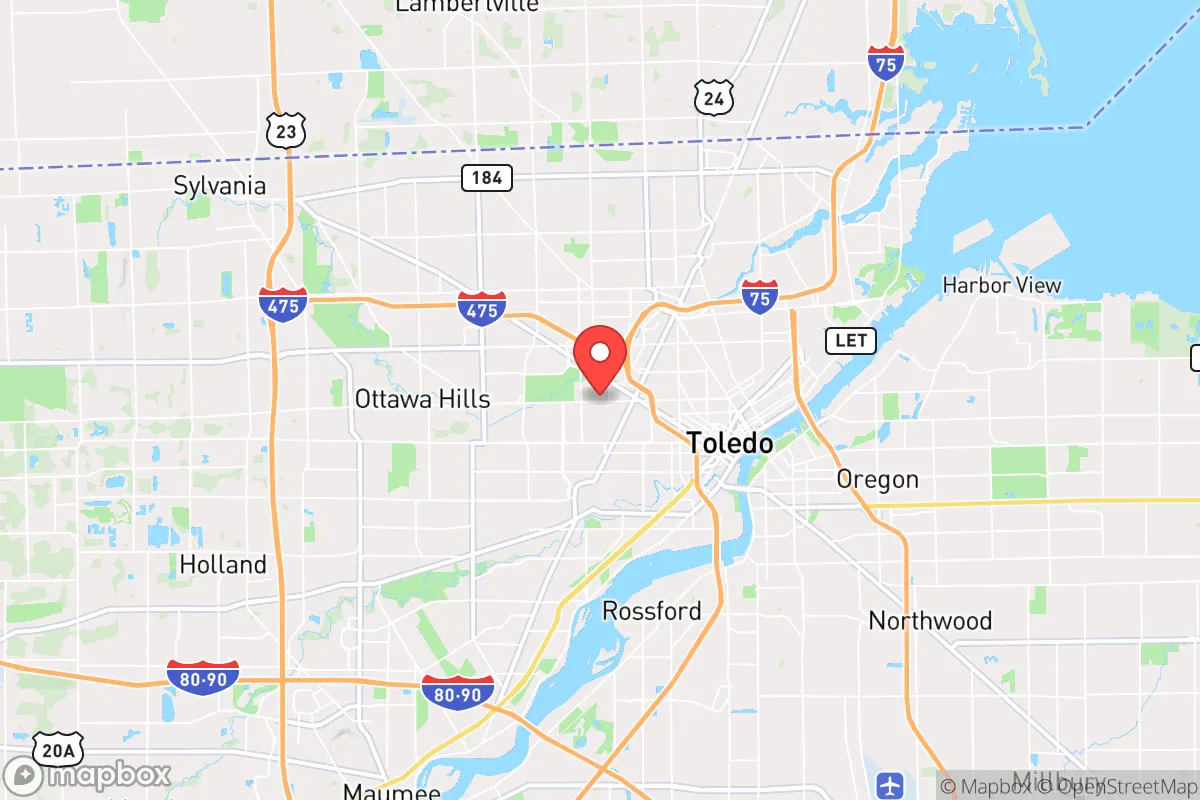
Key Distances
Regional Safe Places
Below is our recommended "safe zones" in Ohio and the surrounding area based on our strategic heuristics. For most people, it's unrealistic to live in a “safe zone” full-time due to work, family or other personal reasons. They tend to be more rural. However, many of these areas are perfect for second homes and retreat properties that double as a vacation home or even a short-term rental.

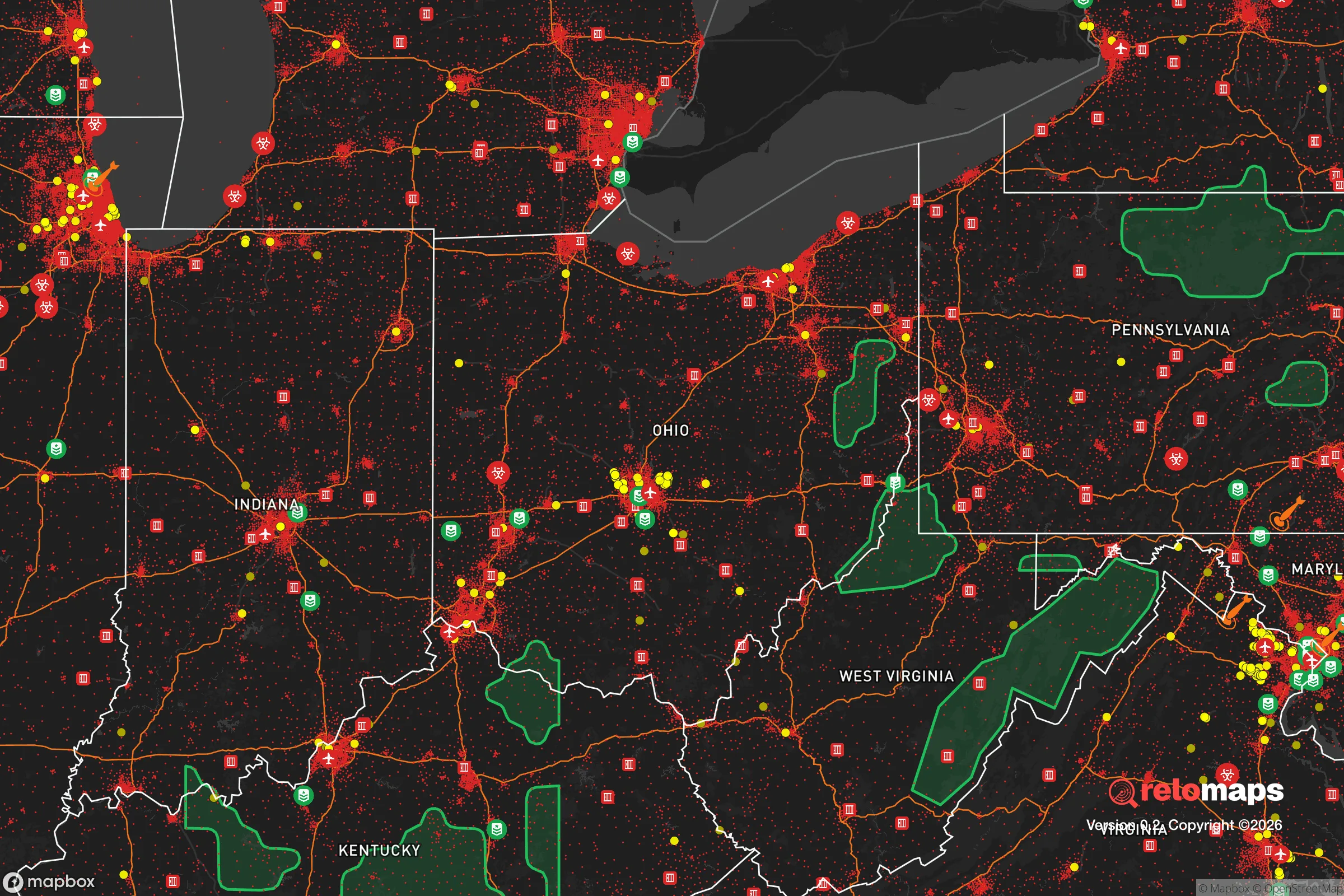


Important Note: For informational purposes only. This does not mean nothing bad ever happens in the green zones. Please use common sense. This is based on public data and modeled with AI. We tried to take a conservative approach but mistakes happen. We update this regularly as new information becomes available.
Solar Generator Recommendations
Backup power matters more here than in safer locations. We've picked three solar generators across budgets and capacity tiers — start with the budget unit if you only need a few essentials, or step up if you want to run a fridge and HVAC for days at a time.

Jackery Portable Power Station Explorer 300
Budget OptionPower on the Go: Weighing only 11 lbs, it's convenient to set up and store with book-sized foldable solar panels

BLUETTI Portable Power Station AC180
Designed for both indoor and outdoor scenarios, AC180 is highly capable as it has a robost capacity and continuous output power.

EF ECOFLOW DELTA Pro Ultra Power Station
Upgraded PickEcoFlow DELTA Pro Ultra is a whole-home energy system designed to grow with your family. Integrated with the Smart Home Panel 2, it scales to meet your evolving energy needs — keeping your home powered, intelligent, and secure through every stage of life.
We earn a commission, at no additional cost to you.
Strategic Assessment Analysis
Toledo, Ohio, occupies a strategic position that resilience-minded relocators should examine carefully—it sits on the western edge of Lake Erie, roughly 50 miles from Detroit and 100 miles from Cleveland, placing it within the fallout zone of major urban centers while offering its own distinct advantages. The city’s industrial past has left behind a network of heavy infrastructure, including rail yards, port facilities, and energy generation, that could prove valuable in a degraded scenario. However, its proximity to the I-75 corridor and the Canadian border also makes it a potential chokepoint for movement and supply lines during unrest. For a conservative-leaning individual or family prioritizing self-sufficiency and strategic depth, Toledo presents a mixed picture: genuine natural assets in water and farmland, offset by exposure to regional instability and the vulnerabilities of a shrinking Rust Belt city.
Geographic position and natural advantages for long-term security
Toledo’s primary strategic asset is its location on the Maumee River at the mouth of Lake Erie, giving it access to one of the largest freshwater bodies in the world. In a crisis where municipal water systems fail or become contaminated, the lake provides a virtually inexhaustible supply, though treatment and purification would be necessary. The surrounding region, stretching into northwest Ohio and southeast Michigan, sits atop the Maumee Valley, a fertile agricultural zone that produces corn, soybeans, and wheat. This means local food production is viable, and the area’s flat terrain simplifies gardening and livestock operations compared to hillier or forested regions. The city itself is built on a grid pattern with wide streets and numerous vacant lots—many neighborhoods have space for backyard gardens or small-scale food storage. Toledo also benefits from a moderate climate with four distinct seasons, avoiding the extreme heat of the South or the brutal cold of the Upper Midwest, which reduces stress on infrastructure and human endurance during prolonged disruptions. The presence of the University of Toledo and ProMedica health systems provides a baseline of medical expertise and hospital capacity, though these would be strained in a mass casualty event.
Risks, exposures, and proximity to fallout-relevant landmarks
The most significant downside for a prepper considering Toledo is its proximity to high-value targets and population centers. Detroit, with its history of civil unrest and its role as a major automotive and logistics hub, lies less than an hour’s drive north. Cleveland, home to the Federal Reserve Bank and significant industrial infrastructure, is about 90 minutes east. Both cities are plausible targets for cyberattacks, economic collapse, or civil disorder that could spill into Toledo via the I-75 and I-80/90 corridors. The city itself has a population of roughly 270,000, with a metropolitan area of about 600,000—large enough to experience resource competition and social friction during a crisis, but small enough that a determined relocator could find a semi-rural buffer on the outskirts. Toledo also sits within 150 miles of the Fermi 2 nuclear plant in Michigan and the Davis-Besse plant in Ohio, both of which are aging facilities that could become liabilities in a grid-down scenario or a targeted attack. The city’s industrial legacy includes refineries and chemical storage along the Maumee River, which could become hazardous if abandoned or damaged. On the positive side, Toledo is far from major military installations, strategic missile fields, or coastal ports that might attract direct kinetic strikes—its risk profile is more about secondary effects from regional collapse than primary targeting.
Practical resilience for a relocator: food, water, energy, and defensibility
For a family or individual looking to establish a resilient homestead, Toledo offers several practical advantages that are often overlooked. Water access is the strongest card: Lake Erie holds 116 cubic miles of freshwater, and the city’s water treatment plant draws directly from it. In a long-term grid failure, a property with a well or access to the lake via a small boat could maintain a reliable water supply, provided filtration and boiling capacity are in place. The flat, fertile soil of the Maumee Valley means that even a suburban lot can produce a meaningful portion of a family’s caloric needs—tomatoes, squash, beans, and root vegetables grow well here, and the growing season runs from May to October. Toledo’s housing stock is older and often built with brick or stone, offering better thermal mass and structural durability than modern stick-frame construction. Many homes have basements, which can serve as root cellars, storm shelters, or secure storage. Energy resilience is more challenging: the region is not particularly sunny (averaging 170 sunny days per year, below the national average), so solar panels require larger arrays and battery storage to be effective. Wind is moderate but consistent, making small-scale wind turbines a viable supplement. Natural gas is widely available in the city, but rural properties may rely on propane or heating oil, which could become scarce. Defensibility is a mixed bag—the flat terrain offers few natural chokepoints, but the city’s grid layout and numerous vacant buildings provide cover and concealment for those who know the area. A relocator should prioritize a property on the outskirts, ideally with a clear line of sight to approach roads and a neighbor network that shares similar values. The local gun culture is present but not dominant; Ohio is a shall-issue state for concealed carry, and there are several gun ranges and clubs in the area for training and community building.
Overall, Toledo is a strategic compromise for the conservative prepper. It offers genuine hard assets—freshwater, fertile soil, moderate climate, and existing infrastructure—that are hard to find in more expensive or remote regions. But it also carries the baggage of a struggling Rust Belt city with proximity to larger urban centers that could become sources of unrest or resource competition. The ideal relocator here would be someone who values access to Lake Erie and agricultural land, is willing to invest in off-grid energy and water systems, and has the situational awareness to monitor the I-75 corridor for signs of trouble. Toledo is not a bug-out location; it is a live-in-place option that requires active preparation and community building. For a single individual or family willing to put in the work, it offers a realistic path to resilience without the isolation of deep rural living. Just keep your bug-out bag packed and your eye on Detroit.

* Values derived from national, state, county, city and local statistics and may differ in a specific area. Last updated: 2026-04-21T20:18:26.000Z
Narrative content on this page is AI-generated and may contain mistakes. Verify any details that matter before acting on them.
ReloMaps may earn a commission from affiliate links at no extra cost to you.

