
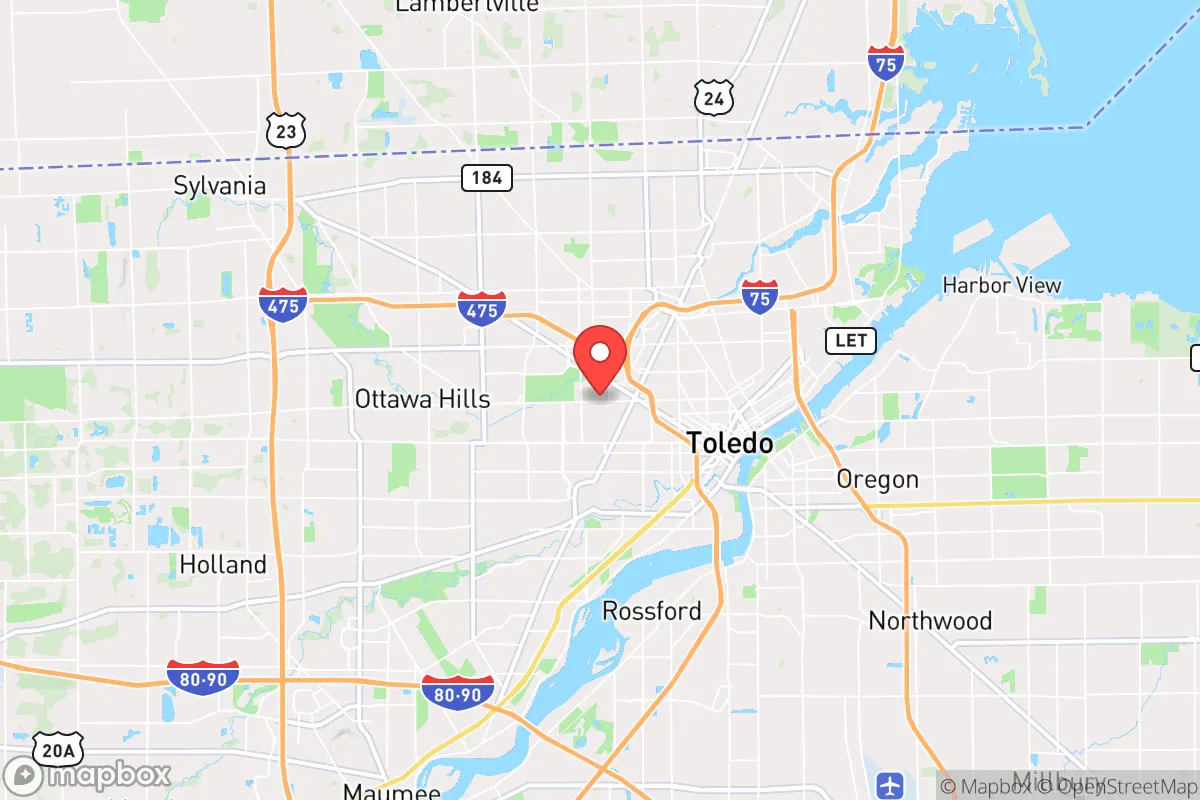
Photo: Wikipedia
Quality of Life in Toledo, OH
A high quality of life with strong walkability, manageable living costs, healthy neighborhood signals, and solid amenity access.
What does Quality of Life tell us?
Quality of Life blends cost of living, nearby amenities, socioeconomic signals, and neighborhood character. City-level scores represent the whole municipality; individual neighborhoods can differ.
What does this tell us?
Quality of Life blends cost of living, nearby amenities, socioeconomic signals, and neighborhood character. City-level scores represent the whole municipality; individual neighborhoods can differ.
Cost of Living
39% below national average
The Real Cost of Living in Toledo, OH for 2026
| Tier | Individual | Family (4) |
|---|---|---|
| Survival | $14k | $26k |
| Comfortable | $23k | $34k |
| Luxury | $80k+ | $124k+ |
| Elite (Top 5%) | $94k+ | $146k+ |
141%
The Area Signal
A metric tracking the socioeconomic signals of the area.
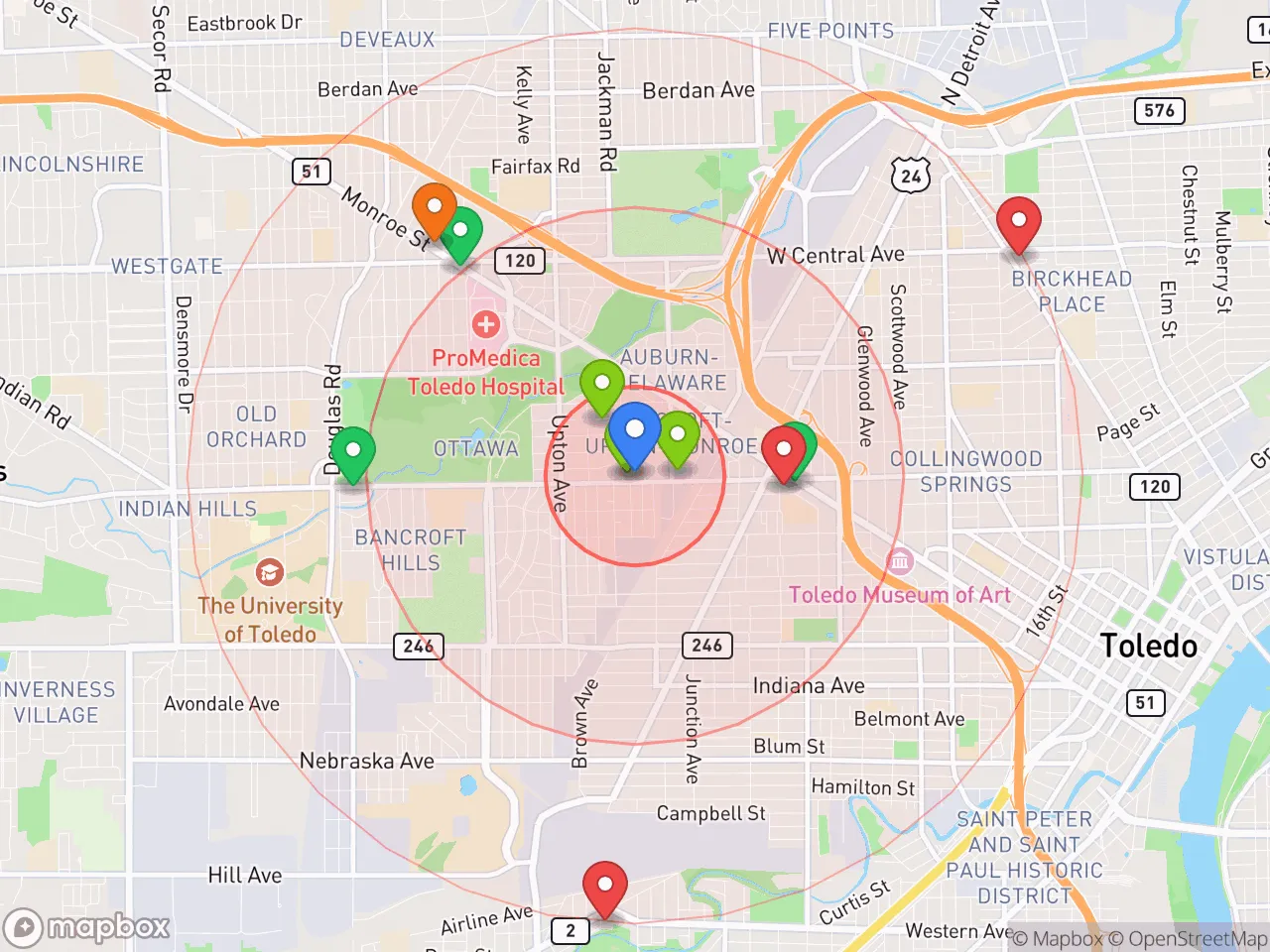
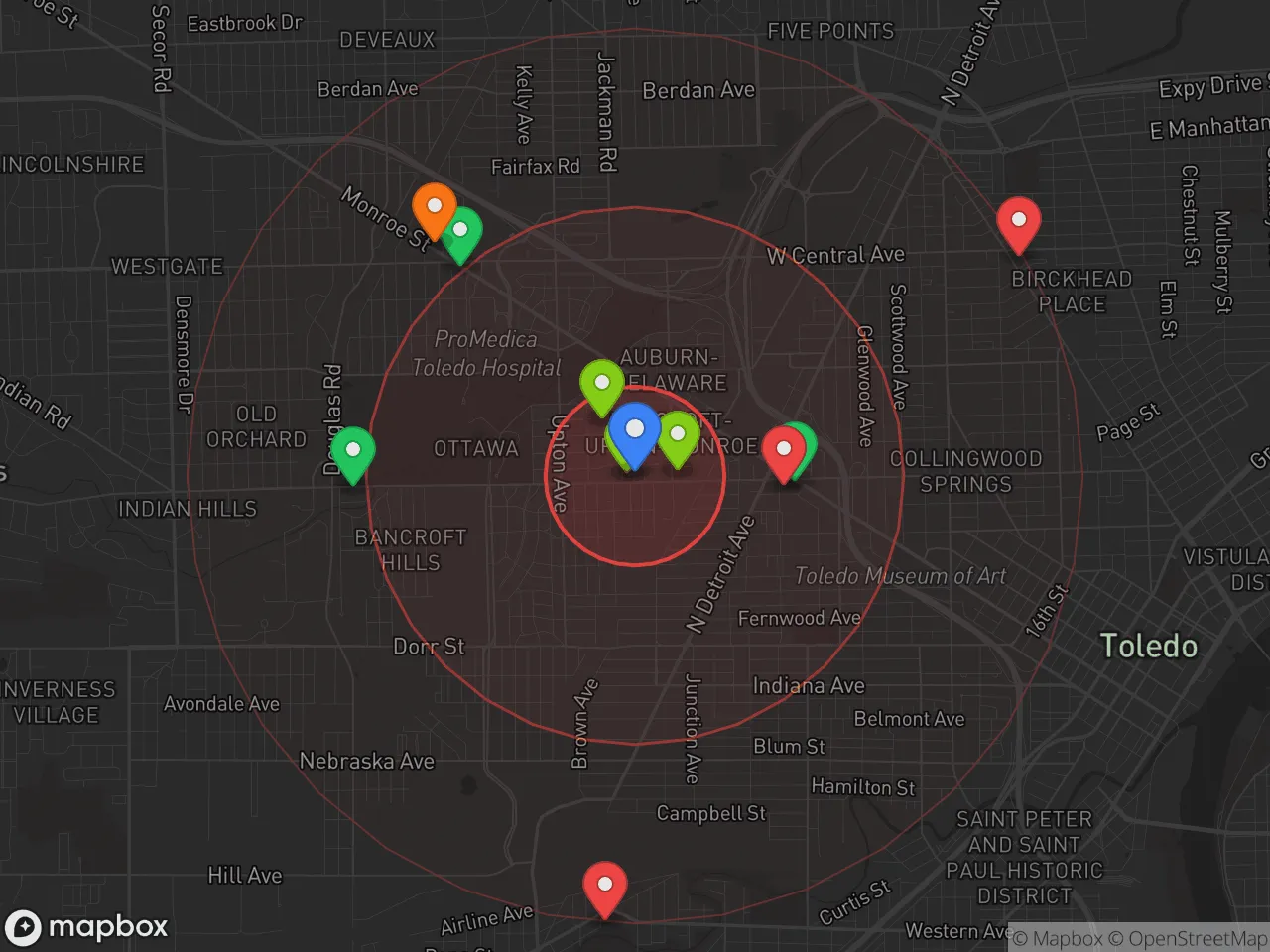
Hobbies
Explore the areaGroceries
6 within 10 miles
Gas
20 within 10 miles
Hospital
18 within 20 miles
Airport
DTW — Detroit Metropolitan Wayne County
Post Office
USPS — Toledo, OH
Critical Amenities
Quality-of-Life Analysis
Toledo, Ohio, offers a notably lower cost of living than most of the United States, attracting a mix of working-class families, retirees on fixed incomes, and young professionals seeking affordability without sacrificing urban amenities. With a cost of living index of 61 (39% below the national average), the city provides a financial cushion that is increasingly rare in the Midwest. The population skews toward long-term residents and those priced out of larger Great Lakes metros like Chicago or Detroit, creating a community that values stability, local industry, and accessible lakefront living.
How housing costs and everyday expenses compare to nearby cities
Toledo’s housing market is among the most affordable in the region. The median home value sits at $107,000, and the median rent is $880 per month—figures that are roughly half of what you would find in Ann Arbor or Cleveland suburbs. This affordability extends to utilities, groceries, and transportation, making it possible for a single-income household to own a home in a walkable neighborhood like the Old West End or near the University of Toledo. The average commute of 19.9 minutes is well below the national average of 26 minutes, reducing both fuel costs and daily stress. Compared to nearby Perrysburg or Maumee, Toledo proper offers lower entry prices but also older housing stock, meaning buyers should budget for potential renovations. Property taxes in Lucas County are moderate, though they can vary significantly by school district.
What daily life is like for families, commuters, and culture seekers
Daily life in Toledo revolves around a compact urban core with distinct neighborhoods. The city is home to the Toledo Museum of Art (free admission), the Imagination Station science center, and the Metroparks Toledo system, which includes over 12,000 acres of trails, wetlands, and the popular Glass City Riverwalk. Families often choose neighborhoods like Ottawa Hills or Sylvania for top-rated public schools, while downtown and the Warehouse District attract younger residents with breweries, the Huntington Center arena, and the annual Toledo Jeep Fest. The public school system (Toledo Public Schools) has faced challenges with funding and performance, leading many families to consider charter or private options. Healthcare access is strong, anchored by ProMedica Toledo Hospital and the University of Toledo Medical Center. The city’s location on the Maumee River and western Lake Erie provides ample boating, fishing, and birding opportunities, though winters can be gray and snowy, which may deter those unaccustomed to lake-effect weather.
Toledo is best suited for individuals and families who prioritize financial breathing room over high-end amenities or rapid career growth. The city offers a stable, slower-paced lifestyle with genuine cultural assets and a strong sense of community, but it lacks the job diversity and nightlife of larger metros. Retirees, remote workers, and those employed in healthcare, manufacturing, or education will find the most value here. For anyone willing to embrace the region’s industrial heritage and four-season climate, Toledo delivers an exceptionally low cost of entry and a quality of life that is quietly solid rather than flashy.

Crime in Toledo, OH
Higher crime rates than 66% of comparable U.S. locations.
Violent CrimeViolent Crime Analysis
Property CrimeProperty Crime Analysis
Crime Analysis
Toledo, Ohio, reports a violent crime rate of 711.9 incidents per 100,000 residents and a property crime rate of 2,074.2 per 100,000, placing it among the higher-crime cities in the Midwest. These figures reflect a challenging public safety environment shaped by socioeconomic factors and, notably, the local justice system’s progressive approach. Residents and prospective movers should weigh these statistics carefully, as the city’s crime rates consistently exceed both state and national averages.
Crime in context
Toledo’s violent crime rate is roughly double the national average of approximately 380 per 100,000, while its property crime rate sits about 30% above the U.S. median. Compared to other Ohio cities, Toledo’s violent crime rate is higher than Columbus (roughly 600 per 100K) and Cincinnati (around 550 per 100K), though slightly below Cleveland’s rate. The city’s progressive district attorney’s office has implemented policies emphasizing diversion programs and reduced sentencing for non-violent offenders, which critics argue contributes to recidivism and a revolving-door effect for repeat property and drug offenders. This ideological stance, while intended to reduce incarceration, has been linked to higher rates of auto theft and burglary in neighborhoods near the downtown core.
What residents experience
Property crime is the most common safety concern for Toledo residents. Vehicle thefts and break-ins are frequent, particularly in areas like the Old West End and near the University of Toledo campus. Violent crime, while less common, is concentrated in specific corridors: the central city neighborhoods east of I-75 and parts of the North End report the highest rates of aggravated assault and robbery. Gun-related incidents account for roughly 40% of violent crimes, according to local police data. The progressive justice system’s focus on rehabilitation over incarceration means many offenders are released quickly, creating a perception among residents that property crimes are not taken seriously. This has led to increased demand for private security measures, such as home surveillance systems and neighborhood watch programs.
Neighborhood-level variation is significant. Suburban areas like Ottawa Hills, Sylvania, and Perrysburg Township—which are outside Toledo city limits—report crime rates 60-70% lower than the city average. Within Toledo, the Old Orchard and Beverly neighborhoods are considered safer, with violent crime rates below 300 per 100K, while the central city and East Toledo remain high-risk. Prospective residents are strongly advised to research specific block-level data and consider that the city’s liberal prosecutorial policies may not align with expectations for strict law enforcement. The combination of elevated crime rates and a justice system that prioritizes offender leniency creates a safety landscape that demands careful, location-specific evaluation before moving.
* Values derived from national, state, county, city and local statistics and may differ in a specific area. Last updated: 2026-04-21T20:18:26.000Z
Narrative content on this page is AI-generated and may contain mistakes. Verify any details that matter before acting on them.
ReloMaps may earn a commission from affiliate links at no extra cost to you.

