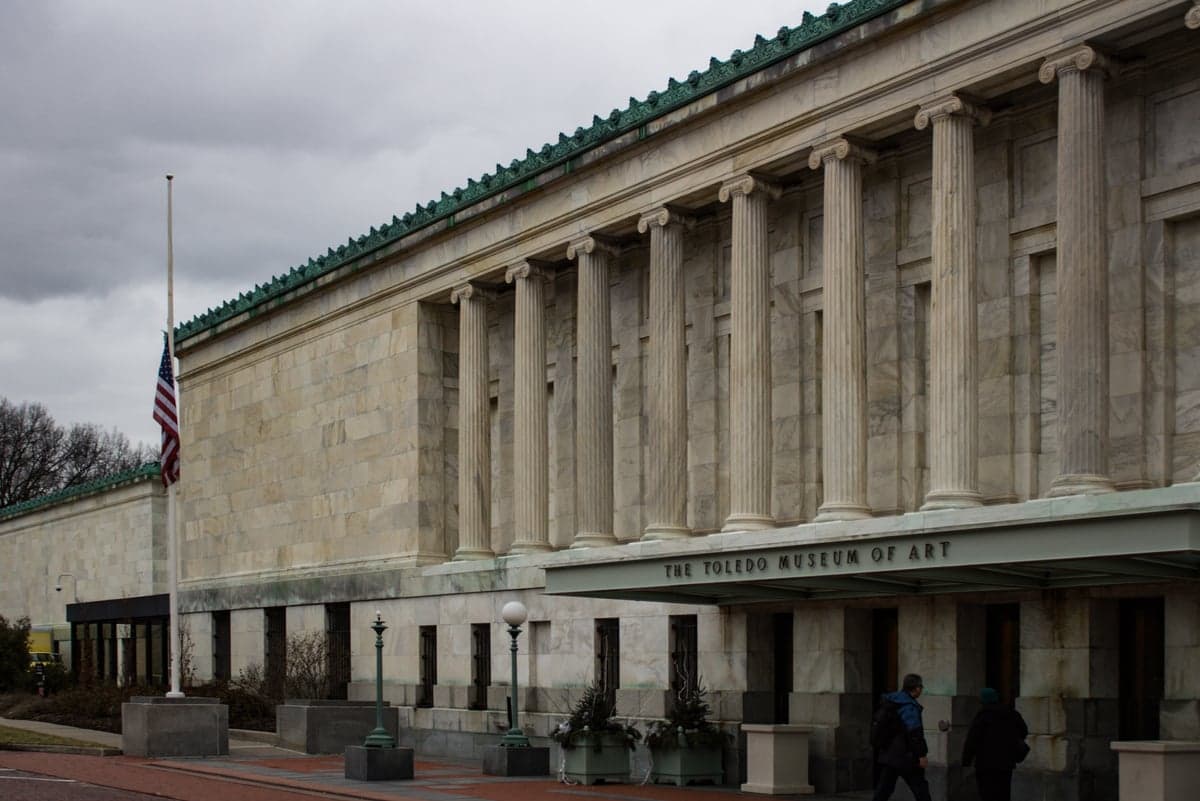
Photo: Wikipedia
Political ClimatePolitical Climate in Toledo, OH
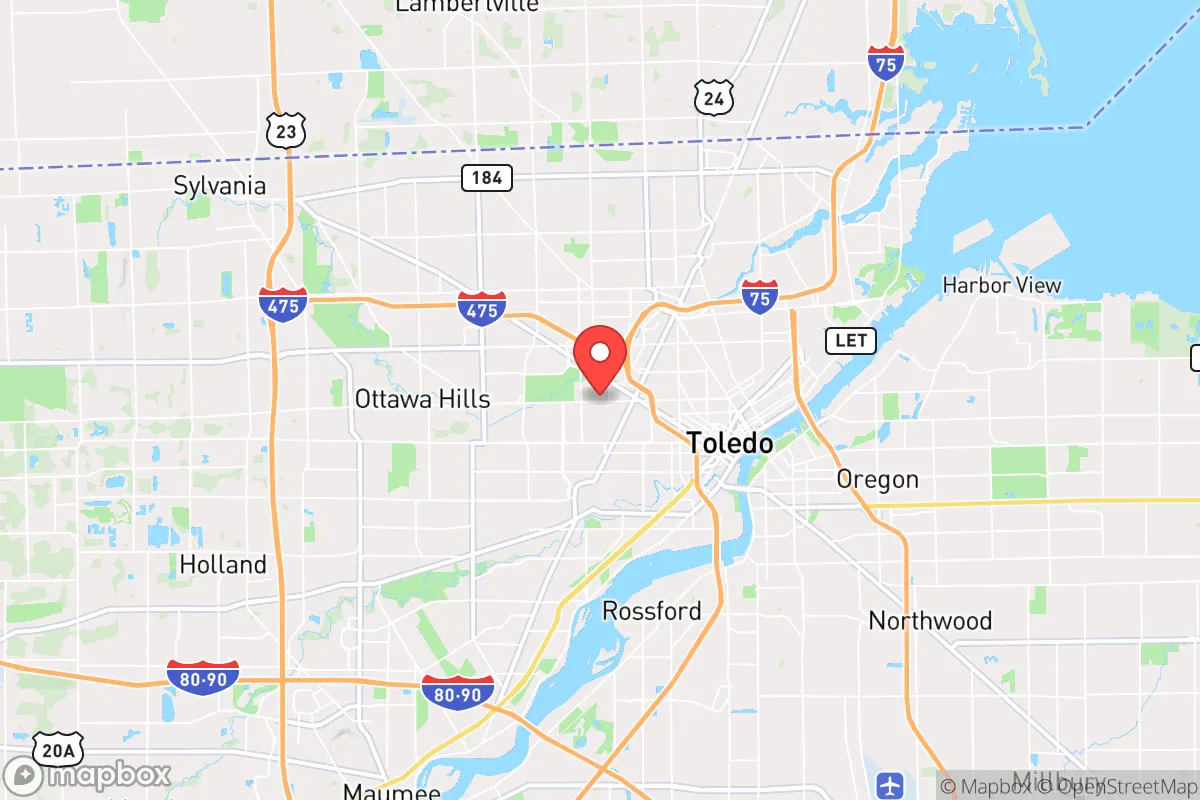
District shown is the primary district for this city’s centroid. Cities may span multiple districts.
Local Political AnalysisPolitical Analysis of Toledo, OH
Toledo, Ohio, sits in a political landscape that has shifted noticeably over the past decade. While Lucas County as a whole has trended blue in presidential elections, the city itself and its surrounding suburbs are more nuanced. The Cook PVI for the area is R+3, meaning the district leans slightly Republican compared to the national average, but that doesn't tell the whole story. Locally, you'll find a mix of old-school union Democrats who are fiscally conservative and socially moderate, alongside a growing number of progressive activists pushing for more government involvement in daily life. The real tension here isn't between Republicans and Democrats as much as it is between the traditional, live-and-let-live working class and the newer wave of folks who seem to want the government to run everything from your thermostat to your kid's curriculum.
How it compares
Drive 20 minutes south to Perrysburg or Maumee, and you'll feel the political temperature drop a few degrees. Those suburbs are reliably conservative, with lower taxes and a general hands-off approach from local government. Head east to Oregon or north to the Michigan line, and you get a similar vibe—people who just want to be left alone. But inside Toledo proper, especially in the Old West End or around the University of Toledo, you'll find a much more activist, progressive energy. City council meetings have become battlegrounds over things like mask mandates, zoning changes for density, and even local police funding. The contrast is stark: in the suburbs, the biggest political fights are about school board transparency and property tax rates; in Toledo, it's about redefining public safety and expanding city ordinances into private property decisions.
What this means for residents
For someone who values personal freedom and limited government, the trend in Toledo is concerning. You're seeing more city-level regulations on landlords, more talk of rent control, and a general push to centralize decision-making in city hall. The school district has also seen its share of ideological battles, with curriculum changes that some parents feel prioritize social agendas over academic basics. If you're the type who believes your home, your business, and your family are your own business, you'll want to pay close attention to local elections. The good news is that the R+3 district means there's still a strong conservative base in the region, and many of the surrounding townships and villages are pushing back against what they see as government overreach. But inside the city limits, the progressive momentum is real, and it's changing the feel of the place.
One thing that sets Toledo apart from bigger cities like Columbus or Cleveland is its blue-collar, practical streak. Even many of the Democrats here are socially conservative on issues like gun rights and religious freedom. The push for more government control hasn't fully taken root yet, but it's gaining ground. Longtime residents remember when the city was a manufacturing powerhouse and the biggest political fights were about union contracts and road repairs, not identity politics or climate mandates. That old Toledo is fading, and the new one is still being shaped. If you're considering a move here, the best advice is to look at the suburbs or the surrounding rural areas if you want a government that stays out of your way. The city itself is becoming a place where you'll need to keep an eye on the ballot box to protect your personal freedoms.

State Political ClimatePolitical Climate in Ohio
State Political AnalysisPolitical Environment in the State
Ohio has long been the quintessential swing state, but over the past decade it has shifted decisively to the right, voting for Donald Trump by 8 points in both 2016 and 2020, and by a similar margin in 2024. The state’s political center of gravity is now solidly Republican, driven by a coalition of rural conservatives, working-class voters in the Appalachian southeast, and suburbanites fleeing the Democratic brand. The Democratic strongholds are shrinking to the urban cores of Cleveland, Columbus, and Cincinnati, while the rest of the state—especially the western half and the Miami Valley—has become reliably red. This isn’t your grandfather’s Ohio; the old union Democrat is nearly extinct, replaced by a populist conservative majority that values economic nationalism, gun rights, and local control.
Urban vs. rural divide
The political map of Ohio is a textbook case of the urban-rural chasm. The three C’s—Cleveland (Cuyahoga County), Columbus (Franklin County), and Cincinnati (Hamilton County)—are the only major Democratic engines, each delivering 65-70% of their vote to Democrats. But outside those islands, the landscape is overwhelmingly red. The Miami Valley, anchored by Dayton (Montgomery County), has flipped from purple to red; Montgomery County itself went for Trump in 2024 after backing Obama twice. The Mahoning Valley around Youngstown is a stark example: once a union Democrat stronghold, it now votes Republican by double digits, driven by fracking jobs and cultural conservatism. The Appalachian counties in the southeast—like Meigs, Vinton, and Monroe—routinely give Republicans 75-80% of the vote. Even the suburbs of Columbus, like Delaware County, have become deeply red, with Delaware County voting +18 R in 2024. The only blue growth area is Columbus’s Franklin County, which is absorbing progressive transplants, but it’s not enough to offset rural and exurban gains.
Policy environment
Ohio’s policy environment has moved sharply rightward in recent years, especially on taxes and labor. The state has a flat income tax rate of 3.5% (down from 4.8% in 2020), with a goal of eliminating it entirely. Property taxes are moderate, but local levies vary wildly—expect higher rates in Cuyahoga County than in rural Knox County. The regulatory posture is business-friendly; Ohio is a right-to-work state in practice (though not by statute), and the state legislature has preempted local minimum wage hikes and paid leave mandates. Education policy is a battleground: the state has a robust school voucher program (EdChoice) that lets parents use public funds for private or religious schools, a major win for school choice advocates. Healthcare is mixed—Medicaid expansion was accepted under Kasich, but the legislature has resisted further expansion and passed a law banning gender-affirming care for minors (2024). Election laws have tightened: voter ID is now required (photo ID only), drop boxes are limited to one per county, and early voting windows have been narrowed. The state also passed a 2023 constitutional amendment enshrining abortion rights (Issue 1), but the legislature has responded with a 24-hour waiting period and mandatory ultrasound laws, creating a legal tug-of-war.
Trajectory & freedom
On the freedom front, Ohio is a mixed bag trending positive for conservatives. Gun rights are strong: the state passed constitutional carry (permitless carry) in 2022, and there are no red flag laws, no magazine bans, and no universal background checks. Parental rights got a boost with the 2024 law requiring schools to notify parents of any changes to a child’s health or well-being (the “Parents’ Bill of Rights”). Medical autonomy took a hit with the abortion amendment, but the legislature has fought back with restrictions that are currently tied up in court. Property rights are generally respected, though eminent domain battles over pipeline projects (like the Rover Pipeline) have angered landowners in the eastern part of the state. Taxation is trending downward, with the flat tax and a phase-out of the business franchise tax. The biggest freedom concern is local government overreach: cities like Cleveland and Columbus have passed their own gun restrictions (magazine limits, safe storage laws) that conflict with state preemption laws, leading to lawsuits. The state legislature has responded by strengthening preemption, but the legal fights continue. Overall, Ohio is becoming more free for conservatives, but the urban enclaves remain pockets of progressive regulation.
Civil unrest & political movements
Ohio has seen its share of political flashpoints. The 2020 George Floyd protests in Columbus and Cincinnati turned violent, with looting and arson in the Short North and downtown Columbus, leading to a heavy National Guard presence. The 2023 East Palestine train derailment in Columbiana County sparked a populist backlash against both the Biden administration and Norfolk Southern, with residents organizing town halls that turned into anti-government rallies. Immigration politics are a hot button: Springfield (Clark County) became a national flashpoint in 2024 after a surge of Haitian migrants strained local resources, leading to school overcrowding and a fatal bus crash involving a Haitian driver. The city council’s refusal to cooperate with ICE has made it a de facto sanctuary city, drawing ire from state lawmakers who have threatened to withhold funding. Election integrity remains a live issue: the 2020 election saw widespread claims of irregularities in Cuyahoga County, and the 2024 law requiring hand-counting of ballots in some precincts was a direct response. Secession talk is fringe but present: some rural counties in the southeast have floated joining West Virginia, though nothing serious has materialized. The most visible movement is the “Ohio Freedom Alliance,” a grassroots group that organizes against vaccine mandates, school mask rules, and property tax hikes—they’re active at every county commission meeting.
Projection
Over the next 5-10 years, Ohio will likely become more Republican, but with a widening urban-rural split. The Columbus metro is growing fast (Intel’s $20 billion chip plant in Licking County is bringing thousands of new residents), and those newcomers are a mix of out-of-state tech workers (leaning left) and Midwestern transplants (leaning right). The net effect will be a blueing of Franklin and Delaware counties, but a reddening of the rest of the state as rural populations age and suburban conservatives dig in. The Mahoning Valley and Miami Valley will continue to trend red as manufacturing jobs return (thanks to CHIPS Act and reshoring) and union loyalty fades. The biggest wildcard is school choice: if the voucher program expands, it could accelerate the exodus from urban public schools, hollowing out Democratic strongholds. Expect more preemption battles—the state will likely ban sanctuary cities outright and further restrict local gun laws. The flat tax will probably drop to 2.5% by 2030. For a conservative moving in now, Ohio in 2035 will feel like a red state with blue cities, similar to Indiana or Missouri today.
Bottom line for a new resident: If you’re a conservative looking for a state that respects gun rights, parental control, and low taxes, Ohio is a solid bet—especially if you avoid the urban cores. Stick to the suburbs of Cincinnati (like West Chester or Mason), the Columbus exurbs (like Johnstown or Granville), or the Lake Erie shoreline (like Port Clinton). You’ll find like-minded neighbors, good schools, and a state government that’s on your side. Just be prepared for the occasional blue city policy fight and the constant hum of election integrity debates. Ohio is a place where your vote actually counts—and increasingly, it counts for the right team.
* Values derived from national, state, county, city and local statistics and may differ in a specific area. Last updated: 2026-04-21T20:18:26.000Z
Narrative content on this page is AI-generated and may contain mistakes. Verify any details that matter before acting on them.
ReloMaps may earn a commission from affiliate links at no extra cost to you.

