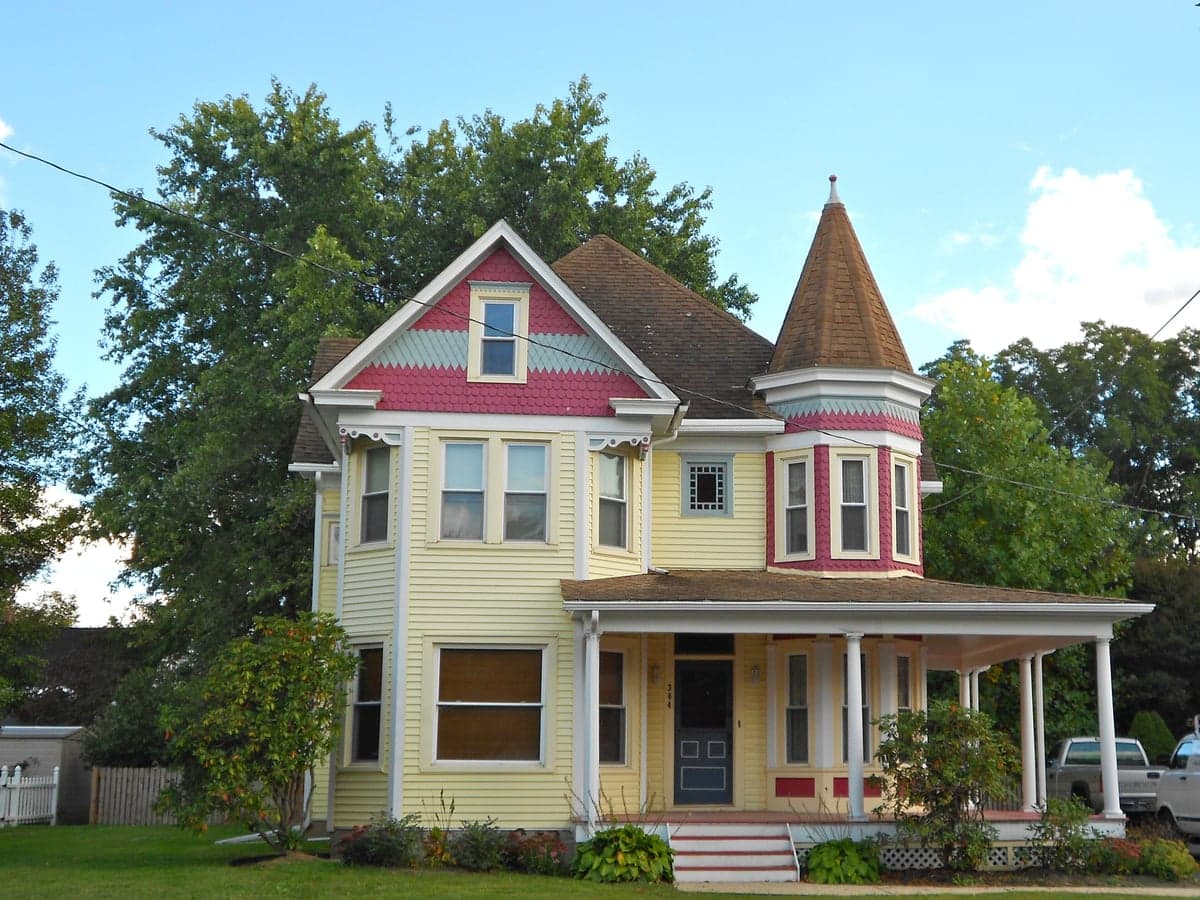
Photo: Wikipedia
Personal Sovereignty in Townsend, DE
Viable for self-reliance. Generally workable, though some barriers may limit total independence.
What does Personal Sovereignty tell us?
Personal Sovereignty measures your capacity for self-reliance and independence with minimal government friction. Higher scores mean fewer barriers between you and the way you want to live... but it assumes you have the space you need and good neighbors.
What does this tell us?
Personal Sovereignty measures your capacity for self-reliance and independence with minimal government friction. Higher scores mean fewer barriers between you and the way you want to live... but it assumes you have the space you need and good neighbors.
State Policy
Energy independence: Importer (2% of energy produced in-state)
Personal Liberty
Homesteading

Personal Liberty Analysis
Townsend, Delaware, offers a notably high degree of personal sovereignty relative to the Mid-Atlantic region, functioning as a quiet outpost where individual autonomy is less encumbered by the dense regulatory frameworks found in neighboring states like Maryland or New Jersey. For the strategic-minded individual or family prioritizing self-determination, Townsend represents a deliberate choice to operate within a state that, while not libertarian paradise, maintains a lighter touch on several key fronts. The town’s small-town character and agricultural roots provide a physical and cultural environment where self-reliance is not just a philosophy but a practical necessity, making it a viable relocation target for those seeking to insulate themselves from perceived government overreach.
Tax burden and regulatory posture: How Delaware compares to neighboring states
Delaware’s tax structure is a significant draw for those prioritizing financial sovereignty. The state imposes no state or local sales tax, which immediately reduces the government’s ability to tax consumption and leaves more capital in your hands. Property taxes in New Castle County, where Townsend sits, are among the lowest in the region, typically ranging from 0.5% to 0.8% of assessed value, a stark contrast to Maryland’s average of over 1.0% and New Jersey’s punishing 2.3%+ rates. Income tax is progressive, topping out at 6.6% for high earners, but the absence of a sales tax and low property levies mean the overall effective tax burden is manageable. On the regulatory side, Delaware is a business-friendly state, famously hosting a majority of U.S. corporations due to its Court of Chancery and flexible corporate laws. However, for the individual, the regulatory posture is mixed. The state has a relatively hands-off approach to land use in unincorporated areas, but New Castle County’s zoning code can be restrictive, particularly regarding accessory structures and home-based businesses. For the prepper, the key takeaway is that while Delaware is not a free-for-all, its tax advantages and generally pro-business climate create a more favorable environment for building wealth and maintaining financial independence than most of the surrounding region.
Self-defense and gun law specifics: Castle doctrine and permitless carry
For those who view the right to self-defense as non-negotiable, Delaware’s legal landscape has improved significantly in recent years. The state operates under a Castle Doctrine with no duty to retreat in your home, vehicle, or place of business, meaning you are legally presumed to have acted reasonably if you use deadly force against an unlawful intruder. More critically, as of 2025, Delaware is a permitless carry (constitutional carry) state for law-abiding residents aged 21 and older. This means you can carry a concealed firearm without a government-issued permit, a direct reduction in bureaucratic interference with a fundamental right. However, there are important caveats. The state still requires a background check for all firearm transfers, including private sales, and has a ban on certain "assault weapons" and magazines over 17 rounds, passed in 2022. These restrictions are actively being challenged in court, but as of now, they remain law. For the survivalist, Townsend’s location in New Castle County means you are subject to county-level regulations as well, though they largely mirror state law. The practical reality is that you can legally defend your home and person with a firearm, but your choice of equipment is more limited than in a state like Texas or Florida. This is a trade-off: you gain permitless carry but lose access to certain standard-capacity magazines and rifle configurations.
Self-reliance and homesteading viability: Lot sizes, zoning, and off-grid feasibility
Townsend’s rural character is its strongest asset for those seeking a self-reliant lifestyle. The town and surrounding areas of southern New Castle County feature large residential lots, often 1 to 5 acres or more, which are rare in the densely populated Northeast corridor. This land availability makes small-scale homesteading—gardening, raising poultry, keeping goats or a family cow—practically feasible. Zoning in the unincorporated areas around Townsend is generally agricultural or rural residential, which permits a wide range of farming and animal husbandry activities without the need for special permits. However, off-grid living faces significant hurdles. Delaware has adopted the International Residential Code (IRC) and International Building Code (IBC), which mandate grid-tied electrical connections for new construction in most cases. Going fully off-grid with solar and battery storage is technically possible but requires navigating a permitting process that assumes grid connection. Rainwater collection for potable use is also restricted; the state requires a permit and connection to a public water supply or a permitted well. Composting toilets are allowed but must meet state health department standards. For the prepper, the realistic path is a grid-tied home with solar backup and a well, rather than a fully autonomous off-grid cabin. The land is there, the water table is accessible, and the soil is fertile, but the regulatory framework still assumes a baseline of modern infrastructure.
Personal liberties: Parental rights, medical autonomy, speech, and property
On the broader front of personal liberties, Townsend reflects Delaware’s moderate-to-liberal state-level policies, which can be a source of friction for those with a conservative worldview. Parental rights in education are a contested area. Delaware public schools follow state-mandated curricula that include comprehensive sex education and diversity, equity, and inclusion (DEI) initiatives, which some parents view as overreach. Opt-out provisions exist but are limited, and the state does not have a robust school choice or voucher program, meaning your local public school is the default unless you can afford private tuition or homeschool. Homeschooling is legal and requires only a simple notification to the local school district, with no standardized testing or curriculum approval required—a significant win for parental autonomy. Medical autonomy is similarly mixed. Delaware has a state-run health insurance exchange and expanded Medicaid, but there are no state-level mandates for vaccine passports or forced medical procedures. The state did have COVID-19 emergency orders, but those have expired. Property rights are generally respected, but the state’s environmental regulations, particularly regarding wetlands and the Chesapeake Bay watershed, can restrict what you can do with your land, especially near waterways. Free speech is protected under the First Amendment, and there are no unique state-level restrictions beyond standard defamation and incitement laws. For the strategic relocator, the calculus is clear: you have strong property and self-defense rights, but you will need to be proactive in protecting your parental and medical autonomy from state-level initiatives that lean progressive.
In the broader context of the United States, Townsend, DE, offers a sovereignty profile that is stronger than the Northeast corridor average but weaker than the Mountain West or Deep South. You get low taxes, permitless carry, and affordable land for homesteading, but you must accept state-level restrictions on firearm accessories, building codes that discourage off-grid living, and public school curricula that may conflict with your values. For the survivalist or prepper who values financial independence and self-defense above all, Townsend is a solid strategic choice. For those who prioritize absolute medical autonomy or unfettered land use, states like Idaho or Tennessee would be more aligned. Townsend is a compromise—a place where you can build a resilient life with a reasonable degree of freedom, provided you are willing to navigate the remaining regulatory hurdles with diligence and patience.

* Values derived from national, state, county, city and local statistics and may differ in a specific area. Last updated: 2026-04-29T23:09:41.000Z
Narrative content on this page is AI-generated and may contain mistakes. Verify any details that matter before acting on them.
ReloMaps may earn a commission from affiliate links at no extra cost to you.

