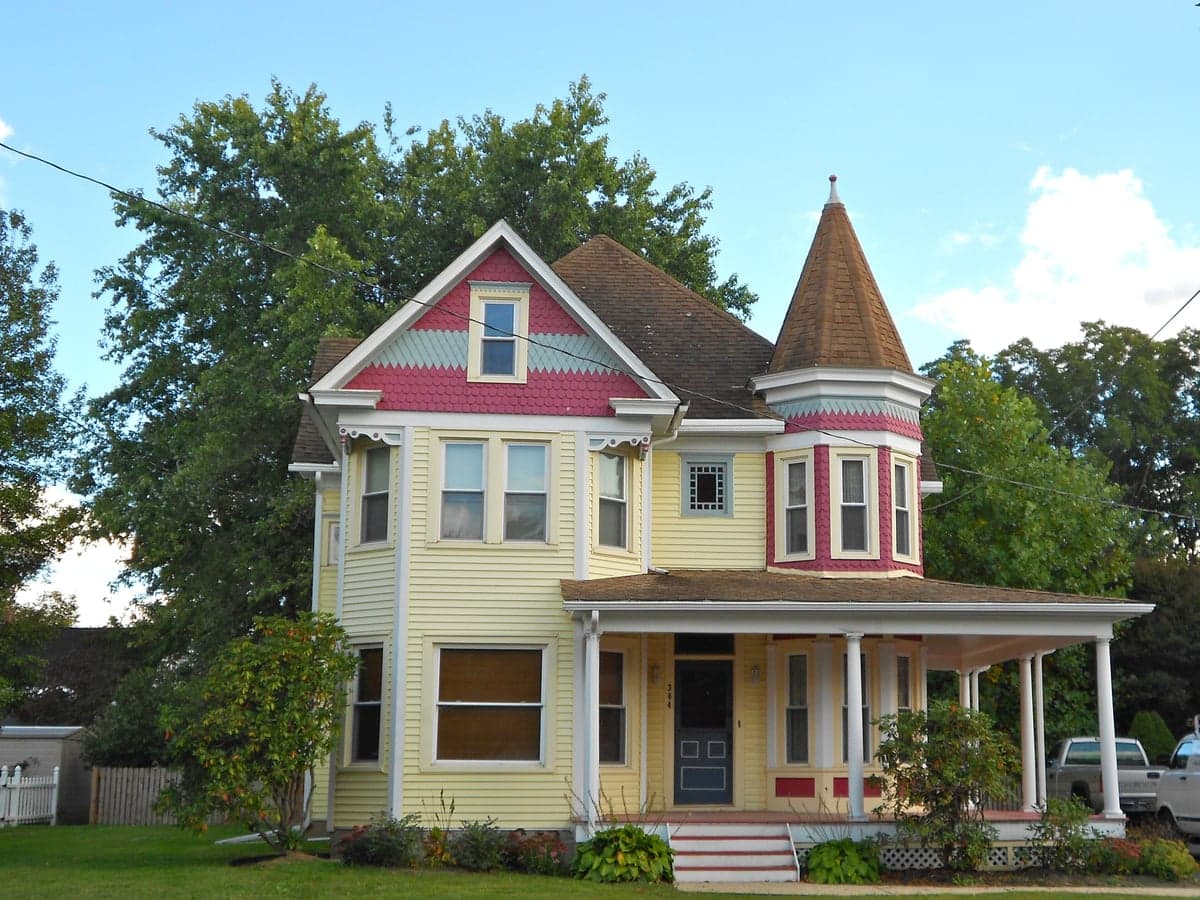
Photo: Wikipedia
Strategic Assessment of Townsend, DE
Multiple tactical vulnerabilities. Population density, target proximity, or disaster risk are likely compounding. A retreat property and exit planning is required.
What does the Strategic Assessment tell us?
Our Strategic Assessment grades tactical survivability of an area. Major population centers, military targets, fallout zones, natural disasters, and border exposure all drive risk — lower exposure means a more defensible position in a crisis.
This is heavily inspired by Joel Skousen's Strategic Relocation book. Highly recommended you checkout the book ($)What does this tell us?
Our Strategic Assessment grades tactical survivability of an area. Major population centers, military targets, fallout zones, natural disasters, and border exposure all drive risk — lower exposure means a more defensible position in a crisis.
This is heavily inspired by Joel Skousen's Strategic Relocation book. Highly recommended you checkout the book ($)Strategic Pillars

Key Distances
Regional Safe Places
Below is our recommended "safe zones" in Delaware and the surrounding area based on our strategic heuristics. For most people, it's unrealistic to live in a “safe zone” full-time due to work, family or other personal reasons. They tend to be more rural. However, many of these areas are perfect for second homes and retreat properties that double as a vacation home or even a short-term rental.
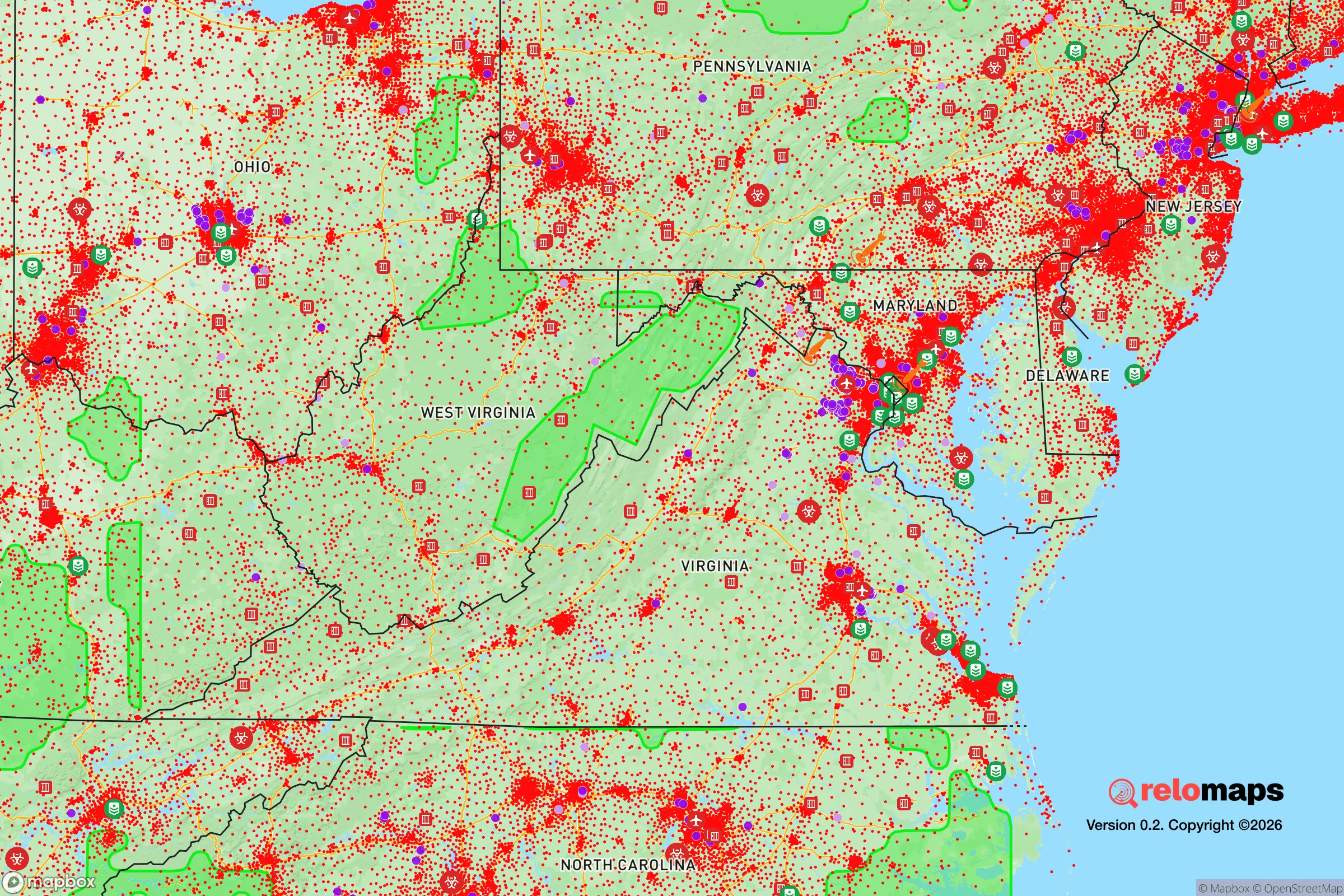
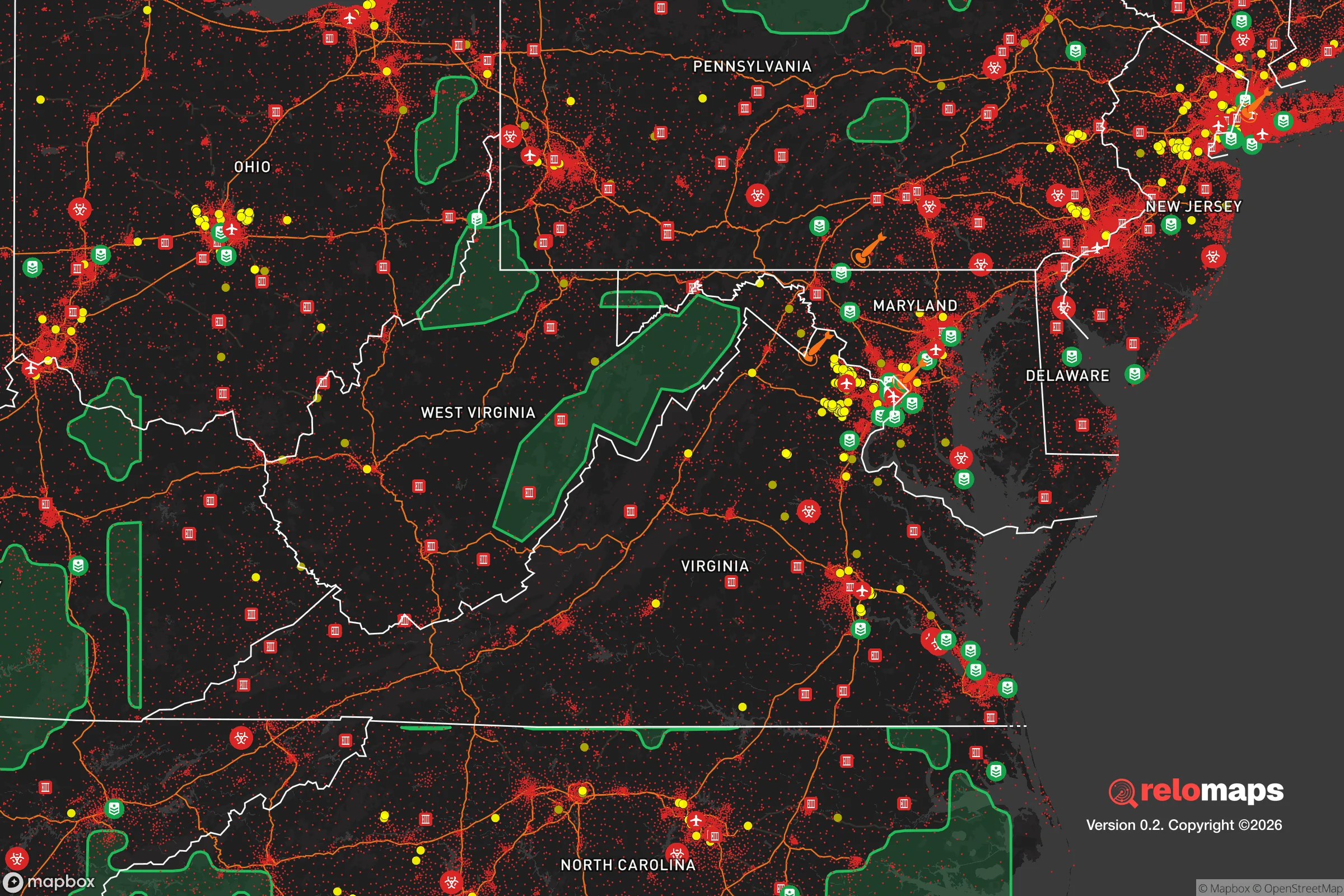


Important Note: For informational purposes only. This does not mean nothing bad ever happens in the green zones. Please use common sense. This is based on public data and modeled with AI. We tried to take a conservative approach but mistakes happen. We update this regularly as new information becomes available.
Solar Generator Recommendations
Backup power matters more here than in safer locations. We've picked three solar generators across budgets and capacity tiers — start with the budget unit if you only need a few essentials, or step up if you want to run a fridge and HVAC for days at a time.

Jackery Portable Power Station Explorer 300
Budget OptionPower on the Go: Weighing only 11 lbs, it's convenient to set up and store with book-sized foldable solar panels

BLUETTI Portable Power Station AC180
Designed for both indoor and outdoor scenarios, AC180 is highly capable as it has a robost capacity and continuous output power.

EF ECOFLOW DELTA Pro Ultra Power Station
Upgraded PickEcoFlow DELTA Pro Ultra is a whole-home energy system designed to grow with your family. Integrated with the Smart Home Panel 2, it scales to meet your evolving energy needs — keeping your home powered, intelligent, and secure through every stage of life.
We earn a commission, at no additional cost to you.
Strategic Assessment Analysis
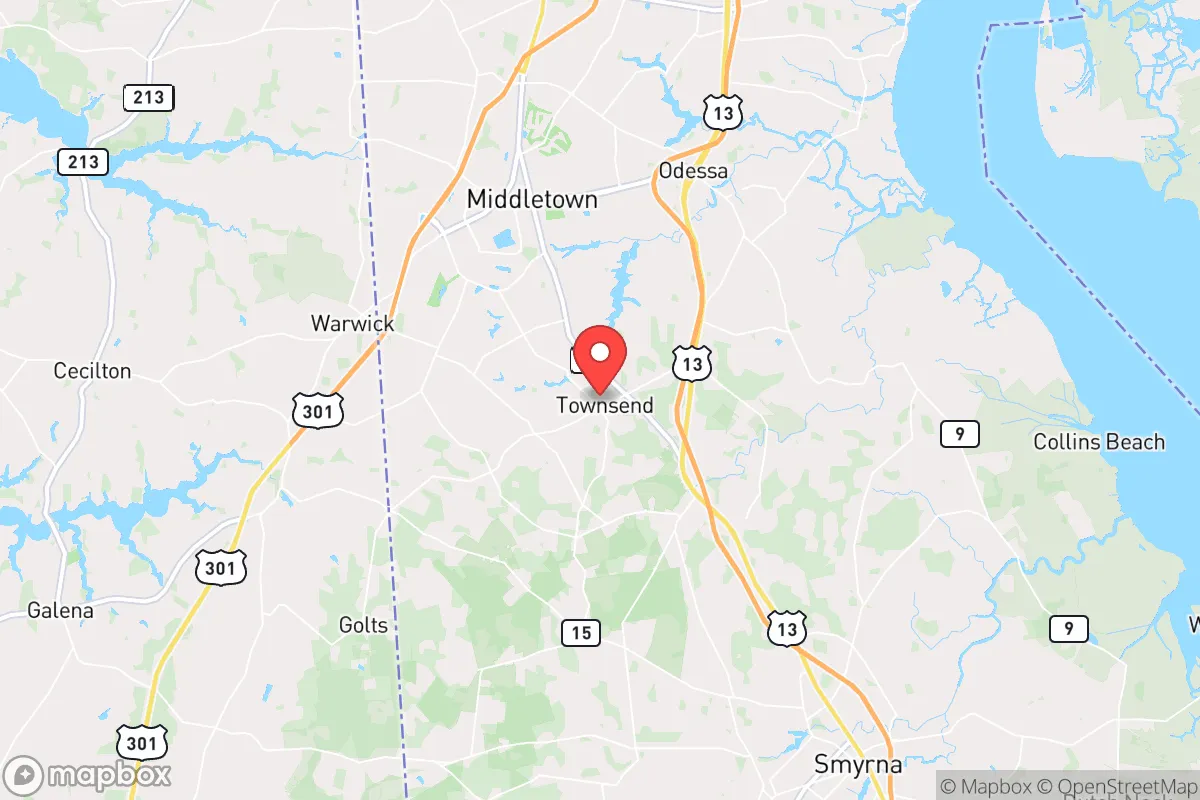
Townsend, Delaware, sits in a sweet spot that few relocators fully appreciate: close enough to the I-95 corridor for supply runs and medical access, but far enough from Wilmington, Philadelphia, and Baltimore to avoid being caught in the blast radius of a major urban event. This small New Castle County town, population roughly 1,200, offers a strategic buffer that preppers and conservative families should weigh seriously. Its position along the Delmarva Peninsula provides natural chokepoints—bridges and two-lane roads that can be monitored or controlled—while its agricultural base means local food production isn't a hypothetical; it's the daily reality. For someone looking to plant roots in a place that can absorb shocks without collapsing, Townsend deserves a hard look.
Geographic position and natural advantages for long-term stability
Townsend's location at the intersection of DE-1 and DE-299 gives it quick access to Dover (25 minutes south) and Wilmington (35 minutes north), but the town itself remains rural enough that you're not breathing urban air or hearing sirens every night. The surrounding landscape is flat, fertile farmland—ideal for small-scale agriculture, livestock, or even a serious garden operation. The Chesapeake & Delaware Canal runs just north of town, providing a potential water source and a natural barrier that slows movement from the north. The Delmarva Peninsula's insular geography is a genuine asset: there are only three road bridges connecting it to the rest of the country (I-95 at Newark, US-301 at Middletown, and US-13 at the Maryland line), plus the Chesapeake Bay Bridge to the west. In a scenario where civil unrest or supply chain collapse hits the Northeast Corridor, those chokepoints become defensible perimeters. Townsend sits far enough south of the canal that you're not dealing with the traffic and congestion of Middletown's exurban sprawl, but you're still inside the ring of practical infrastructure—hospitals, hardware stores, and fuel stations are within a 15-minute drive.
Risks, exposures, and proximity to fallout-relevant landmarks
No location is immune, and Townsend has real vulnerabilities that a strategic relocator must acknowledge. The most obvious is its proximity to the I-95 corridor, which runs 20 miles west. In a mass evacuation scenario from Philadelphia or Baltimore, that highway becomes a parking lot and a target. Townsend itself is off the main evacuation routes, but secondary roads like DE-1 and DE-299 could see heavy traffic from people fleeing north or south. The town is also within 30 miles of the Salem Nuclear Generating Station in New Jersey, across the Delaware River. While prevailing winds typically blow east or northeast, a worst-case release could carry fallout across the bay. Preppers should factor in that Townsend sits roughly 25 miles from the Salem plant and 35 miles from the Hope Creek plant—both are pressurized water reactors with solid safety records, but any nuclear incident would require a shelter-in-place or evacuation plan. On the plus side, Townsend is far from major military installations (Dover Air Force Base is 20 miles south, but that's a transport hub, not a strategic target), and there are no major chemical plants, refineries, or rail yards nearby. The biggest day-to-day risk is flooding: the town lies in the Appoquinimink Creek watershed, and heavy rain events can swamp low-lying roads. Check FEMA flood maps before buying property—some lots in Townsend sit in Zone A (100-year floodplain), which is a hard pass for anyone serious about long-term resilience.
Practical resilience for a relocator: food, water, energy, and defensibility
For a single individual or a family looking to build a self-sufficient setup, Townsend offers a mix of advantages and trade-offs. The agricultural land is the biggest draw: you can buy a 5-10 acre parcel for under $200,000 (as of 2025-2026), and the soil is rich loam that grows corn, soybeans, and vegetables with minimal amendment. Local farmers' markets in Middletown and Smyrna operate year-round, and there are several u-pick operations within 10 miles. Water is less straightforward. Most properties in Townsend rely on private wells, which is a resilience plus—you're not dependent on municipal supply—but the aquifer depth varies, and some wells produce sulfur-heavy water that requires filtration. Test any well before purchase, and budget for a backup hand pump or solar-powered pump. Electricity is delivered by Delmarva Power, and outages are common during thunderstorms and nor'easters (typically 2-4 hours, but storms like 2023's Hurricane Lee knocked power out for three days in some rural pockets). Solar panels with battery storage are a smart investment here; the region gets about 200 sunny days per year, and net metering is available. For defensibility, Townsend's layout works in your favor. The town center is a compact grid of older homes, but the surrounding rural areas are scattered farmsteads with long sightlines and limited through-traffic. If you buy a property with a gravel driveway and a tree line setback, you have natural cover and early warning of anyone approaching. The local police presence is minimal—New Castle County Police patrol the area, but response times can be 15-20 minutes for rural addresses. That's not a bug; it's a feature for those who prefer to handle security themselves. Gun laws in Delaware are moderate: no permit needed for open carry, but a concealed carry permit requires a background check and training course. Magazine capacity is not restricted as of 2026, but keep an eye on Dover legislation—the state has been trending toward tighter controls.
The overall strategic picture for Townsend is one of cautious optimism. It's not a hardened bunker location—there's no mountain redoubt, no arid isolation, no deep wilderness. But for a relocator who wants to stay within a few hours of the Northeast's job markets and family networks while maintaining a genuine buffer from urban chaos, it's one of the better bets on the Delmarva. The combination of affordable land, agricultural potential, well water, and natural chokepoints gives you a foundation to build on. The downsides—flood risk, nuclear proximity, and the possibility of evacuation traffic—are manageable with planning. If you're serious about resilience, Townsend is a place where you can live a normal life while quietly preparing for the abnormal one. It's not flashy, and it won't impress the Instagram prepper crowd. But it will hold. And in the world we're looking at, that's the metric that matters.

* Values derived from national, state, county, city and local statistics and may differ in a specific area. Last updated: 2026-04-29T23:09:41.000Z
Narrative content on this page is AI-generated and may contain mistakes. Verify any details that matter before acting on them.
ReloMaps may earn a commission from affiliate links at no extra cost to you.

