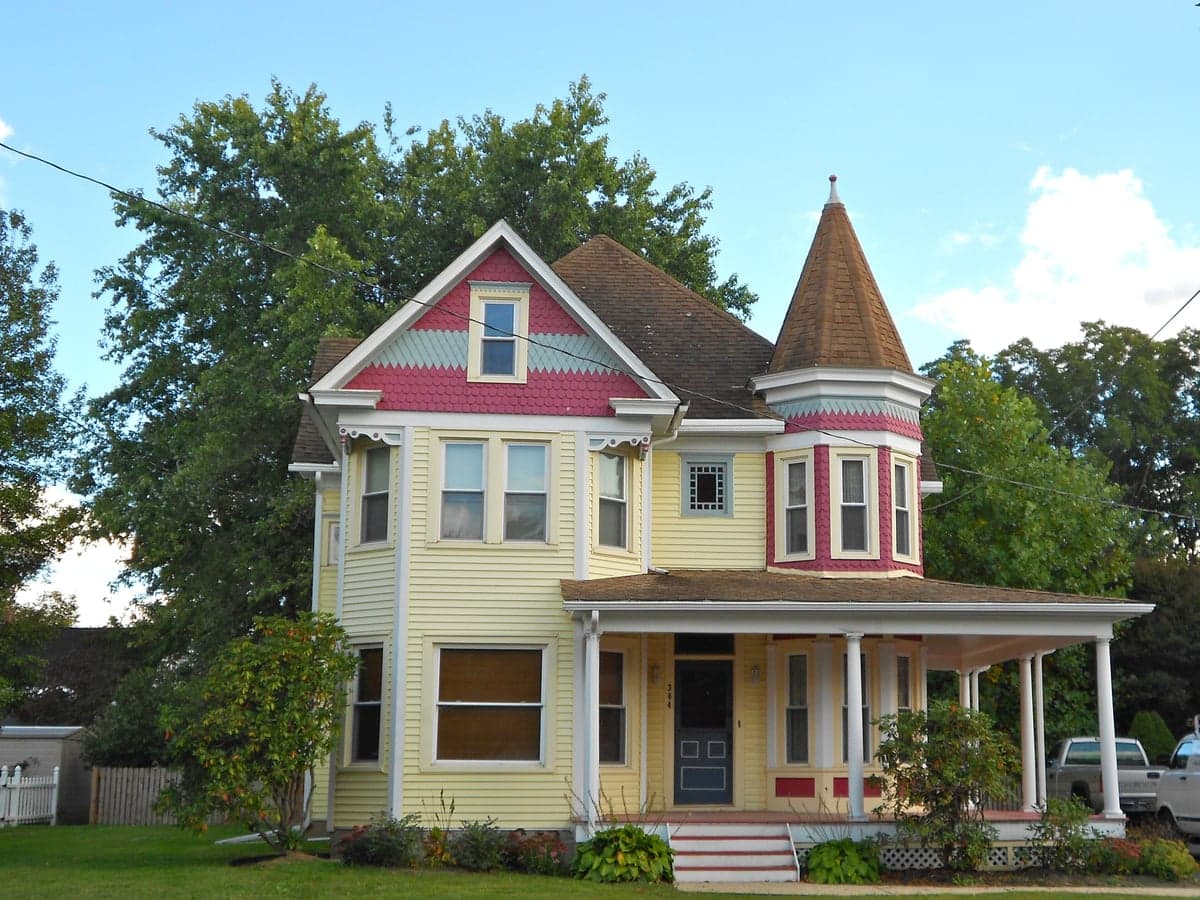
Photo: Wikipedia
Demographics of Townsend, DE
Affluence Level in Townsend, DE
An upper-middle-class area. Household wealth, education levels, and homeownership run ahead of national benchmarks.
People of Townsend, DE
The people of Townsend, Delaware today form a predominantly Black and White community of 2,792 residents, with a small but growing Hispanic presence and a notable East/Southeast Asian minority. The city carries a distinctive identity as a small-town crossroads where historic African American neighborhoods sit alongside newer suburban subdivisions, creating a density of 1,200 people per square mile that feels neither rural nor fully suburban. College-educated residents make up 42.7% of the population, a share that exceeds many neighboring towns and signals a shift toward professional-class households.
How the city was settled and grew
Townsend was founded in the mid-19th century as a railroad stop along the Delaware Railroad, which connected Wilmington to the Eastern Shore. The original population consisted of railroad workers, farmers, and merchants drawn by the promise of transport access for grain and timber. The historic Old Town district, centered around Main Street and the railroad tracks, was built by these early settlers — a mix of white farmers from southern Delaware and free Black families who had established themselves in New Castle County after the gradual abolition of slavery in the state. By the 1880s, a distinct African American community had formed in the South Townsend neighborhood, where Black families built homes and churches on land purchased from white farmers. The town remained small through the early 20th century, with population hovering around 300 residents until the 1950s. A second wave arrived during World War II, when workers came to nearby defense plants in Middletown and Dover, settling in the Railroad Avenue corridor near the depot. These workers were predominantly white families from rural Delaware and Maryland, along with a smaller number of Black families migrating north from the Eastern Shore.
Modern era (post-1965)
The post-1965 period transformed Townsend from a sleepy railroad hamlet into a bedroom community for Dover and Wilmington. The Immigration and Nationality Act of 1965 had little direct effect on Townsend — the foreign-born population today is just 1.7% — but domestic migration reshaped the city. The construction of Middletown-Warwick Road and the expansion of Route 1 made Townsend commutable to both Dover Air Force Base and Wilmington's corporate offices. During the 1990s and 2000s, new subdivisions like Brick Mill Landing and Hickory Ridge drew white and Black middle-class families from northern Delaware and Maryland, attracted by lower home prices and newer schools. The Black population grew from roughly 25% in 1990 to 43.0% today, concentrated in the South Townsend historic district and newer developments along Warwick Road. The Hispanic share rose to 4.3%, with families settling primarily in the Brick Mill area where rental housing is more available. East/Southeast Asian residents make up 3.2% of the population, a small but visible presence in the newer subdivisions, drawn by proximity to jobs at the University of Delaware and Christiana Care. The Indian subcontinent population remains at 0.0%, meaning no Indian American community has formed in Townsend. The white share has fallen to 38.0%, reflecting both Black in-migration and white flight to more rural areas in Kent County.
The future
Demographic trends suggest Townsend will continue to diversify slowly, with the Black and Hispanic shares likely rising while the white share declines further. The foreign-born population is expected to remain low — below 3% — as the city lacks the rental housing stock and ethnic institutions that attract immigrants. The Hispanic community, while small, is growing through natural increase and could reach 6-8% by 2035, concentrating in the Brick Mill Landing and Warwick Road areas. The East/Southeast Asian population is likely to plateau around 3-4%, as most Asian households in the region prefer larger cities like Newark or Middletown. The Black population will probably stabilize around 45-48%, as the South Townsend neighborhood reaches capacity and newer subdivisions attract a more mixed demographic. The city is not tribalizing into distinct ethnic enclaves — the small size and limited housing stock prevent that — but the Old Town and South Townsend districts remain predominantly Black, while Brick Mill Landing and Hickory Ridge are more mixed. The college-educated share is likely to rise above 45% as more professionals commute to Wilmington and Dover.
For someone moving in now, Townsend is becoming a modestly diverse, middle-class bedroom community where racial groups live in close proximity but maintain distinct neighborhood identities. The low foreign-born share means English is the dominant language, and the small-town feel persists despite growth. The city offers affordable housing and good schools in the Appoquinimink School District, but lacks the ethnic grocery stores, places of worship, and community organizations that immigrant-heavy towns provide. New residents should expect a stable, slowly diversifying population where the Black and white communities remain the dominant forces, and where the Hispanic and Asian populations are present but not yet large enough to shape the city's character.

* Values derived from national, state, county, city and local statistics and may differ in a specific area. Last updated: 2026-04-29T23:09:41.000Z
Narrative content on this page is AI-generated and may contain mistakes. Verify any details that matter before acting on them.
ReloMaps may earn a commission from affiliate links at no extra cost to you.

