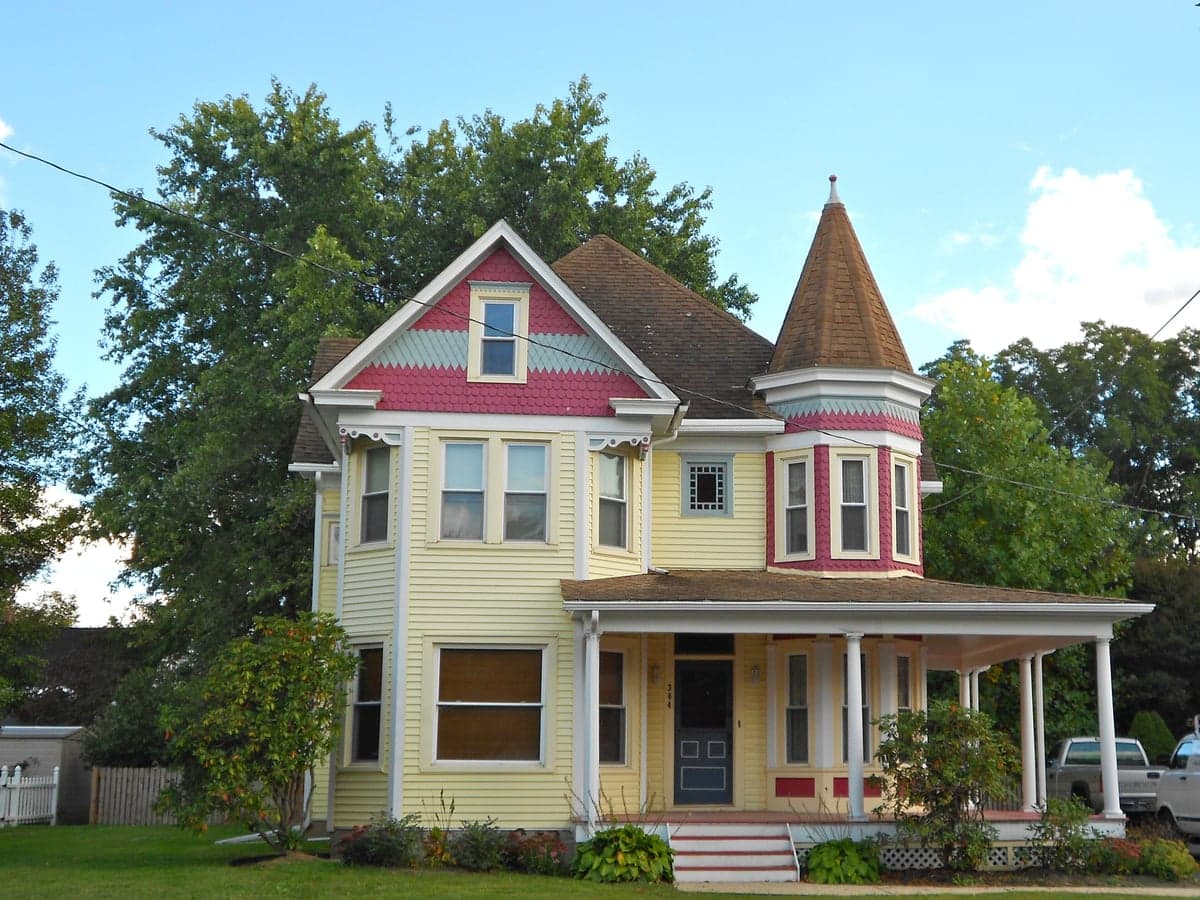
Photo: Wikipedia
Political ClimatePolitical Climate in Townsend, DE
District shown is the primary district for this city’s centroid. Cities may span multiple districts.
Inherited from parent state — no local data available.
Local Political AnalysisPolitical Analysis of Townsend, DE
Townsend, Delaware, has a Cook PVI of D+8, meaning it leans significantly more Democratic than the national average, but that number doesn't tell the whole story for this small New Castle County town. You have to understand that Townsend was a quiet, rural crossroads not that long ago, and the political shift here has been driven almost entirely by the massive influx of new housing developments and people moving up from the I-95 corridor. The old-timers, the families who have been here for generations, they remember when this was a place where you didn't lock your doors and the biggest political issue was whether the county would pave a certain road. Now, you're seeing a steady march of progressive policies that feel imported from Wilmington or Newark, and it's changing the character of the place faster than a lot of us are comfortable with.
How it compares
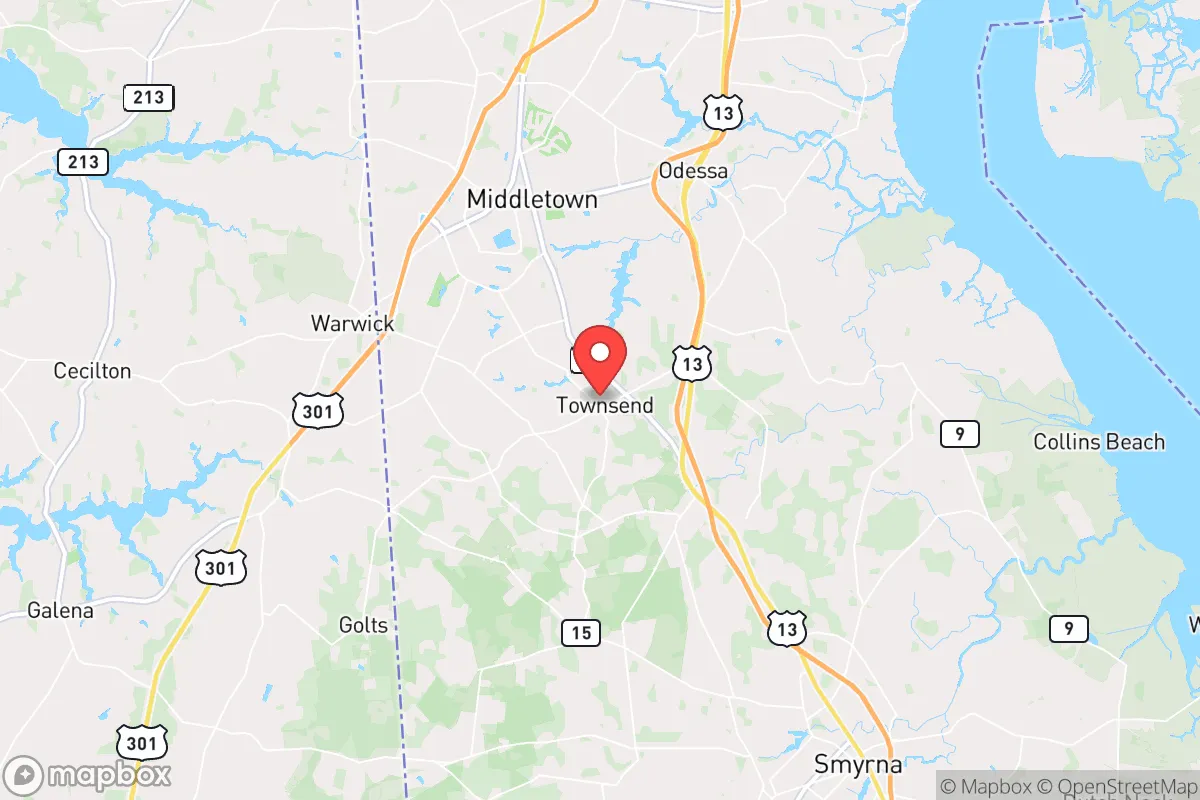
To get a real feel for Townsend's politics, you have to look at the surrounding areas. Drive ten miles south, and you hit Middletown, which is also trending blue but still has a stronger moderate and conservative base, especially in the older neighborhoods and the farms that haven't been sold off yet. Go further south into Kent County, places like Smyrna or Clayton, and you're in much redder territory—those communities still vote more like the Delaware of twenty years ago. But Townsend is squarely in the orbit of New Castle County's progressive machine. The county council and state representatives from this district are reliably Democratic, and they've been pushing policies that feel like government overreach to a lot of us: stricter land use regulations that make it harder for a guy to run a small business out of his garage, higher property taxes to fund programs we didn't ask for, and a general attitude that the state knows better than the people who actually live here. It's a stark contrast to the live-and-let-live ethos that used to define this area.
What this means for residents
For the folks who live here, the biggest practical impact is a feeling that your personal freedoms are getting squeezed from all sides. The county has been aggressive about code enforcement, and there's a growing list of things you can't do on your own property without a permit or a variance. Want to park your boat in the side yard? Better check the HOA rules and the county zoning code. Thinking about putting up a fence or a shed? Expect a paperwork battle. The school board, which used to be pretty low-key, has become a battleground over curriculum and parental rights, with the progressive faction pushing for more state-level control and less local input. A lot of us see this as a slow erosion of the independence that made this area attractive in the first place. The tax burden is also creeping up, and while the services are improving, many residents feel like they're paying for a level of government they didn't vote for.
Looking ahead, the trajectory is concerning. The new developments are bringing in younger, more liberal voters who see Townsend as just another bedroom community for Wilmington or even Philadelphia. They don't have the same attachment to the rural character or the traditional values that long-time residents hold dear. The local elections are increasingly decided by these newcomers, and the old guard is losing influence. If this trend continues, you can expect more of the same: higher taxes, more regulations, and a government that feels less like a servant of the people and more like a manager of their lives. It's not the Townsend I grew up in, and unless something changes, it's only going to get further from it.

State Political ClimatePolitical Climate in Delaware
State Political AnalysisPolitical Environment in the State
Delaware, despite its small size, is a politically complex state that has shifted from a moderate swing state to a reliably Democratic stronghold over the past two decades. The state’s overall partisan lean is now roughly D+7, with Democrats controlling the governorship, both U.S. Senate seats, and both chambers of the General Assembly. However, this blue veneer masks a deep urban-rural split: the northern counties, particularly New Castle County (home to Wilmington and Newark), drive the Democratic majority, while the southern counties of Kent and Sussex remain competitive or lean Republican. Over the last 10-20 years, the state has moved leftward due to in-migration from the Philadelphia and Washington D.C. metro areas, but the pace of change has been slower than in neighboring Maryland or New Jersey, leaving pockets of conservative resistance intact.
Urban vs. rural divide
The political map of Delaware is essentially a tale of three counties. New Castle County, home to roughly 60% of the state’s population, is the Democratic engine. Wilmington, the state’s largest city, votes overwhelmingly blue, with precincts routinely delivering 80-90% Democratic margins. The suburbs of Newark, Bear, and Glasgow are also reliably Democratic, driven by a mix of university faculty (University of Delaware), corporate professionals (banking, pharma), and a growing minority population. In contrast, Sussex County, the southernmost and most rural area, is the Republican stronghold. Towns like Georgetown, Millsboro, and Lewes have seen explosive growth from retirees and second-home buyers, but the county still votes +10-15 Republican in most statewide races. Kent County, anchored by Dover, is the true swing region—Dover itself is moderately Democratic, but the surrounding farmland and small towns like Smyrna and Harrington lean Republican. The 2024 presidential race saw New Castle County go +25 Democratic, Sussex go +12 Republican, and Kent split nearly evenly, illustrating the geographic fault line.
Policy environment
Delaware’s policy environment is a mixed bag for conservatives. On the positive side, the state has no sales tax, which keeps the overall tax burden relatively low compared to neighboring states. Property taxes are also among the lowest in the nation, averaging around 0.5% of assessed value—a major draw for retirees and families. However, income taxes are steep, with a top marginal rate of 6.6% on income over $60,000, and the state has a progressive structure that hits middle earners hard. The regulatory posture is generally business-friendly for large corporations (Delaware is the corporate home to over 60% of Fortune 500 companies due to its Court of Chancery), but small businesses face a thicket of licensing requirements and environmental regulations. Education policy is a flashpoint: the state has a strong teachers’ union and has resisted school choice expansion, though charter schools exist in Wilmington and Newark. Healthcare is dominated by the state-run Medicaid expansion and a heavy regulatory hand on insurance markets. Election laws are a concern for conservatives: Delaware has no voter ID requirement, same-day voter registration, and no-excuse absentee voting, which critics argue opens the door to fraud. The state also has a universal mail-in ballot law passed in 2022, which was upheld by the courts.
Trajectory & freedom
Delaware is trending in a concerning direction for personal freedom. The most significant recent contraction came with the 2022 passage of a package of gun control laws, including a ban on “assault weapons” (defined broadly to include many common semi-automatic rifles), a 10-round magazine limit, and a requirement for a permit to purchase a handgun. These laws were passed on a party-line vote and have been challenged in court, but they remain in effect. Parental rights have also taken a hit: the state’s Department of Education has pushed “culturally responsive” curricula and LGBTQ-inclusive materials that some parents argue bypass local control. In 2023, the legislature passed a law prohibiting schools from notifying parents if a child changes their gender identity or pronouns—a direct blow to parental rights. On the medical autonomy front, Delaware has expanded abortion access, codifying Roe v. Wade protections into state law in 2017 and removing waiting periods and parental consent requirements for minors. Property rights are relatively strong, with no statewide rent control and a fairly straightforward permitting process, but environmental regulations on coastal development in Sussex County have tightened. The overall trajectory is toward more government intervention in daily life, particularly on guns, education, and healthcare.
Civil unrest & political movements
Delaware has not seen the large-scale civil unrest of bigger states, but there have been notable flashpoints. In 2020, Wilmington experienced several nights of protests and looting following the George Floyd killing, leading to property damage and a heavy police response. The state’s sanctuary policies are a simmering issue: Delaware has a “Trust Act” (2019) that limits local law enforcement cooperation with federal immigration authorities, and Wilmington and Newark have declared themselves sanctuary cities. This has led to tension with conservative residents in Sussex County, where immigration enforcement is a top concern. Election integrity controversies have been muted but persistent: the 2020 and 2022 elections saw allegations of ballot harvesting and improper mail-in ballot handling, particularly in New Castle County, though no major fraud was proven. Organized activist movements are active on both sides. On the left, groups like the Delaware Working Families Party and Indivisible Delaware push for progressive policies on climate, housing, and criminal justice reform. On the right, the Delaware GOP has been energized by grassroots groups like the Sussex County Republican Club and the Delaware Family Policy Council, which focus on school board races and parental rights. The most visible flashpoint for a new resident would be the school board elections, which have become highly politicized over curriculum and library books.
Projection
Over the next 5-10 years, Delaware is likely to continue its leftward drift, but at a slower pace than neighboring states. The key demographic driver is in-migration from the Northeast corridor—New York, New Jersey, and Pennsylvania—which brings more progressive voters to New Castle County and the coastal areas of Sussex. However, the retiree influx to Sussex County (particularly in Lewes, Rehoboth Beach, and Fenwick Island) is more politically mixed, with many retirees bringing conservative fiscal views but socially liberal leanings. The state’s small size means that a few thousand votes can swing a statewide race, so a Republican could still win the governorship or a Senate seat if the national environment is favorable. But the legislative map is heavily gerrymandered in favor of Democrats, and the state’s Democratic supermajority is unlikely to be broken. Expect continued expansion of government programs, tighter gun laws, and more progressive education mandates. A new resident moving in now should anticipate a state where personal freedoms—especially on guns, school choice, and medical decisions—will be increasingly constrained by state law, but where the low property taxes and lack of sales tax will remain attractive. The best bet for a conservative-leaning family is to settle in Sussex County or rural Kent County, where local government is more responsive and the cultural environment is more aligned with traditional values.
For a new resident, the bottom line is this: Delaware offers a low-tax, low-regulation environment for property owners and businesses, but those benefits come with a growing progressive policy apparatus that will affect your daily life. If you value gun rights, parental control over education, and limited government, you’ll need to be politically active at the local level—school boards, county councils, and town halls—to push back against the state-level trend. The state is not yet as far gone as Maryland or New Jersey, but the trajectory is clear. Choose your county carefully, and be prepared to fight for the freedoms that matter most to you.
* Values derived from national, state, county, city and local statistics and may differ in a specific area. Last updated: 2026-04-29T23:09:41.000Z
Narrative content on this page is AI-generated and may contain mistakes. Verify any details that matter before acting on them.
ReloMaps may earn a commission from affiliate links at no extra cost to you.

