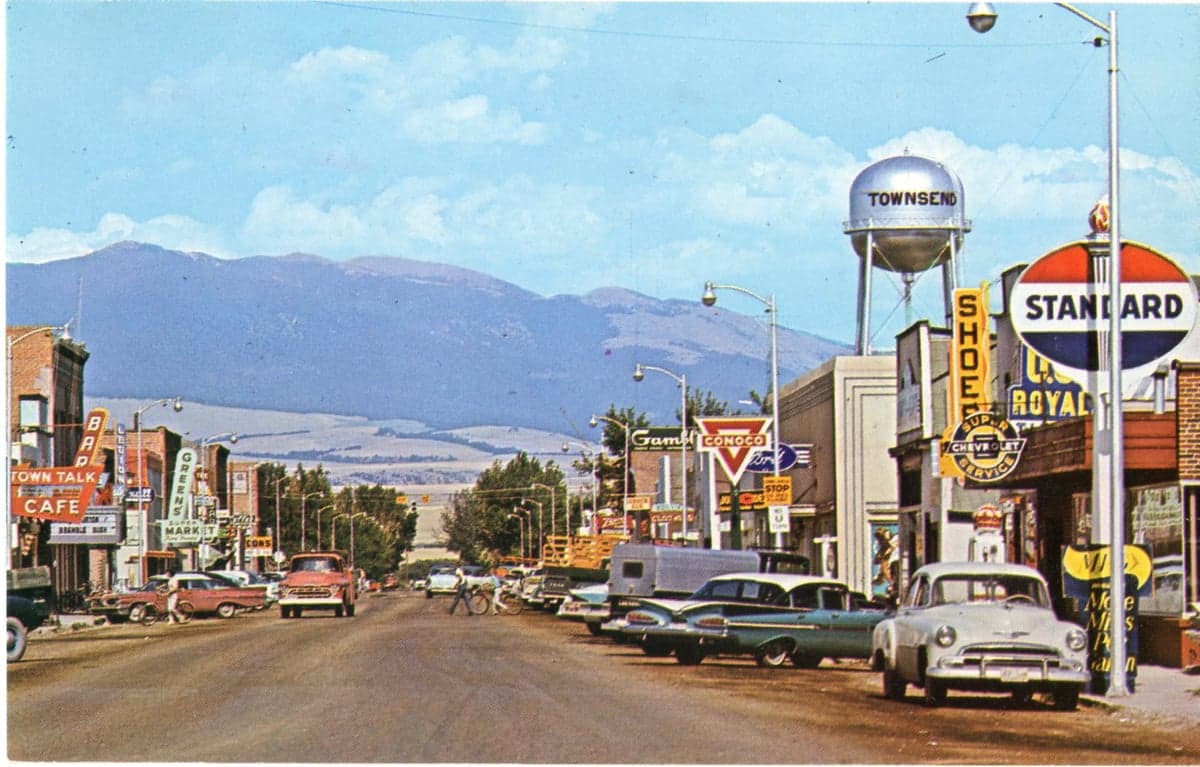
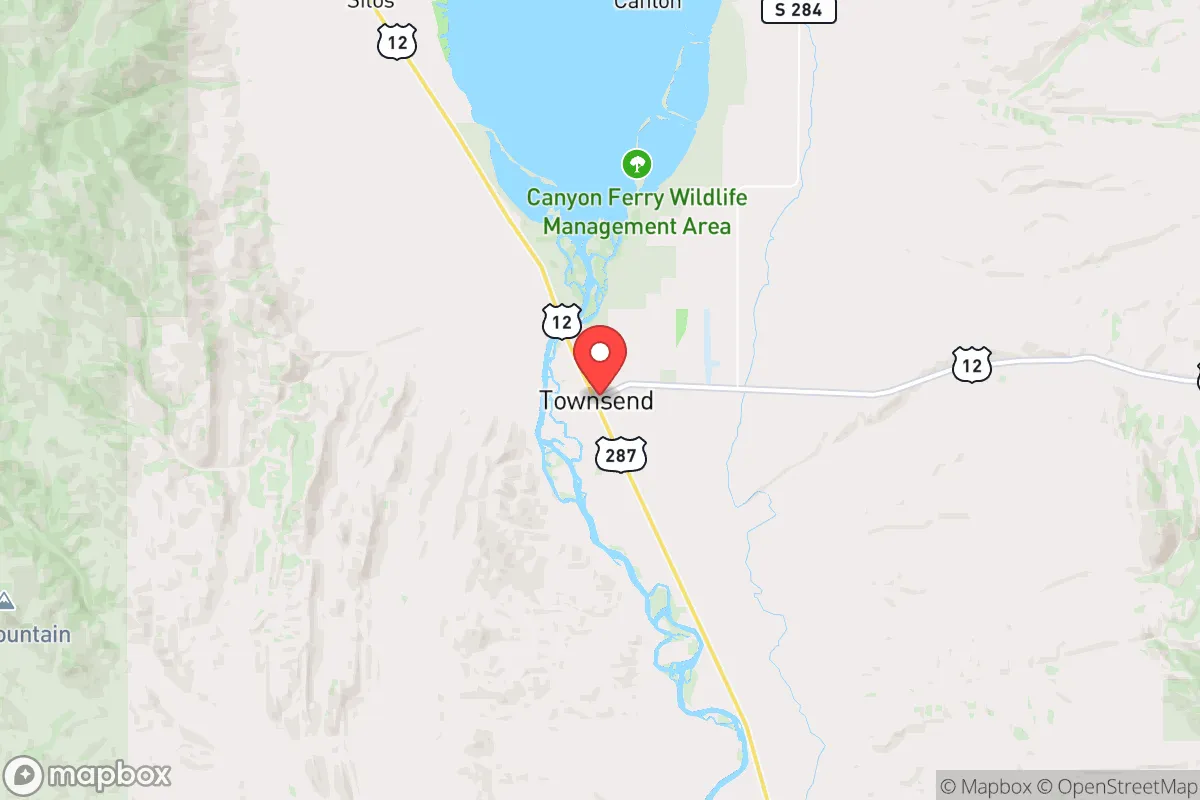
Photo: Wikipedia
Demographics of Townsend, MT
Affluence Level in Townsend, MT
A middle-class area roughly in line with national averages across income, home values, education, and employment.
People of Townsend, MT
The people of Townsend, Montana, today form a small, predominantly white community of 2,232 residents, characterized by a strong rural identity and a quiet, self-reliant culture. With 89.4% of the population identifying as white and a foreign-born share of just 1.2%, Townsend is one of the least ethnically diverse towns in the state, reflecting its historical roots as a railroad and agricultural hub. The town’s distinctive markers include a high proportion of long-term residents, a modest 18.2% college-educated rate, and a palpable sense of neighborly familiarity that defines daily life in its compact residential districts like North Townsend and South of Main.
How the city was settled and grew
Townsend’s population history begins with the arrival of the Northern Pacific Railway in the early 1880s, which transformed a sparse ranching area into a planned railroad division point. The original wave of settlers were predominantly Northern European immigrants—Scandinavians, Germans, and Irish—who built the town’s first homes in what is now the Historic Railroad District along Broadway Avenue. These workers were drawn by jobs in rail maintenance and the nearby smelters of the Helena mining district. By 1900, the town’s population had reached roughly 500, with a second wave of homesteaders arriving under the Enlarged Homestead Act of 1909, settling the East Side Addition with small farms and ranches. The Great Depression slowed growth, but World War II brought a modest influx of families seeking work in the region’s expanding agricultural processing plants, many settling in the West End near the railroad yards. Through the mid-20th century, Townsend remained overwhelmingly white and native-born, with its population hovering around 1,200 by 1950.
Modern era (post-1965)
After the 1965 Hart-Cellar Act, Townsend saw virtually no increase in foreign-born immigration, a pattern that continues today with only 1.2% of residents born abroad. The post-1965 era instead brought domestic in-migration from rural Montana and the Pacific Northwest, as families sought affordable land and a slower pace of life. The Meadow Creek Subdivision, developed in the 1970s, absorbed many of these new arrivals—mostly white, middle-class households from larger Montana cities like Butte and Helena. The town’s Hispanic population remains minimal at 1.2%, and the East/Southeast Asian community, at 1.4%, is largely composed of a few families who moved in during the 1990s for work at the nearby Canyon Ferry Dam or in local healthcare. The Indian-subcontinent population is effectively zero. The Broadway Heights neighborhood, built in the 1980s and 1990s, became the preferred area for professionals commuting to Helena, 30 miles north, reinforcing Townsend’s character as a bedroom community for state government workers. No significant ethnic enclaves developed; instead, the town’s residential areas remain uniformly white, with the only notable clustering being by income rather than ethnicity.
The future
Looking ahead, Townsend’s population is likely to remain stable or grow slowly, driven by domestic migration from more expensive parts of Montana rather than international immigration. The town’s demographic trajectory points toward continued homogenization, as the small East/Southeast Asian and Hispanic populations show no signs of growth—both groups are plateauing near 1%. The South Townsend area, where newer single-family homes are being built, is attracting younger families from Helena and Bozeman, but these newcomers are overwhelmingly white and college-educated, slightly raising the town’s 18.2% college attainment rate. The foreign-born share is unlikely to rise above 2% in the next decade, given the lack of local industry or refugee resettlement programs. The town is not tribalizing into distinct enclaves; rather, it is consolidating as a culturally conservative, predominantly white community where the main demographic shift is a gradual aging of the population, with the median age rising as younger residents leave for urban jobs.
For someone moving in now, Townsend is becoming a quieter, more settled version of its 20th-century self—a place where the population is stable, the ethnic makeup is nearly static, and the dominant identity is rooted in rural Montana values. The lack of diversity and low foreign-born share mean that new residents will find a community where social networks are built on long-standing family ties and local institutions like the Broadwater County Fair. This is not a town of rapid change or new arrivals, but one where the people who live there have deep roots, and newcomers are expected to integrate into an established, homogeneous social fabric.

* Values derived from national, state, county, city and local statistics and may differ in a specific area. Last updated: 2026-04-30T02:42:22.000Z
Narrative content on this page is AI-generated and may contain mistakes. Verify any details that matter before acting on them.
ReloMaps may earn a commission from affiliate links at no extra cost to you.

