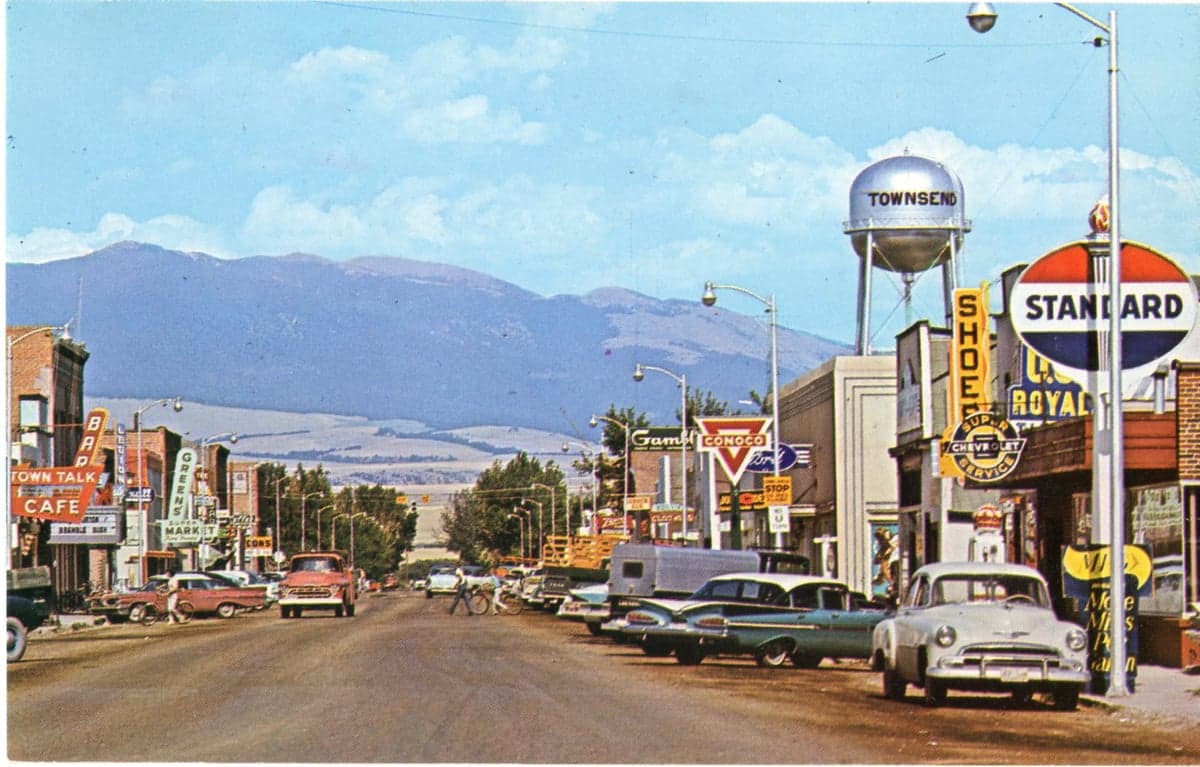
Photo: Wikipedia
Political ClimatePolitical Climate in Townsend, MT
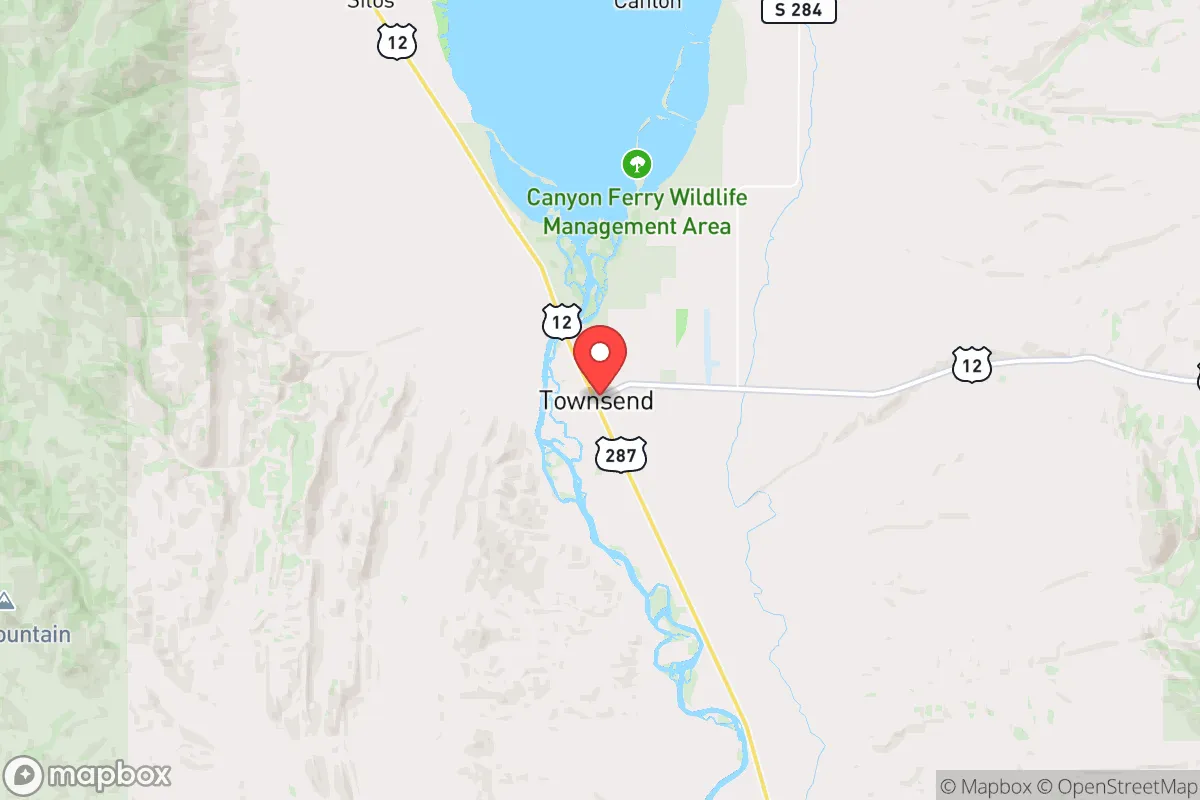
District shown is the primary district for this city’s centroid. Cities may span multiple districts.
Local Political AnalysisPolitical Analysis of Townsend, MT
Townsend, Montana, is about as solidly conservative as small-town America gets, and that's the way most folks here like it. The Cook PVI rating of R+15 tells the story, but it doesn't capture the feel on the ground—this isn't a place where you see yard signs for both parties. The political lean here is deeply rooted in a belief in personal responsibility, limited government, and a healthy skepticism of federal overreach. For a long time, that was just the way things were, and nobody thought much about it. But in the last five to ten years, you've started to feel a shift—not in Townsend itself, but in the pressure coming from outside. Bozeman, just an hour south, has gotten noticeably more progressive, and there's a real concern that those ideas could creep up the valley. So far, Townsend has held the line, but it takes vigilance.
How it compares
When you look at the surrounding area, Townsend sits in a bit of a conservative bubble, even by Montana standards. Broadwater County, where Townsend is the county seat, is reliably red, but it's not as deep red as some of the rural counties further east. For contrast, drive 30 minutes north to Helena, the state capital, and you'll find a much more mixed political scene—state workers, university folks, and a noticeable progressive presence that can make the local politics feel like a tug-of-war. Head south to Bozeman, and you're in a place that's gone from a conservative ranching town to a liberal-leaning college and tech hub in just a couple of decades. That trajectory is what worries people here. Townsend has avoided that so far because it's smaller and less of a destination, but the housing pressure from Bozeman is pushing people this way, and with them come different voting patterns. The contrast is stark: in Townsend, you can still have a conversation about property rights or gun laws without someone calling for more regulation. In Bozeman, that conversation is getting harder to have.
What this means for residents
For the people who live here, the political climate means a few concrete things. First, you can generally count on local government to stay out of your business. The county commission and town council are made up of folks who believe in low taxes and minimal interference—there's no appetite for mask mandates, vaccine passports, or the kind of public health overreach that became common in bigger cities. Second, it means that if you're a business owner or a landowner, you're dealing with fewer hoops to jump through. Zoning is light, and the permitting process is straightforward. But there's a flip side: because the community is so uniformly conservative, there's not a lot of political diversity. If you lean left, you might feel isolated, and the local schools and library tend to reflect the majority view. That's fine with most residents, but it's worth knowing before you move here. The bigger concern for the future is whether the influx of people from out of state—many from blue states—will start to change the voting patterns. So far, it hasn't, but every election cycle, you hold your breath a little.
One thing that sets Townsend apart culturally is its strong sense of self-reliance. This isn't a place that looks to the federal government for solutions. The local economy is built on agriculture, small businesses, and a few manufacturing plants—not on government contracts or grants. That independence shows up in policy too. For example, the county has pushed back on federal land management proposals that would restrict grazing or logging, and there's a general distrust of any "planning" that comes from Washington or even Helena. You'll also notice that the local paper and community bulletin boards are full of events at the rodeo grounds, the gun club, and the churches—not political rallies or activist meetings. That's the Townsend way: keep your head down, take care of your own, and don't let anyone tell you how to live your life. It's a perspective that's getting harder to find, and the people here intend to keep it that way for as long as they can.

State Political ClimatePolitical Climate in Montana
State Political AnalysisPolitical Environment in the State
Montana has long been a reliably Republican state at the presidential level, voting for the GOP candidate in every election since 1968 except for Bill Clinton’s 1992 win. However, the state’s political identity is more nuanced than a simple red-state label suggests. Over the past 10-20 years, the dominant coalition has shifted from a mix of libertarian-leaning ranchers and union-friendly blue-collar Democrats to a more solidly conservative, culturally aligned Republican majority, driven by in-migration from the West Coast and a growing distrust of federal overreach. The 2024 election saw Donald Trump win the state by over 20 points, but the real story is the internal tension between the state’s traditional independence and the new wave of residents who are often more ideologically rigid.
Urban vs. rural divide
The political map of Montana is a classic tale of a few blue islands in a deep red sea. The state’s largest city, Billings, is a conservative stronghold in Yellowstone County, which voted +24 for Trump in 2024. Missoula, home to the University of Montana, is the state’s most liberal city, with Missoula County going +18 for Biden in 2020 and +12 for Harris in 2024. Bozeman and Gallatin County have become the state’s most politically volatile area; once a reliably red region, it flipped to Biden in 2020 by a razor-thin margin and then swung back to Trump in 2024 by about 3 points, reflecting the tension between the tech- and outdoor-recreation transplants who lean left on social issues and the native ranchers and builders who prioritize property rights and low taxes. Helena, the capital, is a moderate blue dot in Lewis and Clark County, driven by state government workers. The rural counties—like Wibaux, Garfield, and Petroleum—routinely vote 85-90% Republican, and their influence is magnified by the state’s at-large congressional district and the Senate’s equal representation. The divide isn’t just about party; it’s about lifestyle. Urban areas are seeing rising housing costs and cultural clashes over growth, while rural counties feel abandoned by both parties on issues like wolf management and federal land access.
Policy environment
Montana’s policy environment is a mixed bag for a conservative audience. The good news: there is no state sales tax, and the income tax was flattened to a single rate of 5.9% in 2024 under Governor Greg Gianforte, a Republican. Property taxes are relatively low but vary wildly by county, with Gallatin County seeing sharp increases due to rising home values. The regulatory posture is generally business-friendly, with no state-level minimum wage above the federal $7.25 and a right-to-work law on the books. On education, the state passed a robust school choice bill in 2023, creating education savings accounts for families, though implementation has been slow. Healthcare policy is a flashpoint: Montana expanded Medicaid under the Affordable Care Act in 2015, and a 2023 law made it permanent, which many conservatives see as a government overreach that traps able-bodied adults in dependency. Election laws have been tightened: the 2021 session passed voter ID requirements and banned ballot harvesting, but the state still allows same-day voter registration, which some see as a vulnerability. The state’s gun laws are among the most permissive in the nation—no permit required for concealed carry, no magazine limits, and a “stand your ground” law—but a 2023 red flag law was narrowly defeated, a win for Second Amendment advocates.
Trajectory & freedom
On the freedom scale, Montana is a state in flux. The last five years have seen a clear expansion of personal liberty in several key areas. The 2021 Montana Firearms Freedom Act explicitly exempts firearms made and kept in-state from federal regulation, a direct challenge to federal authority. In 2023, the legislature passed the Montana Parental Rights Act, which prohibits schools from hiding a child’s medical or mental health information from parents, a major win for family autonomy. The same session saw the Medical Ethics and Diversity Act, which protects healthcare providers from being forced to participate in procedures they find morally objectionable. However, there are concerning trends. The state’s growth policy in Bozeman and Missoula has led to increased zoning restrictions and impact fees, which some argue infringe on property rights. The 2023 Montana Land Use Planning Act attempted to preempt local zoning for housing density, but it was watered down, leaving local governments with too much control. The biggest threat to freedom is the influx of out-of-state money and voters who bring big-government habits with them. The 2024 election saw a ballot initiative to enshrine abortion rights in the state constitution pass with 52% of the vote, a clear sign that the state’s libertarian streak on social issues is being overwritten by progressive activism.
Civil unrest & political movements
Montana is not known for widespread civil unrest, but there have been notable flashpoints. The Yellowstone Club and other high-end developments in Big Sky have sparked local protests over water rights and affordable housing, with activists on both sides clashing over growth. In 2020, Missoula saw several Black Lives Matter protests, including one that blocked traffic on Interstate 90, which led to a strong backlash and the formation of local “Back the Blue” groups. The Montana Freedom Caucus, a group of hardline conservative state legislators, has been a vocal force, pushing for nullification of federal gun laws and opposing any form of vaccine mandates. Immigration politics are less visible here than in border states, but the issue of sanctuary cities has been a hot topic; in 2023, the legislature passed a law banning sanctuary policies, though no Montana city had formally adopted one. Election integrity remains a live issue: the 2022 secretary of state race saw a Republican win on a platform of auditing the 2020 election, and the state has since purged voter rolls and tightened mail-in ballot rules. A new resident in Bozeman or Missoula will notice the political polarization in local coffee shops and town hall meetings, where zoning and growth are the new wedge issues.
Projection
Over the next 5-10 years, Montana is likely to become more politically competitive, but not necessarily more liberal. The in-migration wave—mostly from California, Washington, and Oregon—is bringing a mix of fiscal conservatives who want lower taxes and social liberals who want more government services. The Gallatin County swing is the canary in the coal mine: if Bozeman continues to attract tech workers and remote professionals, it could flip blue permanently, dragging the state’s at-large congressional seat into play. However, the rural counties are not shrinking; they are actually gaining population from domestic migration as well, and they are voting even more Republican. The state’s redistricting commission, which is nonpartisan, has kept the map fair, but the growing population in the western third of the state will eventually force a second congressional district, which could be a toss-up. The biggest wildcard is the state’s constitutional convention question, which will appear on the ballot in 2030; if called, it could rewrite the state’s governing document, potentially enshrining or removing protections for gun rights, property rights, and parental rights. A conservative moving in now should expect a state that remains Republican at the state level for the next decade, but with increasing cultural friction and a need to stay politically engaged to prevent the erosion of the freedoms that make Montana attractive.
For a new resident, the bottom line is this: Montana offers a high degree of personal freedom—low taxes, strong gun rights, and a culture of self-reliance—but those freedoms are under constant pressure from growth and the political baggage that comes with it. If you’re moving here, get involved in local politics, especially at the county commission level, where zoning and school board decisions will shape your daily life. The state is still a refuge from the overreach you see in places like California or Oregon, but it’s not a static paradise. It’s a battleground, and your vote and voice matter more here than in almost any other state.
* Values derived from national, state, county, city and local statistics and may differ in a specific area. Last updated: 2026-04-30T02:42:22.000Z
Narrative content on this page is AI-generated and may contain mistakes. Verify any details that matter before acting on them.
ReloMaps may earn a commission from affiliate links at no extra cost to you.

