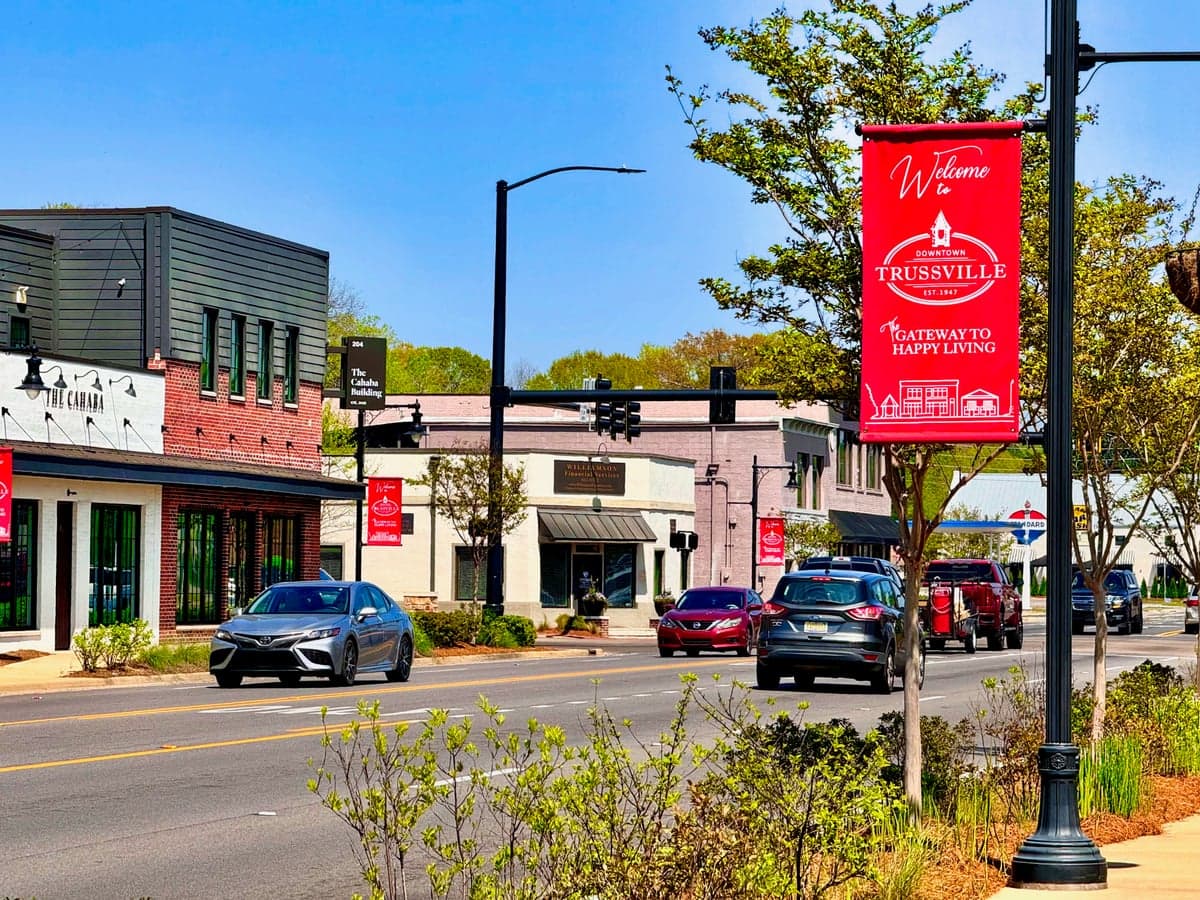
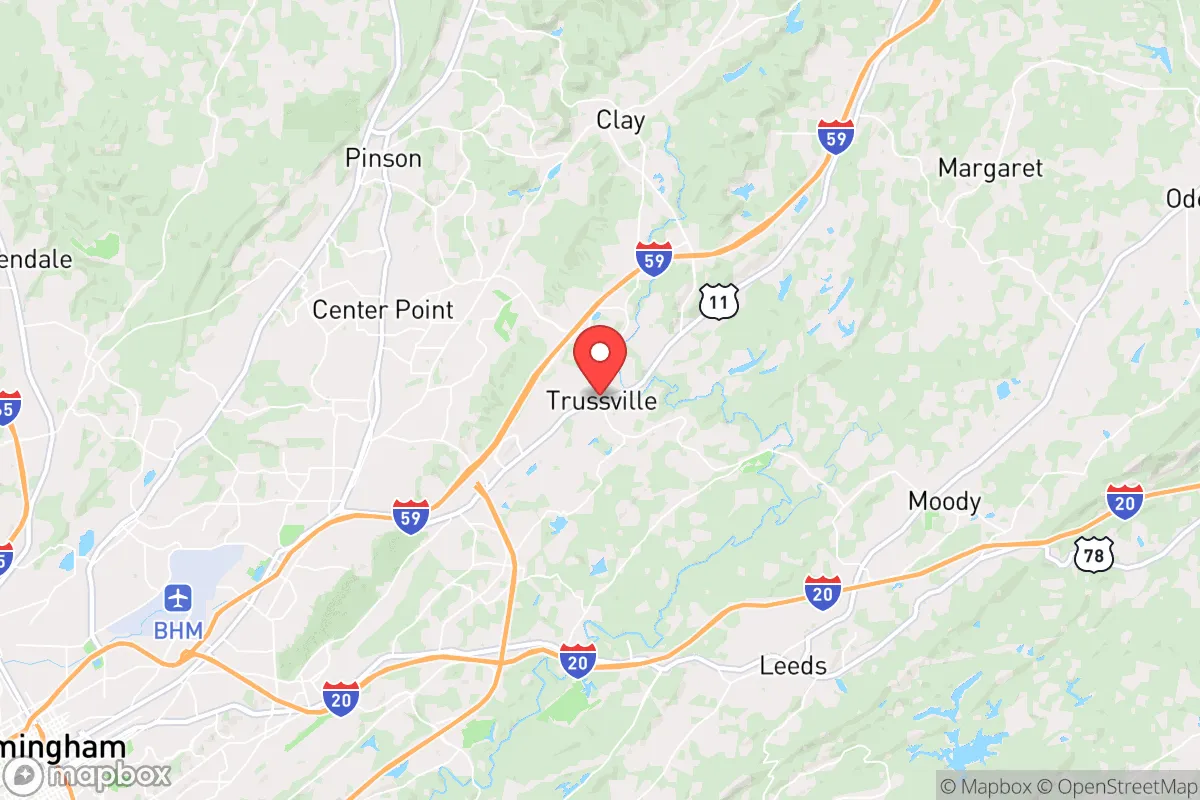
Photo: Wikipedia
Demographics of Trussville, AL
Affluence Level in Trussville, AL
An upper-middle-class area. Household wealth, education levels, and homeownership run ahead of national benchmarks.
People of Trussville, AL
Trussville, Alabama, is a predominantly white, highly educated suburb of Birmingham with a population of 26,182, where 83.1% of residents identify as white and 48.1% hold a college degree. The city is characterized by its low foreign-born population of just 0.9% and a growing Black community at 10.0%, with small but present East/Southeast Asian (1.7%) and Hispanic (2.4%) populations. Its identity is rooted in a strong sense of local community, family-oriented development, and a conservative-leaning political culture that has shaped its modern growth. For a relocating individual or family, Trussville offers a stable, homogeneous environment with a clear trajectory toward continued suburban expansion and demographic stability.
How the city was settled and grew
Trussville’s population history begins not with colonial settlement but with the railroad. Founded in the 1820s as a small farming crossroads, the city was named after the Truss family, early landowners who donated right-of-way for the Alabama & Chattanooga Railroad in the 1870s. The railroad brought the first significant wave of settlers: white farmers, merchants, and railroad workers from the surrounding Appalachian foothills and the Deep South. These early residents built homes in the Historic Downtown Trussville district, where the original commercial core still stands, and in the Chalkville area to the south, which developed as a rural farming community. The population remained small and overwhelmingly white through the early 20th century, with the 1930 census recording just 1,200 residents. The city’s growth accelerated after World War II, when returning veterans and their families sought affordable housing near Birmingham’s industrial jobs. The North Chalkville neighborhood expanded rapidly during the 1950s and 1960s, filled with modest brick ranch homes built for white working-class families employed at U.S. Steel’s Fairfield Works and other Birmingham plants. This wave established Trussville’s character as a white, middle-class suburb, a pattern that would persist for decades.
Modern era (post-1965)
The post-1965 era transformed Trussville from a small railroad town into a major Birmingham suburb. The 1970s and 1980s saw a surge of domestic in-migration, primarily white families from Birmingham and Jefferson County seeking newer housing, better schools, and lower crime rates. The Mallard Lake subdivision, developed in the 1980s, became a magnet for these relocating families, offering large lots and access to the newly widened U.S. Highway 11. The 1990s and 2000s brought the most dramatic growth, with the city’s population more than doubling from 8,000 in 1990 to over 20,000 by 2010. This wave was driven by the construction of Interstate 459, which connected Trussville directly to Birmingham’s eastern suburbs and downtown. The Hewitt and Village at Trussville neighborhoods, both master-planned communities, absorbed the bulk of this growth, attracting white professionals and executives from Birmingham’s banking, healthcare, and engineering sectors. The city’s Black population, historically very small, began to grow during this period, rising from under 2% in 2000 to 10.0% today, with most Black residents settling in the East Trussville area near the Jefferson-St. Clair county line. The East/Southeast Asian community, at 1.7%, is concentrated among professionals in the Village at Trussville and newer developments near the Trussville Promenade shopping center. The Hispanic population, at 2.4%, is dispersed but slightly more visible in the service and construction sectors. The Indian-subcontinent population remains negligible at 0.1%, and the foreign-born share of 0.9% is among the lowest in the Birmingham metro, reflecting the city’s limited appeal to international immigrants.
The future
Trussville’s population is heading toward continued homogenization, with the white share likely to remain above 80% for the foreseeable future. The city’s low foreign-born rate and lack of established immigrant enclaves suggest that international migration will not significantly alter the demographic mix. The Black population, currently 10.0%, is growing slowly but steadily, driven by middle-class Black families moving from Birmingham and other Jefferson County suburbs; this trend is likely to continue, but the city shows no signs of becoming a majority-minority suburb. The East/Southeast Asian and Hispanic populations are plateauing, as the city’s high housing costs (median home value over $300,000) and limited rental stock restrict in-migration by lower-income groups. The next 10-20 years will likely see Trussville become slightly more diverse in terms of race and ethnicity, but the core identity as a white, college-educated, conservative suburb will remain intact. New development is concentrated in the Trussville Springs area and along the I-459 corridor, where large-lot subdivisions continue to attract families from across the metro. The city’s population is projected to reach 30,000 by 2035, driven entirely by domestic migration from within Alabama and the broader Southeast.
For someone moving in now, Trussville is becoming a stable, affluent suburb with a clear demographic trajectory: predominantly white, highly educated, and family-oriented, with modest growth in Black and Asian populations but little change in its low immigrant share. It is a place where community identity is strong, schools are highly rated, and the population is likely to remain homogeneous for the next generation. Relocating families should expect a welcoming environment for those who fit the existing cultural and economic profile, but limited diversity in terms of language, cuisine, and international perspectives.

* Values derived from national, state, county, city and local statistics and may differ in a specific area. Last updated: 2026-04-19T11:55:20.000Z
Narrative content on this page is AI-generated and may contain mistakes. Verify any details that matter before acting on them.
ReloMaps may earn a commission from affiliate links at no extra cost to you.

