Strategic Assessment of Tucson, AZ
Multiple tactical vulnerabilities. Population density, target proximity, or disaster risk are likely compounding. A retreat property and exit planning is required.
What does the Strategic Assessment tell us?
Our Strategic Assessment grades tactical survivability of an area. Major population centers, military targets, fallout zones, natural disasters, and border exposure all drive risk — lower exposure means a more defensible position in a crisis.
This is heavily inspired by Joel Skousen's Strategic Relocation book. Highly recommended you checkout the book ($)What does this tell us?
Our Strategic Assessment grades tactical survivability of an area. Major population centers, military targets, fallout zones, natural disasters, and border exposure all drive risk — lower exposure means a more defensible position in a crisis.
This is heavily inspired by Joel Skousen's Strategic Relocation book. Highly recommended you checkout the book ($)Strategic Pillars

Key Distances
Regional Safe Places
Below is our recommended "safe zones" in Arizona and the surrounding area based on our strategic heuristics. For most people, it's unrealistic to live in a “safe zone” full-time due to work, family or other personal reasons. They tend to be more rural. However, many of these areas are perfect for second homes and retreat properties that double as a vacation home or even a short-term rental.
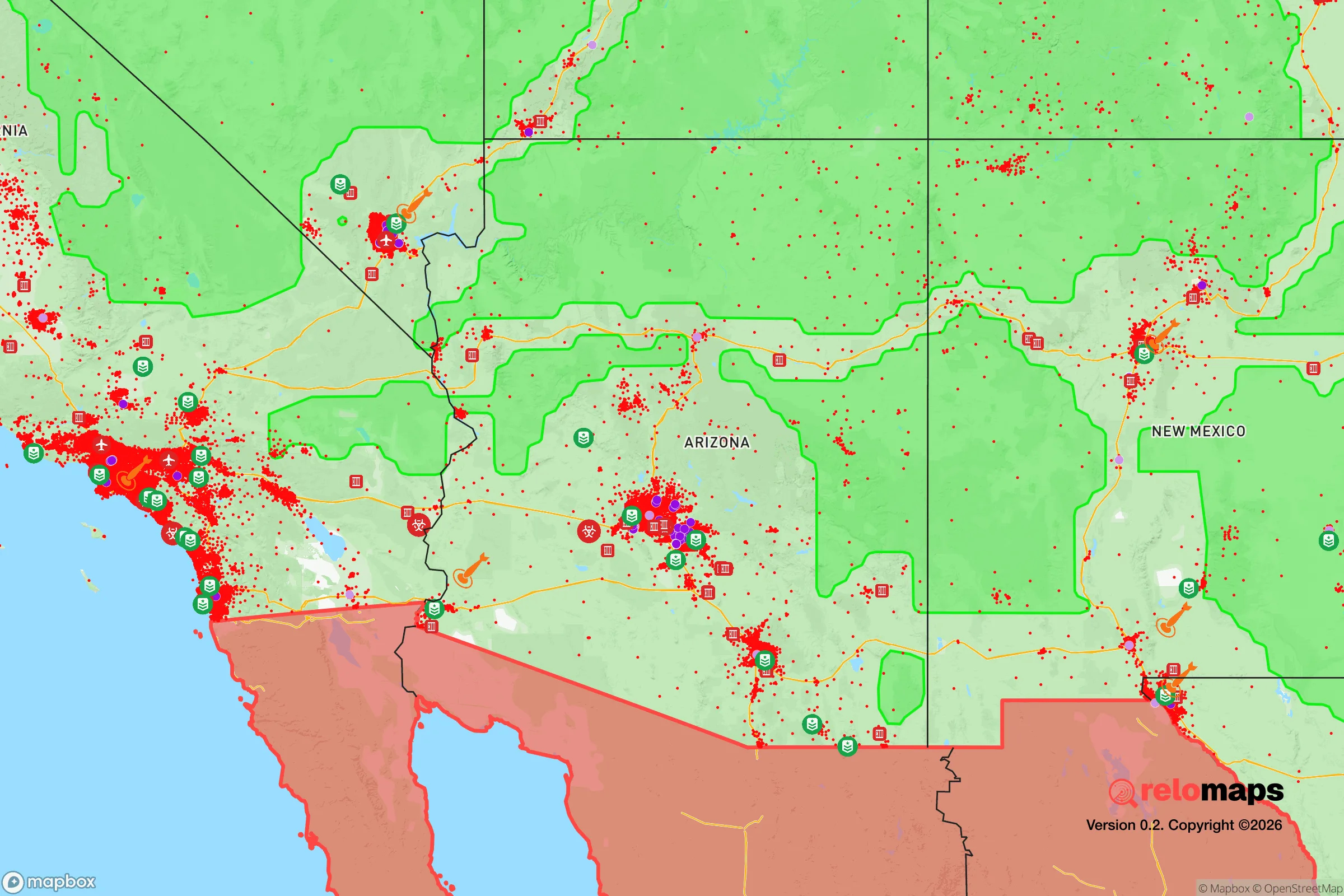
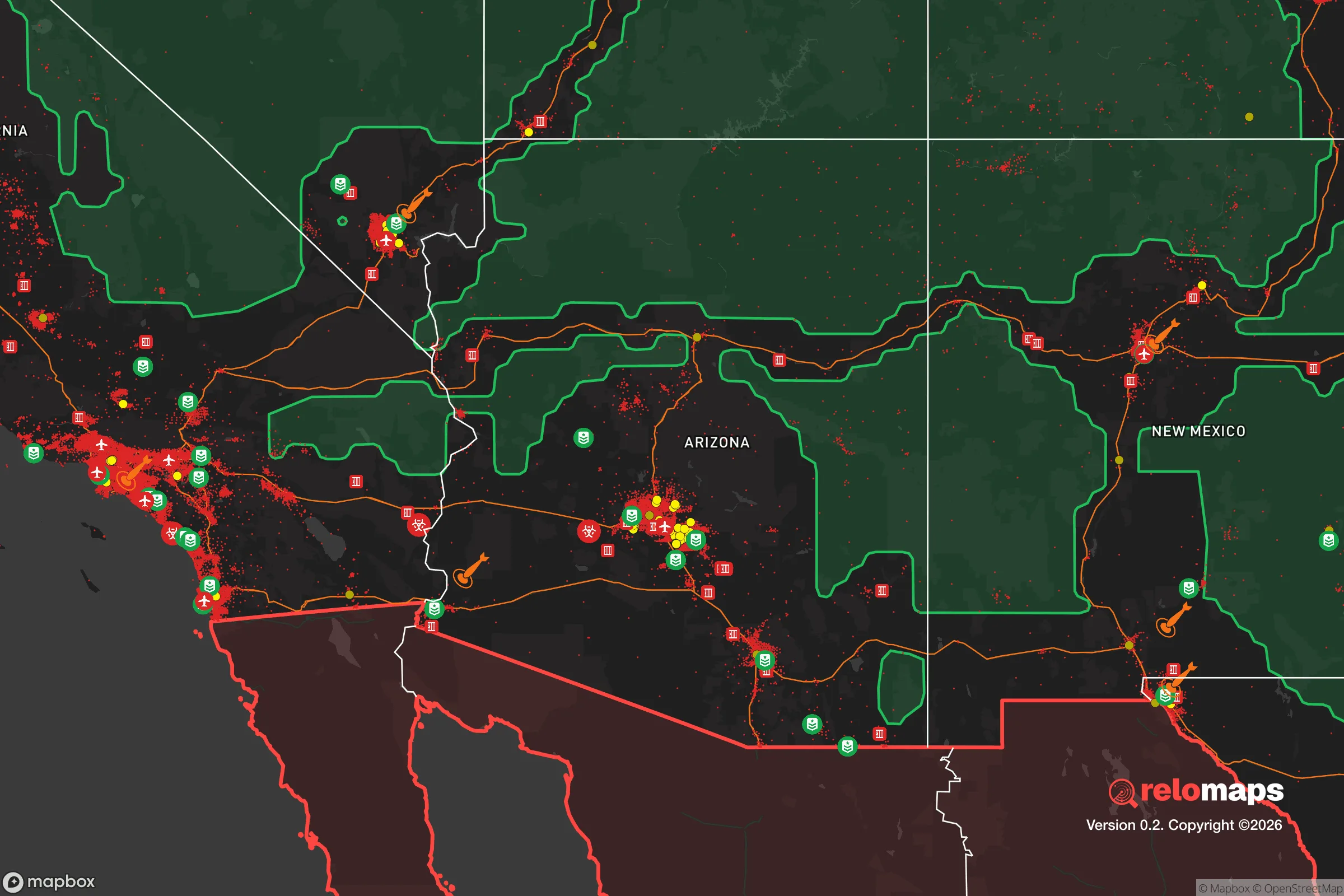


Important Note: For informational purposes only. This does not mean nothing bad ever happens in the green zones. Please use common sense. This is based on public data and modeled with AI. We tried to take a conservative approach but mistakes happen. We update this regularly as new information becomes available.
Solar Generator Recommendations
Backup power matters more here than in safer locations. We've picked three solar generators across budgets and capacity tiers — start with the budget unit if you only need a few essentials, or step up if you want to run a fridge and HVAC for days at a time.

Jackery Portable Power Station Explorer 300
Budget OptionPower on the Go: Weighing only 11 lbs, it's convenient to set up and store with book-sized foldable solar panels

BLUETTI Portable Power Station AC180
Designed for both indoor and outdoor scenarios, AC180 is highly capable as it has a robost capacity and continuous output power.

EF ECOFLOW DELTA Pro Ultra Power Station
Upgraded PickEcoFlow DELTA Pro Ultra is a whole-home energy system designed to grow with your family. Integrated with the Smart Home Panel 2, it scales to meet your evolving energy needs — keeping your home powered, intelligent, and secure through every stage of life.
We earn a commission, at no additional cost to you.
Strategic Assessment Analysis
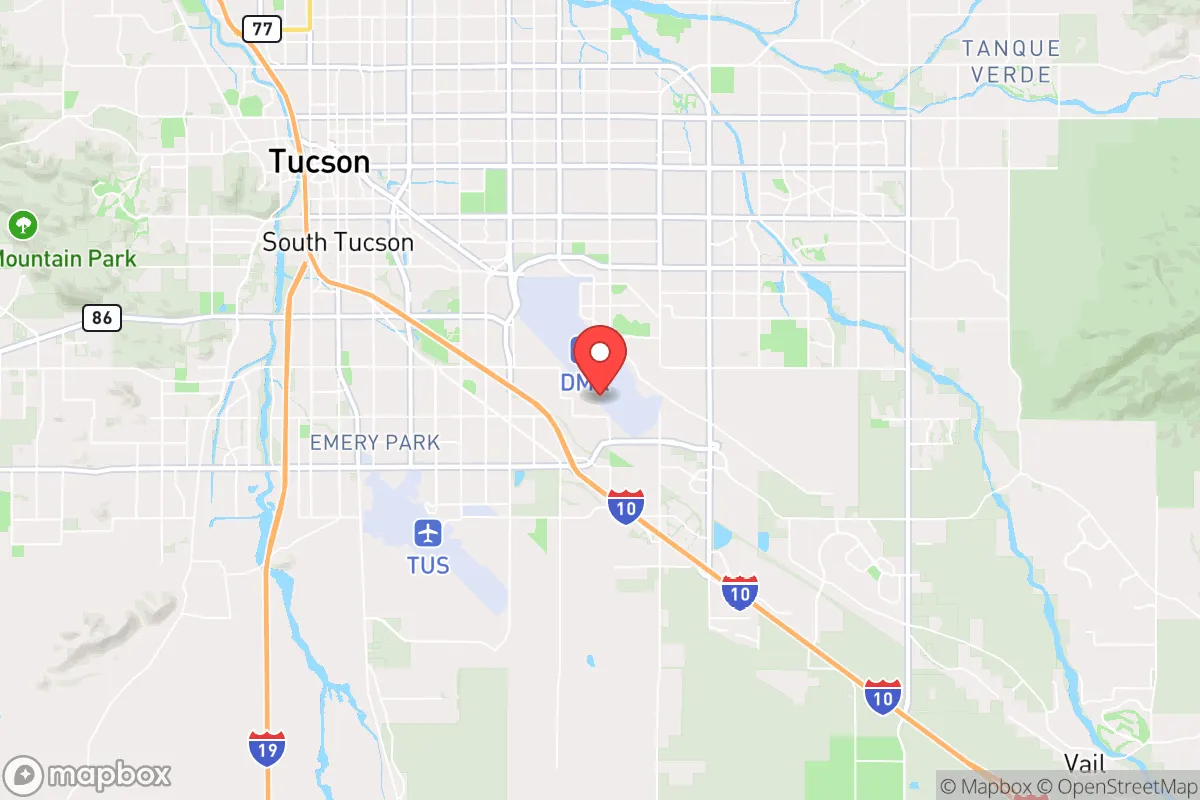
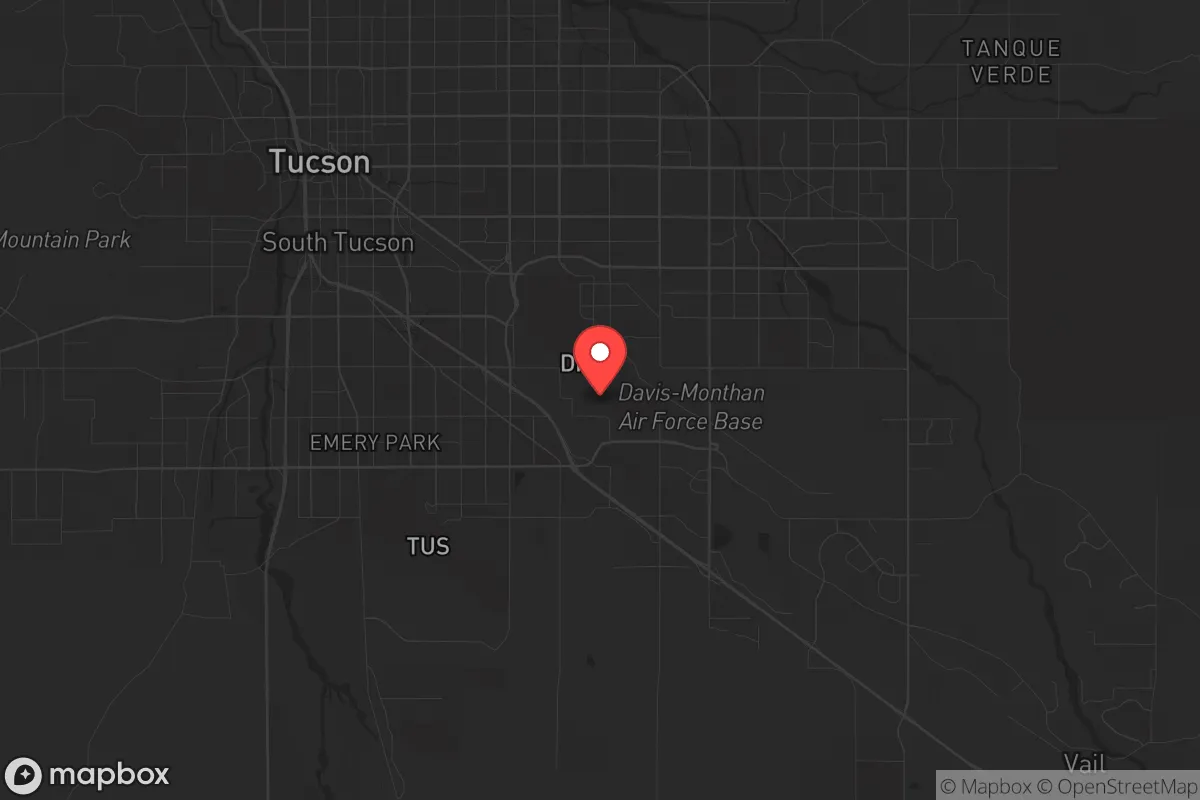
Tucson offers a surprisingly resilient strategic position for those prioritizing self-reliance and distance from the most probable flashpoints of national instability. Nestled in a high desert valley at 2,400 feet, it sits far enough from the San Andreas fault zone to avoid the worst of a California collapse, yet close enough to the Mexican border to create both opportunities and distinct security challenges. The city's location along Interstate 10 and its proximity to Davis-Monthan Air Force Base provide logistical and military presence, but the real draw for a prepper mindset is the surrounding terrain—mountain ranges, remote desert corridors, and a climate that supports extended outdoor living if infrastructure falters.
Geographic position and natural advantages for long-term survival
Tucson's geography is a double-edged sword that leans favorable for those planning for disruption. The city is ringed by five mountain ranges—the Santa Catalinas, Rincons, Tucsons, Tortolitas, and Santa Ritas—which create natural choke points and defensible retreat zones. The Sonoran Desert is not a barren wasteland; it supports mesquite, prickly pear, and saguaro, all of which provide edible resources and building materials if you know what you're doing. Water is the critical variable, and Tucson sits atop a significant groundwater aquifer, though it's being drawn down faster than it recharges. The Central Arizona Project canal delivers Colorado River water, but that pipeline is vulnerable to both earthquake disruption and political fights upstream. For a relocator, the key advantage is that Tucson's low humidity and 350 days of sunshine make solar power highly reliable, and the growing season for desert-adapted crops like tepary beans and amaranth runs nearly year-round. The elevation also means summer highs are 10–15 degrees cooler than Phoenix, reducing heat stress on both people and equipment during a grid-down scenario.
Risks, exposures, and proximity to fallout-relevant landmarks
No strategic assessment is honest without naming the threats, and Tucson has several that a conservative prepper must weigh carefully. The most obvious is the border—just 60 miles south, and while the immediate area isn't a warzone, the cartel presence in Sonora means smuggling routes run through the desert corridors around the city. During a collapse, those corridors could become avenues for armed groups moving north. On the military side, Davis-Monthan AFB is home to the 355th Wing and the Aerospace Maintenance and Regeneration Group (the "boneyard"), which stores thousands of decommissioned aircraft. That makes it a high-value target in any conflict involving strategic bombing or sabotage. The base is also a staging area for drone operations, which could draw unwanted attention. Tucson is roughly 200 miles from the Palo Verde Nuclear Generating Station near Phoenix—the largest nuclear plant in the U.S. by output—and while that's outside the immediate fallout zone for a worst-case release, prevailing winds could carry contamination southeast toward Tucson if the plant were compromised. The city itself has no major nuclear or chemical facilities, which is a plus, but the Interstate 10 corridor is a natural chokepoint for evacuation or supply movement, and during civil unrest that highway could become a liability rather than an asset.
Practical resilience for a relocator: food, water, energy, and defensibility
For a single individual or family looking to establish a sustainable foothold, Tucson offers a mixed but workable resilience profile. Water is the single biggest concern: the city's municipal supply is heavily dependent on the CAP canal, which is a single point of failure. However, properties with wells in the surrounding foothills or in communities like Vail, Sahuarita, or Oracle can access groundwater at depths of 200–400 feet, and rainwater harvesting is legal and encouraged—Tucson even offers rebates for cistern systems. Food production is viable with effort: the desert soil is alkaline and low in organic matter, but raised beds with imported soil, drip irrigation, and shade structures can produce vegetables year-round. Local food co-ops and farmers' markets are robust, and the presence of the University of Arizona's College of Agriculture means there's institutional knowledge available for those who seek it. Energy independence is straightforward: solar panels paired with battery storage are common, and the city's net metering policies are favorable. For defensibility, the key is choosing the right neighborhood. The urban core near the university or downtown is dense and would be chaotic during a breakdown. The better bet is the outskirts—areas like the Catalina Foothills, Tanque Verde, or Green Valley—where properties have space, sightlines, and limited access points. Gun culture is strong in Arizona, and Pima County has a high rate of firearm ownership, which cuts both ways: it means a higher baseline of armed citizens, but also that any confrontation could escalate quickly. The local sheriff's office is generally pro-Second Amendment, and constitutional carry is the law statewide.
The overall strategic picture for Tucson is one of high potential paired with clear vulnerabilities. It's not a bug-out location in the sense of a remote Montana homestead—it's a mid-sized city with a military target on its back and a border that could become a liability. But for someone who wants to maintain a professional career while building a resilient lifestyle, it's one of the better options in the Southwest. The climate is livable, the terrain is defensible, and the community includes a significant number of like-minded individuals who value preparedness. The smart play is to secure a property with a well and solar on the city's edge, build relationships with local growers and shooters, and keep a low profile. Tucson won't save you from a direct nuclear strike or a full-scale invasion, but for the more likely scenarios—economic collapse, supply chain breakdown, localized civil unrest—it offers a solid foundation for riding out the storm.

* Values derived from national, state, county, city and local statistics and may differ in a specific area. Last updated: 2026-05-01T21:59:19.000Z
Narrative content on this page is AI-generated and may contain mistakes. Verify any details that matter before acting on them.
ReloMaps may earn a commission from affiliate links at no extra cost to you.

