
Photo: Wikipedia
Political ClimatePolitical Climate in Tupelo, MS
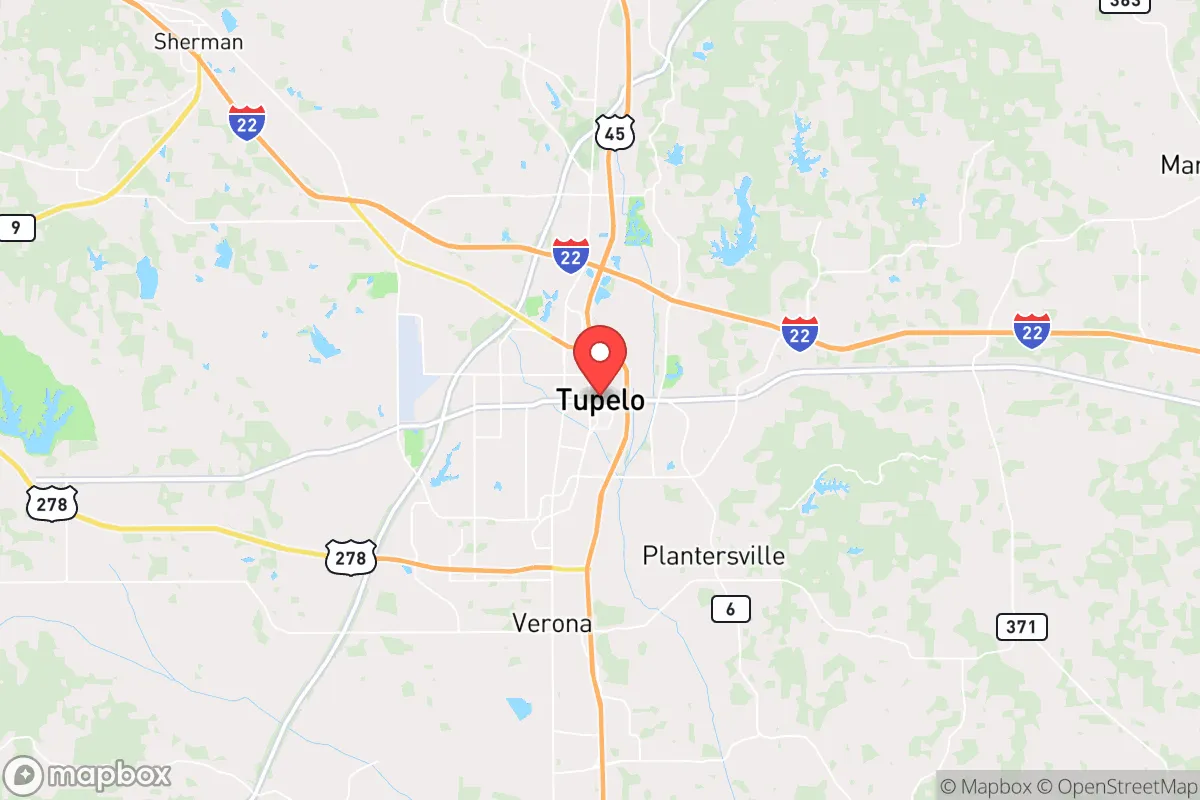
District shown is the primary district for this city’s centroid. Cities may span multiple districts.
Local Political AnalysisPolitical Analysis of Tupelo, MS
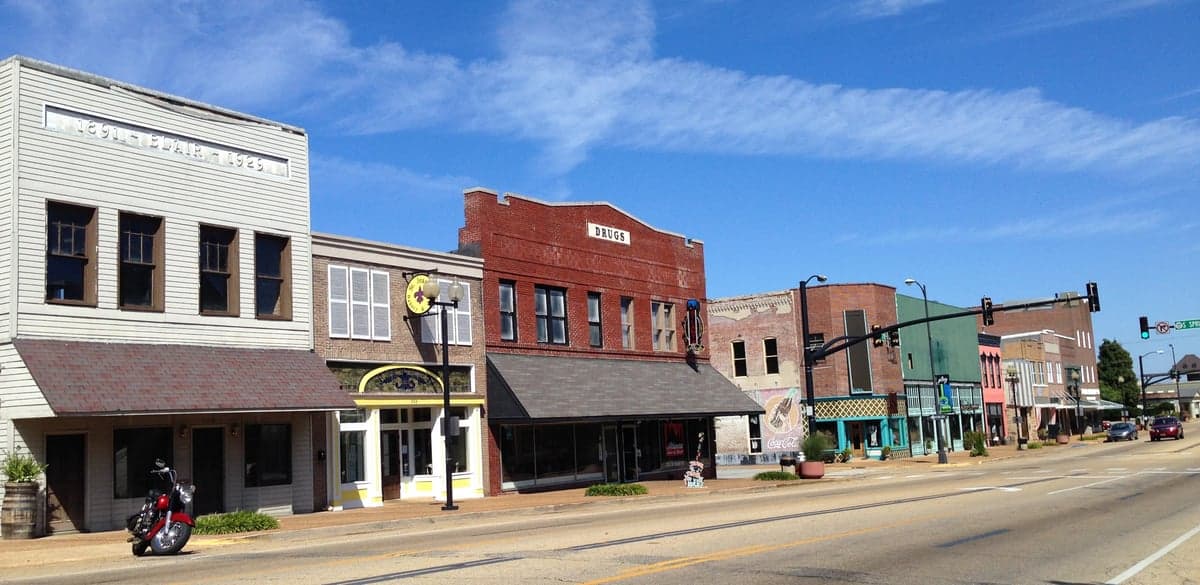
Tupelo, Mississippi, has long been a rock-solid conservative stronghold, and that's not changing anytime soon. With a Cook Partisan Voting Index of R+18, the area leans heavily Republican, and you can feel it in the everyday conversations at local diners and hardware stores. The political trajectory here has been steady—no wild swings toward the left, and most folks are happy to keep it that way. If anything, there's a growing unease about outside influences trying to chip away at the traditional values that have held this community together for generations.
How it compares
When you stack Tupelo up against other parts of Mississippi, it's right in line with the state's conservative backbone, but there are some interesting contrasts nearby. Head south to Oxford, home of Ole Miss, and you'll find a more liberal-leaning pocket—more college-town energy, more progressive chatter, and a voting record that sometimes flirts with Democratic candidates. Similarly, Starkville has its own academic tilt that can feel a bit out of step with Tupelo's down-to-earth, family-first vibe. Even within Lee County, the rural areas outside city limits tend to vote even more conservatively than Tupelo proper, which already leans right. The difference is subtle but real: Tupelo's conservatism is practical and rooted in local business and church life, not just partisan loyalty.
What this means for residents
For the people living here, the political climate translates into a government that mostly stays out of your way. Taxes are low, property rights are respected, and there's a general expectation that local leaders will keep their noses out of personal decisions—whether that's how you run your small business, what you teach your kids, or how you practice your faith. That said, there's a growing concern among long-time residents about creeping government overreach, especially from federal mandates on education and healthcare. The push for more progressive policies in schools or zoning laws is met with serious skepticism. People here remember when things were simpler, and they're wary of any shift that feels like it's coming from Washington or out-of-state activists rather than the community itself. The unspoken rule is: if it ain't broke, don't let the government fix it.
Culturally, Tupelo holds onto its distinctions with a quiet pride. You won't find the same kind of political activism you'd see in Jackson or the Gulf Coast—this is a place where people vote with their feet and their wallets, not with yard signs. The Elvis legacy is a unifying force, but so is a shared belief in self-reliance and neighborly support over bureaucratic solutions. Looking ahead, the biggest test will be whether Tupelo can keep its conservative character as new residents move in from more liberal areas. So far, the community has held firm, but the next decade will tell if that balance tips. For now, it's still a place where you can breathe easy, knowing your rights and freedoms aren't being nibbled away by overreaching government—and folks aim to keep it that way.

State Political ClimatePolitical Climate in Mississippi
State Political AnalysisPolitical Environment in the State
Mississippi is one of the most reliably conservative states in the nation, with a Republican lean that has only deepened over the past two decades. The state hasn’t voted for a Democratic presidential candidate since 1976, and in 2024, Donald Trump carried it by roughly 17 points. The dominant coalition is a mix of rural and suburban voters, evangelical Christians, and a growing number of conservative-leaning transplants from other Southern states. Over the last 10-20 years, the shift has been dramatic: Democrats once held a majority in the state legislature as recently as 2010, but today Republicans hold supermajorities in both chambers. The state’s political identity is now firmly rooted in limited government, traditional values, and a skepticism of federal overreach.
Urban vs. rural divide
The political map of Mississippi is a textbook study in the urban-rural split. The state’s largest metro, the Jackson metropolitan area, is the only significant Democratic stronghold. Hinds County, which includes Jackson, consistently votes 70-80% Democratic, driven by a majority-Black population and a concentration of government workers and academic institutions. But even here, the suburbs tell a different story. Madison County, just north of Jackson, has flipped hard Republican over the last decade, with places like Ridgeland and Madison becoming hubs for conservative families fleeing the city’s crime and tax burdens. The Gulf Coast, anchored by Biloxi and Gulfport, leans Republican but is more moderate on economic issues due to the tourism and casino industries. The northeastern corner, around Tupelo and Oxford, is reliably red, though the University of Mississippi in Oxford injects a small but vocal progressive presence. The Delta region, including Greenville and Clarksdale, remains heavily Democratic due to its large Black population, but its declining population means less political weight. The real engine of Mississippi conservatism is the piney woods and small towns of the south and central parts of the state—places like Hattiesburg, Laurel, and Meridian—where voters prioritize gun rights, low taxes, and local control.
Policy environment
Mississippi’s policy environment is among the most conservative in the country. There is no state income tax on Social Security benefits, and the state has been phasing out its personal income tax entirely, with a plan to eliminate it by 2032. The corporate tax rate is a flat 4%, and property taxes are among the lowest in the nation, with no state-level property tax at all. The regulatory posture is aggressively pro-business: Mississippi is a right-to-work state, has no state-level minimum wage above the federal $7.25, and offers generous incentives for manufacturers and data centers. On education, the state has expanded school choice through the Mississippi Education Scholarship Account program, which allows parents to use public funds for private school tuition, tutoring, or homeschooling. Healthcare policy is marked by a refusal to expand Medicaid under the Affordable Care Act, leaving roughly 200,000 low-income residents in a coverage gap. Election laws are strict: voter ID is required, absentee voting is limited, and there is no early voting period. The state also passed a law in 2023 banning ranked-choice voting, a move that signals a commitment to traditional election mechanics.
Trajectory & freedom
Mississippi is moving in a direction that expands personal freedom in several key areas, but with some notable caveats. On gun rights, the state is a constitutional carry state since 2016, meaning no permit is needed to carry a concealed firearm. In 2024, the legislature passed a law prohibiting the enforcement of any future federal gun bans, asserting state sovereignty. Parental rights have been strengthened: the 2023 Parents’ Bill of Rights gives parents explicit authority over their children’s education and medical decisions, including the right to opt out of any curriculum they find objectionable. On medical autonomy, Mississippi has one of the strictest abortion bans in the country, with no exceptions for rape or incest, and the state has actively resisted any federal attempts to expand abortion access. However, there are areas where freedom is constrained. The state’s medical marijuana program, passed by ballot initiative in 2020, was initially blocked by the state Supreme Court on a technicality, and the legislature only implemented a heavily regulated version in 2023. Property rights are generally strong, but the state’s reliance on federal disaster aid after hurricanes can bring federal strings. Taxation is trending downward, with the income tax phase-out being the biggest win for personal liberty in recent memory.
Civil unrest & political movements
Mississippi has a relatively low level of visible civil unrest compared to other states, but there are flashpoints. The most significant in recent years was the 2020 protests in Jackson following the murder of George Floyd, which saw some property damage and a heavy police presence. The state’s political movements are largely organized around conservative grassroots groups like the Mississippi Tea Party and the Mississippi Center for Public Policy, which push for lower taxes and school choice. On the left, the Mississippi Poor People’s Campaign and local NAACP chapters organize around voting rights and Medicaid expansion, but they have limited influence in the legislature. Immigration politics are less heated than in border states, but the state passed a law in 2024 requiring local law enforcement to cooperate with federal immigration authorities, and there are no sanctuary cities. Election integrity has been a recurring issue: the 2020 election saw no major fraud allegations in Mississippi, but the legislature passed a law in 2021 tightening absentee ballot rules and banning ballot drop boxes. Secession rhetoric is virtually nonexistent, but nullification talk surfaces occasionally around federal gun control proposals. A new resident would notice that political activism is mostly confined to church groups and local civic organizations, not street protests.
Projection
Over the next 5-10 years, Mississippi is likely to become even more conservative, but with a growing suburban moderate wing. Demographic trends show the state’s population is aging and slowly declining, with the biggest losses in the Delta and rural areas. In-migration is modest, but the people moving in tend to be retirees from the Midwest and younger families from high-tax states like California and Illinois, drawn by low housing costs and the income tax phase-out. These newcomers are generally conservative but may push for more investment in infrastructure and education. The biggest wildcard is the growth of the Gulf Coast, where a wave of remote workers and military retirees is shifting the political center of gravity. The state’s Republican supermajority is unlikely to be challenged, but internal fights may emerge between the libertarian-leaning “freedom caucus” and the more establishment wing over issues like Medicaid expansion and criminal justice reform. Expect continued battles over school choice, with possible expansion of charter schools and voucher programs. The income tax phase-out will likely be completed, making Mississippi one of the few states with no income tax at all, which will further attract conservative migrants.
For a new resident, the bottom line is that Mississippi offers a stable, predictable political environment where conservative values are the norm, not the exception. You won’t find the culture wars of California or the regulatory chaos of New York. The state government is generally hands-off in daily life, taxes are low, and gun rights are secure. The trade-offs are a weaker social safety net, limited healthcare access in rural areas, and a public school system that ranks near the bottom nationally. If you value personal freedom, low taxes, and a community that shares your values, Mississippi is a solid bet. Just be prepared for the heat, the mosquitoes, and the fact that your neighbors will probably know your business before you do.
* Values derived from national, state, county, city and local statistics and may differ in a specific area. Last updated: 2026-04-19T05:39:01.000Z
Narrative content on this page is AI-generated and may contain mistakes. Verify any details that matter before acting on them.
ReloMaps may earn a commission from affiliate links at no extra cost to you.

