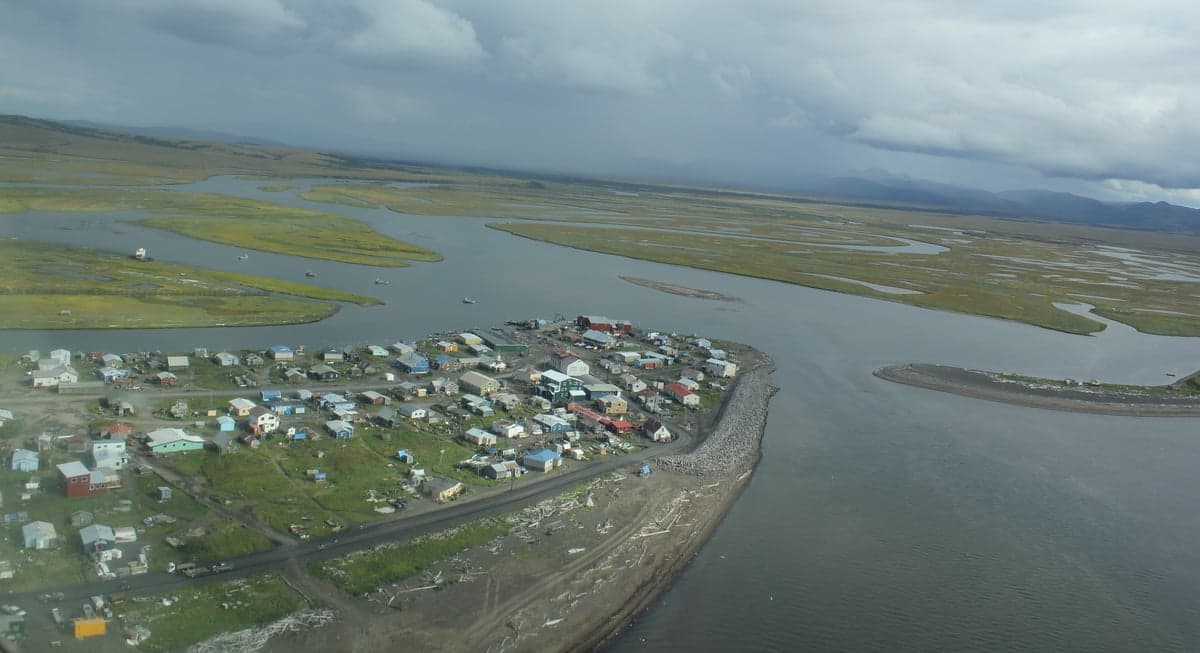
Photo: Wikipedia
Personal Sovereignty in Unalakleet, AK
Strong independent fundamentals that actively favor personal liberty and low regulation.
What does Personal Sovereignty tell us?
Personal Sovereignty measures your capacity for self-reliance and independence with minimal government friction. Higher scores mean fewer barriers between you and the way you want to live... but it assumes you have the space you need and good neighbors.
What does this tell us?
Personal Sovereignty measures your capacity for self-reliance and independence with minimal government friction. Higher scores mean fewer barriers between you and the way you want to live... but it assumes you have the space you need and good neighbors.
State Policy
Energy independence: Net exporter (350% of energy produced in-state)
Personal Liberty
Homesteading

Personal Liberty Analysis
Unalakleet offers a rare pocket of personal sovereignty in an increasingly regulated world, where the state's physical remoteness and small population create a de facto buffer against the worst of government overreach. For the survivalist or prepper, this Bering Sea village—home to roughly 700 people—represents a strategic retreat where Alaska's constitutional protections for individual liberty still carry real weight. The trade-off is stark: you gain near-total autonomy over your life, but you must accept that the nearest major city (Nome) is 150 miles away by air, and the state's infrastructure is thin. This is not a place for those who want convenience; it is a place for those who want control.
Tax burden and regulatory posture: Alaska's constitutional shield
Alaska's state-level framework is arguably the most liberty-friendly in the nation, and Unalakleet sits squarely within that advantage. There is no state income tax, no state sales tax, and no state property tax—a trifecta that leaves the state government with minimal direct claim on your earnings or assets. The Alaska Permanent Fund Dividend, which pays residents an annual share of oil revenues (roughly $1,600 in 2024), is a direct cash transfer that reinforces the principle of resource sovereignty. Regulatory enforcement is thin on the ground; the state's Division of Environmental Health and local tribal councils handle most oversight, but the sheer distance from Juneau means that permitting and compliance are often more advisory than adversarial. For a prepper, this means you can stockpile supplies, build structures, and manage your land with far less bureaucratic friction than in the Lower 48. The trade-off is that local utilities (electricity, water, internet) are expensive and unreliable—power costs can exceed $0.50 per kWh—so self-sufficiency in energy and water is not optional but necessary.
Self-defense and gun law specifics: Alaska's constitutional carry and stand-your-ground
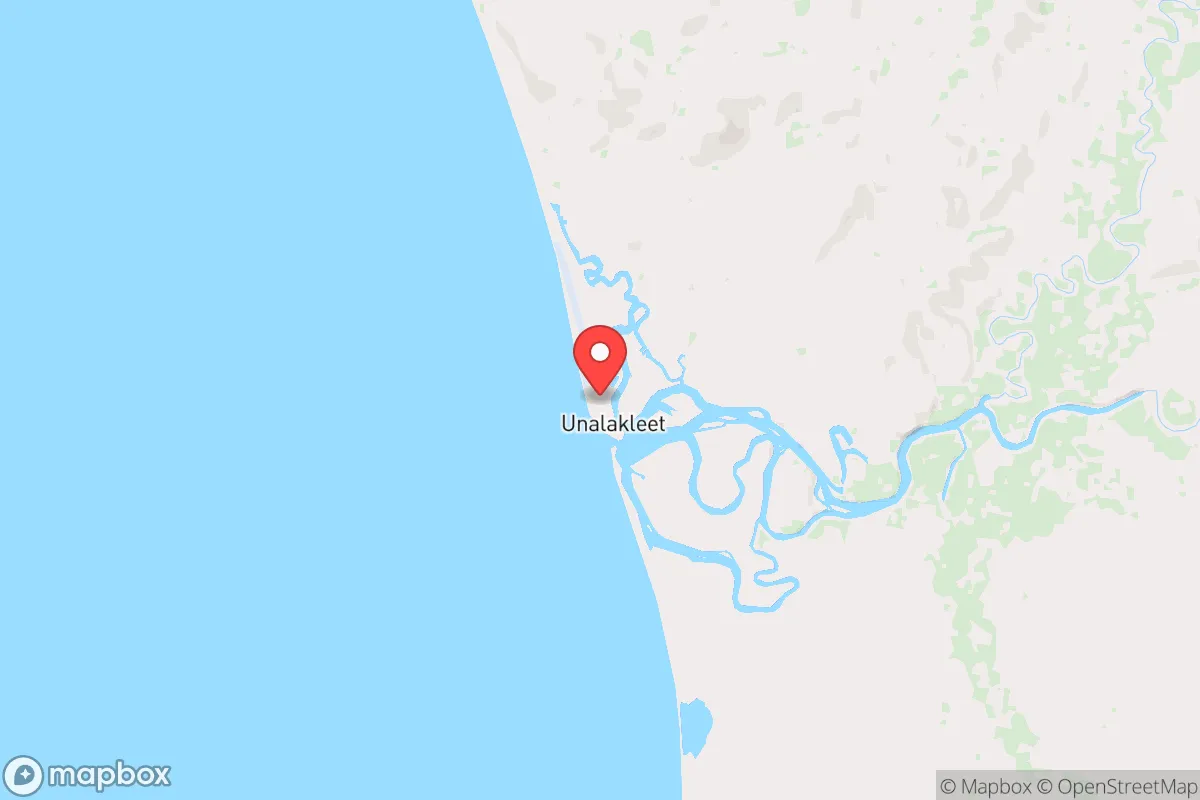
Alaska is a constitutional carry state, meaning no permit is required to openly carry or conceal a firearm for anyone legally allowed to possess one. Unalakleet's remote location—accessible only by air or winter ice road—means that law enforcement response times can stretch to hours or even days, making personal firearms a practical necessity for defense against both human threats and wildlife (brown bears and wolves are common). The state's stand-your-ground law (Alaska Statute 11.81.335) explicitly removes any duty to retreat before using deadly force in self-defense, and the castle doctrine extends to your home, vehicle, and workplace. There are no state-level magazine capacity restrictions, no assault weapon bans, and no waiting periods. The only notable limitation is that firearms must be transported unloaded and in a case on commercial aircraft, which is a minor inconvenience for a relocation move. For a prepper, this legal environment is as close to ideal as you will find in the United States—your right to keep and bear arms is treated as a fundamental, not a privilege.
Self-reliance and homesteading viability: lot sizes, zoning, and off-grid feasibility
Unalakleet's zoning is minimal, with most land under the jurisdiction of the Native Village of Unalakleet or the Bering Straits Native Corporation. Lot sizes for private parcels typically range from 0.5 to 5 acres, though larger tracts can be leased or purchased through the corporation. There is no formal building code enforcement beyond basic health and safety requirements for septic and water, meaning you can construct a cabin, workshop, or bunker with near-total design freedom. Off-grid living is not just feasible but standard: most homes rely on oil-fired heating, generator or solar power, and hauled water. The village has a piped water and sewer system, but many residents choose to remain off-grid to avoid monthly utility fees (around $150–$300). Gardening is limited by the short growing season (June to August), but raised beds and cold frames can produce hardy vegetables like potatoes, carrots, and greens. For a prepper, the key advantage is that you can build a self-sufficient compound without fighting a homeowners' association or county planning board—the only real constraint is the cost of shipping materials (barge or air freight adds 20–40% to construction costs).
Personal liberties: parental rights, medical autonomy, speech, and property
Alaska's constitution (Article I, Section 1) explicitly protects "the right to life, liberty, the pursuit of happiness, and the enjoyment of the rewards of their own industry," which courts have interpreted broadly. Parental rights are strong: Alaska has no state-level vaccine mandate for school attendance, and parents can homeschool or enroll in correspondence programs without state interference. Medical autonomy is similarly robust—there is no state income tax to fund Medicaid expansion, and the state's health department has limited reach into individual choices. The Alaska Supreme Court has consistently upheld free speech protections, and the state's remote villages rarely see the kind of local ordinances that restrict property use or political expression common in urban areas. Property rights are protected by the state's homestead exemption (up to $72,900 in equity for a primary residence) and a strong adverse possession statute, but the real freedom is in the lack of enforcement: you can build, burn, hunt, and live on your land with minimal oversight. The downside is that the tribal government (Native Village of Unalakleet) has jurisdiction over some land-use decisions, and its council can impose restrictions on non-Native residents—though in practice, this is rare and usually limited to subsistence hunting and fishing regulations.
Overall, Unalakleet ranks among the most sovereign communities in the United States for a prepper or conservative-leaning individual. The combination of no state income tax, constitutional carry, minimal zoning, and strong parental rights creates an environment where government overreach is more theoretical than practical. Compared to the Lower 48, where local ordinances, HOA rules, and state mandates can strangle personal freedom, Unalakleet offers a genuine escape—but it demands a willingness to accept isolation, high costs, and a harsh climate. For those who prioritize autonomy above all else, this village on the Bering Sea is a strategic stronghold worth serious consideration.

* Values derived from national, state, county, city and local statistics and may differ in a specific area. Last updated: 2026-04-19T19:39:39.000Z
Narrative content on this page is AI-generated and may contain mistakes. Verify any details that matter before acting on them.
ReloMaps may earn a commission from affiliate links at no extra cost to you.

