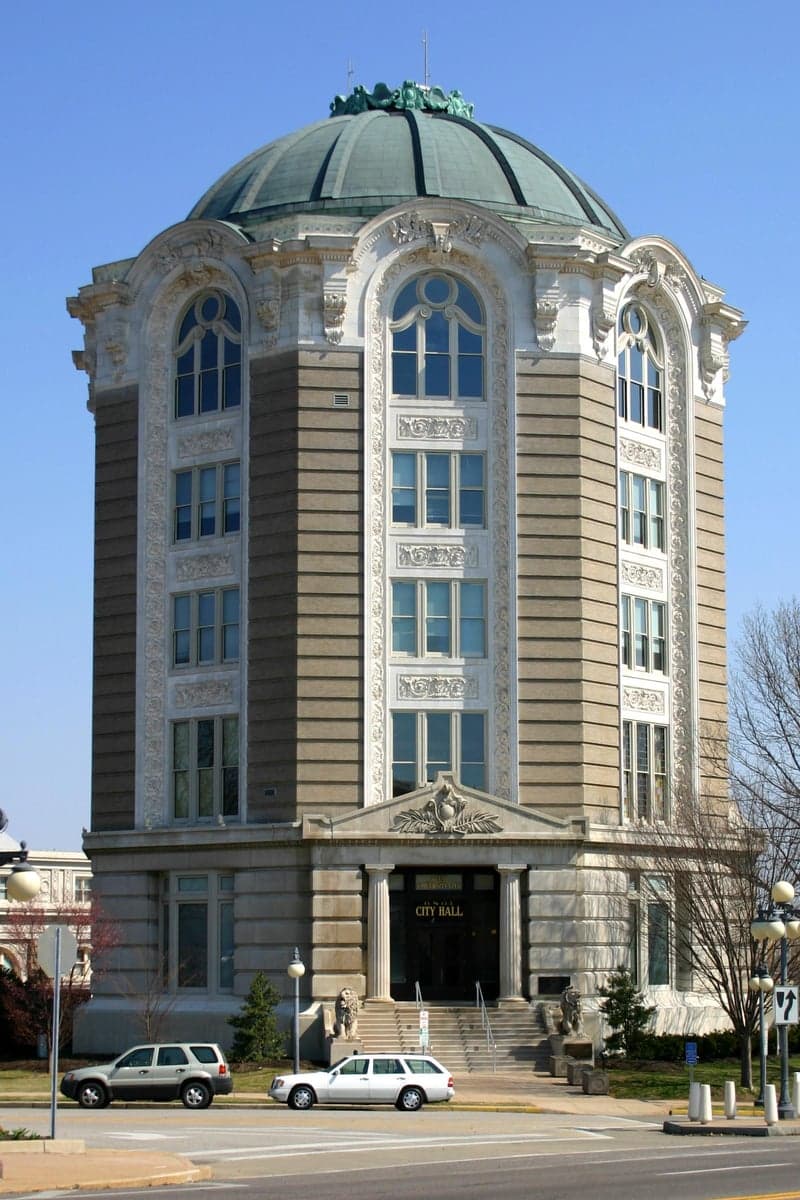
Photo: Wikipedia
Strategic Assessment of University City, MO
Multiple tactical vulnerabilities. Population density, target proximity, or disaster risk are likely compounding. A retreat property and exit planning is required.
What does the Strategic Assessment tell us?
Our Strategic Assessment grades tactical survivability of an area. Major population centers, military targets, fallout zones, natural disasters, and border exposure all drive risk — lower exposure means a more defensible position in a crisis.
This is heavily inspired by Joel Skousen's Strategic Relocation book. Highly recommended you checkout the book ($)What does this tell us?
Our Strategic Assessment grades tactical survivability of an area. Major population centers, military targets, fallout zones, natural disasters, and border exposure all drive risk — lower exposure means a more defensible position in a crisis.
This is heavily inspired by Joel Skousen's Strategic Relocation book. Highly recommended you checkout the book ($)Strategic Pillars

Key Distances
Regional Safe Places
Below is our recommended "safe zones" in Missouri and the surrounding area based on our strategic heuristics. For most people, it's unrealistic to live in a “safe zone” full-time due to work, family or other personal reasons. They tend to be more rural. However, many of these areas are perfect for second homes and retreat properties that double as a vacation home or even a short-term rental.


Important Note: For informational purposes only. This does not mean nothing bad ever happens in the green zones. Please use common sense. This is based on public data and modeled with AI. We tried to take a conservative approach but mistakes happen. We update this regularly as new information becomes available.
Solar Generator Recommendations
Backup power matters more here than in safer locations. We've picked three solar generators across budgets and capacity tiers — start with the budget unit if you only need a few essentials, or step up if you want to run a fridge and HVAC for days at a time.

Jackery Portable Power Station Explorer 300
Budget OptionPower on the Go: Weighing only 11 lbs, it's convenient to set up and store with book-sized foldable solar panels

BLUETTI Portable Power Station AC180
Designed for both indoor and outdoor scenarios, AC180 is highly capable as it has a robost capacity and continuous output power.

EF ECOFLOW DELTA Pro Ultra Power Station
Upgraded PickEcoFlow DELTA Pro Ultra is a whole-home energy system designed to grow with your family. Integrated with the Smart Home Panel 2, it scales to meet your evolving energy needs — keeping your home powered, intelligent, and secure through every stage of life.
We earn a commission, at no additional cost to you.
Strategic Assessment Analysis
University City, Missouri, presents a complex strategic picture for the conservative prepper or survivalist. While its location within the St. Louis metropolitan area introduces significant vulnerabilities, the city’s specific geography, established infrastructure, and demographic density offer a mixed bag of resilience and risk. For a relocator prioritizing preparedness, University City is not a bug-out location but a potential "gray man" staging ground—provided you understand its exposure to fallout, civil unrest, and resource dependencies. The key is to assess whether its advantages in water access and grid stability outweigh the proximity to a major urban center and its associated threats.
Geographic position and natural advantages for a prepared relocator
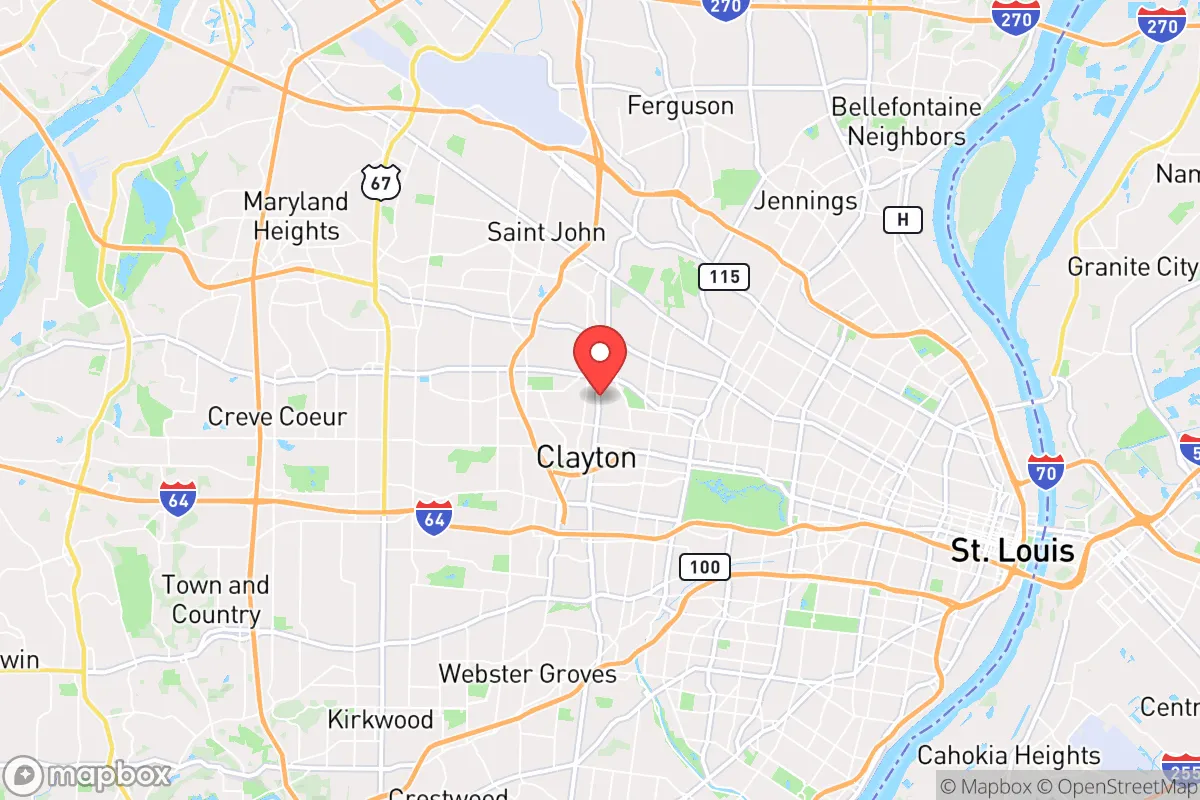
University City sits on the western edge of St. Louis County, roughly 10 miles from the Mississippi River and the urban core. Its elevation—averaging around 530 feet—places it above the floodplains that plague parts of the metro area, a meaningful advantage for long-term habitability. The city is bisected by the River Des Peres, a channelized waterway that, while not pristine, provides a surface water source for filtration in a prolonged grid-down scenario. More importantly, University City lies within the Missouri Ozarks watershed, meaning groundwater recharge is generally reliable, and the region is not prone to the drought extremes seen in the western U.S. For a relocator, this means local wells and municipal supplies are less likely to fail in a multi-year crisis. The area’s tree canopy and established neighborhoods also offer natural cover and thermal regulation, reducing reliance on HVAC in temperate months—a subtle but real defensive advantage in a fuel-scarce scenario.
Risks, exposures, and proximity to fallout-relevant landmarks
The primary strategic liability is proximity to St. Louis itself. University City is less than 8 miles from Lambert–St. Louis International Airport, a major transportation hub that would be a target for both conventional and asymmetric attacks. In a nuclear exchange scenario, the city lies within the moderate fallout zone for a ground burst on downtown St. Louis or the airport, with prevailing westerly winds potentially carrying contamination directly overhead. Additionally, the city is within 15 miles of the Weldon Spring Chemical Plant (a former uranium processing site) and the St. Louis-area nuclear waste storage sites, both of which are aging and vulnerable to sabotage or natural disaster. For the prepper, this means any major event in the metro area—whether a dirty bomb, industrial accident, or civil unrest—could render University City uninhabitable for weeks. The city’s dense suburban layout, with narrow streets and limited choke points, also makes it difficult to defend or evacuate quickly. In a mass casualty event or riot scenario, the proximity to the University of Missouri–St. Louis campus and the Delmar Loop commercial corridor could become a liability, as these areas have historically seen protest activity and could become focal points for looting or crowd control failures.
Practical resilience for a relocator: food, water, energy, and defensibility
On the practical side, University City offers some genuine resilience advantages for a prepared individual. The city is served by Missouri American Water, which draws from the Missouri River—a massive, high-volume source that is less likely to be contaminated by a localized event than a small reservoir. In a grid-down scenario, the city’s water pressure is maintained by backup generators at key pumping stations, though these are not hardened against EMP. For a relocator, installing a 1,500-gallon rainwater catchment system and a Berkey filter would provide a 30-day buffer independent of municipal supply. Food access is decent: the city has multiple grocery stores within a 2-mile radius, including a Schnucks and a Whole Foods, but these would be stripped within hours of a crisis. The better play is to establish relationships with local farmers at the nearby Tower Grove Farmers Market or to join a community garden (University City has several). Energy resilience is mixed. The grid is served by Ameren Missouri, which has a history of storm-related outages but generally restores power within 48 hours. For a prepper, a 10 kW propane generator with a 500-gallon buried tank would cover a month of essential loads, and propane is widely available in the region. Defensibility is the weakest link. University City is a typical inner-ring suburb with no natural barriers, limited standoff distance, and a street grid that offers multiple approach vectors. A single-family home on a corner lot is a tactical liability. The better choice is a mid-block property with a fenced backyard, reinforced doors, and a basement that can serve as a safe room. The city’s police force is well-funded but response times in a widespread event would be measured in hours, not minutes. For a relocator, the strategic play is to treat University City as a base for information gathering and supply caching, not as a final defensive position.
The overall strategic picture for University City is one of calculated risk. It is not a survivalist’s paradise—the proximity to St. Louis, the airport, and industrial hazards means that a major event could force a rapid evacuation. However, for a conservative relocator who values access to medical infrastructure, employment, and a low-profile lifestyle, it offers a viable "gray man" option. The key is to have a pre-planned bug-out route west toward the Ozarks (e.g., I-44 or Highway 50) and to maintain a 90-day supply of food, water, and medical gear on site. University City’s real value is as a place to wait out minor disruptions and gather intelligence before making a move. If you are willing to accept the urban exposure and invest in hardening your home, it can serve as a functional base for a prepared individual or family—but only if you treat it as a temporary hub, not a final redoubt.

* Values derived from national, state, county, city and local statistics and may differ in a specific area. Last updated: 2026-05-29T16:46:43.000Z
Narrative content on this page is AI-generated and may contain mistakes. Verify any details that matter before acting on them.
ReloMaps may earn a commission from affiliate links at no extra cost to you.

